No business is safe from feeling the pressure of operating in the COVID-19 era and Navy Pier in Chicago is no different. Navy Pier announced this morning that it will be closing and canceling events indefinitely on September 8th with a tentative re-opening date of Spring 2021.
Given the landscape of business in Chicago, while unfortunate, this should come as no surprise. Chicago’s Navy Pier is home to nearly 70 small businesses but itself operates as a non-profit and reportedly is facing a $20 million budget shortfall due to a severe lack of visitors at events. It is estimated that 80 percent of the money the pier makes is tied directly to tourism.
Advertisement
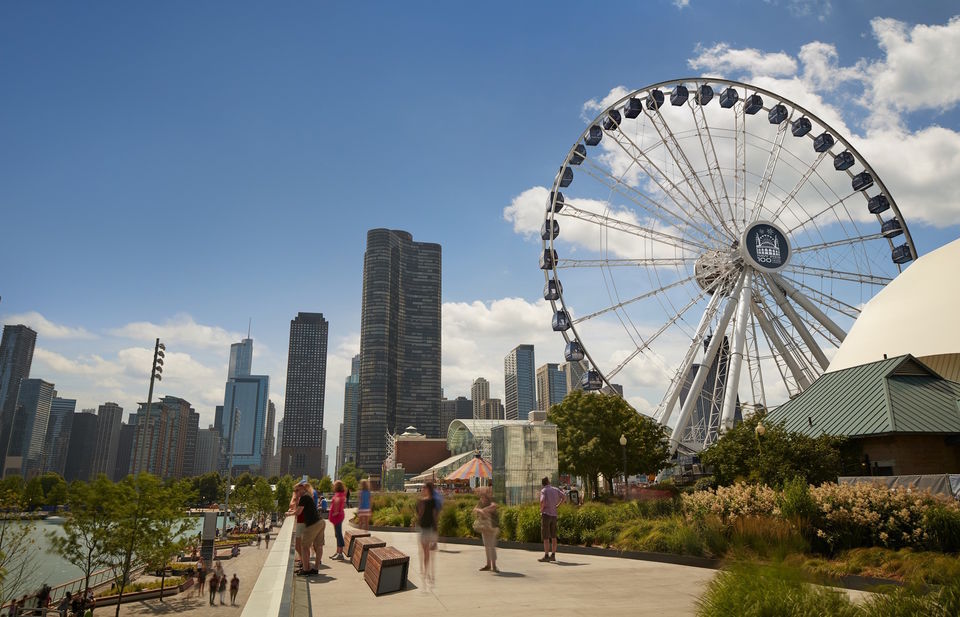
Photo Credit: Navy Pier
Since reopening June 10th as part of the mayor’s re-opening plan, Navy Pier has reported criminally low event turnout. Per NavyPier.org, the tourist attraction estimates that 9 million people per year visit, making it the most visited attraction in Illinois and the Midwest. That’s 2.25 million visitors per month from May through August, the pier’s busiest months, and at 15 percent of normal capacity, the deficit of revenue to business at Navy Pier in Chicago feels catastrophic. In fact, from that June 10th re-opening through this past Sunday, the pier reported roughly 500,000 visitors. Compared to nearly 4 million during the exact same months just one year ago and you can understand the very real concern.
In an interview with ABC 7 Chicago, Navy Pier’s President and CEO voiced that concern saying, “…If we’re seeing 15 percent attendance during our strongest months, we’re very concerned for our partner businesses that rely on summer to get them through the year.”
Advertisement
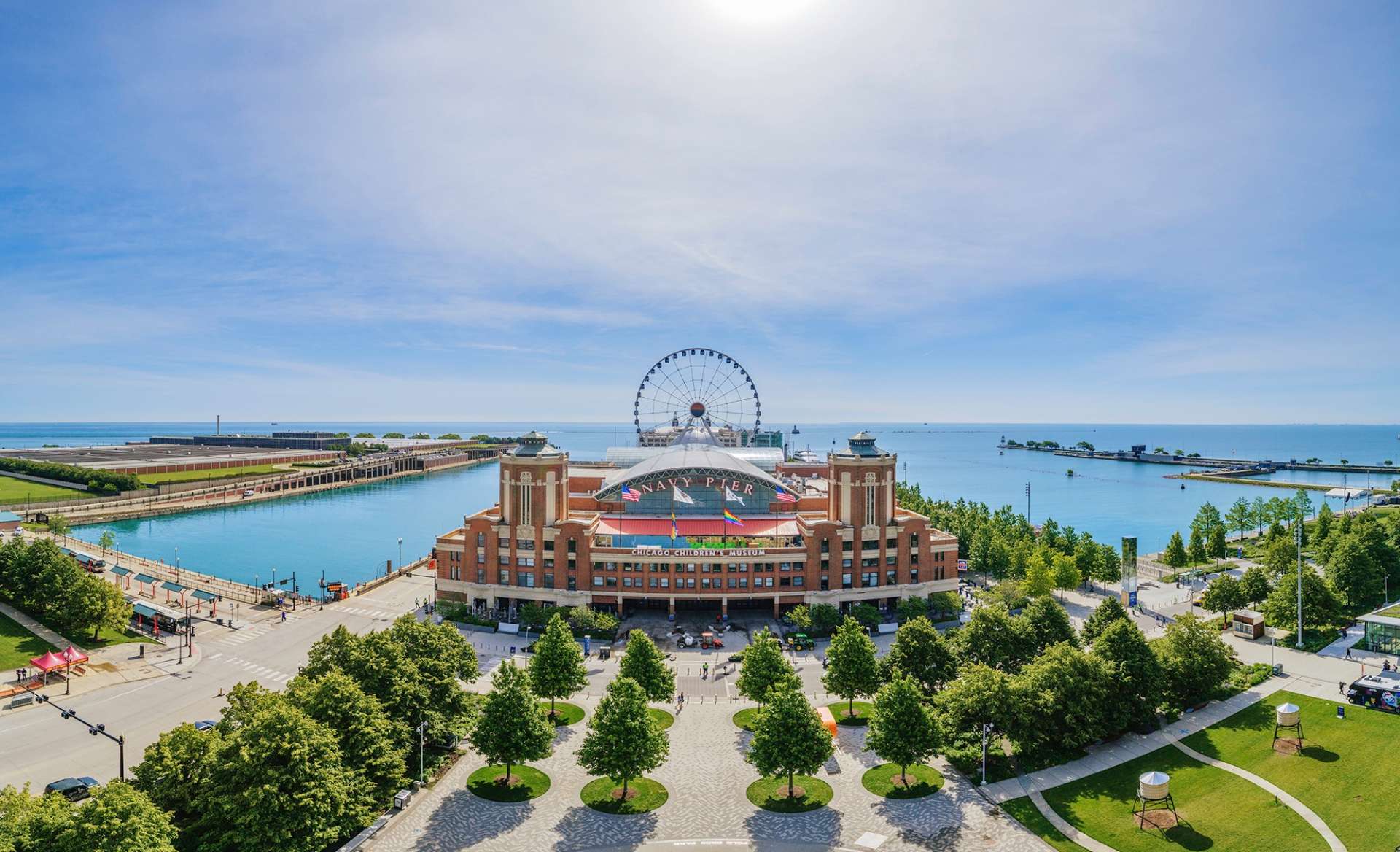
Photo Credit: Navy Pier Facebook Page
While the average consumer views Chicago’s Navy Pier as one giant floating attraction, it’s easy to forget the businesses that inhabit it and rely on consumer revenue to operate. Many of the 70 small businesses on the pier are restaurants and small retail shops that require high, mostly tourist, foot traffic to drive business.
In short, the businesses on Navy Pier need the pier as a whole to be successful to operate comfortably and that simply is not happening right now. Those businesses aren’t the reason people attend the pier in masses. They do so for the events and attractions, and despite the pier’s reopening earlier this summer popular attractions such as the Chicago Children’s Museum, the Shakespeare Theater, and the famed Centennial Ferris Wheel have all remained closed since mid-March. If those are closed that means an extreme deficit in parking revenue and everything domino’s back from there.
Advertisement
Because of Navy Pier’s non-profit status, they do not receive tax dollars and according to the Chicago Sun Times, they received nearly $2.5 million in stimulus money as part of the federal government’s Paycheck Protection Program. That money was said to have gone to the company’s nearly 150 employees. However, per press releases via the pier’s VP of Communications Cory Jobe, the company has laid off roughly one-fifth of its administrative and construction trades staff and 40 percent of seasonal staffers. It’s likely not over either once the October 1st deadline expires on the firing and lay-off freeze for agencies that received PPP money.
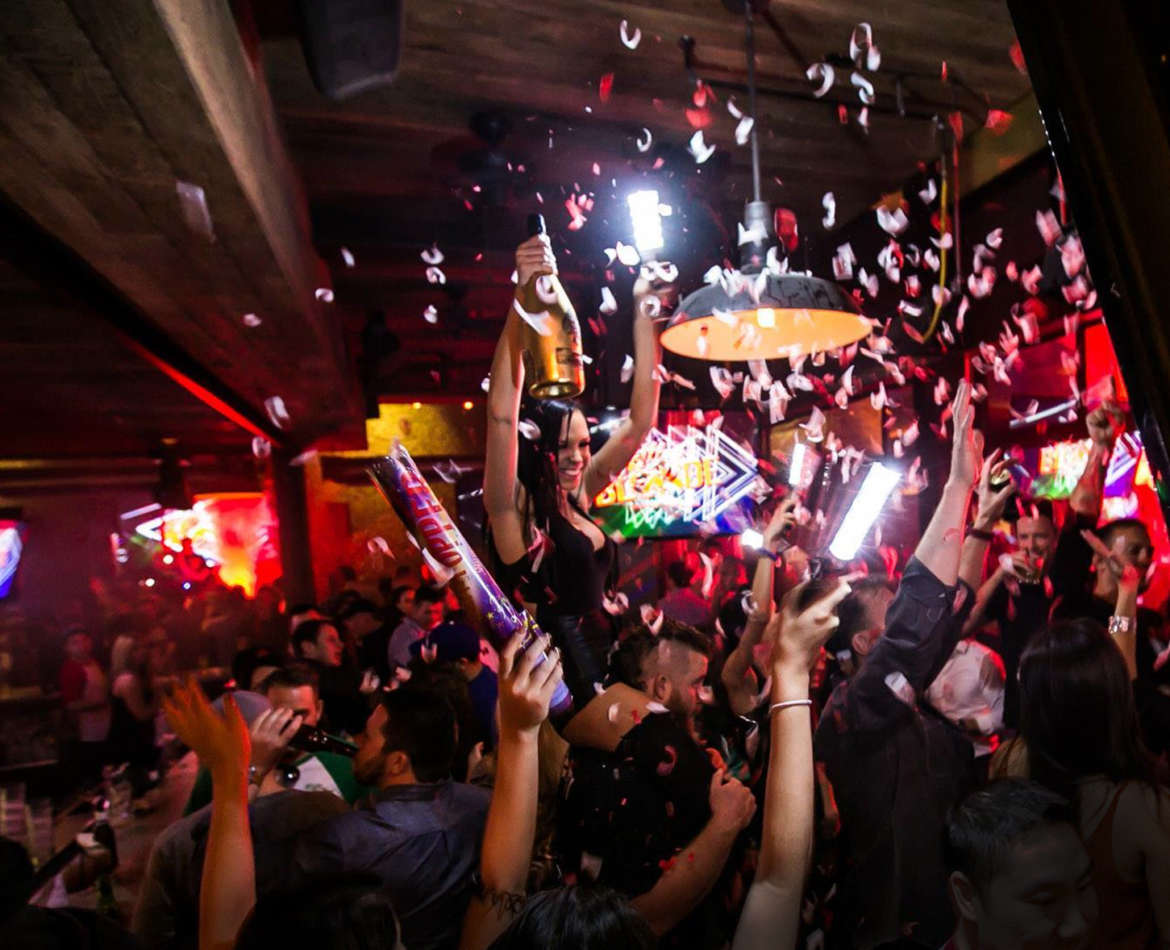
Photo Credit: Bottled Blonde
River North Bar Bottled Blonde Closes Doors For Good
Are you trying to find information on what else in Chicago has closed down? Here’s one example of a River North staple that has shut its doors.
If there is any silver lining to this unfortunate situation, it is that Navy Pier Inc. is saying that it has given rent relief to tenants to help keep costs down in the meantime and incentivize them to return when Navy Pier re-opens in 2021. Also, as self-respecting Chicagoans, we leave you with this.
Advertisement
The only reason I set foot on Navy Pier is Chicago Shakespeare. Navy Pier is the Deep Dish Pizza of Chicago destinations: cheesy, over-rated, and mostly for tourists/suburbanites. https://t.co/hetzKMvAMr
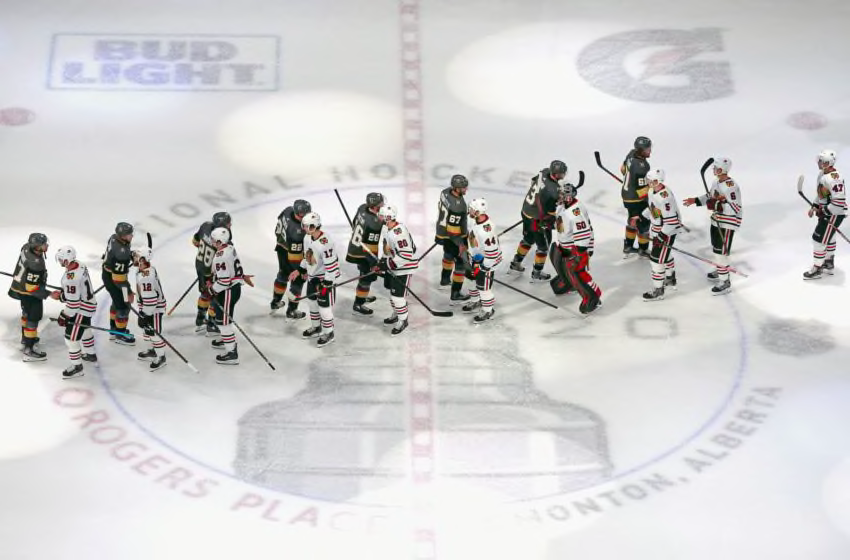
EDMONTON, ALBERTA – AUGUST 18: The Vegas Golden Knights and the Chicago Blackhawks shake hands after the Golden Knights victory in Game Five of the Western Conference First Round during the 2020 NHL Stanley Cup Playoffs at Rogers Place on August 18, 2020 in Edmonton, Alberta, Canada. The Golden Knights defeated the Blackhawks 3-2 to win the series 4-1.
The ChicagoBlackhawks have been eliminated by the Vegas Golden Knights in five games.
The Chicago Blackhawks ended a hard-fought playoff run as the Vegas Golden Knights took care of them in the fifth game to win the series 4-1. The Hawks were outmatched for most of the series and honestly, they were lucky to even squeak one win out of the Golden Knights. They are a great team that has a legit chance to go on and win the Stanley Cup. They attack in waves, use the defense to attack and defend in all three zones, and get great goaltending.
The Blackhawks were right there in game five as they did have a 2-0 lead and even a 3-2 lead but Vegas pushed hard in the third period to win the game 4-3. They outshot the Hawks 39 to 26 which says a lot about how the Hawks were able to attack and how they were able to defend. In addition to being outmatched because their roster is far inferior, they were outcoached as well. This was not a fine performance by Jeremy Colliton.
Colliton used some of the lower end guys way too much in this game. John Quenneville is an AHL player at best and he was out there down a goal with three minutes left. That is not how you win playoff games let alone a series clincher that you are down in with only a few minutes left. The bench needs to be shortened as it is literally a win or go home stretch of the game.
There is plenty of offseason to discuss the coach and management group so the main focus here should be the players. Most of them, key emphasis on most, did everything they can to make this series feel at least a little bit competitive. Players like Jonathan Toews, Patrick Kane, Duncan Keith, and Corey Crawford should have had everyone’s ultimate respect before but they somehow gained even more. They returned to play with championship pedigree and the rest of the organization let them down.
As good as it was to defeat the Edmonton Oilers despite Connor McDavid having his way with them, it is clear once they got to Vegas that they are not a true playoff team right now let alone a Cup contender. There need to be some changes made this offseason otherwise 2020-21 is going to be a lot more of the same.
One player who also deserves some respect is Golden Knights goalie, Robin Lehner. He split the net with Crawford for most of 2019-20 before he was dealt away at the deadline. He was a great player for the Hawks and was brilliant in this series. You can tell as you watched him go through the handshake line that he was super great with his former teammates who seemed to all have mutual respect for him. We wish him well moving forward this season with the Golden Knights and beyond as he looks for a contract. This was some series for him and both teams.
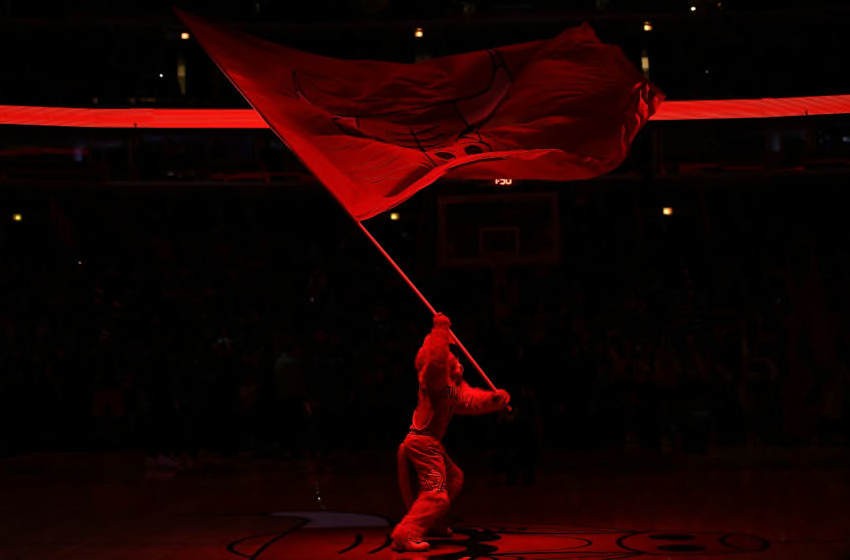
The 2020 NBA Draft lottery is only a few days away and the ChicagoBulls have two picks this year.
August 20th is quickly approaching, and this year’s draft lottery has slotted itself to be huge for the rebuilding Chicago Bulls.
The draft and the lottery will be held virtually, thanks to the ongoing coronavirus pandemic, but the firing of head coach Jim Boylen means that all eyes are locked on EVP of basketball operations, Arturas Karnisovas.
For those of you who have yet to listen to the 15-ish minute official press conference held after Boylen was relieved of his coaching duties, you can take a listen here.
Not sure about all of you, but hearing AK speak about basketball operations around the team makes me deliriously happy. It’s impossible for fans to really understand and hear everything that is going on with a team, especially in the case of a coach getting let go, but Karnisovas shot as straight as he could while keeping some things close to the vest.
Just after the announcement about ol’ JimBo, the Bulls notified their fans that AK would be representing the team during the virtual draft process, which will be held at 7:30 CT on August 20th. The class of 2020 is remarked by most experts as a very weak class, but Karnisovas had different thoughts via Bulls Twitter:
RELATED PRODUCT
Tailgate Men’s Chicago Bulls Reflective Graphic T-Shirt Bold Black L
AK on the draft: I disagree that it’s a weak class. I like the players, I like a lot of players in our range. We’ve done a lot of work studying and that’s where a lot of the excitement comes from: interviewing them and looking at the video. We’ll add a good player to our roster.
Another snag in the drafting plan is the whole pandemic situation. College basketball was shut down before the NCAA Tournament could take place. Without the tournament, there are pieces of scouting reports missing from a lot of domestic players. The cancelation of March Madness also affects draft stock, giving a higher chance for a team to grab a dud prospect.
(There is also a greater chance that a team could grab a sleeper, to be fair.)
An even scarier thought would be that some of the overseas prospects could decline to come to the United States straight away due to coronavirus concerns.
Yikes.
So there is a lot at stake between now and draft night in October, doubly so if you’re in charge of a miserable franchise like the Bulls.
However, with his experience in drafting and player development, fans should wholeheartedly place their hope in Karnisovas, no matter where the Bulls land in the lottery Thursday night.
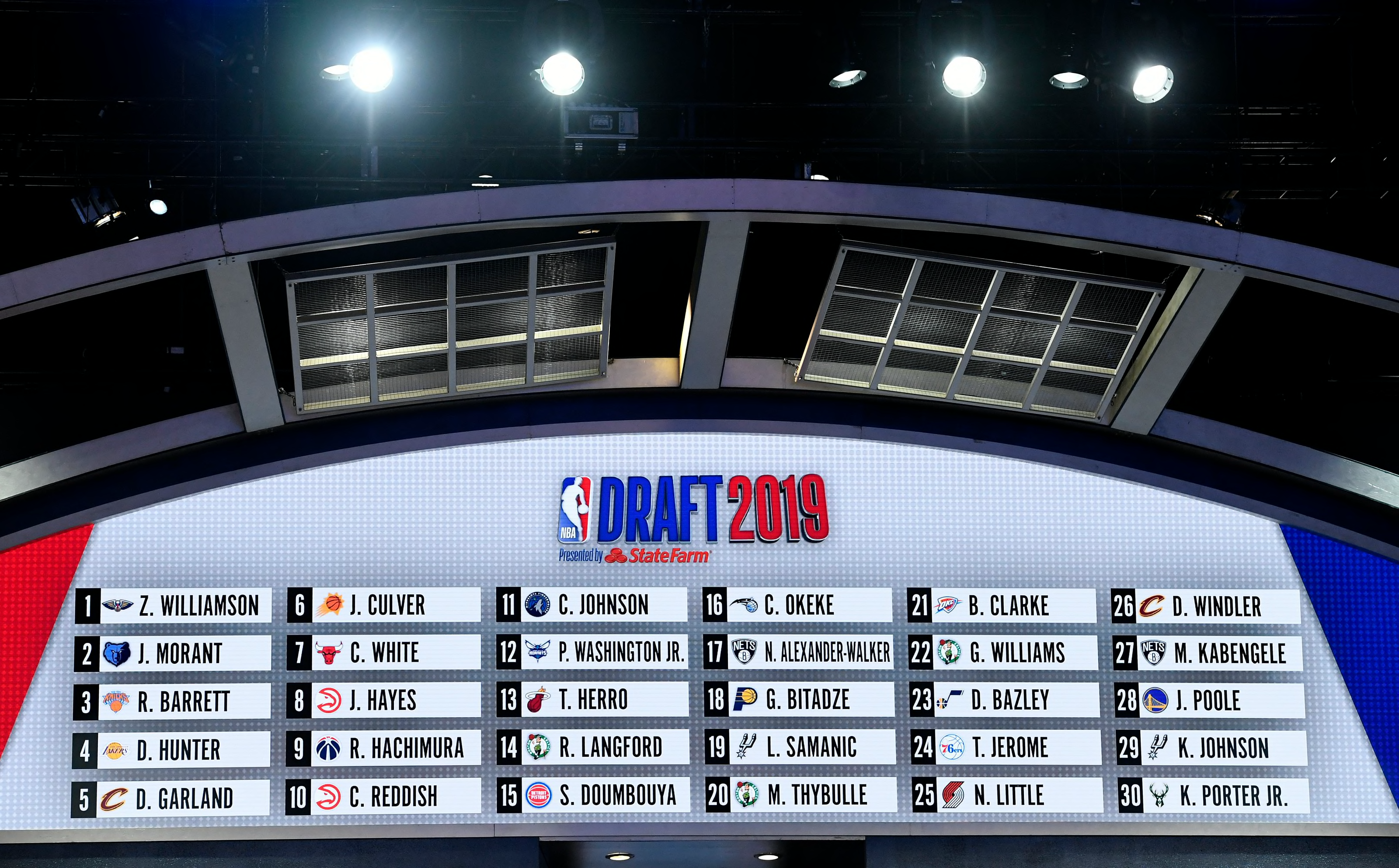
For this Bulls mock draft, the hypothetical will be that the lottery remains unchanged and the Bulls are stuck at pick 7 (AGAIN) in the first round and 44 in the second.
More mock drafts will come post-lottery so stay tuned for those as well! And now…
1000 E. Illinois Road, Lake Forest: $2,795,000 | Listed July 29, 2020 (Fio Creative)
Built in 1914 and named Vallombrosa after a village in Italy, this 5,967-square-foot, Mediterranean-inspired home in Lake Forest sits on 3.8 acres. The home has six bedrooms and 6½ bathrooms and was restored in 2003, with an update following in 2018. From the cobblestone and pebble circular driveway, a front courtyard opens to the home’s solid stucco facade, terra-cotta clay roof and overhanging balcony, complete with a water fountain.
Architect Edwin Clark’s stately design includes arched entry doors and a dual-staircase entry foyer. Formal spaces include a fireside dining room and a wood-paneled office and library. A prep room adjoins the custom kitchen, while the sunroom touts sweeping views of the rear gardens. Upstairs, the primary bedroom is complete with a sitting and dressing room, a vintage-detailed bathroom, custom closets and window treatments. The lower level features an 800-bottle wine cellar, and the couch house with full bathroom and detached two-car garage round out the home.
Southern Illinois head football coach Nick Hill has been spending time on his new tractor with his team on the sidelines this fall. (Photo via Twitter)
College football programs thrive on structure.
“These kids are so used to that we’re able to give them 12-month calendars,” Southern Illinois head coach Nick Hill said Tuesday in a media conference call. “Here’s your days off. Here’s when you get to go home for a break.”
But amid the COVID-19 pandemic and rampant uncertainty in college athletics, schedules are now based on many factors out of athletes’ and coaches’ control.
One thing Hill said that is in his – and his players’ – control is how the Salukis react to the loss of their fall season and the lingering worries about what a spring Missouri Valley Football Conference schedule will look like.
“You’ve got to find the positives in everything or you sit around and keep complaining,” Hill said. “All of this stuff is out of our hands. Change is inevitable and growth is optional. Right now, we have to choose that we’re going to grow and get better. I know that’s where my mindset is. I believe there are going to be opportunities in this.”
For Hill and many of his coaching colleagues, having a fall away from the field is extraordinarily unique. It’s a challenge he readily accepts.
“I bet there’s a lot of coaches around the country that are looking forward to doing something in the fall that they’ve never been able to do,” he said. “There’s got to be life outside of football. We’re all getting hit with that.”
For Hill, that reality has turned his focus to the outdoors.
“I’m a big deer hunter, but I’ve found myself talking about deer hunting way more than I ever do it,” he said. “I’m looking forward to sitting in a deer stand a lot more than I ever have in the fall.”
He also has found a new toy to clear heavy brush around his home.
“I went out and bought a new Kubota tractor,” he said. “I’ve been bush hogging everything I can find, making trails.”
Though this season will look different, SIU head coach Nick Hill said it offers players a chance to become “a better version of themselves.” (Photo via SIUSalukis.com)
While he takes on two new fall hobbies, Hill said he expects the same of his players.
“These kids get more time to become a better version of themselves,” he said. “Not just on the football field. If you’re not able to adjust and adapt and have a good attitude while you’re doing that, it’s hard to operate in life. … As a coach, I’m looking forward to this fall – slowing down, teaching, coaching.”
One thing Hill said he won’t accept is any of the nearly 130 players, coaches and support staff around the SIU program frequently expressing negative thoughts.
“Everybody’s world and what we’re used to has been flipped upside down,” he said. “We can’t sit here and be doom and gloom. I’m not buying in on the doom and gloom. If I hear a conversation start going down into complaining or, ‘Can you believe this?’, I’m done with that.”
Hill said he understands that people in the program are going through a variety of emotions, and he wants to acknowledge those emotions and help everyone move forward.
“Perspective is a great word in life, and we all need to have great perspective during this time,” he said.
Saluki side notes
Hill said senior safety Qua Brown, who entered the transfer portal this week, will graduate this fall from SIU. He added that after conversations with every Saluki player, no others expressed an interest in transferring. “Everybody is on board with pursuing the spring season,” he said. … Though NFL scouts are not allowed in team facilities right now and many are not traveling to campuses in their assigned regions, Hill said SIU will set up Zoom calls with pro prospects and NFL personnel. … SIU and others who are not playing games this fall are awaiting guidance from the NCAA on the number of hours players can spend on football during this unique time. In the off-season, he said eight hours a week of conditioning and workouts are allowed. During the season, coaches and players can spend 20 hours a week together on team activities. “We’re kind of in a holding pattern,” he said. “It could be a blended version at 12 hours.” … Of nearly 400 COVID-19 tests given to players, Hill said SIU has had one positive. “We need to continue to err on the side of caution and safety.”
Blog co-authors Barry Bottino and Dan Verdun bring years of experience covering collegiate athletics. Barry has covered college athletes for more than two decades in his “On Campus” column, which is published weekly by Shaw Media. Dan has written four books about the state’s football programs–“NIU Huskies Football” (released in 2013), “EIU Panthers Football (2014), “ISU Redbirds” (2016) and “SIU Salukis Football” (2017).
If you time your home sale or purchase right you can get a better deal
About a year ago I looked at the best time to buy or sell a home in Chicago from a supply and demand perspective. Theoretically, looking at the market that way should get you the best price for a home sale or purchase. However, what does the data actually tell us? Well, I’ve done this before – a long time ago and it’s time for an update.
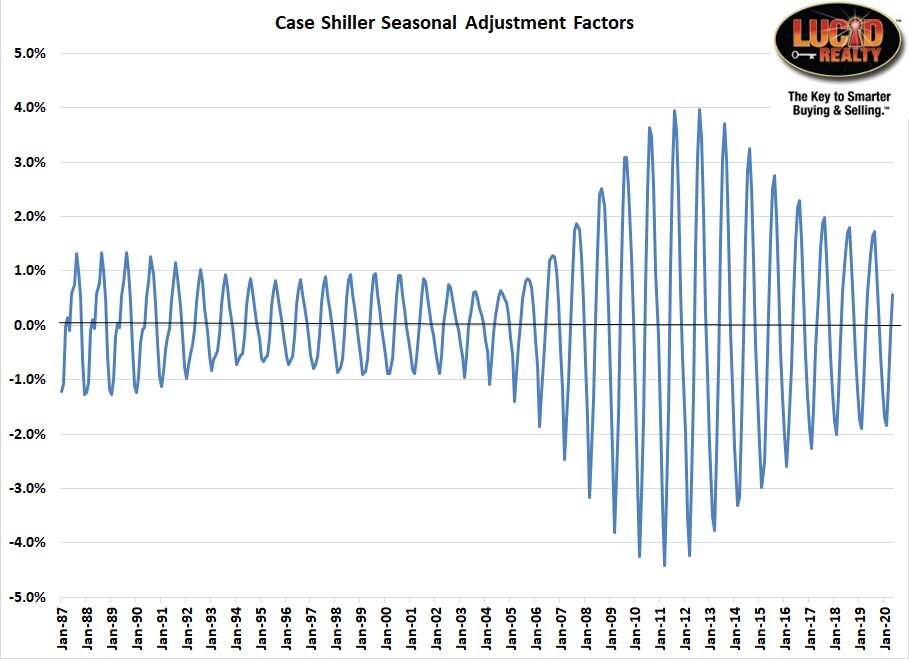
The Case Shiller index folks produce two sets of home price indices for the Chicago area. The un-adjusted indices are what I report on every month. It’s just the regular indices that show price levels as they are without any seasonal adjustments. When you look at my graphs you can clearly see a seasonal pattern in the data. That’s why the Case Shiller folks also produce a seasonally adjusted set of indices, designed to remove seasonal effects. I compare the two to determine how much of a seasonal impact they think exists and we can look at that to figure out when prices generally peak or bottom out during the year.
They get their adjustment factors by feeding their un-adjusted indices into a software program maintained by the US Census Bureau – the X-12-ARIMA seasonal adjustment program. Sounds sexy, right? I have no idea how it works and my guess is that nobody else knows either, other than the people who built it. But we’ll trust it anyway. Here is how those seasonal factors have varied over time.
Chicago area home prices have a significant amount of seasonality that has varied over time
I have no idea why the seasonality would vary over time but I guess it’s possible. The people who created the black box that spit out these values would probably tell us that it’s just the way it is.
The most recent peak value occurred in August 2019 at 1.7% and the lowest point occurred in February at -1.8%, which is a 3.5% total swing. Also, keep in mind that the Case Shiller index is a 3 month average so the August number is more like July and the February number is more like January. Also, keep in mind that this is based on what closed at those points in time so the contracts were written 30 – 60 days prior and if you want to get a contract in one month you probably need to be on the market a month before that.
So, based on this data, I would say that to get the highest price when selling your home you want to hit the market in May and to get the lowest price when buying a home you want to start looking in November. Both of those time frames are shifted a little later in the year than my analysis last year would suggest.
#HomeSelling #HomeBuying #ChicagoRealEstate
Gary Lucido is the President of Lucid Realty, the Chicago area’s full service real estate brokerage that offers home buyer rebates and discount commissions. If you want to keep up to date on the Chicago real estate market or get an insider’s view of the seamy underbelly of the real estate industry you can Subscribe to Getting Real by Email using the form below. Please be sure to verify your email address when you receive the verification notice.
After 20 years in the corporate world and running an Internet company, Gary started Lucid Realty with his partner, Sari. The company provides full service, while discounting commissions for sellers and giving buyers rebates.
I look forward, and am hopeful for, another well-orchestrated roll-out, just as you did with the rectal culture workflow.
Thank you for your professionalism and leadership!
KC”
Wow.
It has been a tough few months for all of us. Pandemic, social unrest, product shortages, political nihilism. It’s not the best time to be rolling out a major change in a necessary product line to our “client” offices. But the move to the exciting field of molecular microbiology was something that we had begun before the world had heard of COVID-19. Significant financial investments had been made. The administration wanted us to push on.
Our lab staff did a tremendous job of finding workarounds for supplies that proved absolutely impossible to obtain. Procedures that had been previously validated needed to be reanalyzed and revalidated to take into account changes in technique.
We devised new strategies for informing our offices about the new procedure, and the not insignificant changes in office workflow that would be needed. We made a video and emailed FAQs and asked the group’s nurse coordinator to schedule face-to-face training where possible. Hundreds of supply kits were sent via courier to each office and our IT team made the necessary changes to our ordering and reporting paradigms.
Of course, there were grumbles. Why this? Why now? Do we HAVE to? But we responded, “Yes you do!” in as nice and as polite and as firm a way as possible. We set a date for when the old test would no longer be orderable.
Over the course of seven days, we watched as the percentage of testing using the new method increased. When the cut-off day arrived we told IT to flip the switch. As far as we were concerned the old method no longer existed.
We are now working on Phase 2 of our molecular microbiology project. That’s what prompted the email above from KC, the Practice Manager at one of our offices. I thanked him for the props and told him he had made my day.
And it’s true. A kind word, a word of support, a word of praise, can truly make my day.
What makes yours?
The above are the opinions of the author and not necessarily UroPartners LLC.
Like what you read here? Add your name to our subscription list below. No spam, I promise!
___
Hi! I am Les, a practicing pathologist living in the North Suburbs and commuting every day to the Western ones. I have lived my entire life in the Chicago area, and have a pretty good feel for the place, its attractions, culture, restaurants and teams. My wife and I are empty-nesters with two adult children and a grandchild. We recently decided to downsize, but just a bit! I will be telling the story of the construction of our new home, but also writing about whatever gets me going on a particular day. Be sure to check out the “About” page to learn more about where we plan to go with this blog!
If you’ve been in to see an Audiologist, congratulations on taking the first step. An Audiologist can address concerns with balance, tinnitus, and hearing. But what happens next?
If there were no issues detected, lucky you. We’ve sent you home and showed you how to protect your ears from preventable damage due to loud sounds. When there are concerns that need to be addressed, we will take the time to learn about you and make a plan for treatment.
If balance or dizziness is an issue, this should always be shared with your physician and other health care professionals that take part in your well being. A visit or two with an Audiologist who is qualified to evaluate and treat balance can in most cases, have you walking out the door feeling better. Your wellness is our priority, and we want to help you safely navigate your environment.
When tinnitus is bothersome, we can help reduce the angst and stress associated with those unwanted ear noises. While living with tinnitus is a struggle, an Audiologist will work to find strategies and customize a plan to give you relief. A variety of solutions to ease the tinnitus and lifestyle changes can help to make the days easier. Avoiding negativity and taking care of yourself helps. Relaxation can be an integral part of successful treatment.
Improving and protecting hearing is the most common reason to see an Audiologist. Understanding where struggles lie and learning what is important to improve communication is where we start. After all, life expectancy and the quality of life is improved with social interaction. Choosing solutions to improve hearing and associated follow-up should be uniquely designed. Providing ear protection and understanding how to properly use it is critical to maintain the one set of ears you already have.
Audiologists improve the quality of life. Reach out and let us help. We’re waiting for you.
Dr. Gostomelsky earned her Bachelors Degree in Speech and Audiology at the University of Illinois, in Champaign IL, her Masters Degree in Audiology at Illinois State University, and her Audiology Doctorate (AuD) from the Arizona School of Health Sciences.
Dr. Gostomelsky is licensed through the State of Illinois, and maintains membership in the Academy of Dispensing Audiologists and Illinois Academy of Audiology. She has over 40 years of experience treating patients.
Dr. Gostomelsky takes pride in helping her patients understand what it takes to be successful in both protecting and improving hearing, one patient at a time.
Now that Fernando Tatis Jr. is a household name in the baseball universe, you won’t find many Chicago White Sox fans who have forgotten that the 21-year-old, who is the son of former MLB player Fernando Tatis, was once a member of the White Sox organization. Traded for James Shields, many Sox fans are now regretting the deal that let Tatis Jr. get away. Take a look at some of the reactions on social media below — and some thoughts from Cubs fans just for fun, too.
Yes, I did photoshop a mask and face shield onto Nick Jonas to make myself feel less weird.
If you know me, you know I’m anxious. Depending on when you met me, you’ve know me at various levels of anxiety. My friends who have met me in adulthood see me as anxious, but my friends who met me in middle or high school will actually inform you that I’m super chill now. So how has this pandemic affected my anxiety?
The first couple of months, I was actually much calmer than a lot of people I know. I honestly didn’t think it was going to be as bad as people thought–much like when the weather reporter says we need to prepare for 2 feet of snow, and then we end up with 2 inches. At the beginning of March I nannied a family trip to Hawaii for 10 days. I worked so much, that I really didn’t have time to open my laptop or look at the news. In my ignorance, I didn’t think much had changed from March 3-12. I was flying back to Chicago for 1 night of rest at my parents’ house before flying back to New York on the 13th. When I got home at about midnight, my parents were waiting for me. They informed me how serious coronavirus had gotten while I was off the grid. They seemed genuinely worried about everything, especially me going back to New York. They both actually cried and asked me to stay in Chicago. I agreed, figuring it would be for a few days (because I didn’t understand what a pandemic really was back then. Ahhhh youth.) I cancelled my flight for the next morning. My dad said it might be 2 weeks, and I thought that was a bit extreme. I ended up staying in Chicago for 4 months. I didn’t have the luxury of knowing I’d be gone for so long when I packed for my trip, so I was stuck with just my essentials.
The first couple of months were easy. For the most part, everyone was staying at home, so I didn’t have any sort of FOMO (Fear of missing out), because everyone was in this together–apart. The difficulties in my anxiety started when people started to slowly emerge from their caves. They slowly started to go back to grocery stores and meet-ups with friends, and of course, I became jealous. The only social interaction I was having was nodding to people I’d pass on my daily walks. I then asked my parents if I could go to the grocery store on occasion–my mom wasn’t getting the exact foods I liked. They allowed it, but the amount of anxiety and guilt I had in the stores was so overwhelming, that it wasn’t as much fun of an outing as I had expected. There were a couple of times I went to the store, walked in, saw too many people (many not wearing masks) and decided to go back when fewer people would be there. When I finally worked up the courage to actually shop, my heart was racing and I would try to get in and out as fast as I could, sometimes forgetting items on my grocery list, but not caring. People were coming too close to me. I even saw 2 people sans masks hug!
For the month of June I was asked to nanny for a family in Chicago. My family and I decided it was safe as long as I was driven to and from the family’s house by either my parents or the family (I don’t have a license). I was slowly starting to open up my circle. Then I decided to go on some masked social distancing walks with friends. My issue was that I took the 6 foot rule very literally, and quickly found out that not everyone did. I tried to make a joke about being anxious, to make me moving to the other side of the street less awkward, but I quickly realized my precautions weren’t sustainable. So 6 feet became 3 feet when necessary. After every walk, of which there were only a few, I’d feel incredibly guilty for potentially causing the spread of coronavirus. Especially as someone who was so vocal online about the importance of social distancing. Was I being hypocritical?
When my month of nannying was done, and covid numbers had decreased, my family and I decided I should return to New York. I would have loved for my parents to drive me, but that wasn’t feasible with their work schedules. So I booked a flight. The prospect of getting on an airplane in the middle of a pandemic freaked me out. Especially when the most dangerous thing I had been doing was going to the grocery store every couple of weeks. But I did research on plane air quality, and the airline’s policies, and decided it would be relatively safe. And I could just do a 14-day quarantine when I got back.
When I arrived at the airport, panic set in. I assumed it would be empty, but it wasn’t. I hadn’t seen that many people since early March. 95% of people were wearing masks, but my mind focused in on the 5% who weren’t. 6 feet of distance wasn’t possible. I remember standing in the security line, a few feet away from someone who wasn’t wearing a mask. I was shocked and appalled that none of the airport workers were saying anything. I started hyperventilating–Not a good thing to do when the air around you is literally toxic. But I figured once I got through security I could find a nice empty spot.
I walked to my gate, and it was full. Strangers sitting in chairs next to each other, flippantly taking off their masks. My hyperventilating got more intense, and my eyes started to water. I eventually found a gate that had no flight scheduled, and was able to properly distance myself from others. But of course people were taking off their masks.
Once on the plane, we were told the plane was completely booked (excluding the middle seats). I had really hoped I would have a row to myself, which I’ve always wanted on an airplane, but now more than ever. I sat by the window even though I prefer the aisle seats, because I figured I would have less exposure to other people this way.
Then snacks and drinks were handed out, a service I had thought was suspended due to the pandemic. People were already taking off their masks before there was food, and I knew that having a drink in front of them would make them think the mask rule no longer applied. Not one flight attendant enforced the mask rule. The girls in front of me had their masks off for almost the entire flight. I had to ask them to put them back on–which they did for about 2 minutes before sneakily taking them off again. I had to ask my seat partner to put his mask above his nose. Was I being crazy?
Then I arrived back to New York and had to Uber home. I left the windows open to allow for air circulation, and had to ask the driver to put his mask on. I was starting to question my decision to come back to New York. But I needed to get back to my life and work. I was also in the process of applying to a grad school program that I needed hospital volunteer hours to get into. Being in a hospital during a pandemic? I was going from 0 to 60 really fast.
Within 2 days of being back, I had to go to 2 different doctor’s appointments and the grocery store. The receptionists at the doctor’s office had their masks on under their noses. Then on my third day of being back, the hospital I’d be volunteering at asked me to come in for an interview. I was hesitant, but I figured the hospital was taking all of the necessary precautions. I had to take public transportation to get there, but luckily it was pretty empty. When I got to the volunteer office, I saw 6 people in an office and none of them were wearing masks. They put masks on when they interacted directly with me, but stood much closer than I was comfortable with. Then I was sent to a small room with 2 others to watch an orientation video. Both of them quickly took their masks off. I attempted to subtly push my chair further and further away from them. After 3 days back in New York I was already exhausted from asking people to put on their masks, so I decided I could only be responsible for my own actions.
On my way home, the guilt set in. Was this an essential activity? I needed to do the volunteering to go to grad school to get the job I wanted… Then friends starting asking to hang out. I declined for a while, then agreed to meet up at a park, as long as we both wore our masks and sat 6 feet apart.
It became clear that my expectations for social interactions were a bit unattainable. I realized the grocery store was always going to be too crowded to maintain distance, and I realized not everybody walking down the streets was going to be wearing a mask. I can’t control what other people do, but I can control what I do.
Then comedy started to come back. Outdoor, “socially distanced” comedy. Then the anxiety came of not wanting to miss out on comedy, but also not wanting to risk spreading covid. I talked to several of my friends, asking for reassurance in my decision to not go to outdoor comedy. I saw pictures posted online of these so-called “socially distanced” mics and shows, and they seemed far from distant. Very few masks. A lot of close conversation, and of course touching and speaking into a communal microphone.
I started posting more online about people needing to wear masks and social distance. I was becoming one of those people. But I was also missing the human interaction. I started reaching out to my med school friends and others I trust to get their opinion on what amount of socializing was okay. Unfortunately no one was giving me a concrete answer. It was all about weighing the risk. So I ventured out to a comedy show. It was within walking distance, so I wouldn’t have to take the train. But once I got there, I realized I wasn’t going to be able to have fun, because I was standing on the outskirts of the show boundaries while others seemed comfortable talking to each other. I was excluding myself from the fun, and then feeling excluded. I ended up going home because I couldn’t handle both the anxiety of feeling left out and the anxiety of me taking this risk. Was I being hypocritical?
I decided that for my own sanity, I needed to buy a face shield. I knew people would judge me, but it was the only way I’d feel safe doing any sort of outdoor socializing. At first I was self conscious wearing my face shield, worried about strangers judging me. I quickly got over that. I stopped caring what strangers thought about me–besides, with both a mask and a face shield on, no one could tell who I was. I knew my friends would understand my need to wear a face shield, I didn’t care what strangers thought, but I was very worried what acquaintances would think. These were the people I was still trying to win over with my charm.
I figured wearing a face shield was a way for me to take safety into my own hands, without relying on other people to wear their masks. I figured it was something that only affected me, and that no one else should care about. But I was wrong. Some people were personally offended by my face shield. When I was at the hospital, I was in an elevator with 2 other people (too many people if you ask me), and one woman asked why I was wearing a face shield. I told her it made me feel more comfortable, thinking that would be the end of the discussion. But she contested– “I understand if you’re interacting with patients, but just around the hospital?” I again told her it made me feel safer. She contested again and then informed me she was the director of volunteers (trying to pull rank on me). I pulled my “I’m diabetic” card, even though it shouldn’t matter. She replied with “so am I”. She contested one more time, until she finally gave up. I started to cry. She then later called my supervisor trying to get me in trouble for…being safe? Luckily she was the one who got in trouble, but it still baffles me why she had a problem with something that didn’t affect her.
Another time on the train, a man with no mask sat down directly across from me, when the train car was mostly empty. I moved further away, and clearly offended his whole being. He looked at me, and then aggressively coughed at me. I looked up, and he yelled “You have a problem with me? Then f***ing leave”. I did. Now I have to weigh my risk of covid with my risk of immediate physical safety. I’ve heard stories of people getting attacked for asking someone to wear a mask, and I didn’t want that to happen.
I do feel much safer now that I have a face shield, but the guilt of taking the risks is still plaguing me. I feel guilty for doing any socializing, and then I feel anxious if I’m not doing any sort of socializing. Like I could lose my friends.
I was taking all of these risks, but was also incredibly stressed about covid. I felt like no matter what I did, I was in the wrong. Didn’t leave my apartment for 3 days? Unhealthy and lame. Met a friend at the park? Selfish and risky. I was afraid of judgement from others, probably because I had been judging others so harshly.
Now I’m at the hospital once a week, and nannying 2 days a week. I try to limit my socialization other than that to about once a week. I’ve become the flakey friend, who I’ve always despised. If I’m out and about one day doing work, or going to the grocery store or doctor’s appointment, I feel the need to spend 2 days at home. I have cancelled plans a few times just to do some sort of 2-day quarantine, which really doesn’t do anything. I’ve been taking my temperature, limiting my expeditions, but it’s all hard. I’ve heard outdoor social gatherings are relatively safe. But that’s also assuming everyone is being cautious. Winter will be coming soon, and then what will we have? No one’s going to want to gather outside. It won’t be safe to gather inside. We’ll probably have a surge in cases. So should I be getting my socializing in before then?
I’m constantly comparing myself to those that are socializing less than me, and those that are socializing more than me. Sometimes I’m judging the people who are socializing and sometimes I’m judging myself for becoming a recluse. Sometimes I’m judging myself for socializing while other people won’t even go to the grocery store.
What sucks is that everyone’s definition of being safe is different, and the government is giving us no guidelines. I just need someone to come out and tell me exactly what I need to do. I need someone to say “You can go to the park once a week as long as you’re wearing a mask”, but no one is doing that. Even if it’s okay to go to the park, should I be going to the park? Going to the park is always more dangerous than staying at home. But also I have my own mental health to worry about. But I’m not going to put my mental health above the safety of millions of people.
As you can tell, it’s hell inside of my brain. But according to my friends, pretty much everyone is going through the same thing. Not sure if that makes me feel better or worse. I think we could all really use a competent government right now. Too bad everything sucks.
Let me know if you want to hang out with me! Maybe we can FaceTime or meet at an abandoned building. Either way, I’ll be super anxious, so I guess it doesn’t matter to me.





lesraff
January 17, 2020 at 12:00 am