What’s New

6 Restaurants & Bars Offering Christmas Takeout & Drink Kits in Chicagoon December 17, 2020 at 3:33 pm

‘Tis the season to indulge! Make your holiday merry and bright by letting someone else do the cooking this Christmas. Check out these local restaurants and bars offering up festive takeout and drink kits in Chicago

Drink Kits Chicago
Image Credit: Chiya Chai

2770 N. Milwaukee Ave., Chicago, IL 60647

Advertisement

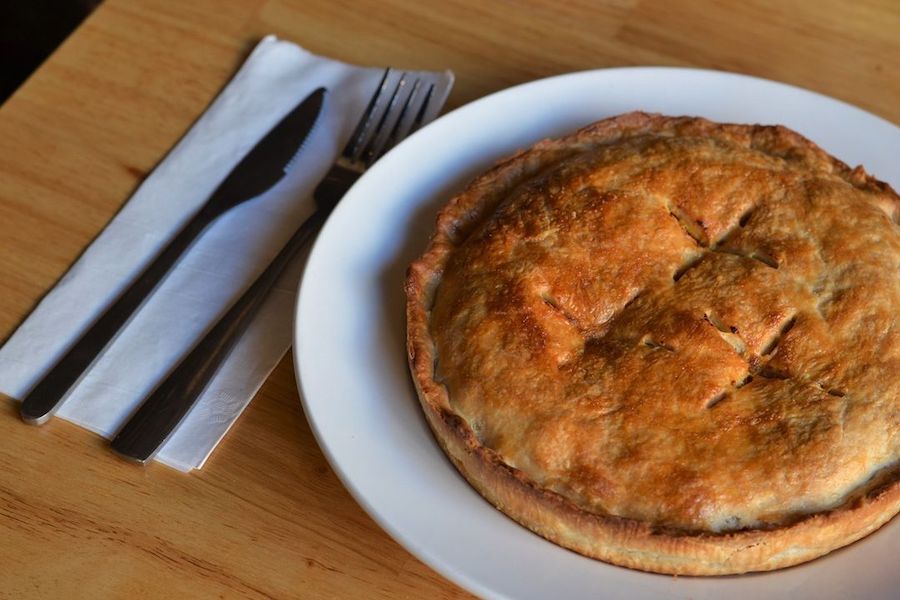
The cozy Logan Square cafe is celebrating the holiday with Savory Pies and Boxed Chai to-go for their takeout and drink kits Chicago special! The Boxed Chai are available in three sizes starting at $32 for 12 8 oz. cups of chai. The nine-inch Masala Chicken Pie or Kale and Potato Pie are available for $20 each. Or enjoy the best of both worlds with a combo savory pie and boxed chai starting at $50. Order at least 48 hours in advance for pick-up by calling 773-360-7541.

Drink Kits Chicago
Photo Credit: Houndstooth Saloon

3369 N. Clark St. Chicago, IL 60657

Advertisement

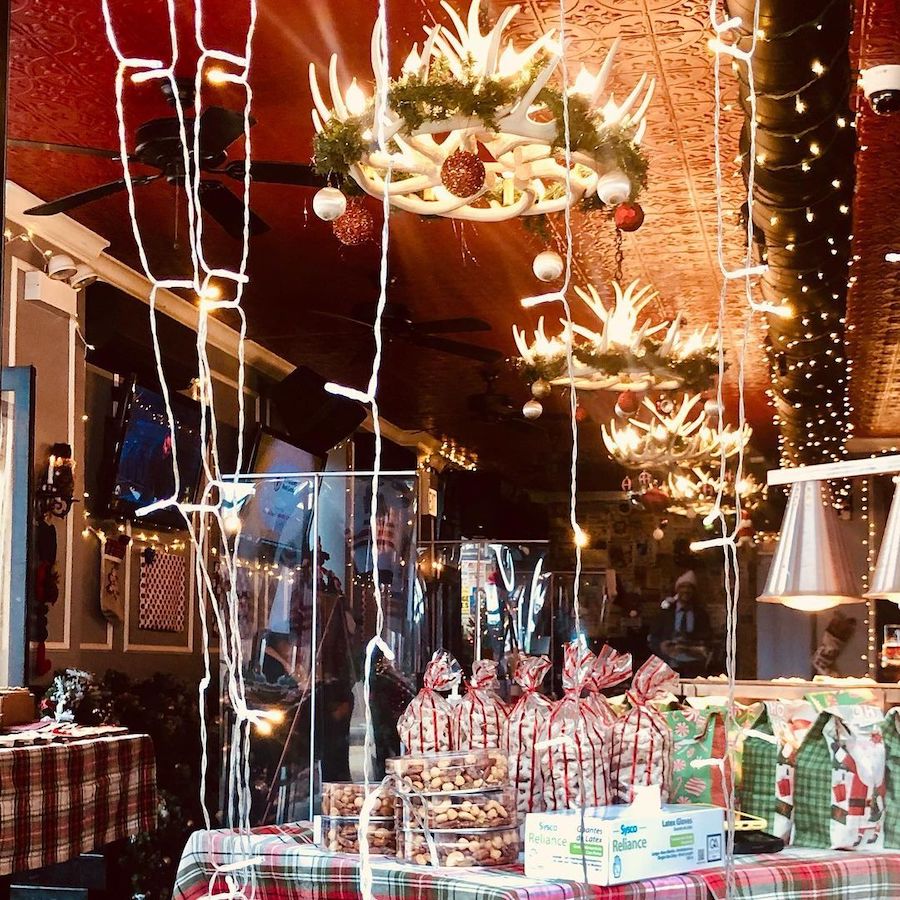
Pop over to the Houndstooth Saloon for their first annual holiday market. Offered seven days a week until Christmas, the new market aims to support small, local businesses and will feature special Christmas gifts from local bakers, artists, and vendors. Grab a hot spiced beverage with your sweetie and pretend like you’re in a Hallmark movie because Houndstooth has one of the most underrated drink kits in Chicago. 

Drink Kits Chicago
Photo Credit: Avli Tavern

1335 W. Wrightwood Ave., Chicago, IL 60614

Advertisement

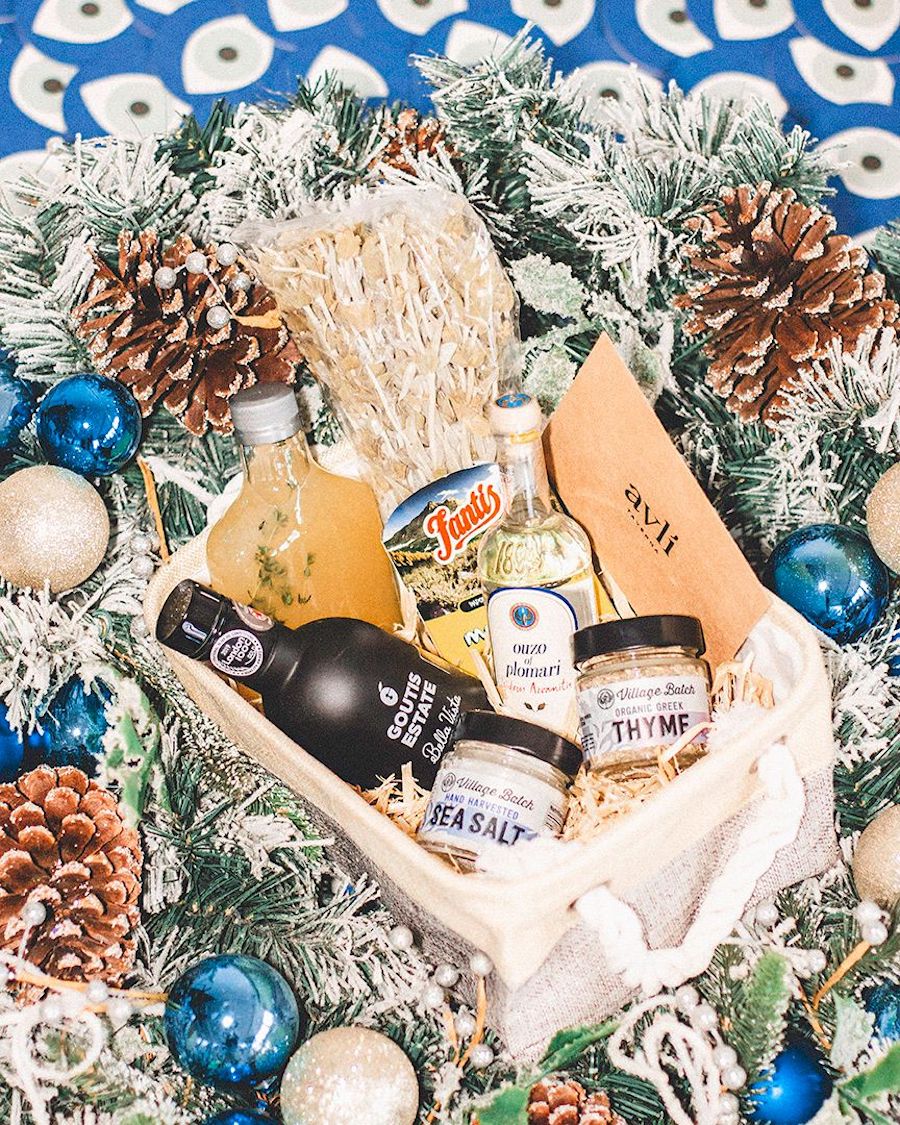
This Lincoln Park favorite is offering up mouthwatering meal boxes in December, available for pick-up or delivery. Options include a choice of turkey breast ($34) or oven-roasted lamb shoulder ($36) with inventive Greek twists on classic sides like a quinoa, lentil and chickpea salad with raspberry dressing or whipped potatoes with feta. Don’t forget to add on trays of Spanakopita, homemade spinach, leek, feta, and wild green pie ($35); Pastichio, traditional Greek casserole of pasta, ground beef, and béchamel ($45); and Baklava (48 pieces/$50). Order via Tock

Photo Credit: Hopsmith

15 W. Division St., Chicago, IL

Advertisement

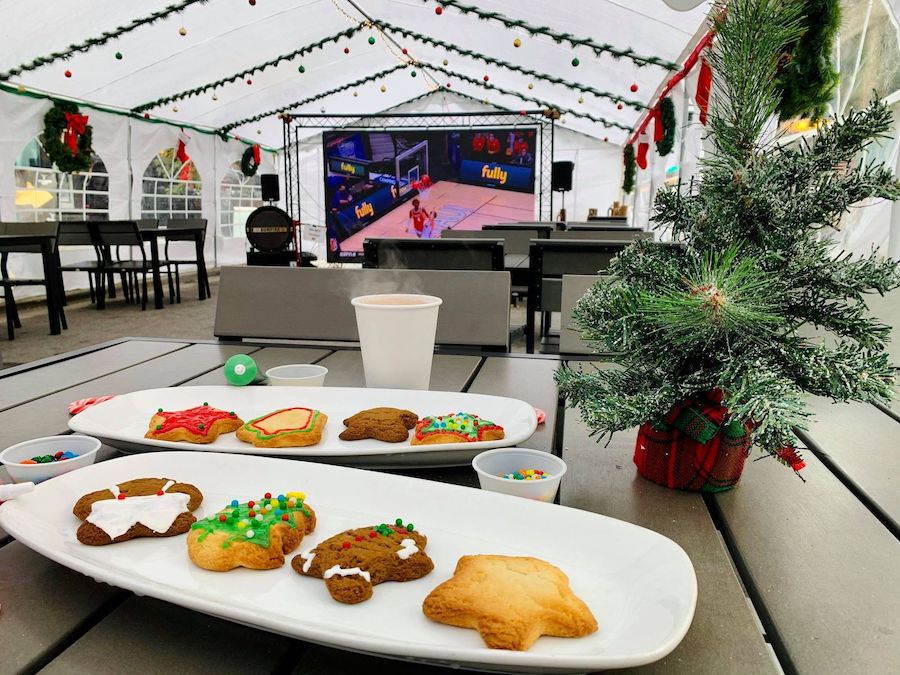
Located in the Gold Coast, this popular tavern has partnered with its neighboring bars (The Lodge, Butch McGuire’s, and She-nannigan’s) to turn Division Street into a winter wonderland! With a festive and heated outdoor tent, a 31-foot Christmas tree, twinkly lights draped above the street, and flying Santa, the vibrant late-night strip is now a holiday spectacular you can’t miss for unbelievable food and drink kits.

Photo Credit: La Josie

740 W. Randolph St., Chicago, IL 60661

Advertisement

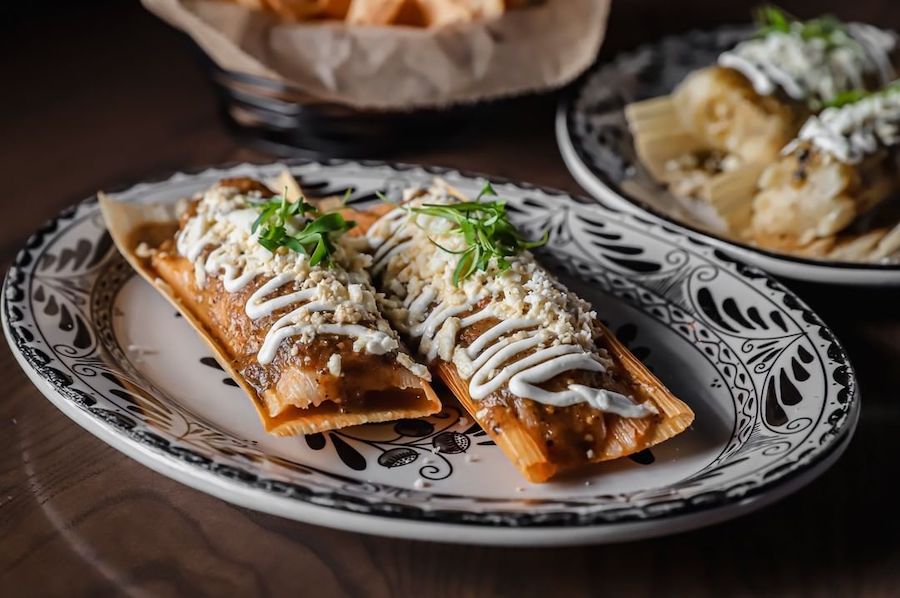
Pepe Barajas opened his West Loop 2020 Michelin BIB Gourmand winning restaurant, to honor his late aunt Josefina “Josie” Villegas, a hard-working street taco entrepreneur. Many dishes at La Josie are influenced by Pepe’s time cooking with Josie including authentic Mexican tamales which they made together every year. Take home Pollo al Horno, Parrillada, Dos Huaraches V, or a dozen Tamales for a true family feast (serves 2-4). Order via Toast

Various locations

Kevin McCallister had Kraft mac & cheese on Christmas Eve. If you’re craving something similar (but WAY better) check out The Pasta Bowl. A dinner for two includes two pastas, a salad, an appetizer, and dessert for just $50. Add any bottle of wine for another $25 and you’re set! Order for takeout or delivery here.

Drink Kits Chicago Featured Image Credit: Avli Taverna

Read More

6 Restaurants & Bars Offering Christmas Takeout & Drink Kits in Chicagoon December 17, 2020 at 3:33 pm Read More »

15-year-old charged in murder of retired firefighter in Far South Side carjackingon December 17, 2020 at 4:25 pm

A 15-year-old boy faces a murder charge in connection to the fatal shooting of a retired Chicago firefighter during a Far South Side carjacking.

The teen, who is unnamed because he’s charged as a juvenile, is expected in court later Thursday in the murder of 65-year-old Dwain Williams, the Cook County state’s attorney’s office said.

The boy was arrested Wednesday afternoon in south suburban Chicago Heights by the Great Lakes Regional Task Force, Chicago police said. The child also faces a count of attempted robbery.

Chicago police show surveillance video of the murder of retired Chicago Firefighter Dwain Williams in the Morgan Park neighborhood.
Tyler LaRiviere/Sun-Times

Williams was confronted by four carjackers Dec. 3 after leaving the popcorn shop Let’s Get Poppin’, 11758 S. Western Ave., in the Morgan Park neighborhood, authorities have said.

Williams exchanged gunfire with the carjackers and was shot in his abdomen. He died later at Christ Medical Center in Oak Lawn.

In the video of the shooting, which unfolded in a few seconds, Williams is seen walking toward his Jeep with a bag in his hand when a car pulls up and three suspects jump out.

Williams retreats behind his car as one of the suspects rushes toward him with a gun in his hand. Williams pulls out his own gun and is seen firing at the suspect, who falls to the ground before jumping back into the car and fleeing.

Investigators believe the suspects followed Williams to the popcorn shop after seeing his car earlier in the day, police said.

Williams was a Chicago Fire Department lieutenant who retired about two years ago after joining in 1992, officials said. He was about to return to work as a civilian employee at the Office of Emergency Management and Communications.

A group of activists and organizations, including the anti-violence group “I’m Telling, Don’t Shoot,” have put up a combined reward of $34,000 for information leading to any arrests in his killing. It wasn’t immediately clear if someone claimed the reward.

Chicago firefighters salute as the procession carrying the remains of retired firefighter Dwain Williams arrives at the Cook County Medical Examiners Office, after Williams was shot and killed in the 2400 block of West 118th St. in the Morgan Park Neighborhood, Thursday, Dec. 3, 2020.
Chicago firefighters salute as the procession carrying the remains of retired firefighter Dwain Williams arrives at the Cook County medical examiner’s office.
Tyler LaRiviere/Sun-Times

Read More

15-year-old charged in murder of retired firefighter in Far South Side carjackingon December 17, 2020 at 4:25 pm Read More »

Commentary: Indian sports nicknames show lack of respect for Native cultureon December 17, 2020 at 4:25 pm

Colorful names for teams are nearly as old as team sports themselves.

But as a growing movement aims to right the wrongs of the past, including notable successes with pro sports franchises in Cleveland and Washington recently, it reminds us history hasn’t always been kind — let alone fair — to marginalized groups.

“I don’t know where the momentum is going to go,” said Joshua Hunt, vice chair of The Committee of 500 Years of Dignity & Resistance, whose Cleveland-based organization joined a coalition of Native American activists who convinced the city’s baseball team to drop “Indians” — first adopted in 1915 — from its name.

“But we’re hoping,” Hunt added, “this will be a blueprint for professional teams like the (Atlanta) Braves, Kansas City Chiefs, Blackhawks and all the thousands of public schools that this is what happens when you take the time to actually listen to indigenous people.”

Danny Wirtz on Blackhawks’ name: “I respect the decision the Cleveland Indians made,” Blackhawks CEO Danny Wirtz said. “But we continue to deepen our commitment to our brand … and to make sure we provide that reverence and respect.”

By now, because of pressure from activists, the public or their corporate sponsors, most sports teams have shed overtly racist names of the past. More than a dozen major college or pro sports teams made the move over the last 50 years.

But a few have clung to Native American names and imagery, arguing they reflect honor and respect. History says otherwise.

Chariot-racing teams in ancient Rome first adopted colors and symbols — and later names — largely as a practical matter, to distinguish themselves from rivals during the actual events. Over time, though, those identifiers took on added significance. Like nations and religions, they became a marker to strengthen the bonds among followers and separate friends from foes.

As sports gained a foothold in America’s popular culture in the late 1800s, fans needed a way to differentiate the many teams playing the same sports in the same city. Sometimes, it was as uncomplicated as adding the name of the neighborhood or point of pride for its residents, i.e. the Brooklyn Dodgers around 1910, because pedestrians there were constantly forced to detour around streetcar lines.

Other times, the names were chosen to highlight the ethnicity of the players that made up the team, or to appeal to the language and culture of their fan base, like the Montreal Canadiens in 1909, because their francophone followers relished every chance to go up against English-speaking teams like the rival Wanderers.

Still other times, names were derived from chants that originated with fans or suggested by reporters at local newspapers. The New York Highlanders baseball team officially changed its name after moving into the new Polo Grounds in 1913, but the city’s dailies had been calling them the “Yankees” for nearly a decade by then, simply because it was an easier fit in headlines.

But as sports became increasingly popular and profitable at the turn of 20th century, owners sought to fire up the imaginations of their fans. It hardly helped marginalized groups like Blacks and Native Americans that those owners tended to be rich white men, who found their beliefs in cultural superiority reflected in the accomplishments being notched around the world by America’s growing might.

Many of those owners named their teams Indians, Braves and Redskins at the very moment the United States government was in the final throes of a largely one-sided battle to take lands from various Indian and First Nations tribes and isolate its people on reservations — attempting to effectively destroy their language and culture.

“It was a learning process for me,” Cleveland team owner Charles Dolan said in an interview with The Associated Press, “and I think when fair-minded, open-minded people really look at it, think about it and maybe even spend some time studying it, I like to think they would come to the same conclusion: It’s a name that had its time, but this is not the time now, and certainly going forward, the name is no longer acceptable in our world.”

But activists argue that there was never an appropriate time, and certainly not when they began to show up. At the specialized boarding schools where Native Americans were sent for “reeducation,” the unofficial motto was “Kill the Indian and save the man.” A number of studies since have established the psychological damage those policies and the continuing negative portrayals in popular culture have inflicted on Native Americans, among whom suicide is a leading cause of death.

“Shortly after the so-called ‘Indian Wars’ of the 1880s, that’s when we see sports teams start to use the names on a wide basis,” said Hunt. “It’s almost as if they did it to say, ‘After we defeated them, now we’re going to parade them around.’

“It’s sort of like a when a hunter kills a bear or a deer and puts their heads on a wall. ‘Look, we killed and conquered these people.’ And,” he said, “at the same time these mascots start showing up, the federal government has made it illegal for indigenous people to speak their own languages or honor their own customs.”

An organized pushback against offensive names and imagery didn’t begin in earnest until the 1960s, as groups like the American Indian Movement became part of a broader push for civil rights across the country. Coincidentally, the federal government’s relocation program had by then moved enough Native Americans into large cities, where many became fans of local sports teams and began to mount efforts to change those names.

Many of those activists credit the 1972 decision by Stanford University, a prestigious school with sports programs to match, to drop “Indians” from its name as an important first step. In 2005, the NCAA finally adopted a policy banning “hostile and abusive” names and mascots, excepting schools that had reached an agreement with particular tribes to use their name, such as the Florida State Seminoles.

“The hopeful thing is we see that when a respected institution merely announces it’s going to change, like we saw in Cleveland, that often leads to a flood of nonprofessional teams changing,” Hunt said.

“There’s no silver bullet. It can’t just be a top-down or bottom-up focus. … I think we’ve still got something like 400 teams with those names here in Ohio. We need local grassroots campaigns and high-profile groups and we need to advocate for change and support one another.”

“But,” he said, “what just happened here in Cleveland is already putting another shot in the arm.”

Read More

Commentary: Indian sports nicknames show lack of respect for Native cultureon December 17, 2020 at 4:25 pm Read More »

Classic high school basketball game rewatch: Proviso East’s Three Amigos beat Peoria Manual (1991)on December 17, 2020 at 4:41 pm

Proviso East’s Three Amigos are an immortal part of the state’s high school basketball lore. Donnie Boyce, Michael Finley and Sherell Ford had the Three Amigos nickname in high school. They won a state title together in 1991 and then all three went on to be selected in the NBA Draft four years later.

Finley was picked 21st and went on to become the best professional player. Ford, the 1991 Sun-Times Player of the Year, was selected 26th and Boyce, the most highly-regarded early in his career and the group’s leader, was selected 42nd.

Boyce is the current head coach at Proviso East.

The three stars were matched up against Peoria Manual for the title in 1991. Remember the Rams and Howard Nathan? 1991 was the year of Hoop Dreams. Nathan and Manual play the villain in that landmark documentary. They knock off Arthur Agee’s underdog Marshall squad in the Class AA state semifinals.

That’s pretty much where the documentary left high school basketball. But the state tournament went on.

Nathan was compared to Isiah Thomas during the pregame show. At this point Manual had only won a single state title, back in 1930. Proviso East was a more established power, with championship game victories in 1969 and 1974.

The state was loaded with talent that season. Gordon Tech star Tom Kleinschmidt posted absolutely insane statistics, as did future NBA player Juwan Howard at Vocational. I read through the Sun-Times’ All-State team before the game and tweeted this:

Those Kleinschmidt numbers are incredible. A high school game is only 32 minutes long and he was accounting for 40 points pretty much on his own, on average.

But I have to admit that after watching the 1991 title game that Sherell Ford was very, very impressivd. The dunks, the drives to the basket coupled with a smooth little mid-range shooting touch. He had three or four big blocks and even some sweet passes out of the post. He played like a more polished Julian Wright or Darius Miles.

It’s easy to see why he was Sun-Times Player of the Year. That’s what happens when you tweet before watching.

Howard Nathan did not have a good title game overall but he came alive at the very end to turn what should have been a double-digit win for Proviso East into a closer final score.

“[Nathan] went to sleep for three and a half quarters. He’s wide awake now,” McReynolds said on the broadcast.

McReynolds and Dan Roan speculated that Nathan may have been tired. Peoria Manual played the second semifinal and remember back then both the semis and title game were played on the same day. Nathan played the entire win against Marshall, despite it being a 68-55 win for the Rams.

Finley’s size and athleticism on defense also clearly impacted Nathan. It’s not often a future NBA All-Star guards you in a high school game.

A few other tidbits:

-The win made Proviso East the first Class AA title winner from the suburbs since Maine South in 1979. I wasn’t aware the suburbs had that long of a big school title drought.

-Ford’s parents were in a car serious car accident on their drive from Louisiana to Champaign to see the state finals. Ford’s dad is interviewed on crutches early in the game.

-The Three Amigos were so unselfish. That’s probably the thing that impressed me most about the team.

-Why didn’t Jerry Hester play more for Manual? He’s just a sophomore in this game but it is so clear what he’s about to become

-Jerome Robinson could play. He’s also a sophomore in this game. He was so interesting that I did a little research on him. He transferred to Proviso East from St. Joseph and went on to have a spectacular high school career, even finishing third in Mr. Basketball voting. It’s strange I’d never heard of him before.

The starting lineups:

Peoria Manual
F Tony Freeman (22), 5-11 Sr.
F Sam Davis (50), 6-1 Sr.
C Clint Ford (54), 6-3 Jr.
G Mike Grayer (20), 5-11 Sr.
G Howard Nathan (34), 5-10 Sr.

Proviso East
F Donnie Boyce (20), 6-5 Sr.
F Ray Gay (34), 6-2 So.
C Sherell Ford (44), 6-7 Sr.
G Michael Finley (24), 6-6 Sr.
G Thaddeus Smith (10), 5-11 Sr.

Watch it all and read Dan Bickley’s story below:

Boyce has fine finale

BY DAN BICKLEY

CHAMPAIGN–When this group first started filling it up on the playgrounds of Maywood, Donnie Boyce was the man.

And eight years later, that’s exactly how Boyce ended his bittersweet career at Proviso East. The 6-5 senior scored all of his 15 points in the second half and added 11 rebounds, five assists, three steals and two blocks as Proviso toppled Peoria Manual 68-61 for the Class AA title.

“Donnie is our leader,” said teammate Mike Finley. “He always has been.”

However, after the first 16 minutes of the championship game against Manual, the most important game he ever had been a part of, Boyce was merely a frustrated basketball player . . . and a scoreless one at that.

“I had my man pinned, but the guards just weren’t getting me the ball,” Boyce said. “We yelled at each other. We weren’t making the right decisions, we were taking the shots too early. We talked about all of that – then we got back in focus.”

“This was it,” Boyce said. “There wasn’t anything left after this game, it was the last of my high school career. I wasn’t going to lose this game.”

“Donnie stepped it up,” Manual guard Howard Nathan said. “Donnie, Sherell (Ford), Mike (Finley) . . . they’re all great players. But Donnie took over.”

The seeds for this state title were sewn eight years ago when Boyce, Finley and Ford met in fourth grade.

Boyce was the star – and he remained that way until he broke his ankle as a junior and missed most of the season. In his absence, Ford and Finley emerged.

So from the first day of practice this season, Boyce was content to fill his role as team leader, totally abandon his perimeter game and relinquish the spotlight that was once his alone.

But after going an entire weekend without a field goal, critics said Boyce was not the same player he had been.

“Without question, Donnie has been the most maligned player on this team,” Proviso coach Bill Hitt said.

“Donnie does all the little things,” Finley said. “He was the spark tonight. He’s like the garbage man, but a lot more. His leadership has been incredible.”

And never more in demand than when Proviso trailed 28-23 at halftime against Manual.

Proviso had been relatively unimpressive in its victories over Carbondale and Libertyville and Boyce had scored only 17 points in the two games, including a four-point, two-rebound performance against Carbondale.

But that all changed in the final 16 minutes of his career, as he hit 6-of-7 shots and changed the entire complexion of the game.

“Donnie Boyce was a monster on the boards in the second half,” Hitt said. “Anyone who has followed us for any length of time knows that is no fluke. Donnie’s knee was sore at halftime . . . playing two games in one day is fatiguing. But he showed a lot of character . . . we all did.”

“I wasn’t as impressive as everyone thought, the whole team wasn’t,” Boyce said. “But we won . . . and that’s all that matters.

Read More

Classic high school basketball game rewatch: Proviso East’s Three Amigos beat Peoria Manual (1991)on December 17, 2020 at 4:41 pm Read More »

2021: Which wolf will you feed?on December 17, 2020 at 4:43 pm

The Rogue Road

2021: Which wolf will you feed?

Read More

2021: Which wolf will you feed?on December 17, 2020 at 4:43 pm Read More »

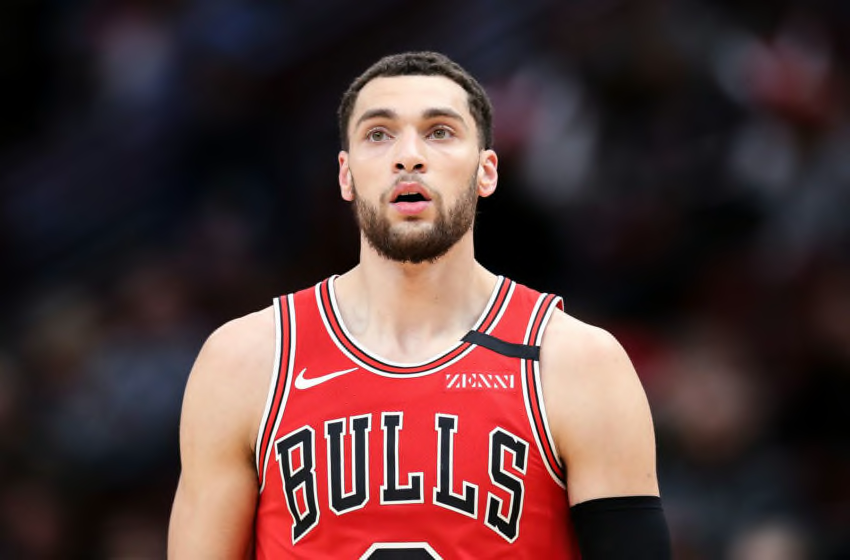
Chicago Bulls: Coby White, Zach LaVine look lethal in preseason winon December 17, 2020 at 2:53 pm

Read More

Chicago Bulls: Coby White, Zach LaVine look lethal in preseason winon December 17, 2020 at 2:53 pm Read More »

Are the Chicago Bears missing out on an opportunity to fix the GM?on December 17, 2020 at 3:30 pm

Read More

Are the Chicago Bears missing out on an opportunity to fix the GM?on December 17, 2020 at 3:30 pm Read More »

The Trump administration legacy is one of deathon December 17, 2020 at 3:49 pm

I’ve Got The Hippy Shakes

The Trump administration legacy is one of death

Read More

The Trump administration legacy is one of deathon December 17, 2020 at 3:49 pm Read More »

No easy answers for fire-weary Western rancherson December 17, 2020 at 2:41 pm

I got a call recently from one of my oldest friends, a retired rancher in Montana. As iconoclasts go, Ansel set the curve. We became friends during graduate school at the University of Virginia. One time he was delivering a seminar paper on William Faulkner’s narrative techniques when he paused, dug in his thick, black hair and yanked.

“Tick,” he announced calmly, before tossing it in a wastebasket and finishing his talk. Later, he explained that he’d been squirrel hunting, not an everyday pastime for a Ph.D. candidate.

So it wasn’t a big surprise when he left academia to raise sheep in remote Highland County, Virginia. Over time, he kept moving farther from civilization until he ended up 17 miles from a town of 300 overlooking the Crazy Mountains in Montana — by then a world-class breeder of Suffolk sheep.

Most summers, I would load up a couple of basset hounds — a shared passion — and make the 24-hour drive to visit for 10 days of trout fishing, fence riding, baseball watching and late-night bull sessions. One year, I arrived while he was doing business on the phone. Without pausing, he slid a bottle of Irish whiskey down the counter and kept talking. His teenaged daughter was aghast. I explained that her father dislikes Irish whiskey; the bottle was a gift. My wife and his ex-wife remain the closest of friends.

Ansel alerted me to an extraordinary essay in Range, a quarterly with cowboys and grizzly bears on the cover. “The cowboy spirit on America’s outback” is how the publication bills itself. It features articles sympathetic to the Bundy family’s ongoing war with federal “tyranny.” The editors think there are too damn many grizzlies killing livestock in Montana.

And a remarkable essay it is. Ansel was hoping I knew a national magazine editor who could reprint California rancher Dave Daley’s saga of the Bear Fire, the catastrophic blaze that destroyed hundreds of square miles of forest habitat, killed 80% of the author’s 400 cows in the worst agony imaginable, and left him shattered, despondent and terribly angry.

Ansel said it squared with everything he knew.

Alas, I know no such editors, but as a former small-scale cattleman, I do have a limited understanding of Daley’s profound grief. Like any domestic animal, cows can get next to your heart: their unique, steadfast personalities; their strong emotional bonds.

A well-meaning friend asked Daley’s daughter if the family home had burned. No, she answered, but a house can be rebuilt. A way of life cannot. At least not during our lifetimes.

The author wakes up nights, crying.

“I cry for the forest, the trees and streams,” he writes, “and the horrible deaths suffered by the wildlife and our cattle. The suffering was unimaginable. When you find groups of cows and their baby calves tumbled in a ravine trying to escape, burned almost beyond recognition, you try not to retch. You only pray death was swift.”

Certainly, the author knows whereof he speaks. His family has been grazing cattle in what’s now the Plumas National Forest since the 1850s: taking them into the mountains after spring snowmelt and gathering them every October. He has a Ph.D. in animal science and is a past president of the California Cattlemen’s Association.

Much of Daley’s essay recounts the agonizing labor of family and friends — experienced local hands all — working with chainsaws and four-wheelers to find, and all too often euthanize, cows with agonizing injuries like burnt hooves and incinerated udders. The photos are harrowing.

And what the author believes is that these catastrophes don’t have to happen. Forest fires are inevitable and can be beneficial in clearing undergrowth that serves as fuel and sucks the moisture from the soil. But virtually all of California’s most destructive fires, he points out, have started on public land, where restrictions mean flammable fuel builds up.

“For those of you on the right who want to blame the left and California,” he points out, “these are national forestlands that are ‘managed’ by the feds. They have failed miserably over the past 50 years. Smokey the Bear was the cruelest joke ever played on the western landscape, a decades-long campaign to prevent forest fires has resulted in megafires of a scope we’ve never seen. Thanks, Smokey.”

Daley sees tree-huggers sharing the blame: “And, for those of you on the left who want to blame it all on climate change, the regulations at the state and federal level have crippled — no, stopped — any progress towards changing the unmitigated disasters facing our landscapes.”

Alas, it’s the “tragedy of the commons” writ large. Everybody’s got a claim on the national forest, but nobody’s responsible. Insofar as Daley offers a solution, it would be a return to local control, and to controlled burns like Native Americans used to manage ecosystems for 13,000 years before white men arrived.

But that looks politically impossible. For example, who qualifies as “local”? Hence, perhaps, Daley’s helpless anger and his elegiac tone.

Read More

No easy answers for fire-weary Western rancherson December 17, 2020 at 2:41 pm Read More »

I resurrect my brother after 75 years gone and oddly, I see him more clearly than ever beforeon December 17, 2020 at 2:00 pm

Cheating Death

I resurrect my brother after 75 years gone and oddly, I see him more clearly than ever before

Read More

I resurrect my brother after 75 years gone and oddly, I see him more clearly than ever beforeon December 17, 2020 at 2:00 pm Read More »