These days, it might be hard to pinpoint one single thing that’s stressing you out. If you’re lucky enough to have found someone who is ready to ride out the tough times with you, why not tackle that stress together? If you’ve both been feeling a little tense and you want to relax together, we have compiled a list of the best spas, studios, and wellness centers to book a romantic couples massage in Chicago.
Founded by Reiki master and clinical massage therapist Ruby Greenberg, Massage Evolved was named “one of Chicago’s top destinations for couple massage” in 2017 by Chicago Magazine. Options include Swedish, deep tissue, or Himalayan salt stone massage.
This Asian wellness center on the north side offers therapeutic and romantic couples massages for 60 minutes and 90 minutes, and even includes dry and steam saunas for the relaxed, happy couple. Their name, “Be Well,” is a their “wish for you,” so make an appointment and be well!
Located near River West, Allyu Spa— whose name is “the Quecha word for community”— offers a variety of services from which couples may choose, including couple massage therapy, hot stone massage, and an exfoliating sugar body polish with massage; additionally, Allyu has couples spa packages available.
Licensed massage therapist Crystal Dorado started Verde in 2011, and the studio has been operating in Pilsen ever since. Though there are no specific couples massage packages at here, the studio offers a number of different types of massages, and interested couples can contact Verde directly about booking a couples service.
This spa— with locations in Lakeview and South Loop— offers the best specialty massages for couples, including Swedish, hot stone, and Himalayan salt massages. Check out additional upgrades like the peppermint scalp massage or aromatherapy.
But the comedy games continue online; plus Raven announces a new-play development commission.
When venerable comedy institutions in Chicago get shout-outs, ComedySportz tends not to top the list, not with Second City and the now-gone iO hogging so many of the famous alums. As Reader critic Jack Helbig wrote back in 2003, “Improv purists tend to put ComedySportz at the bottom of the food chain”—probably because of their crowd-pleasing emphasis on fast-paced competitive games, à la Whose Line Is It Anyway.…Read More
Todd Blanken is the second person to plead guilty since then-President Donald Trump pardoned Casey Urlacher, the Mettawa mayor also charged in the case who is now running for reelection.
For the second time since then-President Donald Trump pardoned Mettawa Mayor Casey Urlacher, one of Urlacher’s co-defendants in a federal sports gambling case has pleaded guilty to a gambling conspiracy and faces time behind bars.
Meanwhile, Lake County officials say Urlacher has filed to run as a write-in candidate for another term as mayor of the northern suburb. He is the brother of ChicagoBears great Brian Urlacher.
Todd Blanken, 44, pleaded guilty during a brief electronic hearing Friday before U.S. District Judge Virginia Kendall, who told him he would likely face six months to a year behind bars. Blanken’s sentencing has been set for May 13.
A 28-page indictment filed in February 2020 accused Blanken of working for Vincent “Uncle Mick” DelGiudice as an agent in the sports bookmaking business DelGiudice ran from 2016 to 2019 in Chicago, Lemont, Frankfort, Orland Park and Woodridge. DelGiudice pleaded guilty in the case Feb. 2.
The indictment alleged that Blanken helped DelGiudice collect and pay cash to gamblers. Blanken’s plea agreement says the two shared winnings and losses “on a 10 to 50% basis.” On Dec. 11, 2018, DelGiudice told Blanken he needed to collect a “dime” — or $1,000 — from a gambler known as “Rock,” according to the plea agreement. A few days later, it said DelGiudice told Blanken he owed $1,880, and Blanken told DelGiudice he would be collecting from “another gambler on Wells Street.”
On Jan. 6, 2019, Blanken complained to DelGiudice about losing money on “parlays” and “teasers,” according to the plea agreement. It said DelGiudice told Blanken he had more than 1,000 gamblers and complained that he had only made $100,000 from them. They also discussed a gambler who lost $22,000 that week, according to the document.
Meanwhile, Assistant U.S. Attorney Terry Kinney this month linked the DelGiudice case to the prosecution of Gregory Paloian, a man with purported mob ties who pleaded guilty last month to running an illegal sports gambling operation. Kinney has said the evidence in both cases include several secret recordings.
Todd Blanken is the second person to plead guilty since then-President Donald Trump pardoned Casey Urlacher, the Mettawa mayor also charged in the case who is now running for reelection.
For the second time since then-President Donald Trump pardoned Mettawa Mayor Casey Urlacher, one of Urlacher’s co-defendants in a federal sports gambling case has pleaded guilty to a gambling conspiracy and faces time behind bars.
Meanwhile, Lake County officials say Urlacher has filed to run as a write-in candidate for another term as mayor of the northern suburb. He is the brother of ChicagoBears great Brian Urlacher.
Todd Blanken, 44, pleaded guilty during a brief electronic hearing Friday before U.S. District Judge Virginia Kendall, who told him he would likely face six months to a year behind bars. Blanken’s sentencing has been set for May 13.
A 28-page indictment filed in February 2020 accused Blanken of working for Vincent “Uncle Mick” DelGiudice as an agent in the sports bookmaking business DelGiudice ran from 2016 to 2019 in Chicago, Lemont, Frankfort, Orland Park and Woodridge. DelGiudice pleaded guilty in the case Feb. 2.
The indictment alleged that Blanken helped DelGiudice collect and pay cash to gamblers. It said DelGiudice told Blanken by phone on Jan. 6, 2019, that he had 1,006 “customers” and had won $100,000. Five days later,it said Blanken sent multiple text messages to a gambler and set up a meeting to collect a $1,500 payment.
Meanwhile, Assistant U.S. Attorney Terry Kinney this month linked the DelGiudice case to the prosecution of Gregory Paloian, a man with purported mob ties who pleaded guilty last month to running an illegal sports gambling operation. Kinney has said the evidence in both cases include several secret recordings.
Boudoir photographer Samantha Eppel’s shoot this past October was an intimate affair: just her client, her client’s friend, and a dozen North Shore triathletes.…Read More
“He was without a doubt one of the best coaches ever in Chicago,” said former Tilden player Tim Hutchison.
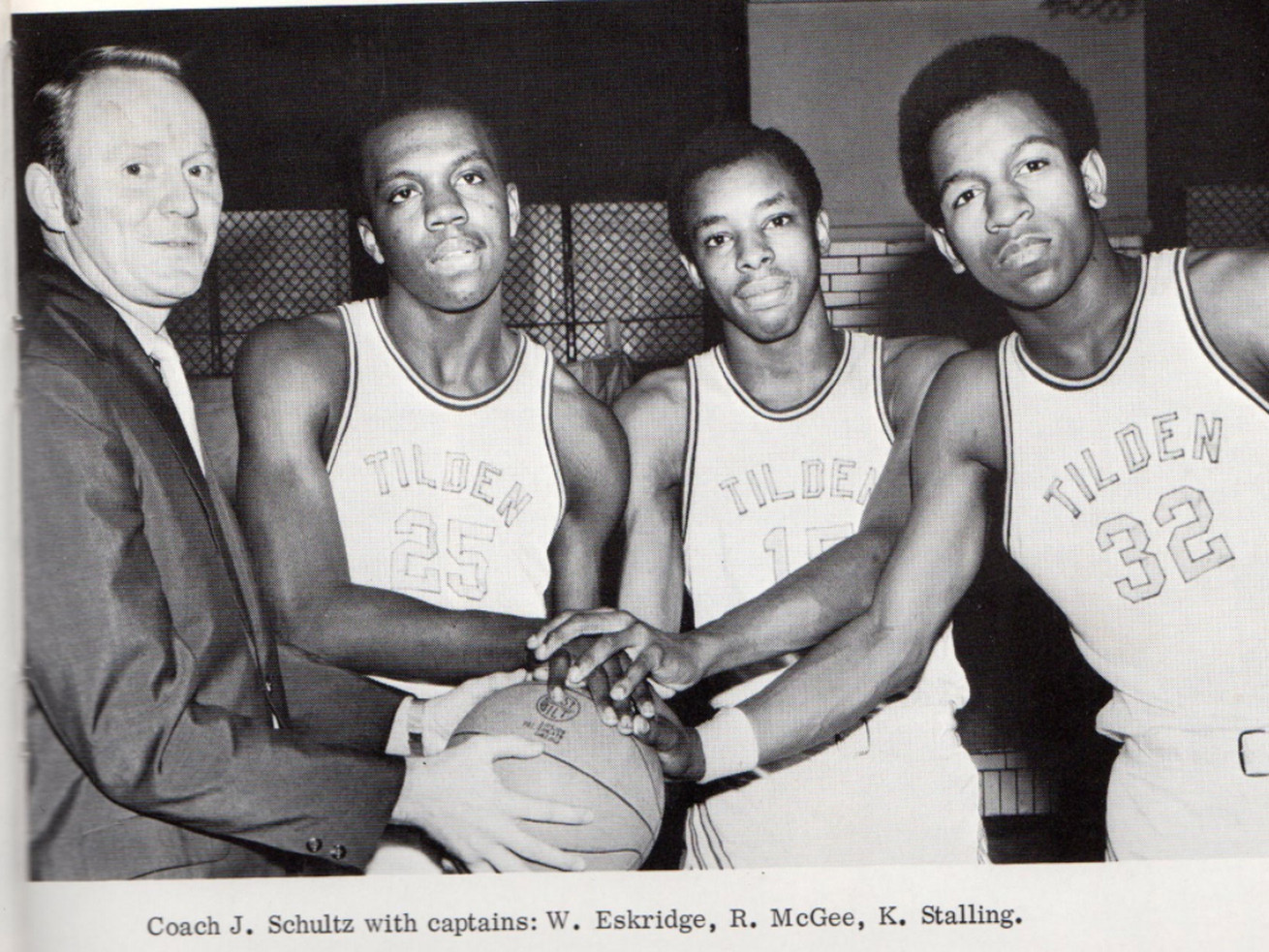
Longtime Tilden basketball coach John Schultz, a Hall of Fame coach who won more than 320 games during his two decades at the South Side high school, died Wednesday. He was 87.
Mr. Schultz was surrounded by family at his home when he succumbed to kidney failure one day after entering hospice, his son, Patrick Schultz, said.
Inducted into the Chicago Public League Hall of Fame and Illinois Basketball Coaches Association (IBCA) Hall of Fame, Mr. Schultz is one of the winningest boys basketball coaches in Tilden history. He won five conference titles and led the Blue Devils to 15 winning seasons over his two stints spanning 26 years at the Canaryville school.
“He was without a doubt one of the best coaches ever in Chicago,” said former Tilden player Tim Hutchison.
Raymond Adams, another former Tilden star, agreed with Hutchison, saying: “Of all great coaches they got Chicago, I would put him up there… Schultz should be at the top tier for coaches of that period of time.”
Mr. Schultz, a founding member of the IBCA, is credited with putting Tilden basketball back on the map. After finishing 7-14 in his first season (1966-67), he coached them to a Public League city title in the second-tier blue division in 1970.
Provided
Arguably his best team took the court the following season. Led by Adams, Tilden went 21-4 en route to the 1971 Public League championship game, where they ultimately lost to Harlan.
After taking a three-year break from Tilden to coach Northeastern Illinois University, Mr. Schultz returned before the 1982-83 season. He had several successful teams in the 80s, including the 1984-85 season when the Blue Devils pulled off one of the biggest upsets in Illinois high school basketball history, beating No. 1 King in the first round of the city playoffs.
Despite Mr. Schultz’ accomplishments, Tilden was often overshadowed by other basketball powerhouses in the city, including Hirsch, Morgan Park and Phillips in the 70s and then Simeon and King in the 80s. But former Sun-Times high school editor Taylor Bell said Mr. Schultz never minded being overlooked.
“He just thrived on the competition, the opportunity for his kids to play these other good programs,” Bell recalled. “He enjoyed the opportunity to compete against them and … he was very successful even though he never won a state title, never won a [red division] city title.”
Provided
Mr. Schultz was a father figure to some of his players, including Hutchinson, who graduated from Tilden in 1969.
“He was huge in my life,” said Hutchinson, whose father died when he was young. “When I went to high school, I was like, ‘Do I really want to be doing this?’ And he got hold of me and grabbed me by the ear and said, ‘Quit feeling sorry for yourself, you got to go to class, want to be a basketball player [and so on.]’ And that’s just the kind of person he was.”
Tough love was Mr. Schultz’ specialty. Adams remembers Mr. Schultz would give a pair of boxing gloves to any of his players who were acting “too tough” at practice.
Mr. Schultz was also very caring and always trying to help people — often driving players to and from practices and games or taking them on college visits. He remained invested in his players’ lives even well after they graduated high school.
Though coaching basketball was Mr. Schultz’ passion, family always came first. When the coaches would go out for beers after the games, Mr. Schultz always invited his wife, Barbara Schultz, whom he met as a student at Chicago Teachers College, now known as Chicago State University.
“He was cute,” Barbara recalled, with a laugh. “He was tall and blonde and blue-eyed and I kind of think that was maybe my idea of an ideal guy. But he was… you know, a smart a—.”
Mr. Schultz, a devoted Catholic, started to walk Barbara to the bus stop after classes before baseball practice.
“He would walk me to the bus and then he’d say, ‘Oh let this bus go.’ And then we talk and then we’d let another bus go, and I’d say, ‘I’m going to be late for work, I have to go,’” Barbara said. “And then he asked me out on a date.”
ProvidedJohn Schultz poses with his wife at the Westin Grand Hotel in Berlin in June 2019 while on a trip tracing Mr. Schultz’ German roots.
When Mr. Schultz was drafted to the U.S. Army for the Korean War, the two penned letters to one another for 18 months while he was stationed in Germany. They got married in 1956 and had eight children.
“He’s a great father, and I only hope to be as good a father as he was,” Patrick said. “… The man is my hero.”
Mr. Schultz left Tilden in 1992 to teach and coach girls basketball at Lincoln Park High School. He retired in 1996.
Mr. Schultz and Barbara traveled the world over the last two decades, tracing their family roots throughout Europe and even stopping at his Army base in Germany.
Mr. Schultz was preceded in death by his daughter, Elizabeth Schultz. He is survived by his wife, Barbara (nee Gornick); in addition to his children, John (Nancy) Schultz, Timothy (Pamela) Schultz, Katherine (Dick Messino) Schultz, Thomas Schultz, Mary Schultz, Terrence (Jennifer) Schultz and Patrick (Lisa) Schultz, along with numerous grandchildren and great grandchildren.
Visitation will be held from 3 to 8 p.m. Wednesday at Vandenberg Funeral Home in Mokena. A memorial mass is scheduled for Thursday at 10 a.m. at St. Mary’s Catholic Church in Mokena.
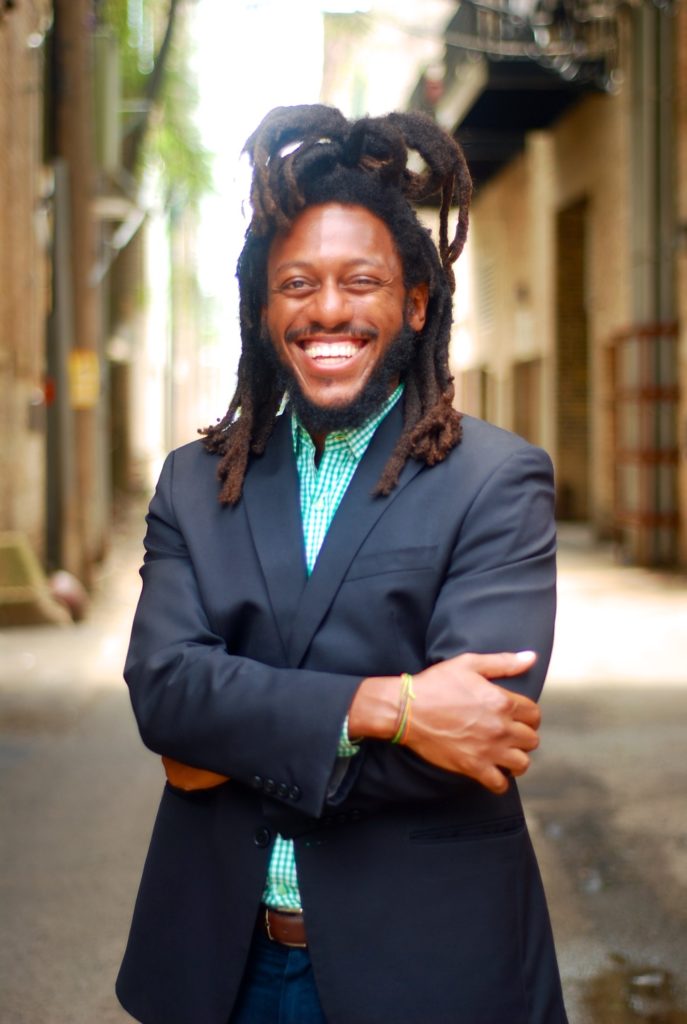
Simmons, who was appointed to the Steans vacancy last weekend, becomes Illinois’s first Black and openly gay state senator. Photograph: Provided
When state Sen. Heather Steans announced she was quitting just two weeks into a new term, her successor seemed like a foregone conclusion: State Rep. Kelly Cassidy was already a member of the committee that would name Steans’s replacement, and she had the senator’s endorsement.
But what looked like a classic Chicago-style handoff didn’t happen. Instead, North Side committeepeople chose Mike Simmons, a 37-year-old former Rahm Emanuel policy director and the founder of Blue Sky Strategies, a political consulting firm specializing in anti-racist public policy.
A lifelong North Sider who grew up in public housing in Lincoln Square, Simmons made the case at a Zoom forum last month that he has the lived experience to best represent Illinois’s most diverse Senate district. He is, he adds, one of just three Black and openly gay state senators in the United States. Chicago has the first print interview with a legislator the likes of which Springfield has never seen.
A lot of people were surprised that you got the appointment. Were you surprised, and why do you think the committeepeople chose you? I talked about the people that live in this district, I talked about the diversity in this district, I talked about the historic opportunity we have here to appoint a state senator who comes directly from those lived experiences of tens of thousands of people, and I think that message resonated in the public forum. I think it resonated with the committeepeople as well. We’re at a moment of racial reckoning in this country. The argument around diverse representation for the most diverse Senate district and region in the state would be compelling to anybody who was making that choice.
A lot of the interest in this appointment was because of the process — the fact that your predecessor resigned at the beginning of her term, and it looked like there was going to be a handoff to a handpicked insider. Do you favor any reforms to the appointment process? I am looking at new ways to make the appointment process more open and accessible. Some things can be required: that there be some public forum component to the appointment process. Can there be a minimum number of weeks between when the resignation occurs and when a decision is made on who the successor is going to be? Can we require that the deliberation on who the successor is be made open to the public, like we do for committee hearings and subcommittee hearings under the Open Meetings Act?
Would you like to see special elections, or do you feel the committeeperson process is such an entrenched part of Illinois’s political culture that all you can really do is reform it? In spirit, I would like to see special elections be a part of the debate. But the reputation of that proposal is that it would replicate the status quo, because you still have a short period of time to mobilize and put a campaign together and raise the money to put out a message. That would benefit people who are already insiders.
Illinois Indivisible, one of the groups that pushed for a more fair appointment process, was asking that the appointee not run in 2022. Are you planning to? I am, yes. The argument around having a person of color, an LGBTQ person to become the state senator on the merits of representation was a compelling one. It would be a disservice to people who have never had a voice representing them the way I can to just be there for two years. Half the people in this district are people of color, and I think it’s long overdue for that population to have a voice.
How did your family come to live in Lincoln Square, and how has that influenced your positions on housing? My family was the first family to move into scattered-site public housing that had just been built for the first time on the North Side of Chicago in 1981, at Foster and Lincoln. Prior to that, public housing residents were isolated in poor areas, and typically they were in high rises. The Supreme Court made a decision that said you can’t continue to segregate poor people and Black people in low-income housing. The court pushed the Chicago Housing Authority to create this pilot, so they started building these three flats around Lincoln Square, Rogers Park, Humboldt Park, Logan Square. That’s how I grew up. I was the result of good policy and programming. Growing up in Lincoln Square allowed me to have access to a grocery store. River Park was right down the street. I went to Budlong Elementary School, and I was assaulted by a security guard for being gay. That’s what put me on a path to going to Catholic school. I went to high school at St. Ignatius.
Right now, deadline on the eviction moratorium is March 6. Do you favor extending that, and if so, how much further? My position would be to extend it indefinitely until we have brought the coronavirus under control. That would mean that a sizable majority of our most vulnerable population is vaccinated.
Is there anything else you favor to help people who are rent stressed as a result of the pandemic? We should be looking for ways to create rent abatements for families paying more than a third of their income on rent. Those are people who are not going to be able to spend money on food and groceries and medical bills, prescriptions. That would be something we could work with the Biden Administration on, to create a whole new policy initiative similar to the Earned Income Tax Credit. This could be a good candidate for a Community Development Block Grant, or Emergency Shelter Assistance. We can look to expand on some of those definitions of existing block grants.
Housing activists are campaigning to lift the state’s ban on rent control. Are you in favor of that? I represent a district where gentrification is coming, and a number of residents have been pushed out or displaced. Uptown is ground zero for it. You’re starting to see it in Edgewater and Rogers Park. I would absolutely support rent control. I think we should regulate rent in the same way they do in New York and other municipalities, to prevent excessive upward pressure on rent.
Here’s an LGBTQ issue that’s come up in other states: Do you favor allowing transgender athletes to compete in high school sports? Some people believe it introduces an unfair advantage. Absolutely. In this district, there are a number of people who are gay, lesbian, bisexual, transgender, non-binary, gender non-conforming. At the end of the day, there’s a sizable section of my constituency that believes that gender is an arbitrary social criteria. I will do anything to bring honor and dignity to that population.
The Fair Tax failed last November. Do you have any ideas for making the state’s tax system more progressive, given that we still have a flat tax? We should look into closing corporate loopholes. For a longer structural issue, the graduated income tax may have to come back to the voters next year.
It lost pretty resoundingly. How could you come back and turn that around? You need to engage some people that aren’t voting, that maybe didn’t vote in 2020 that would come out and vote in 2022. That requires good organization and good messaging. My feeling is that if most people understood the social justice implications of having a progressive income tax structure, they would be open to supporting it.
You took a sabbatical a few years ago and went to Africa to look at the source of the slave trade. What did you learn and how did that affect your policy outlook? This really is a reflection of my intersectional heritage. My mom was a Black American woman; my dad is an Ethiopian immigrant. He came over after the Red Terror. I went to West Africa for several months and traveled from country to country because I wanted to see where my ancestors once lived.
Then I went to Europe, to see some of the less developed countries in Eastern Europe and get a sense of, What is injustice? What does oppression look like in other parts of the world? I went through the Balkan countries: Bosnia, Albania. When I got back to the States, Trump was in his sixth or seventh month in the White House. I almost didn’t want to come back. It really afforded me a great deal of agency that brought me to start my company, Blue Sky Strategies, and my work to develop anti-racist public policy.
What are the first bills you plan to introduce? I am really interested in introducing legislation that will tackle economic insecurity in this district. I want to create tax credits that give single moms a better chance at raising their children and navigating the system, particularly on the North Side, where everything is really expensive. I know from my own experience growing up and watching my mother struggle, and a program like the Earned Income Tax Credit or [Children’s Health Insurance Program] can make the difference for people living on the brink.
You represent a diverse district, but the North Side is expensive. How do you make sure the district stays diverse despite the economic pressures? We have to look at affordable housing. Some of those solutions are going to be about finding the right mix of block grants and public development. You asked me about rent control, or capping rent increases. These are things we’ve avoided for decades.
I wouldn’t have grown up in Lincoln Square if I wasn’t fortunate enough to grow up in public housing. I know a lot of people are ashamed of public housing. I’m not. I think integrated, scattered-site housing is good policy.
A premium name just hit the free agent market in defensive end J.J. Watt, but the Chicago Bears should stay away.
After a fallout with the Houston Texans and their overly dysfunctional organization, Watt had asked for his release. The Texans did the right thing by obliging, and Watt will now be free to find a new team.
Now, normally it would only seem logical to go and add a player of Watt’s caliber. But, in the Bears’ case, they should avoid him at all costs.
Watt is an incredibly gifted player, and if healthy, he can still offer plenty to a contending team. But, that’s the question. Are the Bears a contending team?
Before they consider themselves a contender, the Bears have a lot of work to do at a few key positions. But, it starts with the quarterback. First off, Watt wants to win. He’s made plenty of cash throughout his career, and all last season was about competing, playing hard and trying to win games — something he called his team out on towards the end of the year.
The #Texans are releasing star JJ Watt, source said.
If Watt wants to win, there isn’t any way he will consider signing with the Bears. The quarterback position is far from solved, so in that tone alone, Watt wouldn’t want to come to Chicago.
But, we have seen general manager Ryan Pace do some idiotic things in the past. His next mistake cannot be offering Watt a boatload of money.
The Bears have to save their money for bringing Allen Robinson back, and not only that, trying to keep Robinson happy. The money could be used to help absorb a quarterback contract from a potential trade. If that trade meant landing someone like Matt Ryan or, shockingly, Deshaun Watson, then Robinson would be satisfied.
That’s priority number one — the offense. This team does not lack in defensive talent. They have enough of that. For that side of the ball, it’s about using the talent correctly and within the right scheme.
While Watt would make this defense even scarier, the Bears likely wouldn’t be able to afford fixing the quarterback, re-signing Robinson and also adding an offensive tackle via free agency; assuming those are all done outside of the draft.
Sure, the draft will likely see the Bears address one or more of those positions. However, their limited cap space has to be used wisely as well. Watt might not command a pricy contract at this stage in his career, and because he just cares about winning, but the Bears would still probably have to pay a decent chunk of change to afford him.
It isn’t likely, but for the fans out there immediately clamoring to sign Watt, the answer should be a quick and easy ‘no’ from Pace — end of discussion.


/cdn.vox-cdn.com/uploads/chorus_asset/file/22298369/Screen_Shot_2021_02_11_at_1.52.12_PM.png)
/cdn.vox-cdn.com/uploads/chorus_asset/file/22298150/Screen_Shot_2021_02_11_at_1.50.56_PM.png)
/cdn.vox-cdn.com/uploads/chorus_asset/file/22298376/Maddie.jpg)