Where is Joe Biden’s plan to reopen America?Dennis Byrneon February 25, 2021 at 5:26 pm
Where is Joe Biden’s plan to reopen America?Dennis Byrneon February 25, 2021 at 5:26 pm Read More »
Could the Chicago Bears be a landing spot for Seattle Seahawks quarterback Russell Wilson if he demands a trade? It’s possible.
The post Report: Chicago Bears would be a destination for QB Russell Wilson if traded first appeared on CHI CITY SPORTS l Chicago Sports Blog – News – Forum – Fans – Rumors.Read More

This year’s lineup offers a smorgasbord of online options; plus honoring Felicia P. Fields and remembering Edward S. Weil Jr. and Sally Banes
As the numbers of the vaccinated grow and the icicles melt and crash, the twin angst-inducing events of pandemic shutdown and plain old everyday cabin fever seem to recede like the snow cover on the ground. (Memo to pet owners: please pick up after your furry friends!)…Read More

Johnny Veal, 68, was convicted of killing Sgt. James Severin and Officer Anthony Rizzato in 1970; Joseph Hurst, 77, of killing Officer Herman Stallworth in 1967.
Two men convicted of killing Chicago police officers decades ago were granted parole Thursday over objections from a former police superintendent and, in one case, Cook County State’s Attorney Kim Foxx.
The Illinois Prisoner Review Board voted 8-4 to parole Johnny Veal, 68, and, separately, Joseph Hurst, 77.
The Chicago Police Memorial Foundation, run by former Chicago police Supt. Phil Cline, objected to both parole requests.
Foxx strenuously opposed Veal’s parole. But she sent a letter to the board last year saying she no longer objected to parole for Hurst, a move that drew criticism from Cline and his foundation.
Veal was 17 in 1970 when he and another man, armed with .30-caliber rifles, killed Sgt. James Severin and Officer Anthony Rizzato as the two cops walked across a baseball diamond in the Cabrini-Green housing complex.
The officers — part of a “walk-and-talk” community relations team — were investigating a complaint that someone was firing a rifle from one of the apartment buildings when they were shot.
/cdn.vox-cdn.com/uploads/chorus_asset/file/22328570/RIZZATO_Anthony_12407_200x248.jpg)
/cdn.vox-cdn.com/uploads/chorus_asset/file/22328575/SEVERIN_James_1319_1_200x248.jpg)
Veal, now 68, and George Knights, 74, were convicted of the murders and sentenced to prison terms of 100 to 199 years. Knights remains in prison.
In a letter to the board last year, Foxx said she “strongly opposed” parole for Veal, calling the killings a “cold-blooded execution” and noting that he bragged about it.
Veal has told the parole board he was innocent despite what Foxx described as solid evidence against him. She also said there’s no evidence that he and Knights were beaten by the police when they were questioned, as Veal suggested to the board.
While in prison, Veal was caught with a homemade knife and pleaded guilty to a weapons charge in 1987, Foxx said.
Veal has been held at the Hill Correctional Center in Galesburg.
/cdn.vox-cdn.com/uploads/chorus_asset/file/22328657/pub_showfront.jpg)
Hurst was convicted of killing Officer Herman Stallworth and wounding his partner after being pulled over for speeding in 1967.
Hurst shot Stallworth as the officer was searching him on the street, prosecutors said. Hurst ran away, wounding Stallworth’s partner with a bullet to the face and later firing at other officers after barricading himself in a nearby building on the South Side. Hurst didn’t deny the allegations, according to his past statements to the parole board.
/cdn.vox-cdn.com/uploads/chorus_asset/file/22328653/Screen_Shot_2021_02_23_at_3.16.32_PM.png)
Hurst originally was sentenced to death. But, after the U.S. Supreme Court placed a moratorium on capital punishment in 1972, he was re-sentenced to 100 to 300 years in prison. He has told the board he’s no longer a threat to society and done enough time in prison for his crimes. Hurst has been held at the Dixon Correctional Center.
On Wednesday, Foxx told the Chicago Sun-Times she’ll no longer make recommendations to the Illinois Prisoner Review Board on parole.
/cdn.vox-cdn.com/uploads/chorus_asset/file/22324173/merlin_59515785.jpg)
That came after criticism from Cline for not objecting to parole for Hurst and separately for another cop-killer last year.
The Cook County state’s attorney’s office was one of the few prosecutors’ offices in Illinois that still regularly made parole recommendations.
Foxx called the practice a “relic” of the past and said prosecutors are experts on the facts of the crimes but not on inmates’ conduct in prison — ending a decades-long practice by her office of offering opinions on parole requests.

The hunt was cut short on Wednesday after 182 wolves were wiped out. What was the point?
In Shirley Jackson’s classic short story “The Lottery,” the villagers of a small town randomly choose one of their own to stone to death for no ostensible purpose other than the cathartic thrill of the kill.
A similarly macabre lottery recently was conducted by our neighbors in Wisconsin. Following the Trump administration’s controversial removal of the gray wolf from the federal endangered species list, just days before Donald Trump left office, 2,380 Wisconsin hunters chosen by lottery from 27,151 applicants “won” the privilege of buying licenses to kill 119 wolves over a seven-day period.
But the hunt was cut short this week, on Wednesday, when the quota was exceeded and 182 wolves wiped out in just 3 days. This was likely because the wolves were more vulnerable due to heavy snow cover, said George Meyer of the Wilderness Wildlife Federation.
Why did more than 27,000 people pay for a chance to shoot a gray wolf? It certainly wasn’t for food. As one might expect of this apex predator, gamey smelling wolf meat consists mostly of muscle and is widely considered inedible.
A market may exist for wolf hides in some states, with a pelt fetching an average price of $210, according to Alaska Fish and Wildlife News. But when you add travel and hunting expenses to the cost of a tag for a single wolf, any gunman in it for the fur is more likely to end up in the red.
And when Luke Hilgemann, president of Hunter Nation, the out-of-state organization that filed a lawsuit to force Wisconsin’s Department of Natural Resources to stage the hunt without delay, explained that wolves needed to be exterminated to protect livestock and pets, even hunters had to smile. Official statistics available from 2018 show that under provisions of the federal Endangered Species Act, $144,509 in compensation was paid to Wisconsin farmers and pet owners for 33 cattle and 19 hunting dogs lost to wolves. That’s 33 cattle fatalities out of Wisconsin’s 3.45 million heads of cattle, according to the U.S. Department of Agriculture.
Important to note, in view of hyperbolic wolf legends and lore: there has been only one human fatality (in rural Alaska) in the United States from a wolf attack since 1900. And only 32 attacks at all since 1782, according to Field and Stream.
Whereas, Farley Mowatt, in his 1963 classic memoir “Never Cry Wolf,” documented the beneficial role that wolf packs (complex, extended families dedicated to the care and feeding of its young) play in ecosystems, such as keeping healthy the Arctic’s caribou herd, and, arguably, doing the same for Wisconsin’s deer population.
Hilgemann was more candid, however, when he added that another reason for his organization’s lawsuit was to protect “hunting traditions.” Which, if he’s honest, amounts to stalking and shooting wolves for fun.
I confess, as a fisherman, that this is a rationale I can relate to. Anglers take to the water partly to harvest and eat fish, but mostly for sport in an escapist immersion in nature. We fish for recreation and pleasure. The difference is that we release, unharmed, any fish we don’t eat. The wolves trapped or hunted down this past week, on the other hand, were shot where they stood or finished off while tangled in a trap, never to see another day.
In President Trump’s last month in office, the U.S. Fish and Wildlife Service delisted the wolf as an endangered species, citing its recovery over the last few decades. But the Trump administration had a record of a wholesale loosening or eliminating worthwhile environmental restrictions, as well as ceding power over wildlife and resources to private industry and state governments. And Republican legislators in Wisconsin, still smarting from Joe Biden’s electoral upset in their state, had made known their fervent desire that the DNR fast track a wolf hunt before the new Biden administration could restore protections.
Environmental groups including Earthjustice are suing to restore federal protections for wolves, maintaining that the recovery of these animals is a fiction insofar as they remain extinct in 80% of their former habitat. Wisconsin’s wolf population of approximately 1,000 was reduced by at least 15% in this week’s deadly shootaround.
Years ago, on a foggy summer morning, I came face to face with a wolf on the edge of the Chequamegon National Forest in Wisconsin’s northwoods. I had been walking with my dog on Barker Lake Road, where we had a lake cabin 30 miles east of Hayward.
Our black Lab, accustomed to chasing everything that moved, halted suddenly, its back hair standing up like porcupine needles.
A gray wolf stood on the high bank on the right side of the road, looking down. Though it was the first I had ever seen, it was unmistakable for its considerable size (100 pounds), its legs splayed wide, head slightly declined, its amber eyes intently focused on the two of us.
A single moment of silence, of fear and reverence, of holding my breath, before its head visibly relaxed, and it turned and vanished into the pines.
There is a chance that the wolf I saw was among this past week’s victims. Though wolves have inspired frustration and even hate in some, and awe and inspiration in others, it’s a disgrace and a crime if this wolf was shot to death for political vindication. And fun.
David McGrath, emeritus professor of English at the College of Dupage, is the author of the essay collection “South Siders.” He can be reached at [email protected],
Send letters to [email protected].

The talented Julie Delpy misfires as director and star of a clumsy combo of domestic tragedy and sci-fi that comes to a maddening conclusion.
It’s been said only truly talented people can make art so strikingly bad it goes beyond the banal and into the land of jaw-dropping terribleness, and unfortunately that’s the case with the greatly gifted Julie Delpy’s twin misfire titled “My Zoe,” which plays like two distinct movies — both of them quite awful.
The French-American Delpy has renaissance abilities, as evidenced with the 2007 gem “Two Days in Paris,” for which she wrote, directed, produced, played the lead, edited and composed the soundtrack — but this time around, she’s the writer-director-star of a clumsy, off-putting, uninvolving hybrid of domestic tragedy and sci-fi drama with zero payoffs and one of the most infuriating codas of any movie this century.
“My Zoe” takes place in an unspecified near future, with Delpy’s Isabelle a recently divorced genetic scientist who lives in Berlin with her 6-year-old daughter Zoe (Sophia Ally) and seems to spend most of her free time bickering and arguing with her British ex-husband James (Richard Armitage), a controlling and emotionally abusive lout who shares custody of Zoe, blames Isabelle for the demise of the marriage and can barely contain his seething rage at the mere mention of Isabelle’s new romantic partner, Akil (Saleh Bakri). When Zoe falls asleep one night and doesn’t wake up, Isabelle rushes her to the hospital, where she is met by James, and while their little girl clings to life, these two are encased in a glass box of a waiting room within the hospital and fly into yet another rage-filled screaming match. When Isabelle tells James, “You’re just an awful human being,” we nod in agreement but also think: You’re no prize either, Isabelle.
When it seems certain poor Zoe will never wake up, the film takes a whiplash-inducing turn from toxic family drama to flat and ludicrous science-fiction. Under the auspices of saying one last goodbye to her daughter, Isabelle sneaks some hi-tech equipment into Zoe’s room, takes a tissue sample and flies to Moscow to meet with the pioneering fertility scientist Dr. Thomas Fischer (Daniel Bruhl, so low-key HE seems sedated), who has been conducting some groundbreaking and controversial experiments. Seems that even as Zoe’s father and the rest of Zoe’s family are planning to say goodbye to the girl, Isabelle wants some clone time!
Thomas tells Isabelle the technology isn’t there yet and adamantly refuses to help her — until he changes his mind, because if he didn’t, the movie would be over. Thomas’ wife (Gemma Arterton) is horrified by this secret and quite illegal project and rightfully so, as it could well end with Thomas and his associates (and Isabelle) in prison, while some little clone child is brought into the world. (Either that or the manufactured clone pregnancy will kill Isabelle.)
The second half of “My Zoe” is a heavy slog through multiple attempts at creating a genetic copy of Zoe (who of course would not actually BE Zoe) — and then we zoom forward a half-decade into the future, and we get that tacked-on and deeply irritating epilogue, which brings about far more questions than answers, not that we really care anymore.

The Weeknd and others join an exclusive club of songs that were crowned biggest hit of the year by Billboard but fell short at the Grammy Awards.
NEW YORK — The wattage in The Weeknd’s “Blinding Lights” wasn’t strong enough to compete at the Grammys – but the song isn’t the only electrifying No. 1 hit that the Recording Academy snubbed.
The Weeknd joins an exclusive club of songs that were crowned biggest hit of the year by Billboard but fell short at the Grammy Awards.
It’s been 10 years since a song that dominated the year in music didn’t garner a nomination at the Grammys, and that was “TiK ToK,” the drunken party anthem and multi-platinum debut single from pop singer Kesha.
And in the last 30 years, only five No. 1 songs of the year have missed out at the Grammys. Others joining The Weeknd and Kesha are the rock-pop hit “Hanging by a Moment” from Lifehouse, the top song of 2001; R&B trio Next’s racy hit “Too Close,” which won over 1998; and the 1996 pop culture moment that was the “Macarena,” by Spanish duo Los del Río.
“It’s horrible company to be in,” Ron Aniello, who produced “Hanging by a Moment” and discovered Lifehouse, said with a laugh.
“We’re talking about industry people voting, we’re not talking about the public, so it’s quite different,” Aniello continued. “I think that was a very popular song for the general public but I’m not sure how seriously (the Grammys) took the band to put them first for voting. If you remember it was their first hit. They had no history. ‘We’re going to vote for Lifehouse for best song of the year? Why should we? Who are they?’ They were undefined as artists, so maybe that had something to do with it.”
Like Lifehouse, Kesha was a new artist marking her breakthrough when her song became the year’s biggest hit. Though she launched multiple successes from her debut album, the girl who jokingly sang about brushing her teeth with Jack Daniels and described her personal style as a “garbage chic” wasn’t immediately seen as a serious musician, and it didn’t surprise many when she didn’t earn Grammy recognition in her debut year, especially for “TiK ToK.”
On the other hand, there are monster tracks like “Blinding Lights” that feel like a shoo-in at the Grammys. The Weeknd’s song is spending its record-extending 50th week in the Top 10 of the Billboard Hot 100 chart and is also the longest-running No. 1 hit of all time on the R&B chart, spending 47 weeks — and counting — on top.
“It is kind of surprising because you think that someone with that kind of energy behind him or push or visibility would at least have gotten the nomination,” said Paul Jackson Jr., an adjunct professor at the University of Southern California Thornton School of Music and Grammy-nominated musician who played on The Weeknd’s global hit “I Feel It Coming.”
“I’ll give you another one that’s surprising — if you look in 1984, ‘When Doves Cry’ was not nominated,” he continued. “Huge record.”
While Prince’s lead single from “Purple Rain” didn’t score a nomination, the soundtrack and the title track won Grammys. George Michael’s “Faith” won album of the year but the title track — the No. 1 song of 1988 — did not compete in any Grammy categories.
Jackson Jr. played guitar on the No. 1 song of 1986 — Dionne Warwick’s “That’s What Friends Are For” — which won the Grammys for song of the year and best pop performance by a duo or group with vocals.
“It was a big collaboration,” Jackson Jr. said of the tune which also featured Stevie Wonder, Gladys Knight and Elton John. “It was dealing with AIDS awareness and a lot of things like that. So there was a big push behind it from a lot of the (voting) members.”
“That’s What Friends Are For” is just one of nine Billboard year-end No. 1 hits to win the song of the year Grammy. Ten of the top songs of the year have been named record of the year.
Since the Grammys held its first show in 1959 — to honor the music of 1958 — Billboard has named 63 No. 1 songs of the year. Of the 63 hits, only 18 songs have missed out on Grammy nominations, including “Blinding Lights.” Twenty-eight of the 45 nominated No. 1 songs have won Grammys, which currently has 84 categories.
Only five year-end No. 1 tunes have won both song and record of the year, including Adele’s “Rolling In the Deep” in 2012, Kim Carnes’ “Bette Davis Eyes” in 1982, Roberta Flack’s “The First Time Ever I Saw Your Face” in 1973, Simon & Garfunkel’s “Bridge Over Troubled Water” in 1971, and Domenico Modugno’s “Nel Blu Dipinto di Blu (Volare)” in 1959.
Aniello said one of the reasons a song may not get a Grammy nomination could be the result of record label politics.
When thinking of why “Hanging by a Moment” missed out, he said: “That year we were on DreamWorks and it was ‘I’m Like a Bird’ by Nelly Furtado, that’s the song that the label chose to push for a Grammy.” Furtado’s offbeat Top 10 debut single went on to win best female pop vocal performance and was nominated for song of the year. Furtado also competed for best new artist and best pop vocal album.
“Is it fair? It’s just what it is,” he continued. “We were all just new at it. We had no idea. … We just kind of probably thought you had to pick a unicorn to win a Grammy somewhere, like it was magical. We didn’t realize it was probably more political than anything else.”
Grammy rules state that just because a track is the most successful song of the year does not mean it deserves to be nominated — that means chart placement, radio airplay or streaming success are not part of the voting process. The academy’s voting body includes artists, producers, songwriters and engineers.
“It’s an industry award,” Jackson Jr. explained. “It’s not necessarily based on just popular vote. It’s based on people thinking that this has merits to win.”
Aniello — who produced the Bruce Springsteen albums “Wrecking Ball,” “High Hopes,” “Western Stars” and “Letter to You” — said though The Boss has won 20 Grammys, he’s never picked up big prizes such as record or album of the year, despite being one of music’s most revered performers.
“It’s just a quirky thing,” he said. “The Grammys don’t make sense to me.”
When he thinks about what Lifehouse created two decades ago — opening doors for Christian-leaning rock songs to live on pop radio — he’s proud, and content.
“The song is very deep. I’m fine with not having a Grammy,” he said. “It doesn’t matter to me because the song reached who it needed to reach.”

We found Pritzker’s statement was supported by one metric measured over a few days, but glossed over an otherwise spotty vaccination record.
Illinois kicked off February with one of the lowest COVID-19 vaccination rates in the country, fueling frustration among many over the program’s sluggish start.
Nearly three weeks later, Democratic Gov. J.B. Pritzker said the state was making progress thanks to increased supply from the federal government and the efforts of local health departments:
“As a result, for the month of February, Illinois has been the vaccination leader among the 10 most populous states in the country,” Pritzker said in a prerecorded video address, which aired Feb. 17.
/cdn.vox-cdn.com/uploads/chorus_asset/file/16271248/an_exclusive_partnership_to_fact_check_politicians.jpg)
Has Illinois come as far on vaccinations this month as the governor claimed? We found Pritzker’s statement was supported by one metric measured over a few days, but glossed over an otherwise spotty vaccination record.
There are many yardsticks to measure states’ progress getting their residents vaccinated against COVID-19. Illinois performs well on some metrics this month but still ranks low on others.
Illinois started off the month 43rd in the nation for total doses administered when adjusted for population, according to Our World in Data, a University of Oxford-based project that has been tracking vaccine statistics from the U.S. Centers for Disease Control and Prevention. By the time Pritzker’s address aired, the state had improved to 34th nationally — and sixth place when only the 10 most populous states are considered.
The state is also performing better on a different metric: the share of residents that have received at least one dose of the vaccine. By Feb. 17, Illinois had taken a narrow lead over the other nine most populous states, and it has occupied first, second or third place in that group each day since.
That measurement goes hand in hand with another, though: the share of people fully vaccinated. There, Illinois ranked last among the 10 largest states — and has continued to rank at or near the bottom nationally each day. Experts say it’s tricky to compare states on this measure, however, due to differences in state policies on how much vaccine to earmark for second doses.
/cdn.vox-cdn.com/uploads/chorus_asset/file/22265797/CV_VACCINE_011521_02.jpg)
Given these mixed results, we reached out to the governor’s office to find out what Pritzker was referencing when he said Illinois was the “vaccination leader” this month among large states.
Pritzker spokeswoman Jordan Abudayyeh said that, per capita, Illinois leads the most populous states in vaccinations administered in February — and has done so “for the vast majority” of the month.
Experts said it is fair to compare states based on the total doses administered and adjusted for population. They were split, however, on whether it makes sense to focus on a few weeks in February.
Hemi Tewarson, a senior fellow at the Duke-Margolis Center for Health Policy, said the February snapshot might be helpful to show recent improvement after a sluggish start because of issues outside state control, such as delays with the federal pharmacy partnership program created to vaccinate those in nursing homes.
“If they started out slow back in December or early January, it’s hard to catch up,” she said.
Amesh Adalja, a senior scholar at the Johns Hopkins Center for Health Security, said that while month-to-month data is important for gauging a state’s progress internally, it’s not as useful for making comparisons because it doesn’t provide a full picture of a state’s vaccine rollout.
Regardless, by Pritzker’s metric Illinois’ lead among large states on total doses administered per capita in February amounted to just a few days out of the month, based on our analysis of CDC figures catalogued by Our World in Data.
To support Pritzker’s claim, Abudayyeh sent us a screenshot of a spreadsheet containing figures she said the governor’s office had taken from the CDC’s COVID-19 vaccination tracker. The spreadsheet compares how many doses were administered from Jan. 31 through Feb. 11 per 100,000 residents in the 10 most populous states.
/cdn.vox-cdn.com/uploads/chorus_asset/file/22311000/aa_pritzker_budget_7.jpg)
Those numbers could not be directly verified because the CDC’s tracker only makes available a current cumulative total on each day.
So to check the governor’s figures we turned to Our World in Data again, which makes previous days’ CDC tallies available for users to download. Those numbers matched the governor’s analysis.
Day to day, however, Illinois claimed first place three times out of the first 11 days of the month, hardly the “vast majority” of February as Pritzker’s spokeswoman claimed. The state’s lead was narrow, and by the time the governor’s address aired, Illinois had fallen back to second place behind Florida.
So Pritzker’s claim was accurate as of Feb. 12, the last day of his office’s analysis. It was not accurate when his speech first aired five days later.
Pritzker said that “for the month of February, Illinois has been the vaccination leader among the 10 most populous states in the country.”
There are many different ways to measure how states compare when it comes to vaccinating residents against COVID-19. On some, Illinois ranks high and on others it ranks low. Pritzker’s office pointed to one very specific metric: total doses administered per capita during the month of February alone.
The key issue with Pritzker’s claim is that Illinois only took the lead on that metric for a handful of days prior to the governor’s prerecorded address — and had already fallen back to second place by the time it aired.
We rate this claim Half True.
/cdn.vox-cdn.com/uploads/chorus_asset/file/22327336/tom_ruling_halftrue.gif)
—————————————
HALF TRUE – The statement is partially accurate but leaves out important details or takes things out of context.
The Better Government Association runs PolitiFact Illinois, the local arm of the nationally renowned, Pulitzer Prize-winning fact-checking enterprise that rates the truthfulness of statements made by governmental leaders and politicians. BGA’s fact-checking service has teamed up weekly with the Sun-Times, in print and online. You can find all of the PolitiFact Illinois stories we’ve reported together here.
“COVID-19 vaccine in Illinois: Complaints of slow rollout, confusing process, unequal distribution of doses,” WGN-TV, Feb. 1, 2021
Video: Gov. Pritzker’s State of the State and Budget Address, aired Feb. 17, 2021
State-by-state data on COVID-19 vaccinations, Our World in Data, accessed Feb. 23, 2021
Email: Jordan Abudayyeh, Pritzker spokesperson, Feb. 18, 2021
Phone interview: Hemi Tewarson, senior policy fellow at the Duke-Margolis Center for Health Policy, Feb. 19, 2021
Phone interview and emails: Amesh Adalja, senior scholar at the Johns Hopkins University Center for Health Security, Feb. 18, 2021
COVID-19 vaccination data tracker, U.S. Centers for Disease Control and Prevention
Annual estimates of resident population, U.S. Census Bureau, July 1, 2019
Head shops aren’t for everyone. Some can feel like the back of a Grateful Dead roadie’s van, others like the far corner of a Walgreens. Not so with North Center’s Canna Bella Lux, the brainchild of North Shore native Tiffany Woodman. The recovering human resources professional became a medical cannabis patient in 2018 but was turned off by gritty smoke shops. “I dreamed of a comfy space where you could feel free to ask questions, to host private events, to be a part of an experience,” she says. The bright boutique is awash in green velvet tufted chairs, shaggy rugs, elegant chandeliers — and everything you need to chillax. You can pick up artful pipes, beautifully printed prerolled joint cones, and Bloom Farms vape pens, but we challenge you to walk out with only smoking necessities. There are Chicago-made Htchbtch macramé plant holders, pajama-cozy denim by Judy Blue, and anything and everything CBD, from infused bath bombs and relief creams by Chicago’s Equilibria to Moksha chocolate bars. (No cannabis is sold.) “If Kim Kardashian started smoking weed in Palm Springs, she would go here,” explains Woodman. But no matter your Instagram following, she insists, everyone is treated like a celebrity at this modern apothecary and self-care boutique. 4357 N. Lincoln Ave.



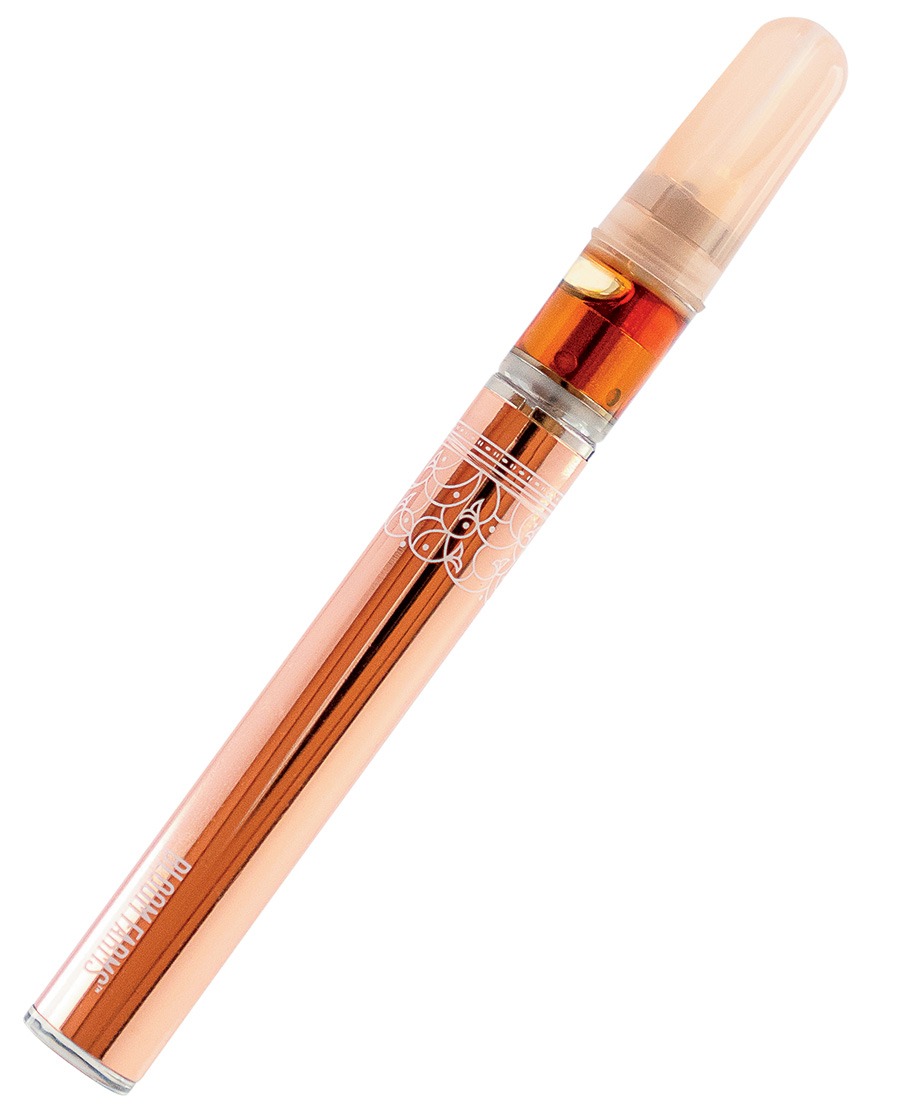

How to Spend $200 at Canna Bella Luxon February 25, 2021 at 4:29 pm Read More »
In a matter of just a few days, the Chicago Bulls have gone from the 9th seed all the way up to the 6th seed in the Eastern Conference.
Call it a weak conference. Call it a mirage. Call it whatever you want, but the Bulls are on a roll and looking to solidify themselves as an Eastern Conference playoff team.
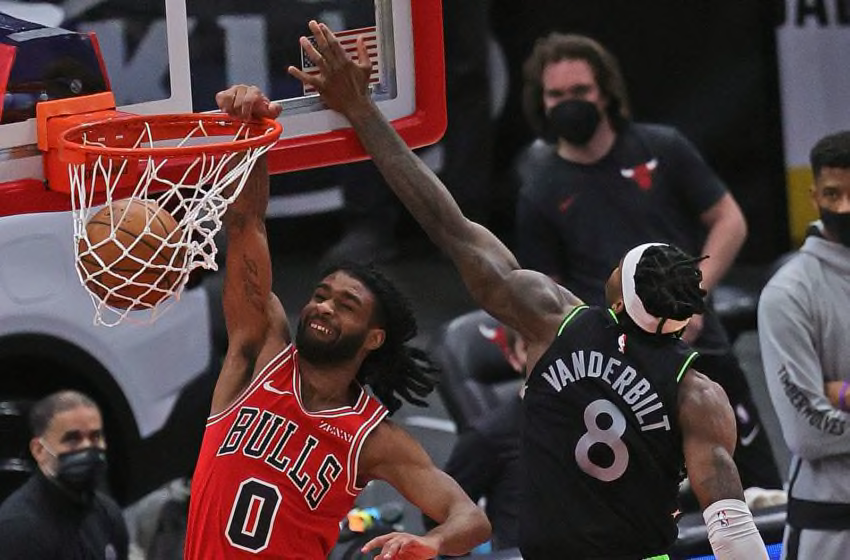
Winners in six of their last seven games, the Bulls pulled out a nail-biter in overtime against the Minnesota Timberwolves on Wednesday night.
The Bulls held a 10-point lead with under five minutes to go, and somehow managed to allow the Wolves back into it. With a 3-point lead and 4.9 seconds left, Ricky Rubio was fouled on a three-pointer by Coby White. Rubio knocked in all three free throws to send it to overtime.
But, in overtime, the Bulls closed things out emphatically, winning 133-126. After the game, fans looked up at the standings with a smile on their faces.
It has been a long time since the city of Chicago felt this good about a Bulls team. Quite frankly, we don’t know what to do with ourselves. It’s become somewhat tradition each New Year to begin looking at what the Bulls will do around the trade deadline and just how big of a seller they will be.
The offseason has always started early for Bulls fans, at least since the glory days of Derrick Rose.
Almost halfway into the season, it feels like a dream to see the Bulls currently occupying the sixth seed in the Eastern Conference. From here on out, fans are going to be watching other Eastern Conference contenders in angst. Now, it means more to root against teams like the Boston Celtics, Indiana Pacers and Toronto Raptors.
Everything means more at this point, and here’s the crazy part: the Bulls aren’t even healthy yet.
Chicago has seen some incredible play out of forward Thaddeus Young while Lauri Markkanen has been injured. Otto Porter is still out of the lineup as well, which has given Patrick Williams ample time to play alongside Young.
The rookie has been thrown into the fire, but he’s played as well as anyone could have asked for. Williams is doing exactly what he was known for as a draft prospect: everything. He’s learning on the fly, but proven he can play defense and rebound at an NBA level. He puts in the hard work and does the little things.
Meanwhile, Young is doing the exact same thing, only at one of the highest levels he’s played over his 15-year career.
Of course, it all begins and ends with All Star Zach LaVine, who is having a career year in every major category.
The Bulls are only getting started, and at this point, the sky is the limit. This is a team who has hardly scratched the surface under Donovan. Fans should continue to sit back and simply enjoy this ride.