What’s New

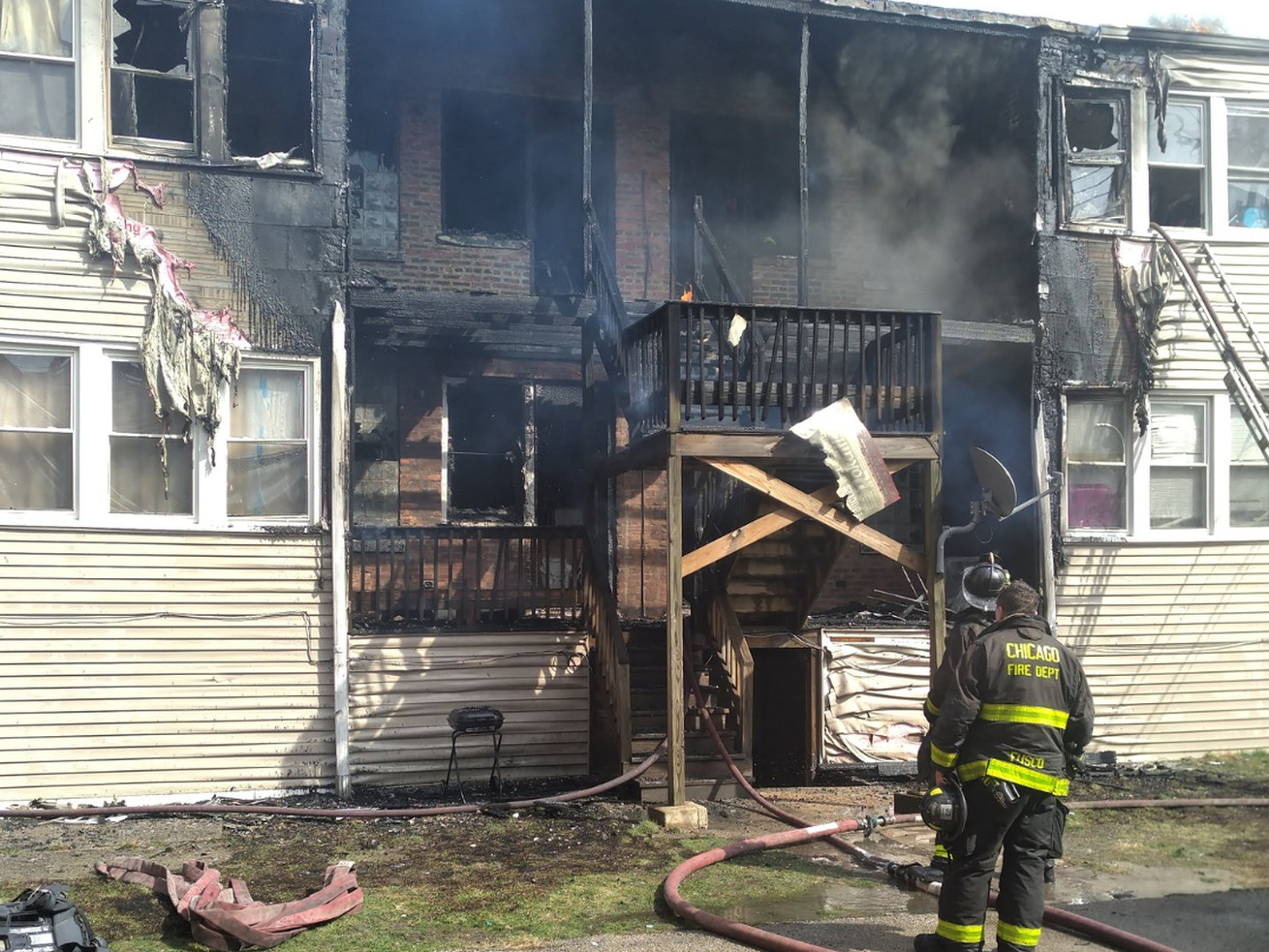
Firefighters battle blaze in Marquette ParkSun-Times Wireon March 30, 2021 at 8:08 pm

A fire broke out at 64th and Troy street March 30, 2021. | Chicago Fire Department

Initial reports indicated children may have been trapped inside but firefighters have not found anyone so far, officials said. Searches are still underway. 

Crews battled a fire Tuesday afternoon in Marquette Park after reports of children trapped on the Southwest Side.

The blaze broke out at an apartment building at 64th and Troy streets, Chicago fire officials said on Twitter.

Initial reports indicated children may have been trapped inside but firefighters have not found anyone so far, officials said.

The blaze was extinguished by 3 p.m., and searches are still underway, officials said.

This is a developing story.

Read More

Firefighters battle blaze in Marquette ParkSun-Times Wireon March 30, 2021 at 8:08 pm Read More »

Cubs-Pritzker tandem benched as city culls North Lawndale plansDavid Roederon March 30, 2021 at 8:34 pm

Part of the vacant site running northeast from Roosevelt Road and Kostner Avenue, as seen last December.
Four groups remain in the running to develop nearly 21 acres at Roosevelt Road and Kostner Avenue. | Tyler LaRiviere/Sun-Times file

After reviewing community remarks, the city’s Planning Department has left four development teams still competing for vacant property at Roosevelt Road and Kostner Avenue.

City officials have drawn up a short list of four investor teams vying to develop nearly 21 vacant acres at Roosevelt Road and Kostner Avenue. They narrowed the field after North Lawndale residents emphasized the site should attract substantial job growth with a creative design and involvement from minority-owned companies.

One prominent contender, a proposal from the Chicago Cubs with business leader Penny Pritzker, failed to make the cut.

The Cubs’ charitable arm had joined with Pritzker Realty Group to suggest splitting the property, the largest empty parcel on the West Side, between a youth baseball academy and an industrial building. Evaluations from residents, summarized on the city’s web links for the project, questioned whether the plan would create enough jobs to suit community needs. Others wondered about participation by minority-owned firms.

Proposals making it to the next review stage generally emphasized a larger industrial complex and a site for community use. One from Chicago developer Dan McCaffery included a residential element — 60 units of what he termed “workforce housing.”

A submission from Matanky Realty Group included a baseball field on the roof of an industrial building. A city-written summary of residents’ comments said the proposal “feels novel if both challenging and tacked-on.”

Cubs spokesman Julian Green said Tuesday, “We believe in the promise of this academy and hope we can work with the city to identify another location.” A Pritzker representative did not respond to a message. Also eliminated from consideration was a joint plan from nonprofit developer Chicago Neighborhood Initiatives, known for bringing jobs to Pullman, and East Lake Management.

The Department of Planning and Development pledged to consider residents’ comments in deciding who will get the city-owned property. Once associated with the 1990s Silver Shovel scandal involving illegal dumping, the land still requires an environmental cleanup that the city believes will cost at least $5 million.

City planner Ethan Lassiter told residents at an online meeting March 22 that officials must evaluate a range of factors, from a project’s design to its financial feasibility. Legally, it’s not a matter of seeking a high bidder. “Getting this right is important,” he said.

The four finalist teams will get several weeks to refine their proposals. The city hopes to have another public review in May.

Ald. Michael Scott Jr., whose 24th Ward includes the site, said he hopes for a “transformative” project that won’t require excessive city subsidies. “What we need to do is figure out what is feasibly done, what the city has to bring to the table, what the developer has to bring to the table and then add those community elements that may not have been there before,” Scott said at the online meeting.

The four teams making the short list:

• McCaffery with KMA Cos. and the nonprofit group A Safe Haven. They would build 729,000 square feet, the most ambitious of the proposals, including a community center it calls the North Lawndale Wealth Engine.

• Matanky with Safeway Construction and WBS Equities. They foresee five buildings totaling 473,000 square feet, including a mechanics’ training center.

• Related Midwest with 548 Development. They would build 327,000 square feet in two large industrial buildings and would donate a Lawndale Innovation Center.

• McLaurin Development Partners and several others. They promise warehouses and cold storage, a recreation center and a minority-owned coffee shop and coworking space.

Two other partnerships replied to the city’s call for plans in January, but they dropped from consideration.

Read More

Cubs-Pritzker tandem benched as city culls North Lawndale plansDavid Roederon March 30, 2021 at 8:34 pm Read More »

Bears-Raiders matchup is likely as NFL owners approve 17th game for 2021on March 30, 2021 at 6:53 pm

NFL owners voted to expand the 2021 season schedule to 17 games Tuesday — an expected move that already has drawn criticism from the league’s players.

The Bears are expected to play their 17th game against the Las Vegas Raiders at Allegiant Stadium in Las Vegas, according to a widely reported AFC vs. NFC formula.

The expansion to a 17-game schedule was considered inevitable after the NFL and the NFL Players Association signed the current collective bargaining agreement last March that included a provision for it. The league’s financial straits caused by the coronavirus season with few fans in the stadiums likely hastened the move for the 2021 season.

Because the league did not add a bye week to accommodate the extra game, NFL teams will play 17 games in 18 weeks. The start of the regular season has been pushed back a week, so Super Bowl LVI will be Feb. 13 at SoFi Stadium in Inglewood, Calif.

The schedule expansion is the first for the NFL since 1978, when it increased from 14 games to 16. It will generate additional revenue to mitigate the damage of the coronavirus season — after several years of $10 million increases, the NFL’s salary cap dropped from $198.2 million in 2020 to $182.5 in 2021. But the 17th game already has come under fire in light of the general concern — shared by the league — for player safety.

The NFL shortened the preseason from four games to three — with the possibility of another game being cut in the future — in an apparent attempt to mitigate the wear-and-tear and injury factors. But that doesn’t quite compute in today’s NFL. Starters often play sparingly in the preseason. In 2019, for instances, Bears regulars played a total of 55 snaps in the preseason — with 14 players not playing at all and only rookie running back David Montgomery (13) and second-year wide receiver Anthony Miller (seven) playing more than a token five.

So for most starting players, the schedule expansion only adds another 60-70 snaps at game speed. Predictably, players criticized the move, even before the owners made it official. Former Bears safety Adrian Amos, now with the Packers, tweeted his protest Monday. In a response to a tweet by ESPN’s Adam Schefter regarding the extra game, Amos tweeted “We really let this happen” with a face-palm emoji.

Eagles cornerback Darius Slay responded to Amos’ tweet with a barb of his own: “That’s wth i’m sayin” with his own face-palm emoji.

Former NFL offensive lineman Geoff Schwartz, a regular and popular participant in NFL discussions on social media, probably said it best when he tweeted, “No surprise. More football. As a fan, love it. As a player … good luck with the extra week”

But the players have their own union to blame. The NFLPA ratified the CBA that included the 17th-game option (along with two additional playoff teams starting in 2020). That vote was close — 1,019-959 — so it’s expected that the criticism of the extra game will mount as the reality of the 17th game hits home.

The 17th game is awkward on other levels as well. Not only will it distort “season” records (as did expansion from 12 games to 14 in 1961 and from 14 games to 16 in 1977), but the odd number creates a situation where some teams will play more home games than road games and vice versa.

According to the 17th-game formula, the Baltimore Ravens will play nine home games in 2021 — on paper an advantage for a team that is 27-13 at home and 19-21 on the road over the past five seasons. The NFL has not had an odd-game schedule since 1946, when each team played 11 games. The league went to a standardized 12-game format the following season.

The NFL has considered expanding the international series to fill the 17th game with neutral-site games. In 2019, there were four international series games — including the Bears against the Raiders at Tottenham Hotspur Stadium in London. The series was cancelled last season because of the coronavirus.

The CBA that was ratified last year runs through 2030. The 17th game formula will continue to be an inter-conference game based on league standings from the previous season — first place vs. first place, second-place vs. second place, etc.

Read More

Bears-Raiders matchup is likely as NFL owners approve 17th game for 2021on March 30, 2021 at 6:53 pm Read More »

Ban on bump stocks for guns highlights the danger of letting bureaucrats invent crimeson March 30, 2021 at 7:01 pm

Two years ago, peaceful, law-abiding gun owners across the country became felons overnight, thanks to the Trump administration’s ban on bump stocks. But as the U.S. Court of Appeals for the 6th Circuit recognized last week, Congress alone has the authority to define new federal crimes, while the president and his underlings are charged with enforcing those laws.

Combining both powers in a single branch is a license for tyranny — a danger the Framers tried to avoid by carefully separating the legislative and executive functions. Regardless of their views on gun control, Americans who care about the rule of law should be troubled by the implications of letting unelected bureaucrats unilaterally and arbitrarily criminalize previously legal conduct.

Bump stocks, first patented in 2000, allow rifles to slide backward, propelled by recoil energy, after a round is fired, which resets the trigger. The sliding stock facilitates a rapid firing technique in which the shooter maintains forward pressure on the rifle, causing his stationary finger to repeatedly bump against the trigger.

These accessories were mainly of interest to hobbyists, regulators and industry insiders until October 1, 2017, when a gunman murdered 60 people in Las Vegas. Because the killer’s rifles reportedly were equipped with bump stocks, Donald Trump responded to the massacre with a promise to ban them by administrative fiat.

Tasked with inventing a legal rationale for a ban the president already was determined to impose, the Bureau of Alcohol, Tobacco, and Firearms reinterpreted the statutory definition of machine guns to cover bump stocks. But as the ATF itself had repeatedly recognized over the years, that reading of the law was inconsistent with its plain meaning.

Under the National Firearms Act, “the term ‘machinegun’ means any weapon” that fires “automatically more than one shot…by a single function of the trigger.” The definition also includes parts “designed and intended” to convert a weapon into a machine gun.

A rifle equipped with a bump stock, however, fires just one round for each “function of the trigger,” which must be reset before the weapon can fire again. The ATF tried to get around that problem by defining “a single function of the trigger” as “a single pull of the trigger,” defining pull to exclude what happens during bump firing, and treating the shooter as part of the rifle mechanism, ignoring his active participation in the process so that the gun could be said to fire “automatically.”

The ATF maintained that the 6th Circuit was bound to accept this highly implausible interpretation under “Chevron deference.” According to that controversial doctrine, courts must accept an agency’s “permissible” interpretation of an “ambiguous” statute.

Critics of that doctrine argue that it undermines the separation of powers, inviting administrative agencies to interpret laws, which courts are supposed to do, and even rewrite them, which is Congress’ job. That danger is especially acute, the 6th Circuit noted, when an agency threatens to fine and imprison people based on its own idiosyncratic understanding of the law.

As a result of the ATF’s ban, continued possession of bump stocks — products the agency had previously deemed legal — is punishable by a maximum fine of $250,000 and up to 10 years in prison. In this context, the appeals court said, deferring to the ATF’s new interpretation of the law would violate the “rule of lenity,” which says ambiguous criminal statutes should be read to favor defendants.

In light of those concerns, the 6th Circuit said, “an agency’s interpretation of a criminal statute is not entitled to Chevron deference.” And without the benefit of that doctrine, it concluded, the ATF’s redefinition of machine guns cannot be accepted, since it is clearly not the “best interpretation” of the law.

The issue here is not whether banning bump stocks is a good idea but who has the authority to do it. As the appeals court noted, “that judgment is reserved to the people through their duly elected representatives in Congress.”

Jacob Sullum is a senior editor at Reason magazine.

Send letters to [email protected].

Read More

Ban on bump stocks for guns highlights the danger of letting bureaucrats invent crimeson March 30, 2021 at 7:01 pm Read More »

Melissa DuPrey loved watching ‘Grey’s Anatomy’ with her mom, and now she’s on iton March 30, 2021 at 7:32 pm

“Grey’s Anatomy” producers were looking for a new, diverse and fresh cast of interns to debut on season 17, so the role of Sara Ortiz was written specifically with an afro-Latina actress in mind.

So when Chicago native Melissa DuPrey opened an email from her agent about the role on the ABC hit, she was ecstatic. In 2014, she was recruited by ABC’s Diversity Showcase, which helped prioritize her audition tape, and within days she got the news that she was the producers’ top pick for the role.

DuPrey’s excitement over being chosen to be a part of the “Grey’s Anatomy” cast was very personal.

“This was a show that my mom and I used to love to watch together,” DuPrey said. “When I was in college we would have dates to watch it. She passed away four years ago and I just feel like she made this happen. I grew up with this show, you know? It’s [over] 17 years long and just to be able to be on set with some of these original cast members is really just breathtaking.”

DuPrey, 36, described her character, Sara, to be very much like her real self.

“My character, the way that I’ve been introduced, was that I was so eager to be perfect that I’m constantly fumbling. I’m accident-prone and that is not far from Melissa DuPrey proper,” she said.?

Those familiar with DuPrey’s work know that she does not shy away from being unapologetically herself. DuPrey, who spent some of her childhood in Humboldt Park and resides there now when she’s not busy with “Grey’s,” has worked in Chicago for years with the all-Latina theater company Teatro Luna and with Free Street Theatre, and she even starred in “Brown Girls,” a short web series from 2017. She’s a wealth of talent as a locally known comic, actor, playwright, producer, organizer and spiritualist.

Melissa DuPrey has performed with several Chicago theater companies and toured the country as a stand-up comic.
Provided

She’s starred in multiple solo shows as well, including “SEXomedy,” “SUSHI-frito” and “Good Grief,” and traveled across the country as a stand-up comic.

“It was super emotional for me to get this recurring character who’s intentionally written as afro-Latina, as if it was meant to be mine,” DuPrey said. “It’s so important for me to be here.”

DuPrey stars alongside her on-screen mother, Dr. Alma Ortiz (portrayed by Lisa Vidal), a social worker with over 30 years of experience who decided to go into practicing medicine. To their surprise, the mother and daughter got placed at Grey-Sloan Memorial at the same time.

?Dr. Tom Koracik (Gregory Germann) quickly offers up a nickname for the dynamic duo: “Mama and Young Ortiz.”

Once cast, DuPrey met with Vidal to brainstorm very intentional ways to bring bits of themselves to their characters. Both proud Puerto Rican women, they’ve found ways to make their heritage obvious by sprinkling phrases in Spanish throughout the script.

DuPrey said they want to bring authentic representation to their characters “in ways that don’t show up in a damaging trope or some kind of Puerto Rican archetype. The goal is to expand the representation of the diaspora as incredible, diverse humans that are capable of being in this space in this room as Black Latinas, and that’s what we’re gonna shoot for.”

“Grey’s” writers are known for expanding upon the stories of interns. DuPrey said that she hopes viewers can keep getting glimpses of Sara’s life and learn more about her as a person, as her recurring role has only granted her appearances in a few episodes, including the one airing this Thursday.

Season 17 of “Grey’s” kicked off filming last year during the pandemic, but after COVID cases began to rise to record numbers in Los Angeles in November 2020, ABC put the show’s filming on hold until spring 2021.

Finally back in Los Angeles for filming by January, DuPrey said that the rules on set are very strict. “Grey’s” is one of the few shows on air that is able to keep pumping out new episodes because of the precautions being taken by producers, according to DuPrey. Not all television series can afford the costs of following the union-specified safety requirements, like rapid testing.? DuPrey gets tested three times a week — Monday, Wednesday and Friday — just as her castmates do, to ensure that they are all working COVID-free.

When she is back in Chicago later this year, DuPrey will be the first Puerto Rican playwright from Humboldt Park to have a full-length play produced with Urban Theater Company, a home for Latinx actors who want to bring more representation to the stage.

DuPrey will be performing “BRUJAJA,” a story about an accidental witch who discovers that brujeria can help her fight against oppression. It will premier virtually this winter as a part of the theater’s annual Destinos festival, and it will feature programming and partnerships with local community organizations and businesses.

Read More

Melissa DuPrey loved watching ‘Grey’s Anatomy’ with her mom, and now she’s on iton March 30, 2021 at 7:32 pm Read More »

Almost A 7 Year Record, Chicago Area’s Home Price Gains No Match For Rest Of Countryon March 30, 2021 at 7:03 pm

Getting Real

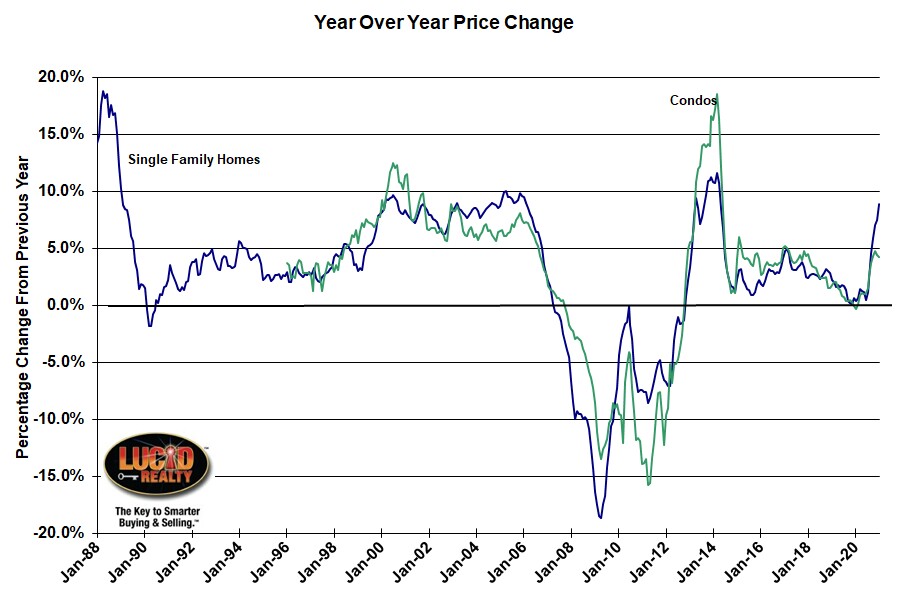
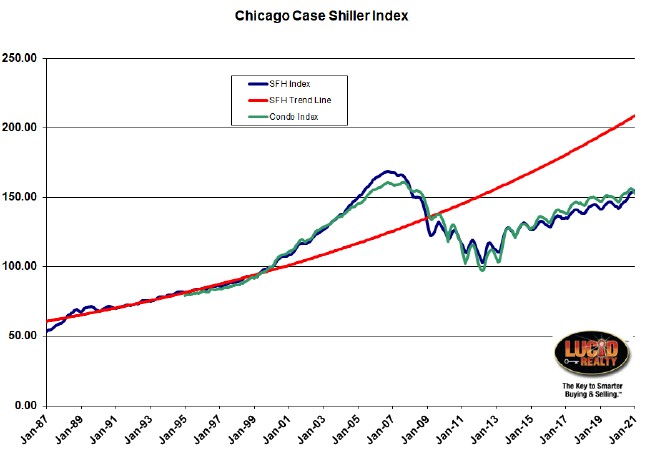
Almost A 7 Year Record, Chicago Area’s Home Price Gains No Match For Rest Of Country

Read More

Almost A 7 Year Record, Chicago Area’s Home Price Gains No Match For Rest Of Countryon March 30, 2021 at 7:03 pm Read More »

Pritzker’s ‘bridge phase’ put on hold as coronavirus cases and hospitalizations rise (LIVE UPDATES)on March 30, 2021 at 6:22 pm

Latest

Reopening plans pushed back in Illinois as COVID-19 infections rise and hospital beds fill

Dr. Roy Werner, the medical director in the Department of Emergency Medicine, listens to a patient’s heart beat in the Emergency Department at Roseland Community Hospital in December, when Illinois was in the midst of its second viral surge. The state could be on the verge of yet another resurgence, officials warn.
Ashlee Rezin Garcia/Sun-Times

Reopening plans are being pushed back in Illinois as COVID-19 infections and hospitalizations rise yet again statewide, public health officials announced Tuesday.

With 70% of seniors vaccinated with at least one dose, the state had been on pace to see some business restrictions lifted this week under Gov. J.B. Pritzker’s “bridge phase” before a full reopening by May.

Not so anymore, as coronavirus cases mount and more people head to hospitals with the deadly respiratory disease. The governor’s intermediate reopening plan also required hospitalizations to “hold steady or decline over a 28-day monitoring period.”

That count has risen almost daily since hitting a one-year-low of 1,082 beds occupied by COVID-19 patients March 12. A total of 1,396 beds were taken up Monday night — the most since late February.

“As long as new hospital admissions continue to increase, the state will not advance to the Bridge Phase and on to Phase 5 of the Restore Illinois Plan,” officials from the Illinois Department of Public Health said in a statement. “The number of cases of COVID-19 has seen an increasing trend as well. Health officials continue to urge all residents to continue to mask up, socially distance, and avoid crowds to reduce transmission and bring the metrics back in line to transition to the Bridge Phase.”

Read the full story from Mitchell Armentrout here.


News

1:16 p.m. New vaccination site will be dedicated to essential union workers

Pat Nabong/Sun-Times

Mayor Lori Lightfoot on Monday announced a new vaccination site in partnership with the Chicago Federation of Labor that will help get doses of COVID-19 vaccine into the arms of essential union workers.

Lightfoot said the site will be able to handle about 1,200 vaccinations weekly at first and can grow to 6,000 weekly as vaccine supply increases.

The announcement comes as the city expands eligibility requirements to what’s called Phase 1C. That expansion includes residents ages 16 to 64 with underlying medical conditions, such as chronic kidney disease or cancer.

It also will allow vaccination for those working in construction, retail, restaurants and all other essential workers who had not previously been eligible.

“You all know this, but it bears repeating. Chicago is 100% a union town,” the mayor said in making the announcement at the vaccination site, the International Union of Operating Engineers Local 399, 2260 S. Grove St.

“It’s our union workers who make up the backbone of this city.”

Those wishing to be vaccinated at Local 399 must live or work in Chicago, hold a current union card or be a union retiree, and qualify under the city’s current eligibility criteria.

Read the full story from Manny Ramos here.

12:44 p.m. States struggle to get rent relief to tenants amid pandemic

Gov. Andrew Cuomo announced last July that New York would spend $100 million in federal coronavirus relief to help cash-strapped tenants pay months of back rent and avert evictions.

By the end of October, the state had doled out only about $40 million, reaching 15,000 of the nearly 100,000 people looking for help. More than 57,000 applicants were denied because of criteria set by lawmakers that many said was difficult to meet.

New York’s experience played out nationwide, with states failing to spend tens of millions of federal dollars aimed at helping renters avoid eviction. Burdensome requirements, poorly administered programs and landlords refusing to cooperate meant tens of thousands of tenants never got assistance. Some states also shifted funding away from rental relief, fearing they’d miss a year-end mandate to spend the money — a deadline that got extended.

The problem, housing advocates said, was that the federal government didn’t specifically earmark any of the coronavirus aid for rental relief, leaving states scrambling to set up programs with no guidance on how the money should be allocated. As much as $3.43 billion in federal aid was spent on rental assistance, according to National Low Income Housing Coalition. But advocates said more should have been done, given tenants faced as much as $34 billion in unpaid rent through January, according to a report released by the National Council of State Housing Agencies.

States’ rental relief programs “were a very mixed success. It was sort of a patchwork of programs,” Maryland Democratic Sen. Chris Van Hollen said in February. “There was a lot of experimentation — some successful, some not.”

Read the full story here.

9:32 a.m. Mayor’s plan for $1.8 billion in federal relief won’t go to City Council until May or June

Last month, a divided City Council authorized another round of federal coronavirus relief despite the political furor triggered by Mayor Lori Lightfoot’s decision to use $281.5 million from earlier funds to cover police payroll costs.

It looks like aldermen must wait a while for Round 2 of what is certain to be a battle royal over the $1.8 billion avalanche of federal money on its way to Chicago.

“I would expect that we probably won’t be taking a package to City Council [until] at the earliest, May, and it may not be ’til June,” the mayor said Monday.

Lightfoot’s timetable did not sit well with downtown Ald. Brian Hopkins (2nd).

“We need to have more involvement in the preparation of that package. Nobody wants a done deal dropped in our laps at the last minute and then say, ‘Take it or leave it. Vote it up or down,'” Hopkins said.

“All the aldermen I’ve talked to about this have expressed an interest in being involved in the prioritization of it. … There’s gonna be a healthy disagreement among the various caucuses within the City Council about what a top priority should be. But we should be a part of that debate.”

Read the full story from Fran Spielman here.


New Cases & Vaccination Numbers

  • The Chicago Department of Public Health reported 438 new confirmed cases, 3 deaths and a test positivity rate of 4%.
  • Another 110,211 shots went into arms on Saturday.
  • Over 6.2 million vaccine doses have been sent to providers in Illinois and more than 2 million residents have now been fully vaccinated, officials said.

Read More

Pritzker’s ‘bridge phase’ put on hold as coronavirus cases and hospitalizations rise (LIVE UPDATES)on March 30, 2021 at 6:22 pm Read More »

Reopening retreat: State’s move into less restrictive ‘bridge phase’ pushed back as cases rise, hospital beds fillon March 30, 2021 at 6:33 pm

Reopening plans are being pushed back in Illinois as COVID-19 infections and hospitalizations rise yet again statewide, public health officials announced Tuesday.

With 70% of seniors vaccinated with at least one dose, the state had been on pace to see some business restrictions lifted this week under Gov. J.B. Pritzker’s “bridge phase” before a full reopening by May.

Not so anymore, as coronavirus cases mount and more people head to hospitals with the deadly respiratory disease. The governor’s intermediate reopening plan also required hospitalizations to “hold steady or decline over a 28-day monitoring period.”

That count has risen almost daily since hitting a one-year-low of 1,082 beds occupied by COVID-19 patients March 12. A total of 1,396 beds were taken up Monday night — the most since late February.

“As long as new hospital admissions continue to increase, the state will not advance to the Bridge Phase and on to Phase 5 of the Restore Illinois Plan,” officials from the Illinois Department of Public Health said in a statement. “The number of cases of COVID-19 has seen an increasing trend as well. Health officials continue to urge all residents to continue to mask up, socially distance, and avoid crowds to reduce transmission and bring the metrics back in line to transition to the Bridge Phase.”

Pritzker’s order to hold steady marks the latest troubling rise in the rollercoaster pandemic, even as its end inches into view thanks to a widening vaccination campaign.

Illinois hadn’t yet reached the peak of its first surge this time last year. That happened in late April, when nightly hospitalizations hovered near 5,000.

Residents helped successfully bend the curve through the spring and summer, when about 1,500 beds were taken up each night — before a devastating fall resurgence shot that figure beyond 6,000 during the worst nights of the pandemic in mid-November.

After the first vaccine shots went into Illinois arms in mid-December, the state’s infection rate sank to an all-time low by the second week of March.

But now, a third surge could be in the offing as Pritzker and Chicago Mayor Lori Lightfoot have sounded the alarm on rising transmission among young adults paying less heed to basic COVID-19 precautions. In an effort to get more administer more shots as quickly as possible, the governor has given local health departments the go-ahead to make all adults eligible for vaccination immediately in areas where demand for appointments had tapered off.

New COVID-19 cases by day

Graphic by Jesse Howe and Caroline Hurley | Sun-Times

Source: Illinois Department of Public Health

Graph not displaying properly? Click here.

The state reported 2,404 new cases were diagnosed among 51,579 tests, raising the state’s average testing positivity rate over the past week to 3.4%. Experts use that number to track how rapidly the virus is spreading.

It’s still barely a quarter as high as it was during the peak of the pandemic, but it was at 2.1% on March 12 — a net increase of 62% in just 17 days.

The uptick has been even more dramatic in Chicago, where the regional positivity rate is at 4.2% — an increase of a full percentage point in a week. About 473 residents are testing positive each day, up 34% compared to a week ago, according to the city’s Department of Public Health.

“COVID-19 is still here, it is still killing people in our city every day, so we have got to remain diligent,” Lightfoot said Monday.

The state also reported 17 more deaths, including that of a McHenry County man in his 30s.

The virus has claimed about 23 Illinois lives per day over the last week. The state’s fatality rate has stayed relatively flat this month, but experts say the pandemic follows a predictable pattern of rising cases leading to more serious infections weeks later and ultimately more death.

The state also reported 86,812 vaccine doses were administered Monday. About 105,040 shots are going into arms every day.

More than 2.1 million residents have been fully vaccinated so far, or about 16.6% of the population.

Over the past year, more than 1.2 million residents have contracted the virus, and 21,273 have died.

COVID-19 vaccine doses administered by day

Graphic by Jesse Howe and Caroline Hurley | Sun-Times

Source: Illinois Department of Public Health

Graph not displaying properly? Click here.

Read More

Reopening retreat: State’s move into less restrictive ‘bridge phase’ pushed back as cases rise, hospital beds fillon March 30, 2021 at 6:33 pm Read More »

Witness: Officer in Floyd case gave onlookers a ‘cold’ stareon March 30, 2021 at 6:27 pm

MINNEAPOLIS — As onlookers pleaded with Minneapolis police Officer Derek Chauvin to take his knee off George Floyd’s neck, Chauvin just gave them a “cold” and “heartless” stare, the teenager who shot the harrowing video of the arrest testified Tuesday at Chauvin’s murder trial.

In sometimes-tearful testimony, Darnella Frazier, 18, said Chauvin continued to kneel on Floyd’s neck and fellow officer Tou Thao wouldn’t let onlookers get close, even when one of them identified herself as a firefighter and begged repeatedly to check Floyd’s pulse.

“They definitely put their hands on the Mace, and we all pulled back,” Frazier told the jury.

Frazier said of Chauvin: “He just stared at us, looked at us. He had like this cold look, heartless. He didn’t care. It seemed as if he didn’t care what we were saying.”

Floyd’s death last May, along with the video of the Black man pleading that he couldn’t breathe and onlookers angrily yelling at the white officer to get off him, triggered sometimes-violent protests around the world and a reckoning over racism and police brutality across the U.S.

Frazier testified that she began recording the scene because “it wasn’t right, he was suffering, he was in pain.”

She said she had walked to a convenience store with her 9-year-old cousin when she came upon the officers, and sent the girl inside because she didn’t want her to see “a man terrified, scared, begging for his life.”

Frazier breathed heavily and wept as she viewed pictures of Chauvin kneeling on Floyd and after a prosecutor asked her to describe how the encounter changed her life.

She said she looks at her father and other Black men in her life, and “how that could have been one of them.”

“I stay up at night apologizing to George Floyd for not doing more … not saving his life,” she said, adding of Chauvin: “It’s not what I should have done, it’s what he should have done.”

Chauvin attorney Eric Nelson sought repeatedly to show that Chauvin and his fellow officers found themselves in an increasingly tense and distracting situation, with the growing crowd of onlookers becoming agitated and menacing over Floyd’s treatment.

Under cross-examination from Nelson, Frazier said bystanders became increasingly upset by what they were seeing and got louder and louder, “more so as he was becoming more unresponsive.”

But when Frazier was asked by a prosecutor whether she saw violence anywhere on the scene, she replied: “Yes, from the cops. From Chauvin, and from officer Thao.”

Chauvin, 45, is charged with murder and manslaughter, accused of killing Floyd by pinning the 46-year-old handcuffed man to the pavement for what prosecutors said was 9 minutes and 29 seconds. Floyd was arrested after being accused of trying to pass a counterfeit $20 bill at the convenience store.

The most serious charge against the now-fired officer carries up to 40 years in prison.

The defense has argued that Chauvin did what his training told him to do and that Floyd’s death was not caused by the officer but by a combination of illegal drug use, heart disease, high blood pressure and the adrenaline flowing through his body.

When Frazier was asked to identify Chauvin in the pandemic-spaced courtroom, the officer stood up and took off his mask, appearing somber as he looked down and away.

Earlier Tuesday, Donald Williams, another one of the onlookers who shouted at Chauvin, testified that he called 911 after paramedics took Floyd away, “because I believed I witnessed a murder.”

Williams, a professional mixed martial arts fighter who said his training includes chokeholds, returned to the witness stand a day after describing seeing Floyd struggle for air, his eyes roll back in his head, and Floyd “slowly fade away … like a fish in a bag.”

On Tuesday, prosecutors played back Williams’ 911 call, in which a dispatcher offers to switch him to a sergeant. As he is being switched, Williams can he heard yelling at the officers at the scene, “Y’all is murderers, bro!”

During cross-examination, Chauvin’s attorney pointed out that Williams seemed to grow increasingly angry at the police, taunting Chauvin with “tough guy,” “bum” and other names, then calling Chauvin expletives, which the defense lawyer repeated in court.

Williams initially admitted he was getting angrier, but then backtracked and said he was controlled and professional and was pleading for Floyd’s life but wasn’t being heard.

Williams said he was stepping on and off the curb, and at one point, Thao, who was controlling the crowd, put his hand on Williams’ chest. Williams admitted under questioning that he told Thao he would beat the officers if Thao touched him again.

Read More

Witness: Officer in Floyd case gave onlookers a ‘cold’ stareon March 30, 2021 at 6:27 pm Read More »