What’s New

13-year-old boy killed by officer after what police called an ‘armed confrontation’on April 1, 2021 at 9:17 pm

Police shot and killed a 13-year-old boy after what officials described as an “armed confrontation” in Little Village early Monday, although no video and few details have been released so far.

Adam Toledo, 13, who lived in the neighborhood, was shot in his chest and later died, the Cook County medical examiner’s office said.

In a statement, police said officers responded to a ShotSpotter alert about 2:35 a.m. and saw two males standing in an alley in the Southwest Side neighborhood.

One person, who was allegedly armed, ran from the scene and was shot by a police officer during an “armed confrontation,” police said. The incident took place in an alley west of the 2300 block of South Sawyer Avenue, near Farragut Career Academy High School.

That person, later identified as Adam, died at the scene, police said. Authorities took four days to release Adam’s name as they waited to notify next-of-kin, a spokeswoman for the medical examiner’s office said.

Police shared a photo of a gun allegedly recovered at the scene.

The other person who ran from police, 21-year-old Ruben Roman Jr. of Edgewater, was arrested and charged with a misdemeanor count of resisting arrest, police said. In 2019, Roman pleaded guilty to illegal gun possession stemming from an arrest in Evanston and was sentenced to probation, court records show.

In a statement issued Thursday, Police Supt. David Brown called the shooting a tragedy and extended condolences to Adam’s family.

“My greatest fear as the Superintendent of the Chicago Police Department has been a deadly encounter between one of our own and a juvenile especially given the recent rise in violent crimes involving juveniles throughout our city,” the statement said. “Unfortunately, this fear became a reality earlier this week.”

Brown said “the split-second decision to use deadly force is extremely difficult for any officer, and is always a heavy burden to bear for officers involved in fatal shooting incidents. We fully support the investigation being conducted by the Civilian Office of Police Accountability (COPA), and adamantly call for the release of any and all video, including body-worn camera footage, related to the incident, as permitted by laws pertaining to juveniles.”

‘Very disheartening’

On Thursday, on the residential block in front of the alley where the shooting took place earlier in the week, residents gathered for a yard sale and formed a line along 24th Street where a local church was holding a food drive.

A surveillance video taken from a camera at Amor de Dios United Methodist Church, which is at the corner of 24th and Sawyer, caught flashes of light from the shooting and additional police officers as they arrived on the scene. However, neither the officer who fired the shots nor Adam could be seen in the video.

Ramiro Rodriguez, Pastor of Amor De Dios United Methodist Church at 24th and Sawyer, speaks to reporters outside his church, Thursday, April 1, 2021.
Tyler LaRiviere/Sun-Times

Pastor Ramiro Rodriguez, who lives in the 2300 block of South Sawyer, said his son heard the gunshots early Monday morning but neither witnessed the incident.

“I feel for the kids around here,” Rodriguez said in Spanish. ” … What happened here is not what we want, we want the best for our families and for our youth.”

Rodriguez said he does not know Adam or his family, but said he turned over security footage from his church to detectives who came to visit.

Many at the food drive expressed shock to hear that the person gunned down by police behind their homes was a 13-year-old boy.

Nakia Smith, a mother of a 13-year-old boy herself, said she heard gunshots on early that morning, followed moments later by a swarm of blue lights.

“It’s very disheartening, especially with what happened a year ago, with the [Derek] Chauvin trial and everything,” Smith said, referring to the Minneapolis officer who is currently on trial in the murder of George Floyd. “And then Monday morning, come to find out it was a 13-year-old boy killed … it’s just quite a bit.”

She added: “I do understand that the police don’t always know what someone is going to do, but there has to be a better way.”

Meanwhile, Rafael Hurtado Jr., 30 — who lives a few houses down from where Adam lived about a mile and a half away — urged CPD to release any footage related to the shooting.

“It’s hard to take CPDs word for it” that he was armed, he said. “Especially with everything that’s been going on with the police shootings in other places.”

He said that “it’s tragic for everyone involved, for the family, for the kid because he was so young and for the officer who pulled the trigger.”

Anthony Gonzalez, an organizer with the community group Mi Villita Neighbors, said he was personally “shocked because it is like when does the violence from police end?”

He was skeptical of the police version of events.

“I don’t think we know the full story but we can’t take the police’s word for it. The bodycam needs to be released and I know there are some kind of loopholes that stop it from happening because of the boy’s age, but if the family wants it out in the public nothing should stop it from happening.”

Local Ald. George Cardenas (12th) said he has many unanswered questions about the shooting, but said “COPA has told me that the gun was found near his body.”

Cardenas urged Little Village residents to keep their cool and “wait for the facts to play out.”

“We’re trying to keep the peace and keep everybody as informed as possible so that people don’t jump to conclusions until all the facts are born out,” he said. “I urge the community to be patient for COPA to do its work. We have challenges in Little Village. The community has reported many shootings in that area. Shots fired constantly night after night. I pray for our young people in harm’s way. There are so many incidents we battle on a daily basis.”

A weapon was recovered after person was shot by police and another was arrested March 29. 2021 in Little Village.
Police released this photo, which they said was a weapon recovered after a person was shot by police and another was arrested March 29. 2021 in Little Village.
Chicago police

Officer on desk duty; no video released

The officer in Monday’s incident was placed on desk duty for 30 days while the Civilian Office of Police Accountability investigates the shooting, police said.

The shooting was captured by body-worn camera, but it wasn’t immediately clear if investigators would release it, COPA said in a statement Thursday.

COPA is required to release body camera video of police shootings within 60 days of the incident, but policy prohibits them from sharing video if the victim is under 18 years old. Absent a court order, the video would not be released, COPA said.

However, investigators will release other evidence including 911 calls, police reports and radio transmissions within 60 days, COPA said.

Two other people have been shot by Chicago police officers this week. Early Wednesday, an officer fatally shot an armed man in Portage Park after officers chased the man on foot. An officer fired shots after the man allegedly pulled out a gun in the 5200 block of West Eddy Street, police said.

Less than an hour later, an off-duty Chicago police officer shot someone breaking into their home in Albany Park on the Northwest Side. The officer shot the man in his face about 12:55 a.m. as the man broke into the officer’s home in the 3100 block of Belle Plaine Avenue, police said. The man was rushed in serious condition to Illinois Masonic Medical Center.

Contributing: Cindy Hernandez, Frank Main

Read more on crime, and track the city’s homicides.

Read More

13-year-old boy killed by officer after what police called an ‘armed confrontation’on April 1, 2021 at 9:17 pm Read More »

Former California cop leads GOP dream of Newsom recallon April 1, 2021 at 9:04 pm

FOLSOM, Calif. — Orrin Heatlie was recovering from a back procedure and browsing social media in 2019 when he found a video of California Gov. Gavin Newsom instructing immigrants in the country illegally not to open their doors to law enforcement unless officers had a warrant.

The 52-year-old retired county sheriff’s sergeant was incensed, believing Newsom’s message was an insult to his profession. It was an unsurprising reaction for a Republican who built a 25-year career in law enforcement.

What Heatlie did next would eventually slingshot the political neophyte to the center of California’s political world: He started researching a recall campaign. Twenty-one months later, 2.1 million signatures have been gathered and it’s now a near certainty that Californians will choose later this year whether to remove Newsom from office.

Heatlie said his police background gave him the organizational skills to pull off what would be only the second recall election for a governor in state history.

“It wasn’t launched on a wing and a prayer,” Heatlie said during a recent interview with The Associated Press from his home in the Northern California city of Folsom.

He started by joining an existing effort to recall Newsom. He described it as a “training mission” that allowed him to make contacts with people who ultimately would turn into his political operation when he formed his own recall effort.

For months he’s been working 12-plus hour days in a silver Airstream camper in his driveway, coordinating volunteers and taking calls. He jokes his family banished him from the house because they were sick of hearing about the recall.

Heatlie lives with his wife and two children — an 18-year-old daughter he describes as a “lovely little socialist” and a 17-year-old son who is more centrist. The children’s politics lead to lively family discussions but Heatlie thinks they respect his activism.

“I’m participating in something that is monumental and historic, and it’s something that, you know, this country was founded on,” he said. “We’re bringing government back to represent the people.”

For an amateur political organizer to get a recall on the ballot is remarkable. While recall efforts are common, the only one to get on the ballot was in 2003 when voters replaced Democrat Gray Davis with Arnold Schwarzenegger, the state’s last Republican governor. In recent months, Heatlie’s effort has drawn donations and support from national Republicans including Mike Huckabee and Newt Gingrich.

California is more Democratic and diverse now and booting Newsom from office remains an uphill climb. A Public Policy Institute of California poll released Tuesday found only 40% support removing the first-term Democrat.

Stephanie Suela, the Sacramento County coordinator for the recall, said Heatlie’s effort succeeded where others failed because he had an eye for talent and created a supportive environment for his volunteers. He had a strong command of the operation and was able to “process 15 things at once,” she said.

“Orrin is really good-hearted when people are in need,” she said, recalling how he organized a GoFundMe account to help a volunteer repair her truck and bought a new computer monitor for another.

Both worked on the recall effort led by Erin Cruz, an unsuccessful candidate for U.S. House and Senate. Heatlie joined Cruz’s group after seeing Newsom’s immigration video and was made moderator of a Facebook group, using it to make contacts and assess the operation’s flaws.

“I started to use her campaign as a live-fire training drill or a live-fire lesson, the term we use in law enforcement. Just basically a training mission to learn everything I could about the recall process,” he said.

Cruz’s campaign fizzled with fewer than 300,000 valid signatures, and Heatlie filed his recall paperwork soon after in February 2020 and formed the California Patriot Coalition.

As a police sergeant, he was adept at managing people and supervising operations. And as a member of the Yolo County Sheriff Department’s crisis negotiating team, he had experience in convincing people to do things.

He reached out to veterans of the 2003 recall and eventually recruited 58 county coordinators, 27 regional leaders and more than 150 social media managers.

Republicans had many grievances against Newsom, including his moratorium on the death penalty and power shutoffs related to wildfires. But it took the pandemic and an infamous decision by Newsom to dine out with lobbyists — maskless — at a fancy restaurant while telling Californians to stay home to generate the necessary recall signatures.

Organizers submitted 55,000 signatures to the Secretary of State’s office between June and November. By December, after Newsom’s dinner came to light, that jumped to nearly 500,000. More kept pouring in.

Newsom ignored the effort until early March, and then came out swinging. He highlighted a Facebook post Heatlie wrote in 2019 that said “Microchip all illegal immigrants. It works! Just ask Animal control!” It was posted the same day as Newsom’s social media video that sparked Heatlie’s anger, according to a screenshot of the post from Capital Public Radio.

Heatlie said it was hyperbole meant to generate discussion and that he does not support forced microchipping of anyone. Facebook disabled Heatlie’s account; he said he doesn’t know why.

Beyond Heatlie, Newsom paints the effort as led by Trump-loving extremists and white supremacists, language that could boost his support with Democrats but further anger recall supporters. The group saw a jump in people downloading the petition after California Democratic Party Chairman Rusty Hicks in January called the effort a “coup” and likened it to the U.S. Capitol insurrection, Heatlie said.

Heatlie said he does not support the Proud Boys, a far-right, anti-immigrant men’s group that has engaged in violent clashes at political rallies, or the QAnon conspiracy theory that believes former President Donald Trump was fighting a “deep state” and child sex trafficking ring affiliated with prominent Democrats. But he does not turn away participants based on their personal affiliations.

He said he looked into QAnon so he could understand what people were talking about and determined it was a “ridiculous premise” whose followers have been “duped.”

“We don’t ask people their affiliations, we don’t vet their background or anything like that. They have a First Amendment right to petition the government,” he said.

He’s skeptical that President Joe Biden rightfully won the election, citing a debunked theory about rigged voting machines. But he’s glad Trump hasn’t spoken about the recall, saying it would be a distraction.

Now that the signature gathering is over, Heatlie isn’t sure what’s next for his group. He doesn’t envision the group endorsing a candidate to replace Newsom, but he hopes they’ll continue bringing grassroots energy to other races and initiatives.

“We will continue to have an influence over California,” he said.

Read More

Former California cop leads GOP dream of Newsom recallon April 1, 2021 at 9:04 pm Read More »

North Carolina’s Hall of Fame coach Roy Williams will retire after 33-year careeron April 1, 2021 at 9:39 pm

The last time Roy Williams left North Carolina, he was a virtually unknown assistant who was getting his first shot as a college head coach at tradition-rich Kansas.

Now Williams is leaving the Tar Heels again with a resume chock full of honors — as a retiring Hall of Famer with more than 900 wins, three national championships and a legacy built on more than three decades of success at two of college basketball’s most storied programs.

The school announced the decision Thursday, some two weeks after the 70-year-old Williams closed his 18th season with the Tar Heels after a highly successful 15-year run with the Jayhawks. In all, Williams won 903 games in a career that included those three titles, all with the Tar Heels, in 2005, 2009 and 2017.

Yet Williams described himself as a coach who was also bothered by losses and by his own mistakes over the past two difficult seasons, one marking the only losing record of his career and the other being a young group playing amid the COVID-19 pandemic.

“Everybody wants to know the reason and the reason is very simple,” Williams said at a news conference on the Smith Center court bearing his name. “Every time somebody asked me how long I was going to go, I’d always say, ‘As long as my health allows me to do it.’

“But deep down inside, I knew the only thing that would speed that up was if I did not feel that I was any longer the right man for the job. … I no longer feel that I am the right man for the job.”

The Tar Heels lost to Wisconsin in the first round of the NCAA Tournament in his final game, his only first-round loss in 30 tournaments.

“I love coaching, working the kids on the court, the locker room, the trips, the ‘Jump Around’ (pregame) music, the trying to build a team,” Williams said. “I will always love that. And I’m scared to death of the next phase. But I no longer feel that I’m the right man.”

Williams thrived with lessons rooted in his time as an assistant to late mentor Dean Smith — he still respectfully refers to him as “Coach Smith” after all these years — even as he forged his own style. Williams always pushed for more — and typically he got it. His teams played fast, with Williams frantically waving his arms for them to push the ball. They attacked the boards with his preferred two-post style.

His competitive drive was fierce and only slightly obscured by his folksy sayings and charm from his time growing up in the North Carolina mountains.

His time as an assistant coach included the Tar Heels’ run to the 1982 NCAA championship for Smith’s first title, a game that memorably featured a freshman named Michael Jordan making the go-ahead jumper late to beat Georgetown.

“Roy Williams is and always will be a Carolina basketball legend,” Jordan said in a statement through his business manager. “His great success on the court is truly matched by the impact he had on the lives of the players he coached – including me. I’m proud of the way he carried on the tradition of Coach Smith’s program, always putting his players first.”

Williams spent 10 seasons at his alma mater under Smith before Kansas took a chance on him in 1988. He spent 15 seasons there, taking Kansas to four Final Fours and two national title games.

Williams passed on taking over at UNC in 2000 after the retirement of Bill Guthridge, but ultimately couldn’t say no a second time and returned as coach in 2003 after the tumultuous Matt Doherty era that included an 8-20 season.

Williams immediately stabilized the program and broke through for his first national championship in his second season with a win against Illinois, marking the first of five Final Four trips with the Tar Heels. His second title came in 2009 with a team that rolled through the NCAA Tournament, winning every game by at least a dozen points, including the final game against Michigan State played in the Spartans’ home state.

The third title was delivered by a team that included players who had lost the 2016 championship game to Villanova on a buzzer-beating 3-pointer. This time, the Tar Heels beat a one-loss Gonzaga team for the championship.

Williams had just that one losing season — an injury-plagued 14-19 year in 2019-20 — and otherwise missed the NCAA Tournament only in his first season at Kansas, when he inherited a program on probation, and in 2010 with a UNC team that reached the NIT final.

Philadelphia 76ers guard Danny Green, who played four seasons for Williams and was part of the 2009 title winner, said Williams had been a “father figure.”

“I became a man in four years there,” said Green, a three-time NBA champion who recently made a $1 million endowment scholarship gift to the Tar Heels’ basketball program. “He’s always been more than a coach to me. He taught me how to be a man and how to do things the right way.”

Read More

North Carolina’s Hall of Fame coach Roy Williams will retire after 33-year careeron April 1, 2021 at 9:39 pm Read More »

‘The Serpent’: For suave monster, the world is his killing groundon April 1, 2021 at 9:35 pm

The eight-episode Netflix docudrama “The Serpent” just might hold the all-time record for number of flashbacks and flash-forwards in a limited series, as we continually zip a couple of years ahead or a few months back along the mid-1970s timeline — a frustrating and utterly unnecessary and wildly overused device that consistently works against an otherwise fascinating, exotic, lurid period-piece true-crime story about a suave, identity-switching serial killer who makes Tom Ripley seem like an amateur.

Serpentine (I see what you did there) storyline concerns aside, “The Serpent” is an effectively unsettling, fictionalized telling of the incredible and horrific series of kidnappings and murders orchestrated by one Charles Sobhraj, played to suave and oily perfection by Tahar Rahim, the brilliant French actor last seen in “The Mauritanian.” (For most of the story, Sobhraj operates under the alias of Alain Gautier, so we’ll refer to him as Alain moving forward.) The story opens in Bangkok, 1975, with Alain clearly the Man as he glides around a poolside party at an apartment building filled with bohemian hippie types, most of them from Western Europe or America — and all of them looking to let their freak flags fly and extend the 1960s vibe as far as possible.

Jenna Coleman is Alain’s girlfriend Monique, a French-Canadian beauty who looks like she stepped off the pages of Vogue magazine. They’re a strikingly handsome couple and they’re clearly in love with one another, and when they steal off to an apartment in the complex and close the door behind them, it appears they’re about to have a midday tryst — but then Alain crushes some pills and stirs them into a drink intended for the sweat-soaked man in the bedroom who is in a great deal of pain and should be taken to the hospital. Not to worry, says Alain, as Monique looks on with detachment. This medicine will make you feel better.

Spoiler alert: No, it won’t.

Born in Saigon to a Vietnamese mother and an Indian father, raised in Paris by his mother and her French husband, Alain has become a chameleon who travels from country to country under the guise of being a rare gems dealer with connections everywhere as he preys upon well-off young travelers who are playing at living the simple, carefree life but often have thick stacks of travelers’ checks and other valuables in their bags. With the help of Monique, who adds to Alain’s veneer of respectability, and Alain’s fiercely loyal second, Ajay (Amesh Edireweera), Alain works his charms on a number of travelers, takes them under his wing — and waits for the right moment to poison them, rob them of their belongings and their passports (which he alters and uses for his own devices), and then dump the bodies. That this actually transpired — though the dialogue is imagined and some scenarios are fictional creations — makes it all the more chilling.

While Alain and his accomplices travel from Hong Kong to Bangkok to Nepal to Paris on various nefarious missions, we have a parallel storyline involving the investigation of the crimes, which starts when the parents of a couple from the Netherlands that has gone missing in Thailand contact the embassy in Bangkok, drawing the attention of a fast-rising but relatively low-level diplomat. Herman Knippenberg is no detective, as his boss and various police authorities constantly remind him, but he’s practically the only one determined to find out what happened to the young couple — and among the first to piece together the puzzle and realize there’s been a series of killings and they could all be connected. Billy Howle does terrific work as the everyman Knippenberg, who surprises even himself with his dogged determination and his willingness to take risks, and Ellie Bamber is equally strong as Knippenberg’s wife, Angela, who supports her husband and helps him on the case for as long as she can, until she sees it ruining his career and tearing them apart.

Billy Howle plays Herman Knippenberg, a Dutch diplomat in Bangkok who sees connections in a series of killings.
BBC/Mammoth Screen

Filmed on location in and around Bangkok and in studios in the United Kingdom, “The Serpent” is a visual feast; whether the story is in Thailand, Kathmandu, Hong Kong, Delhi or Paris, we believe the locale and the time period. Directors Hans Herbots and Tom Shankland and writers Richard Wardlow and Toby Finlay steer clear of glorifying Alain, but we can understand how he was able to work his dark magic on not only his victims, but on Monique, who continues to love him even as she knows he’s taking her to the depths of hell, and Ajay, a straight-up psychopath who mistakenly believes Alain is the only person in the world to ever care about him. At the end of the series, we catch up with the lives of the real-life people in the story (hey, there’s Knippenberg, good for him!) and learn the now 76-year-old Alain/Charles is serving a life sentence in Nepal. May the Serpent never be free.

Read More

‘The Serpent’: For suave monster, the world is his killing groundon April 1, 2021 at 9:35 pm Read More »

An average of 519 Chicagoans are testing positive for COVID-19 each day as health officials warn to skip Easter celebrations (LIVE UPDATES)on April 1, 2021 at 9:48 pm

Latest

Coronavirus spike all the more reason to skip Easter celebrations, Chicago’s top doc says

In-person Easter celebrations should be put on hold as coronavirus infection rates hop back up to troubling levels, the city’s top doctor warned Thursday.

Unless family members are fully vaccinated — meaning two weeks removed from their final dose — it’s best to keep gatherings virtual with COVID-19 still looming, according to Chicago Public Health Commissioner Dr. Allison Arwady.

That’s even more important this weekend because the virus is already spreading across the city and state at the quickest rate seen in almost two months, Arwady said during an online Q&A.

“You don’t want your Easter celebration to turn into a contact tracing event. You really don’t,” she said. “Each day as more people get vaccinated, these things are becoming safer, but with the amount of people fully vaccinated — unless you’ve got a fully vaccinated group gathering, there still is a fair bit of risk.

“It’s a time when a lot of people traditionally get together, but the virus does not know that it’s Easter. It does not know that it is Passover,” Arwady said. “The things that we’ve been doing to protect each other and protect those we care about — especially now with vaccine in the mix — become even more important.”

Read the full story from Mitchell Armentrout here.


News

4:45 p.m. Biden launches community corps to boost COVID vaccinations

WASHINGTON — Seeking to overcome vaccine hesitancy, the Biden administration on Thursday stepped up its outreach efforts to skeptical Americans, launching a coalition of community, religious and celebrity partners to promote COVID-19 shots in hard-hit communities.

The administration’s “We Can Do This” campaign features television and social media ads, but it also relies on a community corps of public health, athletic, faith and other groups to spread the word about the safety and efficacy of the three approved vaccines. The campaign comes amid worries that reluctance to get vaccinated will delay the nation’s recovery from the coronavirus pandemic — and is kicking off as the U.S. is anticipating a boost in vaccine supply that will make all adult Americans eligible for vaccines by the beginning of May.

President Joe Biden encouraged more than 1,000 faith leaders on Thursday to continue their efforts to promote vaccinations in their communities. “They’re going to listen to your words more than they are to me as president of the United States,” Biden said.

Vice President Kamala Harris and Surgeon General Vivek Murthy held a virtual meeting with the more than 275 inaugural members of the community corps on Thursday to kick off the effort. The Department of Health and Human Services was also encouraging other groups, as well as everyday Americans, to join the effort.

“You are the people that folks on the ground know and rely on and have a history with,” Harris said. “And when people are then making the decision to get vaccinated, they’re going to look to you.”

Read the full story here.

3:12 p.m. Chicago sees ‘quantum leap’ in COVID-19 cases — widening Lightfoot-Pritzker split over vaccine plans

Ashlee Rezin Garcia/Sun-Times

Illinois’ COVID-19 uptick took another jump Wednesday as Chicago’s “quantum leap” in cases raised more concerns of a potential third surge of the virus, officials said.

Another 2,592 residents across the state were diagnosed with the virus among 77,727 tests, which lowered Illinois’ average positivity rate to 3.3%, according to the Illinois Department of Public Health.

But that key metric has shot up 57% overall in under three weeks, while COVID-19 hospitalizations have jumped 24% over the same time frame. More than 1,400 beds were occupied by coronavirus patients Tuesday night, the most the state’s hospitals have treated since Feb. 24.

Gov. J.B. Pritzker and Mayor Lori Lightfoot agree the uptick has halted any talk of further reopening — but they’re still far apart on when all adults should be eligible to receive a COVID-19 vaccine dose.

The governor voiced concern Wednesday over the city’s timetable for that move, saying “I think that they will want to do that sooner than they are currently planning to.”

Read the full story from Fran Spielman and Mitchell Armentrout here.

12:39 p.m. Company producing J&J vaccine had history of violations

The company at the center of quality problems that led Johnson & Johnson to discard 15 million doses of its coronavirus vaccine has a string of citations from U.S. health officials for quality control problems.

Emergent BioSolutions, a little-known company vital to the vaccine supply chain, was a key to Johnson & Johnson’s plan to deliver 100 million doses of its vaccine to the United States by the end of May. But the Food and Drug Administration repeatedly has cited Emergent for problems such as poorly trained employees, cracked vials and problems managing mold and other contamination around one of its facilities, according to records obtained by The Associated Press through the Freedom of Information Act. The records cover inspections at Emergent facilities since 2017.

Johnson & Johnson said Wednesday that a batch of vaccine made by Emergent at its Baltimore factory, known as Bayview, cannot be used because it did not meet quality standards. It was unclear how many doses were involved or how the problem would affect future deliveries of J&J’s vaccine. The company said in a statement it was still planning to deliver 100 million doses by the end of June and was “aiming to deliver those doses by the end of May.”

“Human errors do happen,” Dr. Anthony Fauci, the nation’s top infectious disease expert, said Thursday in an interview on CBS’ “This Morning.” “You have checks and balances. … That’s the reason why the good news is that it did get picked up. As I mentioned, that’s the reason nothing from that plant has gone into anyone that we’ve administered to.”

Read the full story here.

11:58 a.m. Positive COVID-19 test forces postponement of Mets-Nationals season opener

WASHINGTON — The Opening Day baseball game between the Nationals and Mets was postponed hours before it was scheduled to begin Thursday night because of coronavirus concerns after one of Washington’s players tested positive for COVID-19.

The Nationals issued a statement saying “ongoing contract tracing involving members of the Nationals organization” was the reason for scrapping the game at their stadium.

The contest was not immediately rescheduled, even though Friday already had been set up as an off day that could accommodate a game pushed back from Thursday if there were a rainout, for example.

The Nationals said in a statement the game “will not be made up on Friday.”

Washington general manager Mike Rizzo said Wednesday that one of his team’s players had tested positive for COVID-19 on Monday, before the team left spring training camp.

Rizzo said four other players and one staff member were following quarantine protocols after contract tracing determined they were in close contact with the person who tested positive.

Rizzo did not identify any of those involved.

“We’re still in the process of finding out exactly what their status is,” Rizzo said Wednesday. “They’re certainly out for tomorrow’s game.”

Read the full story here.

9:24 a.m. James Taylor kicking off rescheduled 2021 tour at the United Center

Live music may be returning to the United Center this summer.

James Taylor on Wednesday announced his postponed world tour with special guest Jackson Browne will kick off at the Chicago venue on July 29.

Tickets purchased for the original dates will be honored for the trek that wraps up Nov. 1 in San Diego. (The tour was originally slated for a stop June 9 the United Center; refunds are available at point of purchase for those unable to make the new date.)

Taylor postponed the tour last April due to the COVID-19 pandemic, which shut down all live music/theater venues across the country. Browne contracted coronavirus last March, revealing at the time he suffered only minor symptoms and recuperated while quarantining at home.

“(Jackson and I/James and I) want to thank all those who have graciously held onto their tickets; we appreciate your continued patience as we navigate these unchartered waters. We didn’t want to have to cancel this tour that we’ve been waiting so long to perform together, so we’ve been working to get these dates rescheduled to a time period when the U.S. is reopened and safe to gather for a concert,” the two legendary singer-songwriters said in a joint statement.”

Read the full story from Miriam Di Nunzio here.


New Cases & Vaccination Numbers

  • Another 2,592 residents across the state were diagnosed with the virus among 77,727 tests.
  • Nearly 500 Chicagoans are testing positive every day, an average figure that has jumped 37% over the past week.
  • Illinois is vaccinating more people than ever as the state’s rolling average is up to a new high of 109,538 shots doled out per day.
  • On Tuesday, 137,445 shots went into arms, the state’s third-highest daily total yet.

Read More

An average of 519 Chicagoans are testing positive for COVID-19 each day as health officials warn to skip Easter celebrations (LIVE UPDATES)on April 1, 2021 at 9:48 pm Read More »

6 Things to Do Outside in Chicago This Aprilon March 31, 2021 at 2:07 pm

Not only is being outside still the safest way to be together, but it’s also much more comfortable as temperatures begin to rise in Chicago. While April is always a bit of a wild card where weather is concerned, with more sunshine and warmer breezes, Chicagoans are ready to get outdoors and have some fun. Here are six things to do outside in Chicago this April to gear up for the springtime bloom!

You can get out and about this spring while supporting the Northcenter Chamber of Commerce and Common Pantry! Walk, run, or bike safely and at your own pace, and don’t forget to bring the provided map and interactive bingo card to get the full experience.

While many of the zoo’s buildings are still closed for safety reasons, you can enjoy all of the wildlife living outdoors at Lincoln Park Zoo! If you’re searching for things to do in Chicago in April, there are always new fluffy and feathered friends to meet, and it’s a perfect opportunity to get outside in Chicago’s rising temperatures this month.

Starting in April, the world’s “largest permanent digital art projection” will feature Astrographics— a four-part artistic piece produced by Adler Planetarium which “will explore ways in which humans conceptualize and visualize their universe.” If you’ve been staring at the same four walls for most of the winter, attend this event in Chicago in April to get out of the house. 

Even if you live in Chicago, it can be fun to be a tourist in your own city for a day. If you’re looking for things to do in Chicago with friends in April, learn more about the spookier side of Chicago’s history with the Gangsters and Ghosts Tour. It is a socially-distanced, limited-capacity walking tour running four times daily and hitting spots like Palmer House and the Congress Hotel.

Seeing live music in person continues to be difficult to do safely, but Montrose Saloon provides a space for musicians and listeners alike to make it work. Almost every night, there’s an outdoor show (weather permitting) featuring a local artist, and with no cover charge— so don’t forget to hit that tip jar!

Locals and tourists alike agree that the architecture cruise tour in Chicago is a great way to experience the city. During the Chicago Architecture Foundation Center’s 90-minute River Cruise, you’ll learn the background of over 50 buildings along the Chicago River, all while enjoying the spring sunshine (hopefully!).

Image by Day_Photo from Pixabay 

Read More

6 Things to Do Outside in Chicago This Aprilon March 31, 2021 at 2:07 pm Read More »

FOCO releasing Chicago Cubs & White Sox Mascot Opening Day Bobbleheads!CCS Staffon April 1, 2021 at 7:53 pm

FOCO has released new MLB Opening Day Mascot bobbleheads including one for the Chicago Cubs and White Sox.

The post FOCO releasing Chicago Cubs & White Sox Mascot Opening Day Bobbleheads! first appeared on CHI CITY SPORTS l Chicago Sports Blog – News – Forum – Fans – Rumors.Read More

FOCO releasing Chicago Cubs & White Sox Mascot Opening Day Bobbleheads!CCS Staffon April 1, 2021 at 7:53 pm Read More »

‘Law & Order’ brings back NYPD detective Elliot Stabler in new series, crossover episodeLynn Elber | AP Television Writeron April 1, 2021 at 8:13 pm

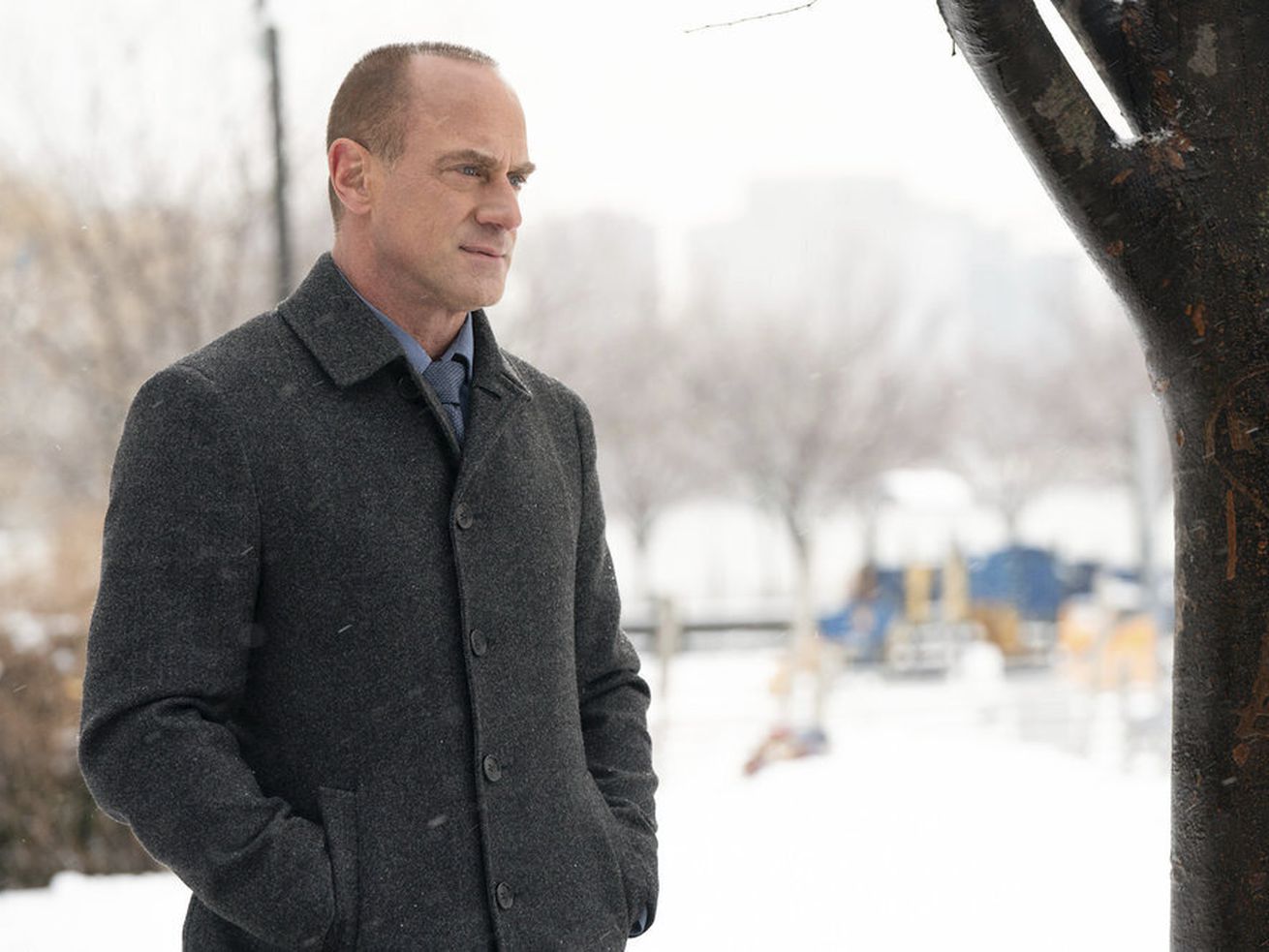
Christopher Meloni portrays Det. Elliot Stabler in a scene from the new “Law & Order: Organized Crime” series premiering April. 1 on NBC.
Christopher Meloni portrays Det. Elliot Stabler in a scene from the new “Law & Order: Organized Crime” series premiering April. 1 on NBC. | AP

NBC’s “Law & Order: Organized Crime” stars Christopher Meloni as New York police detective Elliot Stabler, the role he played until 2011 on “Law & Order: Special Victims Unit.”

LOS ANGELES — The latest member of the “Law & Order” franchise has a familiar face playing a familiar character, but producer Dick Wolf says he’s switching up the storytelling.

NBC’s “Law & Order: Organized Crime” stars Christopher Meloni as New York police detective Elliot Stabler, the role he played until 2011 on “Law & Order: Special Victims Unit.”

Unlike the largely self-contained episodes of its “Law & Order” relatives, the new drama shifts from one criminal syndicate to another in multi-episode arcs. It debuts at 8 p.m. Thursday, paired in a crossover episode with “Law & Order: SVU” at 8 p.m.

Think of it this way, Wolf suggested: “If the first eight episodes are ‘The Godfather,’ the second eight episodes are ‘American Gangster’ and the third eight episodes are ‘Scarface.’”

“You have major antagonists around to build a really good, longer-term story,” he told The Associated Press. That allows for options “we haven’t had a chance to explore yet, including antagonists that aren’t complete ‘black hats,’ that can be more nuanced.”

“Law & Order: Organized Crime” also brings a new writer-producer to the franchise’s ranks, Ilene Chaiken, whose credits include the groundbreaking “The L Word,” which featured LGBTQ characters, and “The Handmaid’s Tale.”

“I’ve known her by reputation for a long time,” Wolf said. “Over the last 30 years there’s very few truly landmark shows, but ‘The L Word’ is one of them.”

Chaiken is “not only skilled, she’s incredibly insightful about human emotion” and with a different “rhythm” than he has, Wolf said. He called that a necessity for “Organized Crime,” with Meloni’s Stabler among the most ”pre-Miranda cops on television.”

In other words, the sort of law enforcement officer who didn’t like to play by the rules, such as informing a person under arrest of their rights — the sort of character that TV once routinely celebrated as heroic.

“What she had to do was keep that character intact, but soften and change him in a believable manner that got him into the present, so that’s he’s not a dinosaur,” Wolf said. “Not an easy thing to do.”

The franchise’s theme music will be featured, with what he fondly calls yet another “Goldberg Variations” — a reference to Bach’s 19th-century aria and its 30 iterations. The “Law & Order” tune is practically an American standard, given the original show’s ubiquity in reruns and the enduring “Law & Order: SVU,” now in its 22nd season with Mariska Hargitay.

The new series is just part of the expansive TV real estate Wolf’s empire occupies, including NBC’s “Chicago Fire” and its pair of spinoffs, and CBS’ “FBI” and its about-to-be two spinoffs, with the recent announcement of “FBI: International” for next season. All are produced by Wolf Entertainment and Universal Television.

He cites Charles Dickens as inspiration for his intertwined shows, explaining how his approach compares to that of the British novelist.

“It’s Dickens’ London: Anybody who appears in any of the books can appear in any of the others,” he said, excepting ‘A Tale of Two Cities,” which adds Paris to the mix. Wolf owns all the books in the format in which they were released, most in monthly sections.

“People would line up for six hours” for the next installment, he said. And, like TV and unlike films, the story could go on as long as the author and the public wanted.

“A movie exists for 110 minutes. A successful show exists for 110 hours,” Wolf said.

Read More

‘Law & Order’ brings back NYPD detective Elliot Stabler in new series, crossover episodeLynn Elber | AP Television Writeron April 1, 2021 at 8:13 pm Read More »

Joe Biden’s bait-and-switch presidencyCharles Lipsonon April 1, 2021 at 8:02 pm

President Joe Biden speaks at a meeting of his Cabinet at the White House on Thursday. | AP Photos

He pledged to work across party lines, but he is ramming through the biggest progressive agenda in American history without any Republican votes.

Joe Biden was elected president as a moderate-left Democrat, but he is not governing as one. He pledged repeatedly to work across party lines, but he is ramming through the biggest, most expensive progressive agenda in American history without any Republican votes.

Biden is almost certain to try it again with his next two spending proposals, the largest since Lyndon Johnson’s Great Society programs. As the White House pushes these mammoth bills with only Democratic votes, Americans are realizing they got a very different president from the one they bargained for, the one they were promised during the campaign.

What’s unclear is whether they will recoil from this new reality.

Throughout the summer and fall, Biden ran as a unifier who could work across party lines. He wanted to do so, he said, and he reiterated that comforting message as late as his inaugural address. It was probably his most important policy message, and Americans believed it. They remembered his years in the Senate and his primary victory over socialist Bernie Sanders.

The reality has been very different from the promises. Biden’s pledge of bipartisanship and unity turned out to be a cynical sleight-of-hand, raw partisanship masquerading as comity. In the general election, it worked well enough to defeat a divisive incumbent, whose impulsiveness, rancor and personal attacks repulsed many Americans. Now that the election is over, so is the message. Despite razor-thin Democratic majorities on Capitol Hill, Biden is determined to pass an ambitious agenda with no support from Republicans.

The clearest indication of Biden’s bait and switch came with the stimulus bill. Before signaling his final position, the president reached out to Republicans, who proposed a $600 billion package, focused on immediate needs plus some fiscal stimulus.

The bipartisan meeting was all for show. Biden quickly rejected the Republicans’ proposal, made no effort to meet with them again or negotiate any compromise, and chose instead to push for a bill three times as large, much of it to be spent long after the COVID crisis has passed. The extra $1.3 trillion did not include the infrastructure and other programs he now considers essential. Those are coming in additional bills with huge price tags and associated tax hikes.

President Biden, Speaker Nancy Pelosi, and Senate Majority Leader Chuck Schumer knew their mammoth COVID bill would face unified Republican resistance. No matter. They pushed it through anyway, using the Senate’s arcane rule for budget reconciliation. They went big and unilateral, even though Republicans were eager to sign off on a large relief bill that would have commanded a Senate supermajority. This week, we learned Schumer has quietly asked the Senate parliamentarian if he can use the same 50-vote procedure for Biden’s latest spending bills, hoping to avoid any Republican filibuster.

Will this ram-it-through mentality characterize the remainder of Biden’s first two years? You don’t have to visit the Oracle at Delphi for an answer. The clearest indication is that the president, who ran for the Oval Office as a man of the Senate, now wants to smash long-standing Senate rules so he can pass the rest of his legislative agenda without Republican votes.

The filibuster rules, Biden says, are nothing more than “relics of the Jim Crow era.” He’s relying on the distant memory that, more than half a century ago, Southern senators used the filibuster to oppose desegregation. Yet the huge civil rights and voting rights bills of the mid-1960s still passed. What’s more, they passed with enough debate and votes to buttress the statutes with a national political consensus.

Since then, both parties have used the filibuster to oppose all sorts of bills, most of them far removed from race. The Democrats used the technique repeatedly last year, when they were in the minority. They used it, for instance, to stop a police reform bill proposed by Tim Scott, an African American representing the state that fired the first shots in the Civil War. But that’s only one example among many. When Joe Biden and Barack Obama served in the Senate, they not only used the filibuster, they explicitly defended it. So did Chuck Schumer. Were they defending Jim Crow? No. They were defending the historic role of the Senate, which grants some power to the minority party.

Now, the same Democrats want to overturn those rules, and they are cynically deploying the sensitive issue of race to do it. But race is not the real issue here. It is whether the Senate wants to afford significant rights to the minority party, as it has for over two centuries, forcing either compromise solutions or stalemate. Put differently, do senators really want to turn their chamber into something like the House, where the minority is powerless and debate is meaningless? Once they do that, they can never turn back.

Behind Biden’s choice to go big, progressive, and unilateral lie three basic calculations.

The first is that, if history is any guide, Democrats are likely to lose the House in 2022. The incumbent president’s party almost always suffers losses, often big ones, and the Democrats don’t have any seats to spare. That means Biden has only two years to pass his aggressive agenda.

Second is Biden’s judgment that voters really like big government spending. Recent polling suggests they do, for now. The question is whether that support will last and whether it will outweigh voters’ concerns about tax hikes to pay for those programs.

Third, Biden is betting that voters in 2022 and 2024 will care a lot more about today’s practical results than about yesterday’s broken campaign promises. That’s probably true. The White House also knows it can blame Republicans for any resistance to its agenda. It has a bully pulpit and a compliant media to help.

The result is a president determined to pass everything on the Democrats’ all-you-can-eat menu, even if he has to do it with strict party-line votes. As a candidate, Joe Biden promised voters a center-left agenda and bipartisanship. As a president, he is giving them neither. Biden’s deception is based on the oldest marketing technique in the book: bait and switch.

Charles Lipson is the Peter B. Ritzma Professor of Political Science Emeritus at the University of Chicago, where he founded the Program on International Politics, Economics, and Security.

Reprinted with permission from RealClearPolitics.

Send letters to [email protected].

Read More

Joe Biden’s bait-and-switch presidencyCharles Lipsonon April 1, 2021 at 8:02 pm Read More »