The Chicago Blackhawks are officially eliminated from playoff contention. It was always going to be the Tampa Bay Lightning, Florida Panthers, and Carolina Hurricanes occupying the top three spots in the division in any order but the fourth spot was up for grabs all season. The Hawks were the favorites to hang onto that spot with a few weeks left in the season but they blew it. It was honestly a good thing because it stopped fooling people into thinking this was actually a good roster.
ChicagoBlackhawks fans should be livid at the way things are with this team right now.
Stan Bowman actually had people fooled at the beginning of the season. He was really strong at this year’s trade deadline but that was about the only thing he’s been good at for a long time now. This team was overachieving by a lot when they looked like a playoff team early. They are not loaded with talent like they once were. Patrick Kane and Alex DeBrincat were great but the depth was certainly challenged.
Some people might really like a few of the young players but they are not what you think. They aren’t at the same level as some of the young players that came up with the team in the late 2000s. There are a few nice pieces to build around like Kirby Dach and Ian Mitchell but there is a lot more they need.
Management should be ashamed of themselves for allowing it to happen. At the same time, the Hawks are what we thought they were. We went into the season knowing it was one of the worst rosters in the league. Jeremy Colliton did a good job getting them to buy in for a while but eventually, the Dallas Stars and Nashville Predators allowed their talent to take over.
There need to be some changes to this team. Stan Bowman’s departure is long overdue but we will see if they actually do something about it. They need a full-blown rebuild and have committed to that but there is no telling if they will actually do it.
People don’t want to admit that letting someone like Patrick Kane get traded is the right move at this point but they won’t realize it until it’s too late. For now, they need to play out the rest of the season and go from there. The players and coaches deserve some credit because they worked so hard with so little. Everyone else should be embarrassed, including the fans.
ONE HUNDRED YEARS ago this spring, a group of British explorers and Sherpa guides took the first steps toward the summit of Mount Everest, the highest peak in the world. Clad in tweed and gabardine and armed with rudimentary climbing gear, the group set out to prove the possibility of reaching the top of a mountain Sherpas call Chomolungma, or “Goddess, Mother of the World.”
Over the course of six months, members of the Mount Everest reconnaissance expedition, which included a 34-year-old English climber and schoolteacher named George Mallory, explored multiple approaches to the summit and photographed and sketched vast areas of the region around the mountain. Thirty-two years later, building upon the knowledge and experience gathered on those early treks, New Zealand climber Edmund Hillary and Sherpa Tenzing Norgay became the first humans to reach the Roof of the World.
In celebration of that initial exploratory expedition, we spoke with dozens of the world’s top climbers, climate scientists, physicians, gear makers and high-altitude climbing experts to examine 20 questions we’ve answered in 100 years on Everest and how exploration of the world’s highest peak looks different today.
So how tall is this mountain, anyway?
Then: In 1856, 65 years before the British reconnaissance expedition, the Great Trigonometrical Survey, commissioned by the British government, determined the summit of Mount Everest, then known simply as Peak XV, to be 29,002 feet tall and the highest peak above sea level in the world. Immediately, climbers began dreaming of standing on its summit.
Now: In the decades after 1856, the height of Everest’s summit, which straddles the border of China’s Tibet and Nepal, was debated as its tectonic plates shifted and scientists posited whether earthquakes had caused it to shrink. China conducted multiple surveys over the years, but in 2019, motivated by national pride, Nepal organized its own survey. Then China and Nepal agreed to collaborate and in 2020, China conducted a survey while the mountain was closed due to the COVID-19 pandemic. On Dec. 8, 2020, the countries agreed upon an official height for Everest: 29,032 feet. The announcement was aired on live TV in Nepal and, to many, signified China’s increasing influence in the region.
What we’ve learned: “Everest is far more dangerous on the descent than the ascent. A lot of people don’t have the energy and reserves to make it down, and they get a sense of euphoria and become careless. You need to keep your concentration at all times. You can’t let your mind wander. Climbing Everest is a round-trip endeavor. Getting up is optional. Getting down is mandatory.” — Bill Burke, the oldest American to summit Everest, at 72
But could a human actually scale Everest?
Then: After losing out on the race to the North and South poles, the British Alpine Club and Royal Geographical Society combined to fund a 1921 expedition to explore, survey and map Mount Everest, the next great uncharted adventure on earth.
Now: As of April 2021, 5,790 people have reached the summit, including a 13-year-old Indian girl, an 80-year-old Japanese man and an American man who has summited 15 times, more than any other non-Nepali person. Over the past decade, about 800 people per year have attempted Everest. In 2019, according to the Himalayan Database, a record 905 people reached the summit. As many as 1,000 people are currently in Base Camp, which is experiencing a COVID-19 outbreak.
What we’ve learned: “In 2012, my partner, Kris Erickson, and I went from the summit of Everest over to [the summit of] Lhotse, and I believe we were the fourth and fifth people to connect those two mountains. But we did it fast, in 24 hours, and we used oxygen. Now it is almost standard to climb Everest and then go to Lhotse [the fourth-highest mountain in the world]. It has since been done in 24 hours without oxygen. Adventure is about pushing limits little by little, and that all started with Mallory.” — Hilaree O’Neill, the first woman to summit Everest and Lhotse in 24 hours
OK, but how do we get there?
Then: After arriving in India via sailboat, the explorers spent nearly a month preparing for the journey into the Himalayas. The expedition set out from Darjeeling on May 18 and, aided by mules and yaks that carried their possessions, trekked for more than 300 miles over four weeks to reach the Tibetan side of Everest.
Now: In 1964, the Tenzing-Hillary Airport opened in Lukla, Nepal, a small village in the Himalayas nestled at 9,383 feet. The ability to take a 30-minute flight from Kathmandu cut the trek to Base Camp on the Nepali side of Everest to less than a week. But the flight isn’t without risk. Several flights have crashed attempting to land on Lukla’s steep, cliffside runway, including an accident in 2019 that killed three people.
What we’ve learned: “When I started in 2008, the traditional expedition to Everest was 65 days, and now we run 35-day expeditions and most companies offer some form of rapid-ascent trip. We shorten the time on the mountain by pre-acclimatizing at home with hypoxic tents, which were developed in the late ’90s and early 2000s. Climbers sleep in a mostly sealed tent where oxygen is pulled out of the air and replaced with nitrogen, simulating the oxygen you get at higher altitudes. At home, we can sleep up to 21,000 feet, fly to Tibet and immediately begin climbing.” — Adrian Ballinger, founder of Alpenglow Expeditions and the first person to summit three 8,000-meter peaks, including Everest, in three weeks
Everest is huge. Which way do we go?
Then: Because Nepal was closed to foreigners until 1951, the expedition approached Everest from its north side. The extreme terrain and weather the men encountered while trekking through northeastern India into Tibet cost them two expedition members. In early June, Scottish scientist Alexander Kellas died of heart failure and Scottish climber Harold Raeburn, one of the most distinguished mountaineers of his generation, turned back due to illness.
Now: Two routes dominate modern Everest climbing: the Northeast Ridge through Tibet, which Mallory attempted again in 1924, and the popular South Col Route, which begins in Nepal. Only 621 climbers have reached the summit from both Nepal and Tibet. But today, due to crowds on the southern route and the risk of traversing its unstable Khumbu Icefall, experienced climbers are choosing the Northeast Ridge, which the Chinese government more strictly regulates.
What we’ve learned: “Around 2015, the type of climbers on the south side of Everest started to change. There were more climbers without any experience who found cheap, local expedition operators out of Nepal, and many of them had accidents, were left alone by their operators or ran out of oxygen. The chance to get involved in a rescue situation high on the mountain is very high today.” — Lukas Furtenbach, Austrian mountaineer with multiple Everest summits and the founder of Everest operator Furtenbach Adventures
What do we wear?
Then: High-altitude mountaineering was still in its infancy in 1921 and so, too, was the clothing mountaineers wore to protect themselves from the elements. Made mostly of cotton, tweed, silk and gabardine, outerwear of the era borrowed from developments used by the military for ocean travel and high altitudes. Recent studies found the materials were surprisingly effective at keeping the climbers warm but were bulky. They wore as many as five to eight layers.
Now: Several pivotal moments in fabric manufacturing changed high-altitude mountaineering and lightened the load for climbers: the invention of polyester in 1941, the use of ripstop nylon (developed for parachutes during World War II) as a waterproof outer layer, the use of goose down as an insulating material, and the development of synthetic down, Kevlar and Gore-Tex. And don’t forget footwear. Says Everest climber and chronicler Alan Arnette, “Your feet swell half a size on Everest, so if you wear a size 10, buy a 10 1/2 .”
What we’ve learned: “The idea of using a layering system evolved as a result of Everest expeditions and mountaineering. In 1958, Eddie Bauer created a thin down undershirt and down underpants that used ripstop nylon. They were seemingly insignificant pieces, but the mountaineers loved them and all the expeditions that followed used the pieces. That undershirt was, in many ways, Eddie’s most visionary piece. While he was building huge mountaineering parkas, he was simultaneously changing the paradigm of what down garments needed to be by creating this ultralight insulating layer. That foreshadowed by 50 years the ultralight layering system of today.” — Colin Berg, Eddie Bauer brand historian
What the heck will we eat?
Then: Mallory & Co. packed enough food and supplies to sustain them for 3 1/2 months, and relied on the mules and porters returning to camp with a second supply in late July to carry them through. Early expeditions used carbohydrate-rich stores such as rice, potatoes and lentils and food available locally like chicken and eggs.
Now: A food chain to Everest was established in the late ’90s. During climbing season, regular deliveries of fresh produce are driven from Kathmandu to Base Camp, where expedition chefs cook anything from eggs and bacon to traditional Japanese fare. In 2008, expedition operator and guide Dawa Steven Sherpa erected the first bakery at Base Camp, which sold apple pie, cheesecake and banana bread and raised funds for local villages.
What we’ve learned: “On the south side of Everest, you are not going off the edge of the map. You have a constant supply at Base Camp of fresh food. You’ve got eggs and vegetables coming up every day. It’s not exploratory climbing anymore. We live pretty good at Base Camp.” — Dave Hahn, 15 Everest summits, the most by any non-Nepali person
That’s a lot of hiking. How much should we eat?
Then: Knowing they needed to consume between 8,000 and 10,000 calories per day, climbers ate large meals before heading out on long treks. They regularly suffered from gastric problems and stomach pain.
Now: Climbers eat small amounts consistently throughout the day, focusing on foods that are easy to digest and don’t require much energy to metabolize, like gummy bears, nut butters, dehydrated foods and chocolate.
What we’ve learned: “In the past several decades, we’ve learned there is this steal that goes on in your body. Your muscles and brain need oxygen and blood, so they steal it from lower-priority organs like the lining of the stomach and the intestines. That’s why we see a lot of people with ulcers or gastritis. Their gut is getting the short shrift. Eating simple carbohydrates requires less energy and blood flow to digest.” — Dr. Luanne Freer, founder and director of Everest ER, a seasonal medical facility at Base Camp
How much do we pack for that trip?
Then: To say the early expeditions overpacked would be an understatement. Not knowing what they would encounter or how long they would be gone, they packed extra tents, climbing equipment and clothing and used porters and yaks to carry it all into the Himalayas.
Now: Like high-altitude clothing, modern climbing gear like boots, crampons and ice axes is lighter, and climbers have learned to streamline their packing lists. “The dynamic between Sherpas and climbers is changing,” Dawa Steven Sherpa says. “Today, Sherpas are not going to carry your 5 kilos of pistachio nuts and two iPads up the mountain. You have to be stronger as a client.”
What we’ve learned: “We have a box from the 1963 American expedition, and it’s labeled, ‘one of 1,200.’ It was like transporting a village back then. We had to ship 1,200 boxes on horseback into the camp to support that expedition. Nowadays, it’s a dozen boxes.” — Damien Huang, president of Eddie Bauer
All that stuff is heavy. Can we leave some of it on the mountain?
Then: Early expeditions carried only what they needed on their return. They left tents, used food containers, oxygen canisters and human waste on the mountain, not understanding the impact of their footprints on what seemed to be a vast land.
Now: Most outfitters require their clients to use wag bags to remove human waste, which, when left on the mountain, pollutes the water and causes illness. Since 2008, Eco Expeditions has paid climbers $1 per kilo of trash removed from the mountain. Over 47 days in late 2020, 12 Nepali climbers removed more than 2.2 tons of waste from around Base Camp while the mountain was closed.
What we’ve learned: “Those early national expeditions trashed the mountain pretty good. It takes a lot of energy to bring down a useless bottle of oxygen or a used tent. They thought: No one will know, and climbers will understand. Now we are cleaning up their mess.” — Alan Arnette, Everest climber and chronicler
How will we know what the weather’s like up there?
Then: Once on the mountain, early expedition members relied on almanacs, altimeters, barometers and the most accurate on-mountain weather forecasters of the time: their eyes.
Now: Thanks to Michael Fagin, founder of West Coast Weather and EverestWeather.com in Seattle, and Meteotest out of Europe, climbers can rely on increasingly accurate weather forecasts days in advance. Fagin looks at six to seven weather models each day to determine the best windows for summit pushes and, for around $50-75 per report, delivers daily forecasts to expeditions on the mountain via cellphones, satellite calls and inReach, a two-way satellite communicator made by Garmin. Fagin’s forecasting got a huge data boost in 2019, when National Geographic launched an expedition that placed a network of weather stations on Everest, including the highest station in the world at 27,657 feet. The weather station at Everest Base Camp even tweets twice-daily photographs @ever_weather.
What we’ve learned: “The forecast models have gotten really accurate. But over the last 20 years, I’ve learned the snow forecast is still not accurate. If there is a big storm coming in, I tend to put higher amounts of snowfall in my reports than what the models say. With all the technology available today, the mountain still has the final say.” — Michael Fagin, founder of EverestWeather.com
What we do down here doesn’t affect things all the way up there, right?
Then: In the 1920s, the general sense among the scientific and climbing communities was that the Earth was in a stable climate pattern and the mountains were remote, high and relatively static.
Now: In 2019, scientists on National Geographic’s expedition recovered an ice core at 26,312 feet, which allowed them to study climate change over the past century. They found pollutants trapped in the glaciers. “As they melt, they release those toxic substances, like microplastics and forever chemicals including lead, cadmium, nitrogen and sulfur compounds,” says Dr. Paul Mayewski, director of the Climate Change Institute at the University of Maine and a member of the 2019 expedition. “In general, wherever people go, pollution goes.”
What we’ve learned: “In the last few years, we’ve come to understand the complex set of drivers working toward killing off the glaciers in high-mountain Asia. It’s not just carbon dioxide and the associated warming but also [at lower elevations] black carbon emissions from biomass burning, belching taxis, a massively growing population and, starting in the mid-1800s, [at higher elevations] dust. We started having a disturbance of the deserts in the Indian subcontinent, central Asia and the Middle East, which causes dust to be blown and carry along the atmosphere until it hits an obstacle. Black carbon and dust absorb sunlight and speed melt.” — Thomas Painter, Ph.D., principal scientist at the Jet Propulsion Laboratory at California Institute of Technology and a research professor at UCLA
Once we get up there, will we even be able to breathe?
Then: In 1921, none of the climbers carried supplemental oxygen. They deemed the canisters too heavy and the masks too restrictive to wear while climbing. By the next expedition in 1922, bottled oxygen was a staple on Everest expeditions, although the canisters of the time weighed 30-plus pounds and the leather masks, adapted from those worn by fighter pilots in World War I, were uncomfortable, ill-fitting and leaked oxygen.
Now: Today, more than 95% of climbers who summit Everest use bottled oxygen. The canisters weigh less than 10 pounds; the masks are lightweight and better fitting; and modern regulators, which control the rate of continuous oxygen flow, are more efficient.
What we’ve learned: “We found that the summit of Everest just happens to be at about the highest point a human can go without oxygen. It’s right at the extreme limit. Think about that. The very limit of human performance without oxygen just happens to be the highest point on the planet.” — Dr. Peter Hackett, director of the Institute for Altitude Medicine in Telluride, Colorado
What happens if we get altitude sickness?
Then: Until the past few decades, high-altitude pulmonary edema (HAPE), a deadly form of altitude sickness, was misidentified as high-altitude pneumonia and treated with antibiotics. It was not understood why, at high altitude, climbers began to cough up blood.
Now: In 1952, a Swiss expedition leader coined the term “death zone” for altitudes above 26,000 feet, where oxygen levels are not sufficient to sustain life for extended periods. In the second half of the 20th century, the medical community began to unlock why some people acclimatize better than others (genetics, body mass index, experience) and also better understand and prevent HAPE, which is not an infection at all. When lacking oxygen, the body begins to circulate extra blood into the lungs, the blood vessels in the lungs constrict, pressure builds and the blood leaks into the breathing sacs.
What we’ve learned: “Now that we understand what is happening with HAPE, we can use medication that selectively lowers the blood pressure in the lungs. That causes the pressure to relax and the leak to stop. The leak is what kills people. The medications are called PDE5 inhibitors. The one that gets everyone’s attention is Viagra, and as a result of using them for people with pulmonary hypertension, they found that other lucrative side effect.” — Dr. Luanne Freer
What about frostbite?
Then: The first American expedition to Everest took place in 1963 and saw Jim Whittaker become the first American to reach the summit, via the South Col route. Four team members suffered frostbite, and two men, Barry C. Bishop and William F. Unsoeld, lost nearly all of their toes.
Now: Thanks to better protection from the elements, medicine, and improved communication and transport on Everest, it is possible to save tissue from even severe frostbite.
What we’ve learned: “Fifty years ago, if someone sustained frostbite on their fingers and toes, a doctor would amputate. Mountaineers would amputate their flesh in the mountains because they were afraid of dying of gangrene. We’ve recently come to understand frostbite is small blood clots and we can use medication to open the blood vessels and dissolve the blood clots and restore more of the tissue. None of this is effective after 48 hours.” — Dr. Luanne Freer
So if someone does get to the top, we won’t know about it for weeks, right?
Then: In 1953, word of Hilary and Tenzing’s summit reached England by way of a hand-delivered note via a runner from Base Camp to a Nepalese village that was radioed to a telegraph operator in the UK. The news broke after four days, when it was announced on June 2, the day of Queen Elizabeth II’s coronation.
Now: With satellite phones, cell service and Wi-Fi available, there’s little chance of keeping secrets at the top of the world. Climbers call their husbands and wives from the summit and tweet photos while broadcasting live on Instagram.
What we’ve learned: “My partner, Jim [Morrison], climbed Everest in 2018 on the north side in spring. He was ahead of his climbing partners, and he called me. He’s 100 feet below the summit of Everest, and I said, ‘Don’t go yet. Wait till you can see the sunrise.’ I could hear him great, no static, no delays. It was crazy. I can sit in my tent at Base Camp with a Nepali SIM card or a satellite phone and call my kids for a penny a minute.” — Hilaree O’Neill
But will we even remember the climb?
Then: After returning home to the UK in 1921, expedition leader Charles Howard-Bury began writing a book about the experience, “Mount Everest: The Reconnaissance, 1921,” which was published the next year. Mallory contributed six chapters.
Now: Even those who write books about their experiences on Everest recognize their memories don’t always match those of their teammates. Altitude affects memory, and today, most expedition operators station a doctor or leader at Base Camp to make decisions unaffected by the cognitive impairment of altitude.
What we’ve learned: “Sometimes you wonder whether people have been on the same expedition. They don’t lie, but people remember different things. I don’t remember my summit day. If I asked myself the questions I ask climbers when they return, for their entry into the database, I couldn’t answer one. Some climbers have learned to meticulously write everything down. I’ve learned to catch people quickly after they arrive back in Kathmandu. The database is a very good reference, but there are mistakes and mis-memories in it.” — Billi Bierling, journalist, historian and record keeper at The Himalayan Database, summited Everest in 2009
Who’s paying for all this?
Then: The 1921 expedition was funded by London’s Alpine Club and the Royal Geographical Society. When Mallory and his teammates returned to Britain with information and maps of previously uncharted areas of the Himalayas, they did so to further a national effort to find a path to Everest’s summit. Climbing at the time was tied to national pride, and few adventurers set out in search of personal achievement.
Now: In the 1990s, an industry was born on the mountain, with expeditions made up of mountain guides (typically Westerners), Sherpa porters (four to one client at the time; now 2-to-1 is typical) and clients (paying, nonprofessional climbers). Today, a round-trip trek to the top of Everest runs between $35,000 and $85,000 for nonprofessionals. Since the birth of mountain guiding on Everest, no season has had a larger impact than 1996, when 15 climbers died, including eight in a blizzard near the summit. That season was immortalized in Jon Krakauer’s best-seller “Into Thin Air.”
What we’ve learned: “A lot of changes came out of the 1996 disaster. Prior to ’96, we did not have fixed ropes from top to bottom of the route. Because of a lack of visibility, people on the descent were not able to find their way back to high camp at 26,000 feet. If there was continuous rope that would indicate the trail, like there is now, it stands to reason they would have found their way back to the tents. Also, in 1996 it was a record to have two helicopter flights rescue climbers from Camp 2 around 21,000 feet. Today, Camp 2 is a milk run for helicopter pilots.” — Pete Athans, co-director of the Khumbu Climbing Center in Phortse Village, Nepal, and a participant in the rescue of several climbers during the 1996 Everest disaster
Everest is cool and all, but why bother?
Then: Members of early British expeditions to Everest spoke of their climbs as if they were waging war on the mountain. They traveled to Nepal to “conquer” and “assault” Everest, language that shocked Nepali and Tibetan locals, who hold deep reverence for their mountains.
Now: As climbing evolved from a national pursuit to a personal endeavor, the meaning for climbers changed. Westerners adopted a deeper appreciation for the mountains, and locals took on their Western counterparts’ sense of adventure.
What we’ve learned: “We’ve changed the way Westerners look at the mountain. And our attitude is changing, too. In the past, Sherpas only became mountaineers because they needed to make an income. My generation, we are doing it because we enjoy the art and sport of climbing. We even spend our own money to go climbing. Sherpas now are leading, becoming internationally certified mountain guides and with a change in mentality that we are not some subservient yak to carry gear up a mountain. We are helping foreigners go to the mountain and are responsible for your and our lives. The decisions we make keep us all safe.” — Dawa Steven Sherpa, mountaineer, environmentalist and owner of Asian Trekking, the oldest Nepali trekking company still in operation
How will this affect the local community?
Then: Before British expeditions began exploring Everest in the 1920s, locals didn’t look at their mountains as settings for adventure. They were high-altitude climbers by necessity.
Now: Sherpas face disproportionate risk on the mountain, as they set lines, carry heavy loads and move through the dangerous Khumbu Icefall multiple times in a single expedition. They’ve also become revered, highly trained, technical climbers and expect to be paid accordingly. “I believe in the future, fewer Sherpas will climb the mountain as Sherpas become more wealthy and have more global opportunities,” Dawa Steven Sherpa says. “Those available will be more skilled, but more expensive. If a Sherpa costs roughly $8,000 right now, with food, accommodation and wages, a skilled Sherpa will be $15,000-20,000. They will be pro mountain guides, not porters, so it will become a partnership rather than a service mentality.”
What we’ve learned: “The mountain and mountaineering profession have given us a fame and recognition that we never expected. Just a couple of decades before the commercial mountaineering expedition and trekking began, the Everest region was an unexplored and unknown land for outsiders. But now, expeditions and trekking have created an opportunity which has helped our people financially to make their lives easier. To increase the safety of Nepali climbers and high-altitude workers, the Khumbu Climbing Center has successfully trained around 1,200 students. By encouraging responsible climbing practices, it has changed the way Everest is climbed.” — Panuru Sherpa, 17-time Everest summiter who led the 2019 National Geographic climbing expedition
If Mallory does make it, how will he be remembered?
Then: Three years after the 1921 expedition, Mallory returned to Everest with eight others and the expedition made three summit pushes. On the second, Edward Norton climbed higher than anyone had previously (28,126 feet). On the third, Mallory and 22-year-old engineering student Sandy Irvine disappeared. They were last seen 800 feet from the peak and still ascending.
Now: In 1999, American Eric Simonson led an expedition of the northern route to search for Mallory and Irvine’s bodies. On May 1, renowned climber Conrad Anker discovered Mallory’s body at 26,760 feet. Irvine, who is said to have been carrying a camera, has never been found. According to the Himalayan Database, 304 people have died on Everest since 1924 and more than half of their bodies remain on the mountain.
What we’ve learned: “In our wildest dreams, we never thought we’d wind up face to face with this historical figure. After 75 years, you could see the spread of his shoulders, the musculature. Going into that trip, I underestimated Mallory. I’d been a pro guide for 14 years at that point. I thought, ‘How good could he have been? He was a schoolteacher who climbed on vacation. We must be so much better than they were in 1924. Being up there with him, it all hit me at once. This was such a different place when they were here. In 1924, it was on the bounds of what humans thought was possible and they were so far from the rest of the world. I realized, ‘This wasn’t just some guy. Whether he reached the summit or not, this guy was much more of a climber than you’ll ever be.'” — Dave Hahn, member of the 1999 Everest expedition that discovered Mallory’s body
In these dark days, when counterculture heroes of the 60s and 70s are dropping at an alarming rate, it’s important to take a break from mourning and assess who’s still standing—and who’s still creating vital art. By all rights, singer-songwriter Marianne Faithfull could have left us long ago.…Read More
Adam Gaudette has scored four points in his first four games with the Blackhawks. | AP Photos
The 6-1, 170-pound forward finally should be able to bulk up this summer now that his digestive disorder, which had affected his appetite for years, has been treated.
Blackhawks forward Adam Gaudette has spent his entire NHL career below his desired weight.
But Gaudette finally expects to be able to bulk up his 6-1, 170-pound body this offseason.
Why? After years of struggling with a lack of appetite, involuntary vomiting and nausea and searching fruitlessly for a cause, Gaudette finally was diagnosed last fall with candidiasis, a condition in which Candida — a type of yeast that naturally lives in the human body — grows out of control in the digestive system.
‘‘I would get sick in the mornings,’’ Gaudette said last week. ‘‘I would throw up all the time. I couldn’t eat; I wasn’t hungry. After a game, I’d have a protein shake and wouldn’t be able to eat for hours after. I just wasn’t getting the nutrients and the food in me.’’
Gaudette, 24, had two blood tests done last year in Vancouver, where he spent the first four seasons of his NHL career with the Canucks. He sent the results to his nutritionist from his high school days in Massachusetts, and she noticed his Candida levels were ‘‘way over the limits.’’
That discovery jump-started the process. Working with doctors and nutritionists in Massachusetts and Vancouver, Gaudette twice went on medicine to clear up the initial overgrowth and changed his diet to prevent it from happening again.
Studies show Candida thrives on sugar and starch, so Gaudette cut out most processed foods, sodas, energy drinks and other high-sugar items and switched to a vegetable-heavy diet. He also takes probiotics and vitamins daily.
‘‘I still add in red meat every now and then, but it’s mostly chicken, fish, nuts, seeds, beans and all the vegetables,’’ he said.
Gaudette was starting to make significant progress healthwise when he was stricken with a severe case of COVID-19 this spring. Last week, he pushed back vehemently against rumors that he started the Canucks’ massive outbreak, saying: ‘‘A lot of disrespectful things that were said about me and my wife were just not true.’’
Traded to the Hawks as soon as he recovered, Gaudette had four points in his first three games entering Monday, inspiring memories of his 2018 Hobey Baker-winning season at Northeastern.
Gaudette was the most dominant player in college hockey that year, racking up 60 points in 38 games. He returned to that level of offensive confidence with the Canucks last season, with 33 points in 59 games, but never clicked this season (seven points in 33 games) in a fourth-line role.
Conversely, Hawks coach Jeremy Colliton has unleashed Gaudette alongside Dylan Strome and Dominik Kubalik.
‘‘He’s been very committed to the work ethic and just getting himself prepared, knowing [there are] no guarantees as far as his playing time,’’ Colliton said. ‘‘He has done a good job with the opportunity he’s received.’’
‘‘It’s a great fit for me here,’’ Gaudette said. ‘‘They’re allowing me to play with my confidence and my style of game . . . where I have that extra jump and more poise with the puck.’’
Gaudette will be a restricted free agent this summer, so his future with the Hawks is uncertain. He might be an appealing option for the Kraken in the expansion draft.
But if he re-signs with the Hawks, he expects a bigger, stronger version of himself to arrive at the United Center next season.
‘‘Even this season, I was able to put on 10-plus pounds . . . just because my diet was better, my eating was better,’’ he said. ‘‘So this offseason I’m expecting to be a big one for me. Also, it’s going to be easier mentally and physically. This whole problem, [when] I couldn’t figure out what was going on, was a big mental battle.
‘‘Things are just going to come easier for me this offseason. [I’ll] be able to put weight on and keep it on.’’
What a difference just one year makes for these ChicagoBears. Better yet, what a difference just three days makes following the 2021 NFL Draft. Bears general manager Ryan Pace did exactly what fans had been praying for when he made the move to go up and get Justin Fields at the no. 11 pick. […]
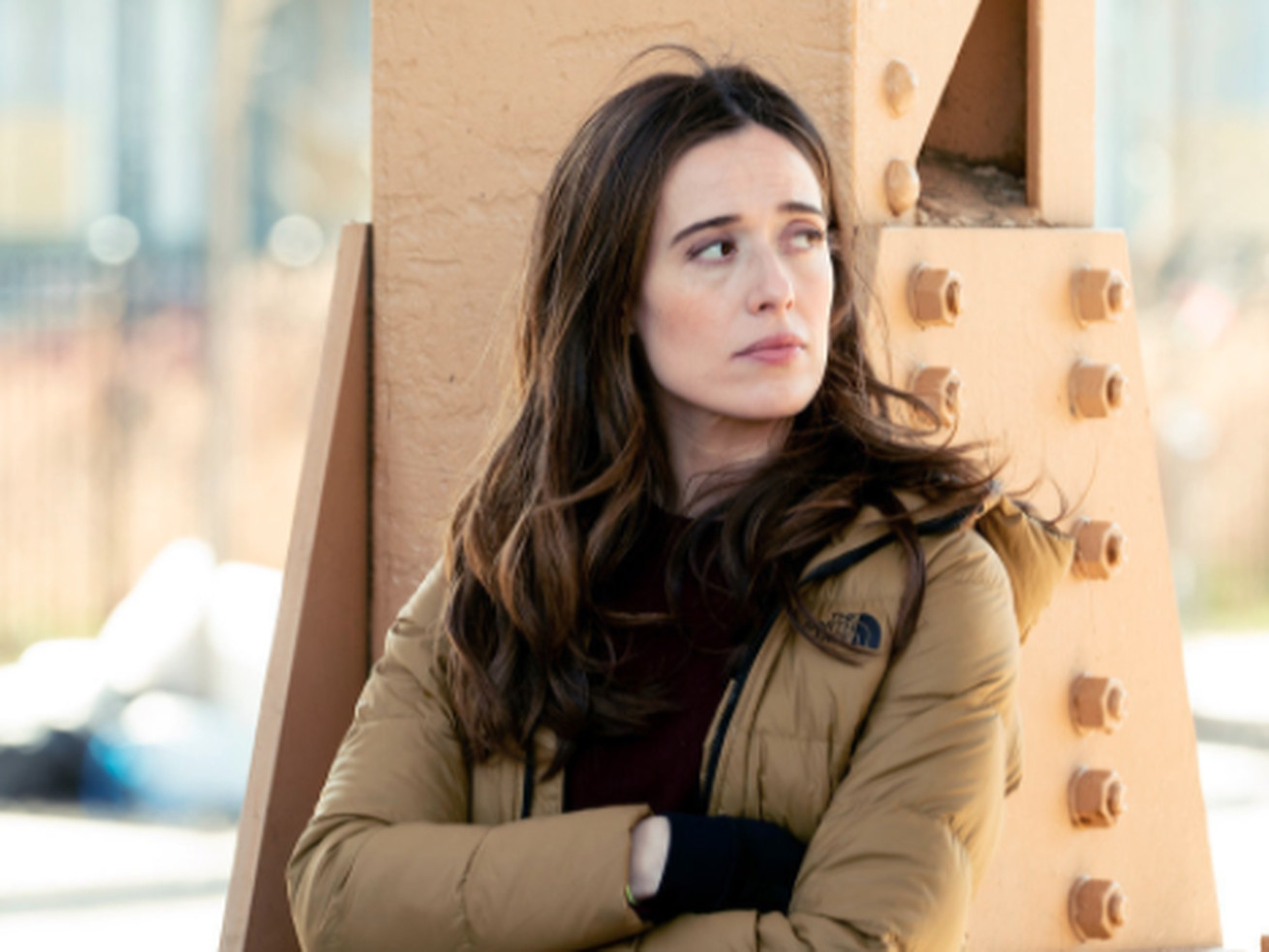
“Chicago P.D.” cast member Marina Squerciati says the show continues to make nuanced changes in storylines. | Lori Allen/NBC
Squerciati, a mother in real life, says: ‘Sometimes, I feel like I’m doing everything kind of well — I’m not killing it; I’m doing OK.’
As one door closes, another opens, and, in the case of Marina Squerciati’s “Chicago P.D.” character, she wrestles with the reasons why she takes on motherhood post-miscarriage.
Amid season eight of the popular NBC series, which airs Wednesdays at 9 p.m., a young girl whose parents are murdered ends up in government care and is taken in by Officer Kim Burgess. On this week’s episode, she decides whether to adopt the child.
In the previous season, Burgess suffered a miscarriage, of a child fathered by her ex-fiance, Adam Ruzek, after she was beaten while trying to save a young woman.
“Adam says to me: ‘Are you doing this for her or for you?’ And I think that speaks to good acts in general.” Squerciati said in an interview. “I think that unpacks something for her and I think ultimately she decided she was doing it for both of them, right? Saving both of them, so I don’t think it would have happened if she hadn’t had the miscarriage.
“But I think it’s a good thing; she’s a girl who has been traumatized — or lost her family. … I’m a woman who’s single and who’s lost a child, and we come together and I think that’s a good thing, ultimately.”
Squerciati, who in real life is the mother of a young girl, says her storyline shows why parenting — whether a person is the birth parent or not — isn’t a zero-sum endeavor.
“It’s great as an actor because you don’t have all the tools at the beginning of an episode, right? And you’re unpacking your box and learning how to deal with each thing as it comes up,” said Squerciati. “… Also as a working mom myself, it’s this constant hustle of trying to do your job while trying to take care of your kid, and earn a living at the same time. Sometimes, I feel like I’m doing everything kind of well — I’m not killing it [laughs]; I’m doing OK.”
Matt Dinerstein/NBCMarina Squerciati (left) with “Chicago P.D.” cast members Jason Beghe (from left), Patrick John Flueger (background), and Tracy Spiridakos.
And Squerciati says the show continues to make nuanced changes in storylines. “Chicago P.D.,” critics say, is one of TV’s main purveyors of “copaganda,” a tendency of TV series to depict police officers solely as heroes.
LaRoyce Hawkins, “P.D.’s” lone Black series regular, has been vocal in making sure storylines reflect real life, Squerciati says, in speaking with cast members and producers.
“I think that you can’t start a cop show — a Chicago cop show in a post-George Floyd world — without acknowledging it. I feel like that would be socially irresponsible,” said Squerciati. “I think that the writers giving LaRoyce this voice in order to speak to that part of the unrest is really important. Now, I don’t think the show does everything perfectly because it’s a television show, but I think addressing reform is really important.”
Three people were shot, one fatally, Monday in Chicago including a man who was killed in a shooting in South Shore on the South Side.
About 5:50 p.m., the 31-year-old was in the 7800 block of South South Shore Drive, when someone opened fire, striking him in the hand, groin and leg, Chicago police said. The man was taken to the University of Chicago Medical Center, where he was later pronounced dead.
In non-fatal shootings two teens were wounded in a drive-by in Englewood on the South Side. Just before midnight, a 17-year-old boy and an 18-year-old woman were outside in the 7000 block of South Throop Street, when someone inside a passing vehicle fired shots at them, police said. The boy was grazed by a bullet on the back of his head and brought to the University of Chicago Medical Center in good condition. The girl was struck in the ear and brought to Stroger Hospital where her condition was stabilized.
Two teens were wounded in a drive-by Monday night in Englewood on the South Side.
Just before midnight, a 17-year-old boy and an 18-year-old woman were outside in the 7000 block of South Throop Street, when someone inside a passing vehicle fired shots at them, Chicago police said.
The boy was grazed by a bullet on the back of his head and brought to the University of Chicago Medical Center in good condition, police said. The girl was struck in the ear and brought to Stroger Hospital where her condition was stabilized.
Tim Anderson (left) celebrates his grand slam in the second inning Saturday off Indians starting pitcher Triston McKenzie with Yasmani Grandal. | Charles Rex Arbogast/AP
Confident shortstop, who says he wants to be the best, just loves to compete.
One of manager Tony La Russa’s mantras for his young players is: Be confident but never comfortable. That leaves no room for complacency to seep in.
Even though he’s in his sixth year in the majors, shortstop Tim Anderson embodies that philosophy.
Since debuting in 2016, he has gone from a guy who can hit for some power but not for average to the 2019 batting champion and 2020 runner-up. And as he gains more experience in the majors, Anderson is going from making adjustments game by game to at-bat by at-bat.
For instance, in the White Sox’ 7-3 victory Saturday against the Indians, Anderson faced starter Triston McKenzie twice, with divergent results. McKenzie got Anderson to strike out with his fastball the first time, but in his second at-bat, Anderson clubbed another McKenzie fastball over the right-field wall for a grand slam.
Anderson said after the game that he adjusted his plan at the plate after the first at-bat, telling himself to look for the fastball again and time it up so he could connect the next time he saw it.
“I want to be the best, so I practice like it, and I think like it,” Anderson said. “Confidence is always at an all-time high. I never lose. A guy might strike me out, but I got myself out. He didn’t get me out.”
Or after an 0-for-4 night with four strikeouts last week against the Tigers, Anderson said he used a hard line drive that went foul as fuel for his next game. That day, he went 2-for-5 with an RBI. He’s confident enough to shrug off a bad night but never comfortable enough not to learn from it.
Ask Anderson’s manager and his teammates, and they love seeing what he can do on the field, whether it’s with his bat or his glove or on the bases. But maybe even more than that, they love his attitude and work ethic.
“You’re looking at a guy that has slowed the game down by just doing him, being him, being what he’s about,” right-hander Lance Lynn said.
La Russa likened having Anderson on his team to managing Rickey Henderson and Dennis Eckersley from his time with the Athletics in the 1980s and ’90s.
“What Tim does is what they did,” La Russa said. “He’s competing, and he’s having fun competing.”
The comparisons don’t stop there for La Russa, either. During the Bulls’ heyday in the 1990s, La Russa would go to their games and had the opportunity to watch them practice from time to time. In Anderson’s work ethic and energy, La Russa sees things that remind him of Michael Jordan — namely, his vocal leadership and drive to keep becoming a better player.
“He’s the same every stinking, wonderful day,” La Russa said. “He brings effort, he brings a commitment to the practices, to the competition. And he does it because he enjoys competing.”
As a result, Anderson has the Sox remaining sure of themselves but never complacent.
That attitude might carry over into the game as a whole, too. Just a few years ago, Anderson called baseball boring, and rather than leave it at that, he has set out to change things. In the process, he has helped bring excitement to Sox baseball.
“When you come on the South Side, that’s the plan,” Anderson said. “We’re going to try to give you a show and go out and have fun with it. Make you want to come back and watch some more.”
Avoid shopping or making important decisions from 7 to 9:20 p.m. Chicago time. After that, the moon moves from Aquarius into Pisces.
Aries (March 21-April 19)
Today you feel optimistic about your future. You’re happier when dealing with others, especially friends and members of groups and organizations. You also feel generous to others. (This is a good thing because what goes around, comes around.)
Taurus (April 20-May 20)
Whereas yesterday was a testy day with authority figures, today is different! Now parents, teachers and people in authority will sing your praises. One of the reasons you look so good to others is that you are confident; and you are kind.
Gemini (May 21-June 20)
Today you will do whatever is within your power to expand your experience of the world! Ideally, you want to travel. But if you can’t physically travel, then you will travel through film, books, the media and talking to people from other backgrounds. Great day to study or finish an important paper or manuscript. Yes!
Cancer (June 21-July 22)
Financial discussions will definitely benefit you. Oh yeah, you’ll be laughing all the way to the bank. However, avoid important financial discussions during the moon alert. This is easy to do. Looking swell!
Leo (July 23-Aug. 22)
This is fantastic day to enjoy the company of partners and close friends. (We’re talking spouses as well as professional contacts.) Because you are confident and you feel that you have nothing to fear, your good feelings will rub off onto others as well. Everyone will be happy to see you!
Virgo (Aug. 23-Sept. 22)
This is a good day for work-related travel. It’s also an excellent day for any kind of group activities, Zoom meetings and interactions with others that are work-related or not. You will do well dealing with the public in large numbers. Trust your intuition!
Libra (Sept. 23-Oct. 22)
Lucky you! This is a fun-loving, playful, light-hearted day! Enjoy talking to your kids, romantic partners and anyone related to sportsevents, the entertainment world or the hospitality industry. You feel happy because you know you’re in the groove. Yeah!
Scorpio (Oct. 23-Nov. 21)
Family discussions will go well today because people are happy to share their ideas and to be in each other’s company. In fact, you might decide to tackle a major renovation or an ambitious project that relates to home and family. Good luck!
Sagittarius (Nov. 22-Dec. 21)
When we change the way we see things, the things we see change. Today is a fantastic example of this. Because you are in a happier frame of mind, suddenly everything looks better. Enjoy short trips and dealing with siblings, neighbors and relatives.
Capricorn (Dec. 22-Jan. 19)
It’s a money day! (Music to your ears.) Look for ways to boost your earnings because this is possible. You might find a better-paying job. You might see ways to make money on the side. Dealings with distant or foreign interests are likely. Ka-ching!
Aquarius (Jan. 20-Feb. 18)
It doesn’t get much better than this. Today the moon is in your sign lined up with moneybags lucky Jupiter. You will enjoy the company of others and you will get what you give in terms of kindness, assistance and generosity to others. Cool!
Pisces (Feb. 19-March 20)
You are a sensitive sign and today your concerns for the welfare of others, especially those who are less fortunate, are genuine. This could lead to metaphysical or spiritual insights on your part. You will find it rewarding if you can build a strong rapport with people who need your help.
If Your Birthday Is Today
Actor Will Arnett (1970) shares your birthday. You are a cool, confident perfectionist. You are also mild-mannered, ambitious and hard-working. As your new year begins, you are entering a time of change in your life. Get ready to pivot in a major way. Welcome this because it presents exciting opportunities for you to explore new ideas and ways of doing things. As you navigate these changes, your personal independence will be tested.




/cdn.vox-cdn.com/uploads/chorus_asset/file/22488851/merlin_83707132.jpg)