What’s New

Financial advisor gets 13 years in prison for swindling $5.1 million from investorson May 4, 2021 at 10:03 pm

A former financial advisor from Chicago was sentenced to 13 years in prison for swindling investors out of $5.1 million to fund club memberships and a Los Angeles mansion.

Darayl Davis, 48, used the money to pay rent for the eight-bedroom mansion and also spent his ill-gotten gains on theater tickets, plane tickets, rental cars and luxury hotels, the U.S. Attorney’s office for the Northern District of Illinois said.

He carried out his scheme from 2003 to 2018, the attorney’s office said. Davis pleaded guilty earlier this year to one count of mail fraud, and the sentence was handed down Monday.

Prosecutors said Davis told investors they would be protected from any losses and would receive fixed interest payments if they invested with his firms, Washington, D.C.-based Financial Assurance Corp. and Los Angeles-based Affluent Advisory Group LLC.

In reality, Davis didn’t invest the funds as he promised and spent the money on himself, prosecutors said. He tried to hide the scam by using funds from some investors to pay others in a Ponzi-like scheme.

Davis targeted fellow church members, friends and former clients, prosecutors said. In all, more than 25 people were defrauded out of more than $5.1 million. Many of the victims were retirees who gave Davis all of their savings.

“Davis knew these people trusted him and deliberately exploited that trust,” Assistant U.S. Attorneys Christopher Catizone and Philip N. Fluhr argued in the government’s sentencing memorandum.

Read More

Financial advisor gets 13 years in prison for swindling $5.1 million from investorson May 4, 2021 at 10:03 pm Read More »

Biden aims for vaccinating 70% of adult Americans by July 4on May 4, 2021 at 10:13 pm

WASHINGTON — President Joe Biden on Tuesday set a new vaccination goal to deliver at least one shot to 70% of adult Americans by July Fourth as he tackles the vexing problem of winning over the “doubters” and those unmotivated to get inoculated.

Demand for vaccines has dropped off markedly nationwide, with some states leaving more than half their available doses unordered. Aiming to make it easier to get shots, Biden called for states to make vaccines available on a walk-in basis and he will direct many pharmacies to do likewise.

His administration for the first time also is moving to shift doses from states with weaker demand to areas with stronger interest in the shots.

“You do need to get vaccinated,” Biden said from the White House. “Even if your chance of getting seriously ill is low, why take the risk? It could save your life or the lives of somebody you love.”

Biden’s goal equates to delivering at least the first shot to 181 million adults and fully vaccinating 160 million. It’s a tacit acknowledgment of the declining interest in shots.

Already more than 56% of American adults have received at least one dose of a COVID-19 vaccine and nearly 105 million are fully vaccinated. The U.S. is currently administering first doses at a rate of about 965,000 per day — half the rate of three weeks ago, but almost twice as fast as needed to meet Biden’s target.

“I’d like to get it 100%, but I think realistically we can get to that place between now and July Fourth,” Biden said of his new goal.

He said the administration would focus on three areas as it tries to ramp up the pace of vaccinations:

–Adults who need more convincing to take the vaccine.

–Those who have struggled or are in no hurry to obtain a shot.

–Adolescents aged 12-15, once federal authorities approve vaccination for that age group.

Acknowledging that “the pace of vaccination is slowing,” Biden predicted the inoculation effort is “going to be harder” when it comes to convincing “doubters” of the need to get their shots.

He said the most effective argument to those people would be to protect those they love. “This is your choice: It’s life and death.”

Biden’s push comes as his administration has shifted away from setting a target for the U.S. to reach “herd immunity,” instead focusing on delivering as many shots into arms as possible. Officials said Biden’s vaccination target would result in a significant reduction in COVID-19 cases heading into the summer.

To that end, the Biden administration is shifting the government’s focus toward expanding smaller and mobile vaccination clinics to deliver doses to harder-to-reach communities. It is also spending hundreds of millions of dollars to try to boost interest in vaccines through education campaigns and greater access to shots through community organizations that can help bring people to clinics.

Biden touted creative efforts to make it “easier and more fun” to get vaccinated, such as grocery stores offering discounts to shoppers who come to get shots and sports leagues that hold promotions to gets shots for their fans.

Ahead of the Food and Drug Administration’s expected authorization of the Pfizer vaccine for kids aged 12-15, the White House is developing plans to speed vaccinations for that age group. Biden urged states to administer at least one dose to adolescents by July Fourth and work to deliver doses to pediatricians’ offices and other trusted locations, with the aim of getting many of them fully vaccinated by the start of the next school year.

While younger people are at dramatically lower risk of serious complications from COVID-19, they have made up a larger share of new virus cases as a majority of U.S. adults have been at least partially vaccinated and as higher-risk activities like indoor dining and contact sports have resumed in most of the country.

Officials hope that extending vaccinations to teens — who could get the first dose in one location and the second elsewhere, if necessary — will further accelerate the nation’s reduced virus caseload and allow schools to reopen with minimal disruptions this fall.

The urgency to expand the pool of those getting the shots is rooted in hopes of stamping out the development of new variants that could emerge from unchecked outbreaks and helping the country further reopen by the symbolic moment of Independence Day, exactly two months away. Though White House officials privately acknowledge the steep challenge, Biden sounded an optimistic note.

“The light at the end of the tunnel is actually growing brighter and brighter,” Biden said.

Biden’s speech comes as the White House announced a shift away from a strict allocation of vaccines by state population. The administration says that when states decline to take all the vaccine they have been allocated, that surplus will shift to states still awaiting doses to meet demand.

Governors were informed of the change by the White House on Tuesday morning.

This week, Iowa turned down nearly three quarters of the vaccine doses available to the state for next week from the federal government because demand for the shots remains weak. Louisiana, meanwhile, hasn’t drawn down its full vaccine allocation from the federal government for the last few weeks.

Data from the Centers for Disease Control and Prevention shows Louisiana’s coronavirus vaccination rate is well behind most states. About 27% of state residents are fully vaccinated while 32% have received at least one dose of the vaccine, according to the state health department.

The White House previously resisted efforts to distribute vaccine by metrics other than population. Biden rebuffed Michigan Gov. Gretchen Whitmer last month when she requested more doses as her state was experiencing a surge in virus cases. White House press secretary Jen Psaki said at the time nearly all states were ordering at or near their population allocations, which is no longer the case.

Individual states have made similar shifts internally to account for changing demand. Last week, Washington state changed the way it allocates coronavirus vaccine to its counties. Previously the state doled out supplies to counties proportionate to their populations. But now amounts will be based on requests from health care providers.

___

AP Writer Melinda Deslatte in Baton Rouge, Louisiana contributed to this report.

Read More

Biden aims for vaccinating 70% of adult Americans by July 4on May 4, 2021 at 10:13 pm Read More »

Overpass collapse on Mexico City metro kills at least 24on May 4, 2021 at 10:35 pm

MEXICO CITY — The death toll from the collapse of an overpass on the Mexico City metro rose to 24 Tuesday as crews untangled train carriages from the steel and concrete wreckage that fell onto a roadway.

Monday night’s accident was one of the deadliest in the history of the subway, and questions quickly arose about the structural integrity of the mass transit system, among the world’s busiest.

Another 27 people remained hospitalized of the more than 70 injured when the support beams collapsed about 10:30 p.m. as a train passed along the elevated section, Mayor Claudia Sheinbaum said.

On Tuesday, a crane carefully lowered a train car containing four bodies to the ground.

Of the 24 killed, 21 died at the scene, while the others died at hospitals. Only five have been identified so far. Children were among the fatalities, Sheinbaum said.

On Tuesday afternoon, Carlos Miramar waited under a tent on metal chairs with two other relatives to receive the body of his uncle. The 25-year-old student had been awake since beginning an “exasperating” odyssey the previous night that took them to seven hospitals and multiple prosecutor’s offices in search of his uncle.

Now they had found 38-year-old Carlos Pineda, a man he described as a soccer fan and buoyant personality. Pineda is survived by his wife, two children ages 7 and 13, and his mother.

“I’m tired and unable to sleep,” Miramar said. “He didn’t deserve this end. He was a good father, good husband and good son.”

Initial analysis pointed to a “presumed structural failure,” Sheinbaum said, promising a thorough and independent inquiry. She added that a Norwegian firm had been hired to investigate.

“I did not have any report nor alert of any problem that could have led us to this situation,” she said.

The overpass was about 16 feet above the road in the borough of Tlahuac, but the train ran above a concrete median strip, which apparently lessened the casualties among motorists.

Abelardo Sanchez, a 38-year-old cook, was just closing up his sandwich shop beside the metro line when he said the ground shook, a tremendous noise echoed, lights flickered and the air filled with dust and the smell of burning wires.

Stunned, Sanchez didn’t initially react. “Then a guy in a white shirt with blood on his arms, his hands and chest came out and another guy came to help him here on the sidewalk, and he was there trembling,” he said.

The Mexico City Metro — which is among the world’s cheapest with tickets costing about 25 cents — has had at least three serious accidents since its inauguration half a century ago. In March 2020, a collision between two trains at the Tacubaya station left one passenger dead and injured 41. In 2015, a train that did not stop on time crashed into another at the Oceania station, injuring 12. In October 1975, at least 26 people were killed in another accident.

A magnitude 7.1 earthquake in 2017 exposed dangerous construction defects in the elevated line near where Monday’s accident occurred. Authorities at the time had done patchwork repairs on the columns and horizontal beams.

Julio Yanez, a 67-year-old lawyer whose apartment overlooks the collapsed metro line, was working at his computer when he heard a loud noise and felt his building shake. He saw a cloud of dust and falling debris followed by an eerie silence until emergency vehicles began arriving. Helicopters landed at a nearby Walmart to ferry the injured to hospitals.

The scene shook him because he had exited the metro at that same station earlier in the day.

“That part there was already declared bad … in the earthquake, and the authorities didn’t pay attention,” Yanez said, noting similar problems were reported at another nearby station, but nothing was done. “They are time bombs.”

The collapse occurred on Line 12, the subway’s newest, that stretches to the city’s south side. Like many of the dozen subway lines, it runs underground through more central areas of the city of 9 million but is on elevated concrete structures on the outskirts.

A report issued by the subway system including photos in 2017 showed that the base of one vertical column supporting the tracks had cracked and shed layers of concrete because not enough steel rebar stirrups had been used when it was built around 2010. In 2017, authorities patched and widened the column by injecting resins, swathing it in carbon fiber, building a jacket of additional rebar around the base and pouring concrete around the collar.

Authorities also found that one of the horizontal beams had come loose from its support at the top of a vertical column and was sagging — the kind of failure that could have contributed to Monday’s collapse. Authorities at the time welded steel diagonal braces to the bottom of the beam, chipped out and repoured fractured concrete elements.

Mexican Foreign Relations Secretary Marcelo Ebrard called the collapse “the most terrible accident we have ever had in mass transportation.” Ebrard was Mexico City’s mayor from 2006 to 2012, when the affected line was built.

Allegations of poor design and construction on the subway line emerged soon after the Ebrard left office as mayor. The line had to be partly closed in 2014 so tracks could be repaired.

Ebrard, who leads Mexico’s efforts to obtain coronavirus vaccines, has been considered a potential presidential candidate in 2024.

“Of course, the causes should be investigated and those responsible should be identified,” he wrote. “I repeat that I am entirely at the disposition of authorities to contribute in whatever way is necessary.”

The line was closed Tuesday and hundreds of buses were called in. Thousands in surrounding neighborhoods lined up before dawn to catch the buses for work.

___

Associated Press writers E. Eduardo Castillo, Mark Stevenson and Maria Verza contributed.

Read More

Overpass collapse on Mexico City metro kills at least 24on May 4, 2021 at 10:35 pm Read More »

Facebook board’s Trump decision could have wider impactson May 4, 2021 at 10:28 pm

Since the day after the deadly Jan. 6 riots on the U.S. Capitol, former President Donald Trump’s social media accounts have been silent — muzzled for inciting violence using the platforms as online megaphones.

On Wednesday, his fate on Facebook, the biggest social platform around, will be decided. The company’s quasi-independent Oversight Board will announce its ruling around 9 a.m. ET. If it rules in Trump’s favor, Facebook has seven days to reinstate the account. If the board upholds Facebook’s decision, Trump will remain “indefinitely” suspended.

Politicians, free speech experts and activists around the world are watching the decision closely. It has implications not only for Trump but for tech companies, world leaders and people across the political spectrum — many of whom have wildly conflicting views of the proper role for technology companies when it comes to regulating online speech and protecting people from abuse and misinformation.

After years of handling Trump’s inflammatory rhetoric with a light touch, Facebook and Instagram took the drastic step of silencing his accounts in January. In announcing the unprecedented move, Facebook CEO Mark Zuckerberg said the risk of allowing Trump to continue using the platform was too great.

“The shocking events of the last 24 hours clearly demonstrate that President Donald Trump intends to use his remaining time in office to undermine the peaceful and lawful transition of power to his elected successor, Joe Biden,” Zuckerberg wrote on his Facebook page on Jan. 7.

Facebook created the oversight panel to rule on thorny content on its platforms following widespread criticism of its difficulty responding swiftly and effectively to misinformation, hate speech and nefarious influence campaigns. Its decisions so far — all nine of them — have tended to favor free expression over the restriction of content.

In its first rulings, the panel overturned four out of five decisions by the social network to take down questionable material. It ordered Facebook to restore posts by users that the company said broke standards on adult nudity, hate speech, or dangerous individuals.

Critics of Facebook, however, worry that the Oversight Board is a mere distraction from the company’s deeper problems — ones that can’t be addressed in a handful of high-profile cases by a semi-independent body of experts.

“Facebook set the rules, are judge, jury and executioner and control their own appeals court and their own Supreme Court. The decisions they make have an impact on our democracies, national security and biosecurity and cannot be left to their own in house theatre of the absurd,” said Imran Ahmed, CEO Center for Countering Digital Hate, a nonprofit critical of Facebook. “Whatever the judgement tomorrow, this whole fiasco shows why we need democratic regulation of Big Tech.”

Gautam Hans, a technology law and free speech expert and professor at Vanderbilt University, said he finds the Oversight Board structure to be “frustrating and a bit of a sideshow from the larger policy and social questions that we have about these companies.”

“To some degree, Facebook is trying to create an accountability mechanism that I think undermines efforts to have government regulation and legislation,” Hans said. “If any other company decided, well, we’re just going to outsource our decision-making to some quasi-independent body, that would be thought of as ridiculous.”

Read More

Facebook board’s Trump decision could have wider impactson May 4, 2021 at 10:28 pm Read More »

Campaign stunt, ads bring California recall into new phaseon May 4, 2021 at 10:40 pm

SACRAMENTO, Calif. — California’s recall election now features “the beast” and a “compassionate disruptor.”

That’s how John Cox and Caitlyn Jenner, Republicans running for California governor, pitched themselves to voters Tuesday in new campaign ads, taking different tones in their bids to oust Democratic Gov. Gavin Newsom.

Cox, a 65-year-old businessman who lost in a landslide to Newsom in 2018, released a video calling himself “the beast” to the photogenic Newsom’s “beauty.” He also resorted to name-calling reminiscent of former President Donald Trump, repeatedly labeling Newsom a “pretty boy” who lacks governing chops.

Launching a bus tour in Sacramento with a live Kodiak bear named Tag ambling behind him in the hot sun, Cox promised to bring “beastly” changes to state government. He spent $5 million to begin airing a 30-second version on television statewide, his campaign said, a major amount this early in the campaign and indicative of the need to raise his profile in a crowded field.

The stunt was aimed at drawing eyes to his campaign, but he promised to discuss “serious issues” — like bringing down the cost of housing, boosting the state’s water resources and preventing special interests from influencing government.

“You have to get this message out and that’s what we’re going to do here,” he said.

Jenner, meanwhile, released a video with a more inspirational and patriotic tone. She calls herself a “compassionate disruptor” in the ad that features clips from her Summer Olympics appearance in 1976, when she won the gold medal in the men’s decathlon.

Jenner, now a 71-year-old transgender woman, has held no campaign events since announcing her candidacy nearly two weeks ago. A televised town hall in her hometown of Malibu is planned for Wednesday. The ad offers her most expansive commentary as a candidate.

“I’m running to be governor for all Californians, to reclaim our true identity, to bring back the gold to the Golden State,” Jenner says in the ad.

The ad shows a photo of Newsom only once and never says his name, though she is clearly blasting his pandemic policies by highlighting closed businesses and kids out of school. Jenner’s campaign didn’t immediately answer whether the campaign was running corresponding ads on television or whether the pitch was digital only.

The release of the ads marked a new phase in the campaign. Later Tuesday, two firefighters unions endorsed Newsom at the governor’s first campaign-style event of the recall.

“This is a big day as we really kick off our efforts to defeat this recall,” the governor said, flanked by more than a dozen firefighters.

He declined to comment on Jenner’s or Cox’s ads. Instead, he pivoted to the state’s efforts on vaccinations, wildfire prevention and job creation. Standing in jeans and a zip up with the California bear logo on it, Newsom turned to his own familiar bear-related metaphor to say the state is “roaring back” from the pandemic.

He turned to well-worn talking points painting the recall as a partisan power grab led by extremists, But when pushed by a reporter, he acknowledged some Democrats and independents are frustrated, too.

“This was a challenging year for the world, not just this country and our state. And in that process, I understand why people express themselves the way they did. So my job is to earn that trust back,” he said.

Newsom wasn’t expected to face an election until 2022 but critics of his coronavirus response and liberal policies succeeded in collecting more than the 1.5 million signatures needed for a recall election.

There are still several steps remaining before the election is officially certified, but the signatures collection and verification were the biggest hurdles. The election will likely be scheduled for the fall.

Other Republicans in the race include former San Diego Mayor Kevin Faulconer and former Congressman Doug Ose.

Cox won less than 40% of the vote against Newsom in 2018 and has never won elected office despite many attempts. He said that run gives him a statewide base to grow this time around. Faulconer has not run a statewide campaign and Ose briefly ran for governor in 2018 before dropping out.

Cox pitched himself Tuesday as a man who knows struggle. He grew up with a single mom, paid his way through college, and launched a succesful business career, mostly in real estate. He’s already spent $10 million of his own money on the race and said he is willing to spend more.

“Millions of people voted for something named John Cox but he was never a very, I don’t think, a very clearly defined John Cox, and so we’re going to define him a lot better,” said Fred Davis, an ad-maker now working for Cox who is known for creating quirky, attention-grabbing political spots, including the “demon sheep” ad in Carly Fiorina’s unsuccessful 2010 bid against California U.S. Sen. Barbara Boxer.

Cox twice declined to answer whether he’d welcome former President Donald Trump to campaign for him. Trump endorsed Cox in 2018 but is unpopular in the state.

“The pretty boy politician is going to make it all about the former president and the partisan battles of the past. This is about the California of the here and now,” Cox said.

Jenner is working with several former aides to Trump.

Read More

Campaign stunt, ads bring California recall into new phaseon May 4, 2021 at 10:40 pm Read More »

The Big Red Bus: A Chicago Bulls Podcast; Episode 65 – The Joe Cowley InterviewNick Bon May 4, 2021 at 9:00 pm

Can the Bulls make a late playoff push as they now sitting four games out of the final playoff spot in the East. See Red Fred sits down with the Chicago Sun-Times’ Joe Cowley to discuss how the winding road has brought the Bulls into their predicament, what’s next, and much more!

The post The Big Red Bus: A Chicago Bulls Podcast; Episode 65 – The Joe Cowley Interview first appeared on CHI CITY SPORTS l Chicago Sports Blog – News – Forum – Fans – Rumors.Read More

The Big Red Bus: A Chicago Bulls Podcast; Episode 65 – The Joe Cowley InterviewNick Bon May 4, 2021 at 9:00 pm Read More »

Madrid’s anti-lockdown champion heads to win in electionAssociated Presson May 4, 2021 at 8:54 pm

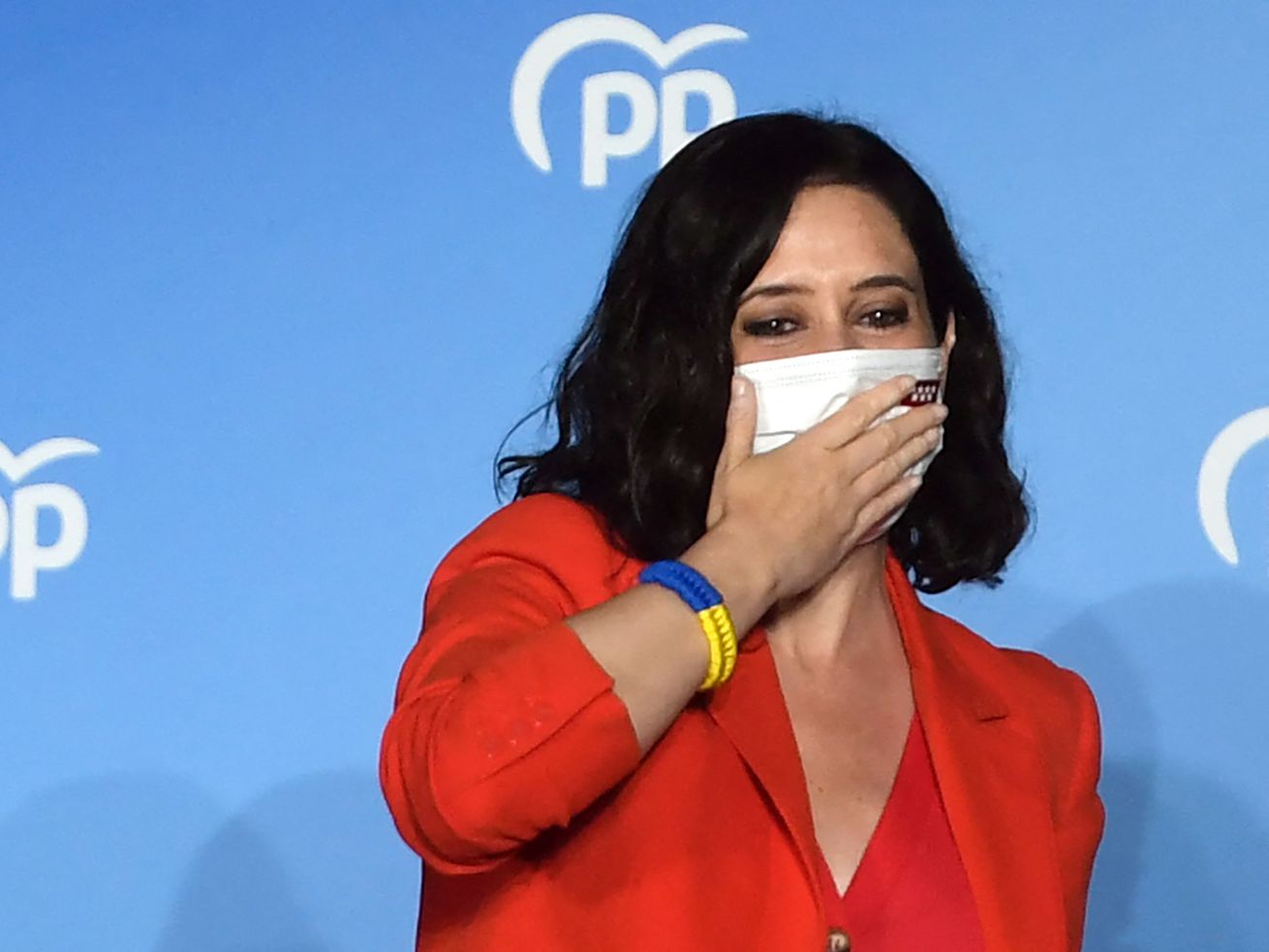
Madrid regional president and People’s Party  candidate Isabel Diaz Ayuso blows a kiss at the People’s Party headquarters in Madrid as she celebrates her victory in the Madrid regional elections on May 4, 2021.
Madrid regional president and People’s Party candidate Isabel Diaz Ayuso blows a kiss at the People’s Party headquarters in Madrid as she celebrates her victory in the Madrid regional elections on May 4, 2021. | Getty

With 70% of the ballots counted, Isabel Díaz Ayuso was backed by 44% of voters, up from 22% in the last election two years ago.

MADRID — Madrid’s conservative leader, a champion of relaxed measures against the coronavirus and a scourge of the left-wing central government’s handling of the pandemic, looked on course for a solid victory in a regional election Tuesday.

With 70% of the ballots counted, Isabel Díaz Ayuso was backed by 44% of voters, up from 22% in the last election two years ago. Three rival left-wing parties together had 41%.

The preliminary results gave Díaz Ayuso’s Popular Party 64 seats in the 136-seat regional assembly, more than double from 2019 but short of the 69-seat majority needed to form a government.

Vox, the far-right party that mixes Spanish patriotism and populism and is shaping up as Díaz Ayuso’s new choice for legislative support, was set to win one more regional lawmaker, rising from 12 seats to 13.

Voters shunned the liberal center-right Citizens party that was Díaz Ayuso’s junior coalition partner before she called the early election seeking to broaden her power base. The centrist party, which is trying to keep afloat also at the national level, lost all of its 26 regional lawmakers because it failed to reach the 5% vote threshold.

The preliminary results were a blow for the regional Socialists of Prime Minister Pedro Sánchez, losing 11 assembly seats, from 37 to 25.

Sánchez’s government’s junior coalition partner, the anti-austerity United We Can, obtained 10 seats, up from seven in 2019, after leader Pablo Iglesias quit his Cabinet position to run in Madrid.

More Madrid, a new upstart regional party led by a staunch defender of public health and education against the conservatives’ austerity and privatization record, grew from 20 to 24 seats.

Despite a persistent high infection rate that has recently plateaued, Madrid residents voted in droves, shooting the turnout to more than 69% of the 5 million eligible voters by 7 p.m., an hour before voting ended and up from 59% in the 2019 regional election.

Long queues of socially distanced voters formed outside polling stations in schools, sports centers and even a bullring. Authorities imposed strict voting requirements to prevent the spread of infections: double masks, separate entrance and exit paths for voters and plastic screens for election workers.

Older adults were encouraged to cast their ballots during a 2-hour period mid-morning and the hour before polls close was reserved for people quarantining because of COVID-19.

The Madrid region is Spain’s main economic engine and the country’s busiest transportation hub. It’s home to 14% of Spain’s 47 million people but has recorded nearly one-fifth of the country’s 3.5 million confirmed virus cases and of the national pandemic death toll of over 78,000.

The only incident reported was a brief semi-naked protest by the activist group Femen who held signs reading “It’s not patriotism, it’s fascism” outside where Vox’s main candidate voted.

Read More

Madrid’s anti-lockdown champion heads to win in electionAssociated Presson May 4, 2021 at 8:54 pm Read More »

Cubs put Nico Hoerner, Jake Arrieta and Dan Winkler on 10-day injured listRussell Dorseyon May 4, 2021 at 9:43 pm

Cubs center fielder Ian Happ, center, is carted off after a collision with teammate Nico Hoerner, foreground, in the eighth inning of Sunday’s game.
Cubs center fielder Ian Happ, center, is carted off after a collision with teammate Nico Hoerner, foreground, in the eighth inning of Sunday’s game. | Jeff Dean/AP

Hoerner (left forearm strain), Arrieta (right thumb scrape) and Winkler (right triceps tendinitis) are expected be back soon thanks to several off-days in the next week.

The Cubs made a flurry of roster moves Tuesday, putting infielder Nico Hoerner (left forearm strain), right-handers Jake Arrieta (right thumb scrape) and Dan Winkler (right triceps tendinitis) on the 10-day injured list. The team recalled lefty Kyle Ryan and right-hander Keegan Thompson, and selected infielder Ildemaro Vargas from Class AAA Iowa.

“We’re optimistic about everyone,” manager David Ross said before Game 1 of a doubleheader against the Dodgers. “I don’t think they’re very serious [injuries].”

Hoerner’s IL stint comes after his collision with outfielder Ian Happ in Sunday’s loss to the Reds. Hoerner said before the Cubs’ doubleheader that there was some soreness after Sunday’s game, but nothing too severe. But after meeting with trainers Monday, things had progressed, leading to the team’s decision to put him on the IL.

“I was pretty stressed in the outfield, just not knowing what condition he was in,” Hoerner said. “Pretty shaken up. Just seeing a friend leave the field like that doesn’t feel good at all. So when I could go back to the locker room and see him and he was in good spirits, that definitely made me feel good because it was probably the scariest baseball play I’ve been a part of.”

It appeared Happ took the worst of the collision, but has come away from the scary scene better than many expected. The 26-year-old outfielder is still undergoing tests, but has cleared the team’s concussion protocols.

“Tests seem to be all good,” Ross said. “He’s pretty sore in a lot of different areas. He ran through a ton of tests yesterday to make sure he was fine and I think all the tests I know have come back and he’s in a good place.”

Hendricks twirls seven-inning complete game in Game 1

Things didn’t go well for starter Kyle Hendricks in the month of April as he sported a 7.54 ERA over the first month of the season. But in first start in May, Hendricks looked like the ace the Cubs need him to be as he tossed a seven-inning, complete game in the Cubs’ 7-1 victory over the Dodgers in Game 1.

Hendricks went to work after the Cubs took a commanding first-inning lead and held a tough Dodgers’ lineup in check, allowing just one run one seven hits over seven innings of work. He struck out six batters and walked one.

“I did a much better job just intent-wise,” Hendricks said. “Going pitch-to-pitch. [Willson] had me locked in on that. The boys going out and putting up four runs early was huge to help me have that confidence to go attack, which I’ve been trying to do better.”

It was the first time this season a Cubs starter has pitched seven innings and just the second a starter has reached the seventh inning since Trevor Williams did it on April 5 against Milwaukee.

“I think Kyle looked a lot more like himself from the jump,” Ross said after the Game 1 victory.

Alzolay to start Game 3 vs. Dodgers

Right-hander Adbert Alzolay will start the series finale vs. the Dodgers on Wednesday, replacing Arrieta, who was scheduled to make the start before going on the IL. Alzolay had his best start of the season in his last outing, pitching six innings and striking out six against the Braves.

Read More

Cubs put Nico Hoerner, Jake Arrieta and Dan Winkler on 10-day injured listRussell Dorseyon May 4, 2021 at 9:43 pm Read More »

Man fatally shot in South ShoreSun-Times Wireon May 4, 2021 at 9:12 pm

A man was shot and killed May 3, 2021, in South Shore.
A man was shot and killed May 3, 2021, in South Shore. | File photo/Getty Images

About 5:50 p.m., the 31-year-old was in the 7800 block of South South Shore Drive when someone opened fire, striking him in the hand, groin and leg, Chicago police said.

A man was killed in a shooting Monday in South Shore, police said.

About 5:50 p.m., the 31-year-old was in the 7800 block of South South Shore Drive when someone opened fire, striking him in the hand, groin and leg, Chicago police said.

The man was taken to the University of Chicago Medical Center, where he was later pronounced dead, police said.

The Cook County medical examiner’s office hasn’t identified the man, but an autopsy Tuesday ruled his death a homicide.

Area Two detectives are investigating.

Read More

Man fatally shot in South ShoreSun-Times Wireon May 4, 2021 at 9:12 pm Read More »

In the rarest of NBA seasons — an MVP center! — let’s remember the best to ever do itSteve Greenbergon May 4, 2021 at 9:49 pm

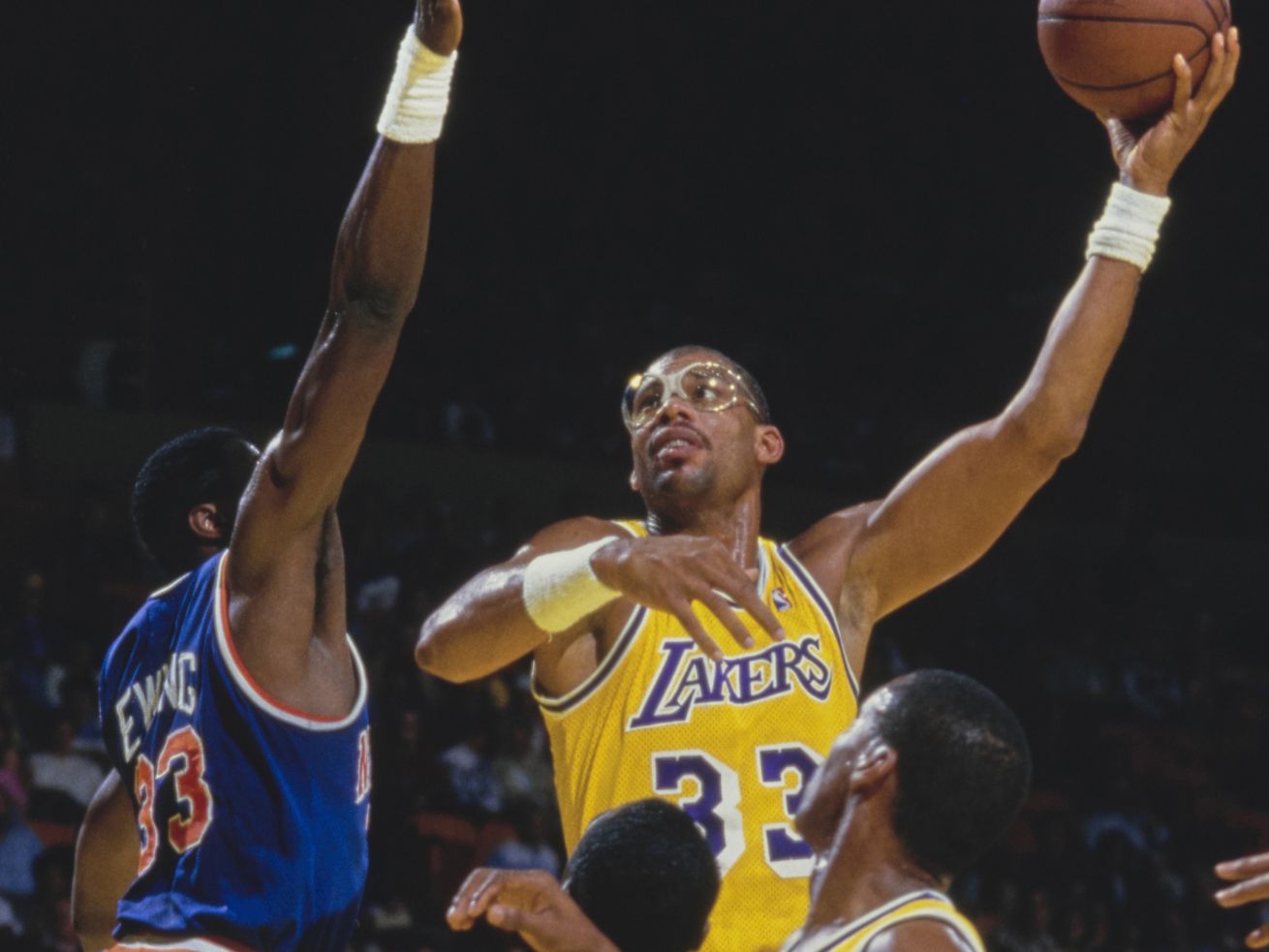
New York Knicks vs Los Angeles Lakers
Nobody did it like Kareem. | Photo by Rick Stewart/Allsport/Getty Images

How many basketball lovers in 2021 fail to understand that Kareem Abdul-Jabbar belongs — simply must be — on the sport’s Mount Rushmore as clearly and automatically as Michael Jordan and LeBron James?

We might as well dispense with the formalities and give Nuggets center Nikola Jokic his first MVP award right now.

That’s what you get when you strap your Jamal Murray-less team across your broad shoulders and carry it — despite many outsiders assuming the situation is hopeless — on a 9-2 tear that puts the clamps on a top-four seed in the Western Conference. Murray’s ACL tear last month was a cruel blow to the Nuggets, but Jokic will bring the franchise its first MVP and the center position its first MVP since Shaquille O’Neal won the award in 2000.

In a refreshing throwback to a time when big men ruled the sport, Jokic and 76ers center Joel Embiid almost surely will finish 1-2 in the voting. What a couple of players they are. So dynamic, so skilled, so unstoppable when they really get rolling.

But wait. Let’s not kid ourselves. And let’s not mislead our readers who aren’t yet old enough to stand on their front lawns and yell at clouds as white as the stubble on their chins.

Though the game in many ways gets better and better — and though many of the best players now are, hands down, better than many of the best players of previous generations — basketball has suffered an irreparable disconnect when it comes to the center position. That’s an admittedly long-winded way of saying the best centers of yore would’ve eaten Jokic and Embiid for breakfast.

No one more so than Kareem Abdul-Jabbar.

I was reminded of Abdul-Jabbar Tuesday when a photo taken exactly 10 years prior popped up on my phone. It was of Abdul-Jabbar, then 64, in Los Angeles, where I interviewed him for a magazine feature. During that interview, we discussed at length the limelight he’d generally taken pains to avoid from the time he arrived at UCLA until long after his 20-year NBA career was over. He had no doubt it had bridled media praise of his career to such an extent that younger fans were no longer automatically counting him as one of the three or four greatest players ever.

“Sometimes people just can’t see through the fog,” he said then. “Maybe I’m a victim of that.”

Even the Lakers had, Abdul-Jabbar felt, kind of forgotten about him. This despite his six rings (five won in L.A.) and — a decade later, still NBA records all — six MVPs, 19 All-Star appearances and 35,318 points scored. Not to mention his three straight national titles won at UCLA as the greatest player the college game has ever seen.

Other ex-Lakers made themselves extremely visible, while the shy, scholarly Abdul-Jabbar remained what had often been mischaracterized as aloof. Somehow, by 2011, five statues had gone up outside Staples Center and not one of them was of a goggles-wearing, sky-hooking No. 33. How could Magic Johnson, Jerry West, Chick Hearn, Wayne Gretzky and Oscar De La Hoya all have been immortalized before him? It boggled the mind — not just his — and understandably offended him.

“It doesn’t make me happy,” he said. “It’s definitely a slight. I feel slighted.”

Kareem Abdul-Jabbar Statue Unveiling At STAPLES Center
Photo by Kevork Djansezian/Getty Images
Abdul-Jabbar with his Staples statue in 2012.

The story created a real hubbub and, in 2012, Abdul-Jabbar’s statue went up in front of Staples. It was long overdue. And the memory of it makes me wonder how many basketball lovers out there in 2021 fail to understand that Abdul-Jabbar belongs — simply must be — on the sport’s Mount Rushmore as clearly and automatically as anyone else. Yes, that includes Michael Jordan and LeBron James.

Carve Jordan, James and Kareem into that mountainside, I say, and let everyone else fight to be Guy No. 4.

JUST SAYIN’

No, I can’t tell you who my Guy No. 4 is. I’ve never been able to decide.

But what about the Mount Rushmore of centers? Who’s on there with Kareem? Is Bill Russell an automatic? Is Shaq? What about Wilt Chamberlain and Hakeem Olajuwon? Are Jokic and Embiid even in the top 10?

Wait, scratch that last question. It was off topic and uncalled for.

• As one-two punches go, the injuries to outfielders Eloy Jimenez and Luis Robert that have cost the White Sox two of their most talented players are stunning. But nobody’s stopping this fight yet. Not even close.

The Sox will weather this barrage of bad luck for as long as their starting rotation will carry them. It’s the wrong question to ask if Jose Abreu, Tim Anderson, Yermin Mercedes and company can put enough runs on the board. The right one: Can Carlos Rodon and Lance Lynn keep leading the way?

Northwestern v Gonzaga
Photo by Christian Petersen/Getty Images
Collins has had a rough four years.

• New ACC commissioner Jim Phillips was a state-of-the-art athletic director at Northwestern, but he left Evanston without having confronted the hardest issue facing successor Mike Polisky: What do do about Chris Collins and a basketball program that has disappeared since reaching the NCAA Tournament in 2017?

The Wildcats have had four straight losing seasons — with a dreadful Big Ten record of 19-58 — since that high point. Collins is signed through the 2024-25 campaign. Polisky won’t be able to ignore the purple elephant in the room for long.

• Meaningless Blackhawks games vs. meaningless Bulls games:

Discuss.

Better yet, don’t.

• Note to brand-new Bears quarterback Justin Fields: Take a deep breath, pal. Everything’s great. There’s no pressure. Just go about your business and be the best player you can be.

We’ll handle the rest, starting with figuring out who’s going to make your 2041 induction speech in Canton, Ohio.

Read More

In the rarest of NBA seasons — an MVP center! — let’s remember the best to ever do itSteve Greenbergon May 4, 2021 at 9:49 pm Read More »