What’s New

Israel, Hamas trade deadly fire as confrontation escalatesAssociated Presson May 11, 2021 at 8:25 pm
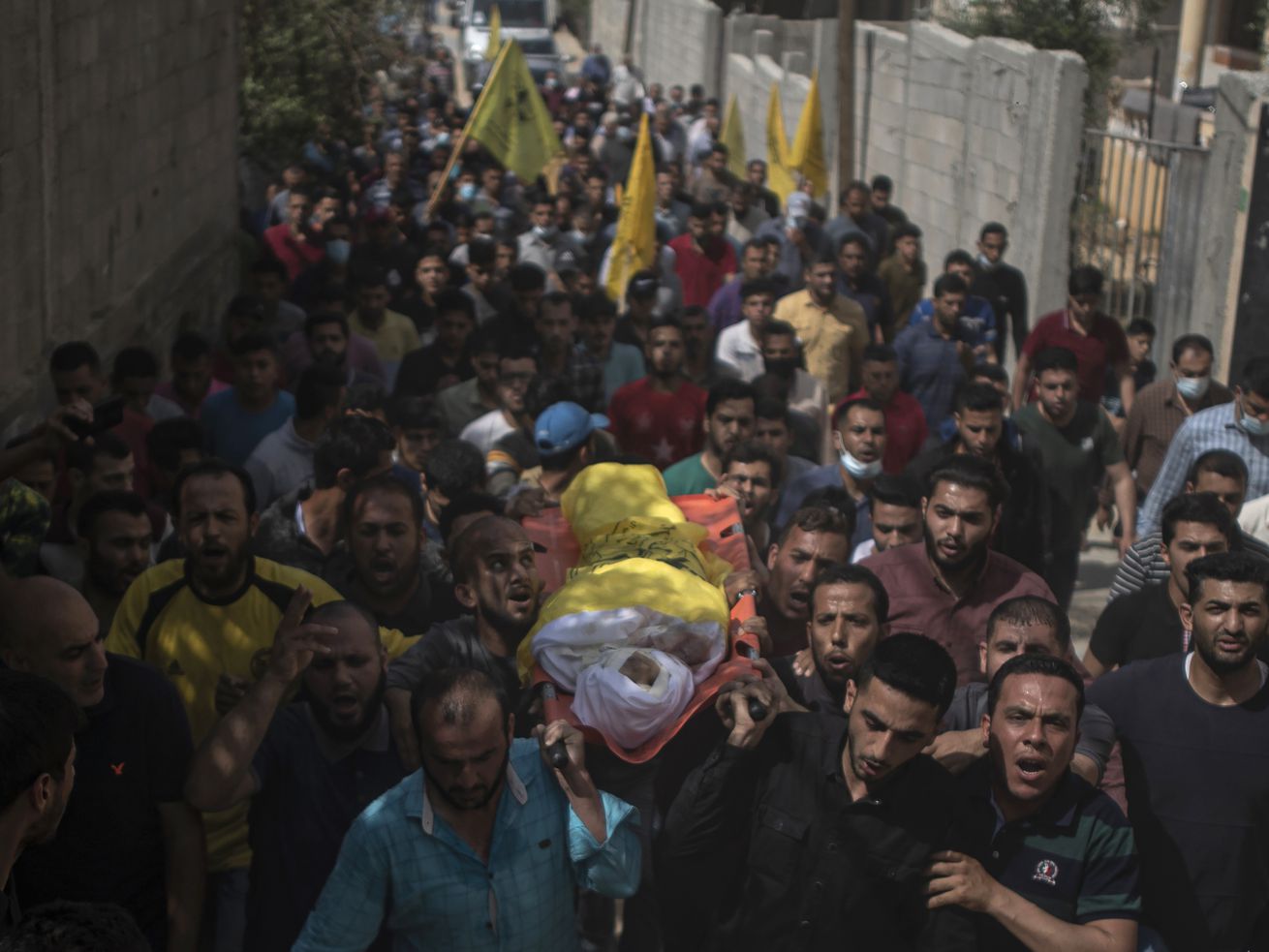
Palestinian mourners carry the body of 11-year-old Hussain Hamad, who was killed by an explosion during the ongoing conflict between Israel and Hamas, during his funeral in Beit Hanoun, northern Gaza Strip, Tuesday, May 11, 2021.
Palestinian mourners carry the body of 11-year-old Hussain Hamad, who was killed by an explosion during the ongoing conflict between Israel and Hamas, during his funeral in Beit Hanoun, northern Gaza Strip, Tuesday, May 11, 2021. | AP

Since sundown Monday, 28 Palestinians — including 10 children and a woman— were killed in Gaza, most by airstrikes, health officials there said.

GAZA CITY, Gaza Strip — A confrontation between Israel and Hamas sparked by weeks of tensions in contested Jerusalem escalated Tuesday as Israel unleashed new airstrikes on Gaza while militants barraged Israel with hundreds of rockets. The exchange killed a number of militants and civilians in Gaza and at least three people in Israel.

The barrage of rockets from the Gaza Strip and airstrikes into the territory continued almost nonstop throughout the day, in what appeared to be some of the most intense fighting between Israel and Hamas since their 2014 war. The fire was so relentless that Israel’s Iron Dome rocket-defense system seemed to be overwhelmed. Columns of smoke rose from many places in Gaza.

By late Tuesday, the violence extended to Tel Aviv, which came under fire from a barrage of rockets launched from the Gaza Strip. A 50-year-old woman was killed. The outgoing volleys set off air raid sirens across the city, and the main international airport closed temporarily.

Hamas said it launched a total of 130 rockets, its most intense strike so far, in response to Israel’s destruction of a high-rise building in Gaza earlier in the evening. The sound of the outgoing rockets could be heard in Gaza. As the rockets rose into the skies, mosques across Gaza blared with chants of “God is great,” “victory to Islam” and “resistance.”

One rocket struck a bus in the central city of Holon, just south of Tel Aviv. Medics said three people, including a 5-year-old girl, were wounded and the bus went up in flames.

Since sundown Monday, 28 Palestinians — including 10 children and a woman— were killed in Gaza, most by airstrikes, health officials there said. The Israeli military said at least 16 of the dead were militants.

Two women were killed by rockets fired from Gaza that hit their homes in the southern city of Ashkelon — the first Israeli deaths in the current violence. At least 10 other Israelis have been wounded since Monday evening.

Prime Minister Benjamin Netanyahu warned that the fighting would continue for some time. In a nationally televised speech late Tuesday, he said Hamas and Islamic Jihad “have paid, and will pay, a heavy price.”

“This campaign will take time, with determination, unity and strength,” he said.

Even before the two Israeli deaths, the Israeli military said it was sending troop reinforcements to the Gaza border, and the defense minister ordered the mobilization of 5,000 reserve soldiers.

Lt. Col. Jonathan Conricus, a military spokesman, told reporters that the objective was to send a “clear message” to Hamas.

Diplomats sought to intervene. U.N. Secretary-General Antonio Guterres demanded a halt to the “spiraling” violence, a U.N. spokesman said. U.S. Secretary of State Antony Blinken spoke to the Israeli foreign minister to condemn the Hamas attacks and “reiterate the important message of de-escalation,” the State Department said.

The barrage of rockets and airstrikes was preceded by hours of clashes Monday between Palestinians and Israeli security forces, including dramatic confrontations at Jerusalem’s Al-Aqsa Mosque compound, a sacred site to both Jews and Muslims. The current violence, like previous rounds, including the last intifada, or uprising, has been fueled by conflicting claims over Jerusalem, which is at the emotional core of the long conflict.

In a sign of widening unrest, hundreds of residents of Arab communities across Israel staged overnight demonstrations denouncing the recent actions of Israeli security forces against Palestinians. It was one of the largest protests by Palestinian citizens in Israel in recent years.

In the central Israeli town of Lod, police fired tear gas and stun grenades after mourners threw rocks at officers during the funeral of an Arab man allegedly shot to death by a Jewish resident the night before. Thousands took part in the funeral, and police said the crowd set fire to a patrol car, a bus and a motorcycle. Two police officers were injured.

Israel and Hamas have fought three wars and numerous skirmishes since the militant group seized control of Gaza in 2007. Recent rounds of fighting have usually ended after a few days, often helped by mediation by Qatar, Egypt and others.

Israel carried out dozens of airstrikes, including two that targeted high-rise apartment buildings where militants were believed to be hiding.

One strike demolished a 12-story building in Gaza City that housed the offices of top Hamas officials. Israeli drones fired a series of warning shots at the roof to give people time to leave the building before it was destroyed. There were no immediate reports of casualties.

At midday, an airstrike hit a building in central Gaza City, sending terrified residents running into the street, including women and barefoot children. The Islamic Jihad militant group confirmed that the strike killed three of its commanders.

Another strike hit a high-rise as people were conducting dawn prayers, killing a woman, her 19-year-old disabled son and another man, residents said. Health officials confirmed the deaths.

The Gaza Health Ministry said 28 people, including 10 children and the woman, have been killed and 152 wounded. Ashraf al-Kidra, a spokesman for the ministry, said Israel’s “relentless assault” was overwhelming the health care system, which has been struggling with a COVID-19 outbreak.

The escalation comes at a time of political limbo in Israel.

Netanyahu has been caretaker prime minister since an inconclusive parliamentary election in March. He failed to form a coalition government with his hard-line and ultra-Orthodox allies, and the task was handed to his political rivals last week.

One of those rivals is Israel’s defense minister, who is overseeing the Gaza campaign. It was not clear whether the political atmosphere was spilling over into military decision-making, though the rival camps have unanimously expressed support for striking Hamas hard.

The support of an Arab-backed party with Islamist roots is key for the anti-Netanyahu bloc. But the current tensions might deter the party’s leader, Mansour Abbas, from joining a coalition for now. The sides have three more weeks to reach a deal.

The current violence in Jerusalem coincided with the start of the Muslim fasting month of Ramadan in mid-April.

Critics say heavy-handed police measures helped stoke nightly unrest, including a decision to temporarily seal off a popular gathering spot where Palestinian residents would meet after evening prayers. Another flashpoint was the east Jerusalem neighborhood of Sheikh Jarrah, where dozens of Palestinians are under threat of eviction by Jewish settlers.

Over the weekend, confrontations erupted at the Al-Aqsa Mosque compound, which is the third holiest site of Islam and the holiest site in Judaism.

Over several days, Israel police fired tear gas, stun grenades and rubber bullets at Palestinians in the compound who hurled stones and chairs. At times, police fired stun grenades into the carpeted mosque.

On Monday evening, Hamas began firing rockets from Gaza. From there on, the escalation was rapid.

Gaza militants fired more than 500 rockets at Israel, with about one-third falling short and landing in Gaza, Conricus said.

At midday, a barrage of some 10 rockets whizzed above the southern city of Ashdod, filling the skies with streaks of white smoke.

A rocket that hit an apartment building in Ashkelon injured six people, according to Israeli paramedic service Magen David Adom. A building in Ashdod was also hit, lightly wounding four, Israeli police said.

The military hit 130 targets in Gaza, including two tunnels militants were digging under the border with Israel, Conricus said. He did not address Gaza Health Ministry reports about the dead children.

Seven of the deaths in Gaza were members of a single family, including three children, who died in an explosion in the northern Gaza town of Beit Hanoun. It was not clear if the blast was caused by an Israeli airstrike or errant rocket.

___

Federman reported from Jerusalem. Associated Press writers Karin Laub in the West Bank, Ilan Ben Zion in Jerusalem and Samy Magdy in Cairo contributed.
Read More

Israel, Hamas trade deadly fire as confrontation escalatesAssociated Presson May 11, 2021 at 8:25 pm Read More »

Medina Spirit will get extra testing at PreaknessStephen Whyno | Associated Presson May 11, 2021 at 8:47 pm

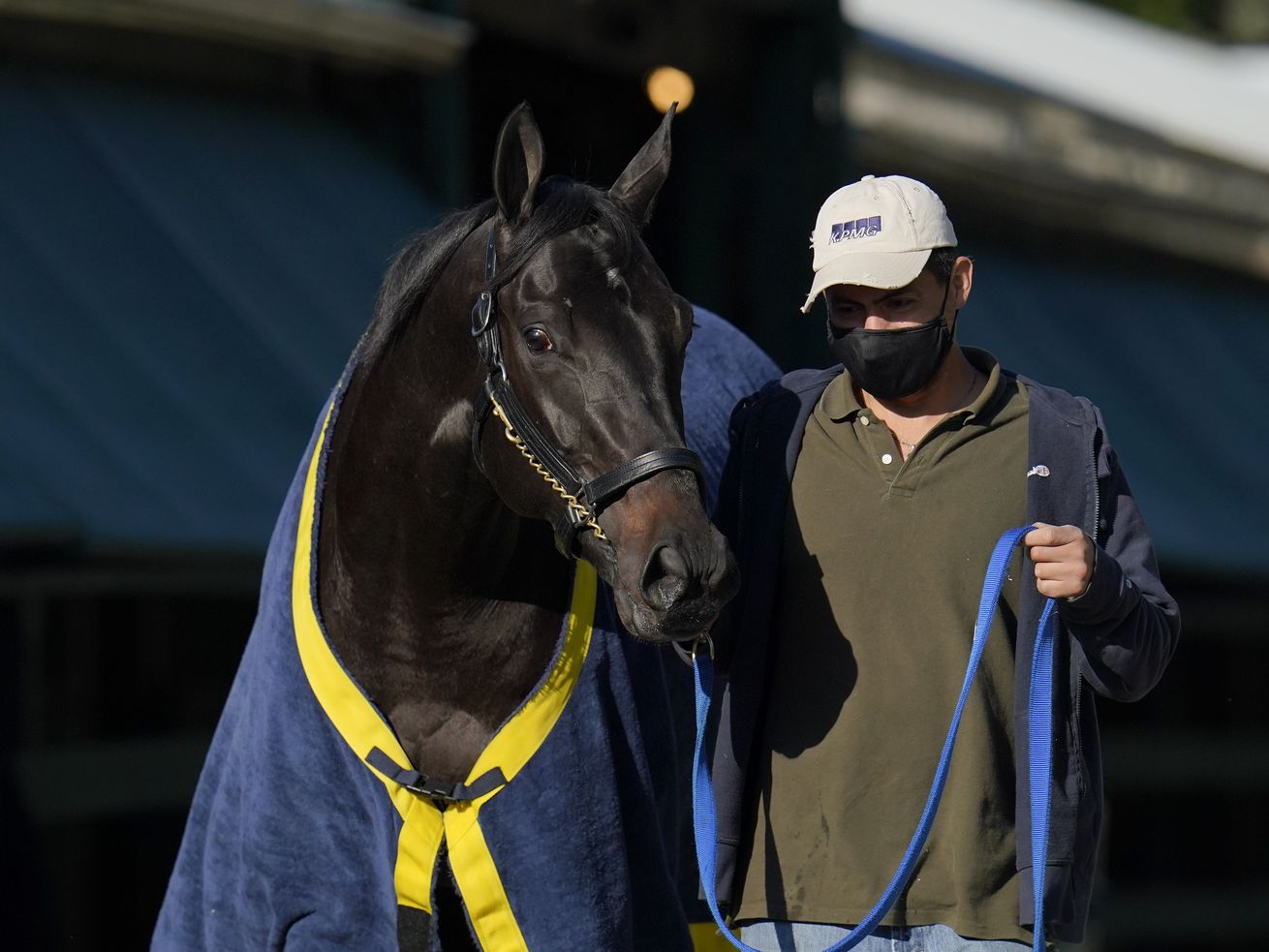
Kentucky Derby winner Medina Spirit is walked to be groomed after a morning exercise at Pimlico Race Course ahead of the Preakness Stakes.
Kentucky Derby winner Medina Spirit is walked to be groomed after a morning exercise at Pimlico Race Course ahead of the Preakness Stakes. | Julio Cortez/AP

Medina Spirit and two other horses trained by Bob Baffert will be under extra scrutiny in the days leading up to the second jewel of the Triple Crown.

BALTIMORE — Preakness officials said Tuesday they are allowing Kentucky Derby winner Medina Spirit to enter Saturday’s race subject to additional testing and monitoring.

Medina Spirit and two other horses trained by Bob Baffert will be under extra scrutiny in the days leading up to the second jewel of the Triple Crown. The Maryland Racing Commission and Baffert have agreed to the conditions for Medina Spirit, fellow Preakness runner Concert Tour and Beautiful Gift, who is expected to run in the Black-Eyed Susan Stakes on Friday.

Medina Spirit drew the No. 3 post in a field of 10 horses as the 9-5 morning-line favorite. Concert Tour drew the outside 10th post and is the second choice in the wagering at 5-2.

Baffert earlier Tuesday said it was brought to his attention that a veterinarian treated Medina Spirit with an antifungal medication to treat dermatitis that includes the steroid betamethasone. Medina Spirit failed a Kentucky Derby postrace drug test due to the presence of betamethasone.

Maryland Racing’s chief veterinary officer, Dr. Dionne Benson, said at the draw that tests on the three Baffert horses are expected back Friday. This is an additional layer of blood testing added to the usual postrace tests.

Read More

Medina Spirit will get extra testing at PreaknessStephen Whyno | Associated Presson May 11, 2021 at 8:47 pm Read More »

Prosecutor plans to seek death penalty in Atlanta area spa shootingsAssociated Presson May 11, 2021 at 8:50 pm

Captain Jay Baker, of the Cherokee County Sheriff’s Office, speaks at a press conference on March 17, 2021 in Atlanta, Georgia.
Captain Jay Baker, of the Cherokee County Sheriff’s Office, speaks at a press conference on March 17, 2021 in Atlanta, Georgia. Suspect Robert Aaron Long, 21, was arrested after a series of shootings at three Atlanta-area spas left eight people dead on Tuesday night, including six Asian women. | Getty

The prosecutor also filed notice that she’ll also seek hate crime charges against 22-year-old Robert Aaron Long.

ATLANTA — A man accused of killing eight people, six of them women of Asian descent, in shootings at three Atlanta-area massage businesses was indicted Tuesday on murder charges, and a prosecutor filed notice that she’ll also seek hate crime charges and the death penalty.

A Fulton County grand jury indicted Robert Aaron Long, 22, in the March 16 slayings of Suncha Kim, 69; Soon Chung Park, 74; Hyun Jung Grant, 51; and Yong Ae Yue, 63. The indictment only covers those four killings that happened at two spas in Atlanta, and not the attack in Cherokee County in which Xiaojie “Emily” Tan, 49; Daoyou Feng, 44; Delaina Yaun, 33; and Paul Michels, 54, were killed.

Fulton County District Attorney Fani Willis also filed notice that she intends to seek hate crime charges and the death penalty against Long, who is white. The hate crime charges are based on the actual or perceived race, national origin, sex and gender of the four women killed, the notice says.

Georgia’s new hate crimes law does not provide for a stand-alone hate crime. After a person is convicted of an underlying crime, a jury must determine whether it’s a hate crime, which carries an additional penalty.

The indictment charges Long with four counts of murder, four counts of felony murder, five counts of assault with a deadly weapon, four counts of possession of a firearm during the commission of a felony and one count of domestic terrorism, according to online records.

The domestic terrorism charge says Long committed a series of illegal acts “which were interrelated by distinguishing characteristics, with the intent to cause serious bodily harm and to kill individuals and groups of individuals, and with the intent to intimidate the civilian population of this state and of its political subdivisions.”

Four of the aggravated assault charges have to do with the shootings of the four victims who died. For the fifth, the indictment says Long pointed a gun at another woman, causing her “reasonable apprehension of immediately receiving a violent injury.” The notice of intent to seek hate crimes charges says she was targeted based on her actual or perceived sex and gender.

Long was arrested the night of the shootings on murder charges and is being held without bond after waiving an initial court appearance in March in Cherokee County Magistrate Court. A Cherokee County grand jury was scheduled to meet Monday and Tuesday this week, but it was not immediately clear whether prosecutors presented potential charges to the grand jury for the shooting at a spa near suburban Woodstock in which four were killed and one person was wounded.

Willis’ decision to seek the death penalty is a departure from her stance during her campaign to be district attorney last year.

During a candidate forum last year, Willis answered yes when asked: “Will you commit to refuse to seek the death penalty?”

The killings are eligible for the death penalty because each was committed while Long was in the act of committing another capital offense, namely the killings of the victims, the notice of intent says. Each killing was also “outrageously or wantonly vile, horrible, or inhuman in that it involved depravity of mind” and was committed during an act of domestic terrorism, the notice says.

Police have said Long shot and killed four people, three of them women and two of Asian descent, at Youngs Asian Massage near Woodstock just before 5 p.m. on March 16. He also shot and wounded a fifth person, investigators said.

He then drove about 30 miles south to Atlanta, where he shot and killed three women at Gold Spa before going across the the street to Aromatherapy Spa and fatally shooting another woman, police have said. All of the Atlanta victims were women of Asian descent.

After the shootings at the two Atlanta spas, Long got back into his car and headed south on the interstate, police said.

Long’s parents called authorities to help after recognizing their son in still images from security video that the Cherokee County Sheriff’s Office posted on social media. They provided cellphone information that allowed authorities to track their son to rural Crisp County, about 140 miles south of Atlanta.

State troopers and sheriff’s deputies spotted his SUV on Interstate 75, and one of them forced Long to spin to a stop by bumping his vehicle. Long then surrendered to authorities.

In an initial interview with investigators, Long claimed to have a “sex addiction,” and authorities said he apparently lashed out at businesses he viewed as a temptation. But those statements spurred outrage and widespread skepticism given the locations and that six of the eight victims were women of Asian descent.

Read More

Prosecutor plans to seek death penalty in Atlanta area spa shootingsAssociated Presson May 11, 2021 at 8:50 pm Read More »

‘Back to the Office’ Bar Pop-Up Returns at Replay Lincoln Park (UPDATED)Brian Lendinoon May 11, 2021 at 5:30 pm

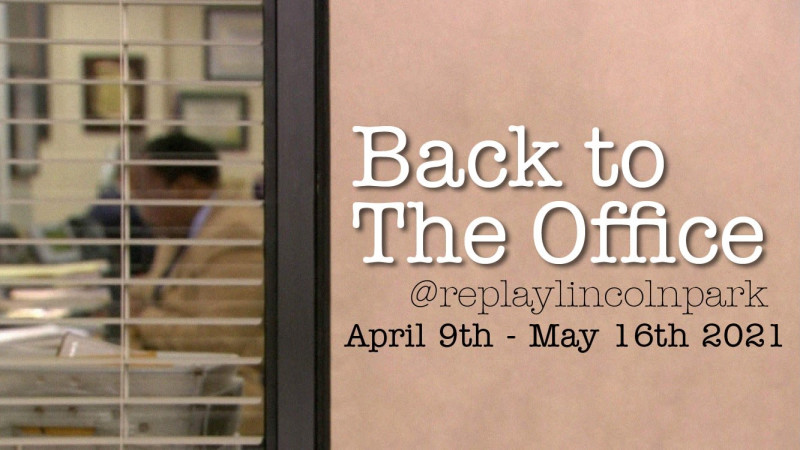
The collective world spent the majority of the past QuaranYear binge watching The Office. It’s likely you binged, moved onto binging something else and then when you inevitably couldn’t find something else new, you went back to binging The Office. Don’t worry, we all did it. And Replay Lincoln Park knows this. Thus, enter the return of ‘Back to the Office’. For all the watching of Michael Scott you’ve done since March 2020, you can now experience the show in real life again at the ‘Back to the Office’ pop-up bar at Replay Lincoln Park.

The pop-up went live on April 9th and will remain open through May 16th.

Everyone knows that Replay Lincoln Park is Chicago’s oasis for your favorite TV shows and movies come to life. The arcade bar at 2833 N Sheffield has become home to everything from the Moe’s Tavern Simpsons pop-up, the Central Perk Coffee Shop rendition of FRIENDS, and most recently, Schitt’s Creeks Schitt Happens. They have a ton in store for pop-up feigns this time around as they’re transforming the space fully into a myriad of locations featured in the show. The ‘Back to the Office’ pop-up bar at Replay Lincoln Park is a recreation of the iconic Duner Mifflin office. Want to head to Chili’s and get as drunk as Pam at the Dundies, you can do that. Additionally, homages to Schrute Farms, Michael Scott Paper Company, and the Warehouse will be featured.

The menu at the ‘Back to the Office’ pop-up bar in Chicago includes a vodka drink infused with beet syrup that would drive Dwight wild, soft pretzels that would make even Stanley crack a smile, and the infamous scotch and Splenda should that be your cup of tea.

Advertisement

Tickets to the pop-up bar at Replay Lincoln Park are $20 a piece but they come with two complimentary drink tickets and a table reservation for an hour. In addition, you do get access to all of Replay’s 30+ arcade games so right after you’re done immersing yourself with the Assistant (to the) Regional Manger you can yam on some people in NBA Jam as if you were Jim vs. Roy in the Warehouse. It’s a true taste of all worlds.

For more information on the ‘Back to the Office’ pop-up bar, visit Replay Lincoln Park’s website, or, follow Replay on Instagram at @replaylincolnpark. Replay Lincoln Park is located at 2833 N Sheffield Ave, Chicago, IL 60657 at the corner of Sheffield and Wolfram, just off the Diversey Brown Line stop.

Advertisement

UPDATE

Due to popular demand, Chicago’s favorite pop-up bar, Replay Lincoln Park, 2833 N. Sheffield, has extended its fan favorite pop-up “Back to the Office” so everyone can celebrate with their favorite coworkers at “Dunder Mifflin” through Monday, May 31. Now with added activations to keep the party goingReplay Lincoln Park’s resident DJ Kite will be playing Office-inspired sets every Friday night at 9pm beginning May 14. Walk-ins are welcome with no cover charge. Superfans can also compete in Superfan Trivia, themed bingo, and enjoy outdoor cubicle seating with the warmer city nights ahead. 

To celebrate the extension of the pop-up, Replay Lincoln Park has now incorporated special events throughout for the superfansBrought to you by the Party Planning Committee and the Committee to Plan Parties, guests can attend Psycho Bingo hosted by Prison Mike on May 19 at 8pm, and Superfan Trivia on May 20 at 7pm. The First Place Winner of Psycho Bingo will take home a 50-inch Smart TV with Peacock Premium to watch (or should we say, rewatch) all the Office episodes.

Advertisement

Patrons will also have the opportunity to unleash their inner Stanley Hudson and celebrate “Pretzel Day”, with free hot, soft pretzels on May 21, from 5pm to 8pm with email reservations to [email protected] 

Featured Image Credit: Replay Lincoln Park Facebook

Advertisement

Advertisement

The post ‘Back to the Office’ Bar Pop-Up Returns at Replay Lincoln Park (UPDATED) appeared first on UrbanMatter.

Read More

‘Back to the Office’ Bar Pop-Up Returns at Replay Lincoln Park (UPDATED)Brian Lendinoon May 11, 2021 at 5:30 pm Read More »

Chicago Blackhawks: Season finale was a fitting endTim Healeyon May 11, 2021 at 7:55 pm

The game was a microcosm of the Chicago Blackhawks’ season, complete with blown leads, missed defensive assignments, and the Hawks being outshot by a significant margin. Oh, and the team was just about half a minute away from forcing a shootout. The Chicago Blackhawks had a fitting ending to the 2020-21 season. Chicago had a […]

Chicago Blackhawks: Season finale was a fitting endDa Windy CityDa Windy City – A Chicago Sports Site – Bears, Bulls, Cubs, White Sox, Blackhawks, Fighting Illini & More

Read More

Chicago Blackhawks: Season finale was a fitting endTim Healeyon May 11, 2021 at 7:55 pm Read More »

2021 NFL Schedule News: Chicago Bears reportedly opening on Sunday Night FootballJordan Campbellon May 11, 2021 at 8:37 pm

The 2021 NFL Regular Season scheduled is scheduled to be released on Wednesday night during a live special on NFL Network and the Chicago Bears could be featured heavily. Despite the planned release of the schedule, it has become tradition for portions of the 2021 NFL Schedule to be leaked in the 24 hours leading […]

2021 NFL Schedule News: Chicago Bears reportedly opening on Sunday Night FootballDa Windy CityDa Windy City – A Chicago Sports Site – Bears, Bulls, Cubs, White Sox, Blackhawks, Fighting Illini & More

Read More

2021 NFL Schedule News: Chicago Bears reportedly opening on Sunday Night FootballJordan Campbellon May 11, 2021 at 8:37 pm Read More »

Athletics get OK from MLB to explore relocation if team can’t secure a new stadiumon May 11, 2021 at 7:30 pm

OAKLAND, Calif. — Major League Baseball instructed the Athletics to explore relocation options as the team tries to secure a new ballpark it hopes will keep the club in Oakland long-term.

MLB released a statement Tuesday expressing its longtime determination that the current Coliseum site is “not a viable option for the future vision of baseball.”

“MLB is concerned with the rate of progress on the A’s new ballpark effort with local officials and other stakeholders in Oakland,” MLB said. “The A’s have worked very hard to advance a new ballpark in downtown Oakland for the last four years, investing significant resources while facing multiple roadblocks. We know they remain deeply committed to succeeding in Oakland, and with two other sports franchises recently leaving the community, their commitment to Oakland is now more important than ever.”

In November 2018, the A’s announced they had found a waterfront location for their ballpark, with picturesque views toward San Francisco, the Bay Bridge and Port of Oakland. The goal had been to open in 2023.

A’s owner John Fisher said in a statement Tuesday he will honor MLB’s instructions but remains committed to continuing to pursue the waterfront ballpark proposed for construction in the city’s Howard Terminal location, close to the popular Jack London Square neighborhood.

“The future success of the A’s depends on a new ballpark,” Fisher said. “Oakland is a great baseball town, and we will continue to pursue our waterfront ballpark project. We will also follow MLB’s direction to explore other markets.”

The proposed ballpark site is about six miles from the Coliseum and there is no mass transit. The A’s and city have said they plan to build a gondola that would go from the waterfront area of ballpark over Interstate 880 to downtown.

The team’s new downtown offices would have a view of the project, including right from President Dave Kaval’s large corner window.

Kaval has asked the City Council to make a decision on the ballpark plan via a vote before summer break.

The Athletics have moved twice since the franchise was founded in Philadelphia, arriving in Kansas City for the 1955 season and in Oakland for the 1968 season.

Just two MLB teams have moved in the past half-century: The expansion Washington Senators became the Texas Rangers for the 1972 season and the Montreal Expos transformed into the Washington Nationals for the 2005 season.

The Braves also moved twice, switching from Boston to Milwaukee for the 1953 season and to Atlanta for 1966.

There were a flurry of switches in the 1950s and ’60s: the St. Louis Browns became the Baltimore Orioles (1954), the Brooklyn Dodgers moved to Los Angeles for 1958, the New York Giants moved to San Francisco for 1958, the original Washington Senators became the Minnesota Twins (1961) and the Seattle Pilots became the Milwaukee Brewers (1970).

Baseball Commissioner Rob Manfred has said MLB will not consider expansion until the A’s and Tampa Bay Rays get new ballparks.

Rays owner Stu Sternberg had been working to build a ballpark in Tampa’s Ybor City area but abandoned that plan in December 2018. MLB’s executive council gave the Rays permission in June 2019 to explore splitting their home schedule between the Tampa Bay area and Montreal after their lease at the Trop expires at the end of the 2027 season.

Read More

Athletics get OK from MLB to explore relocation if team can’t secure a new stadiumon May 11, 2021 at 7:30 pm Read More »

Why Broadway is waiting until fall to reopenon May 11, 2021 at 7:35 pm

NEW YORK — Broadway shows are tripping over themselves to announce that tickets are once more available. But don’t get dressed up just yet: The curtains won’t rise for most until September or October.

“Hamilton,” “The Lion King” and “Wicked” return Sept. 14, as does “Chicago.” “Ain’t Too Proud – The Life and Times of the Temptations” restarts Oct. 16, “The Phantom of the Opera” on Oct. 22, “Jagged Little Pill” on Oct. 21 and “Come From Away on Sept. 21. “Six,” which had planned to open officially on the day of the 2020 shutdown, will restart Sept. 17, as will David Byrne’s “American Utopia.” “Mrs. Doubtfire” will return Oct. 21. More are expected to announce new dates soon — for the fall.

Selling tickets now allows producers to gauge interest in their shows, like putting a big toe in the water to check the temperature. Is there thunderous demand or is it more tepid? How enduring is the interest? Once producers get answers — and much-needed cash from interested theater-goers — they can plan. Shows that find a lukewarm response may need to invest in more advertising or change it up.

Broadway shows thrive on tourists — who were roughly two-thirds of the people in the seats before the pandemic struck — and producers are banking that visitor numbers will be up by fall. The hope is that theater lovers — both tourists and New Yorkers — will loudly cheer the return. It will be a big occasion.

“The moment those theater lights go down and the stage lights come up is probably going to be one of the most emotional moments in theater in New York. And I can’t wait to be standing in my spot in the back of the theater,” says Stacey Mindich, the lead producer of “Dear Evan Hansen.”

Broadway shows can’t just restart like flipping a light switch, especially big musicals. Cast members may have left, requiring new hiring. Orchestras and ensembles must re-learn their parts, choreographers need the cast in the room to synchronize and costumers need to check fittings. Producers say the task is like opening a show from scratch all over again.

The pandemic also has added new safety fears for everything from handling props to theater cleaning. Broadway seats are very close together, and the venues are not particularly airy or spacious. Just getting inside before the pandemic required standing in a long line and cramming into entrances. It’s no surprise that the first report of COVID-19 invading Broadway was when a part-time usher and security guard tested positive.

So questions need to be addressed: Will temperature checks be enough? Must actors be vaccinated? Will audiences have to show vaccination cards? Will masks be required? Some theater owners have installed new air filters and some have updated bathrooms. Is that enough? Might shows eliminate intermission and bar service to curb people from mingling? Producers and union leaders must reach agreements on all these issues before shows open.

Audiences are also going to have to adjust. Actor Katharine McPhee wondered about small things, like folks coughing during a show. That used to be annoying; now it may be triggering. “I feel like it’s going to take a long time for people to not have some trauma connected to us all being fearful,” she said.

Those shows likely to fare best, at least initially, have legions of fans and histories as a tested entertainment source — think “Hamilton,” “The Lion King” and “Wicked.” Those in the most precarious positions are new plays or musicals that few know about, but are bravely opening post-pandemic. Initially, after 18 months of pent-up demand, theater lovers are expected to make a point of buying tickets and cheering the return. But the months after those die-hard fans have come and gone will be the trickiest. Theater actors certainly are hopeful.

“I think it has, for me, reset my passion for theater,” says Jesse Tyler Ferguson, who is waiting for his revival of “Take Me Out” to restart. “I think for a lot of people, it’s been something that we’ve taken for granted. And I think when we do get back to being able to commune and join together and watch live theater together, I’m going to have that same feeling in my heart and in my soul as when I first sat down to see my first Broadway show at 17 years old.”

Away from the Great White Way, shows have already opened with socially distanced audiences, but that’s not possible for the 41 Broadway theaters. The financial demands simply don’t favor keeping many seats purposefully empty.

The average operating costs for a play are about $300,000 per week, while weekly costs run $600,000 for musicals. Conventional wisdom is that many shows need to sell at least 80% of tickets just to break even. Figuring out ticket pricing will also be a headache: Should there be regular prices initially and then deep discounts later in the fall to attract more wary customers? Disney is luring customers by promising to pay all Ticketmaster fees and offering skittish ticket buyers the freedom to exchange or even cancel tickets at no charge. There’s going to be a lot of number-crunching from now until fall.

Financials aside, the existing theater community is going through a reflective and turbulent period as it comes under criticism from people — inside and outside the business — demanding racial justice, inclusion, fair wages, accountability and representation.

Spurred on by the protests over the police-involved death of George Floyd, marchers have taken to the streets to denounce the labor union Actors Equity Association and have successfully forced producer Scott Rudin to step aside in the face of bullying allegations. The voices are calling for wholesale changes from a system that has been static for decades. Working out what a more inclusive Broadway will take time.

“I think that we are at a point now where people are listening and people are willing to make changes,” Vanessa Williams, a leader in the new group Black Theatre United, said in March. “It’s almost like a reset button now: ‘OK, now we’re listening and now we’re going to make changes.'”

Read More

Why Broadway is waiting until fall to reopenon May 11, 2021 at 7:35 pm Read More »

Israel, Hamas trade deadly fireon May 11, 2021 at 7:35 pm

GAZA CITY, Gaza Strip — A confrontation between Israel and Hamas sparked by weeks of tensions in contested Jerusalem escalated Tuesday as Israel unleashed new airstrikes on Gaza while militants barraged Israel with hundreds of rockets. The exchange killed a number of militants and civilians in Gaza and at least three Israelis.

The barrage of rockets from the Gaza Strip and airstrikes into the territory continued almost nonstop throughout the day, in what appeared to be some of the most intense fighting between Israel and Hamas since their 2014 war. The fire was so relentless that Israel’s Iron Dome rocket-defense system seemed to be overwhelmed. Columns of smoke rose from many places in Gaza.

By late Tuesday, the violence extended to Tel Aviv, which came under fire from a barrage of rockets launched from the Gaza Strip. A 50-year-old woman was killed. The outgoing volleys set off air raid sirens across the city, and the main international airport quickly closed, forcing flights to divert.

Hamas said it launched a total of 130 rockets, its most intense strike so far, in response to Israel’s destruction of a high-rise building in Gaza earlier in the evening. The sound of the outgoing rockets could be heard in Gaza. As the rockets rose into the skies, mosques across Gaza blared with chants of “God is great,” “victory to Islam” and “resistance.”

One rocket struck a bus in the central city of Holon, just south of Tel Aviv. Medics said three people, including a 5-year-old girl, were wounded and the bus went up in flames.

Since sundown Monday, 28 Palestinians — including 10 children and a woman– were killed in Gaza, most by airstrikes, health officials there said. The Israeli military said at least 16 of the dead were militants.

Two women were killed by rockets fired from Gaza that hit their homes in the southern city of Ashkelon — the first Israeli deaths in the current violence. At least 10 other Israelis have been wounded since Monday evening.

After those deaths, Israeli Prime Minister Benjamin Netanyahu said officials decided to “increase both the strength and rate of the strikes” against militant groups Hamas and Islamic Jihad in the Gaza Strip.

Egyptian officials said they were trying to broker a cease-fire, but the cycle of violence was gaining momentum. Even before the two Israeli deaths, the Israeli military said it was sending troop reinforcements to the Gaza border, and the defense minister ordered the mobilization of 5,000 reserve soldiers.

Lt. Col. Jonathan Conricus, a military spokesman, told reporters that the objective was to send a “clear message” to Hamas.

Diplomats sought to intervene. U.N. Secretary-General Antonio Guterres demanded a halt to the “spiraling” violence, a U.N. spokesman said. U.S. Secretary of State Antony Blinken spoke to the Israeli foreign minister to condemn the Hamas attacks and “reiterate the important message of de-escalation,” the State Department said.

The barrage of rockets and airstrikes was preceded by hours of clashes Monday between Palestinians and Israeli security forces, including dramatic confrontations at Jerusalem’s Al-Aqsa Mosque compound, a sacred site to both Jews and Muslims. The current violence, like previous rounds, including the last intifada, or uprising, has been fueled by conflicting claims over Jerusalem, which is at the emotional core of the long conflict.

In a sign of widening unrest, hundreds of residents of Arab communities across Israel staged overnight demonstrations denouncing the recent actions of Israeli security forces against Palestinians. It was one of the largest protests by Palestinian citizens in Israel in recent years.

In the central Israeli town of Lod, police fired tear gas and stun grenades after mourners threw rocks at officers during the funeral of an Arab man allegedly shot to death by a Jewish resident the night before. Thousands took part in the funeral, and police said the crowd set fire to a patrol car, a bus and a motorcycle. Two police officers were injured.

Israel and Hamas have fought three wars and numerous skirmishes since the militant group seized control of Gaza in 2007. Recent rounds of fighting have usually ended after a few days, often helped by mediation by Qatar, Egypt and others.

Israel carried out dozens of airstrikes, including two that targeted high-rise apartment buildings where militants were believed to be hiding.

One strike demolished a 12-story building in Gaza City that housed the offices of top Hamas officials. Israeli drones fired a series of warning shots at the roof to give people time to leave the building before it was destroyed. There were no immediate reports of casualties.

At midday, an airstrike hit a building in central Gaza City, sending terrified residents running into the street, including women and barefoot children. The Islamic Jihad militant group confirmed that the strike killed three of its commanders.

Another strike hit a high-rise as people were conducting dawn prayers, killing a woman, her 19-year-old disabled son and another man, residents said. Health officials confirmed the deaths.

The Gaza Health Ministry said 28 people, including 10 children and the woman, have been killed and 152 wounded. Ashraf al-Kidra, a spokesman for the ministry, said Israel’s “relentless assault” was overwhelming the health care system, which has been struggling with a COVID-19 outbreak.

The escalation comes at a time of political limbo in Israel.

Netanyahu has been caretaker prime minister since an inconclusive parliamentary election in March. He failed to form a coalition government with his hard-line and ultra-Orthodox allies, and the task was handed to his political rivals last week.

One of those rivals is Israel’s defense minister, who is overseeing the Gaza campaign. It was not clear whether the political atmosphere was spilling over into military decision-making, though the rival camps have unanimously expressed support for striking Hamas hard.

The support of an Arab-backed party with Islamist roots is key for the anti-Netanyahu bloc. But the current tensions might deter the party’s leader, Mansour Abbas, from joining a coalition for now. The sides have three more weeks to reach a deal.

The current violence in Jerusalem coincided with the start of the Muslim fasting month of Ramadan in mid-April.

Critics say heavy-handed police measures helped stoke nightly unrest, including a decision to temporarily seal off a popular gathering spot where Palestinian residents would meet after evening prayers. Another flashpoint was the east Jerusalem neighborhood of Sheikh Jarrah, where dozens of Palestinians are under threat of eviction by Jewish settlers.

Over the weekend, confrontations erupted at the Al-Aqsa Mosque compound, which is the third holiest site of Islam and the holiest site in Judaism.

Over several days, Israel police fired tear gas, stun grenades and rubber bullets at Palestinians in the compound who hurled stones and chairs. At times, police fired stun grenades into the carpeted mosque.

On Monday evening, Hamas began firing rockets from Gaza. From there on, the escalation was rapid.

Gaza militants fired more than 500 rockets at Israel, with about one-third falling short and landing in Gaza, Conricus said.

At midday, a barrage of some 10 rockets whizzed above the southern city of Ashdod, filling the skies with streaks of white smoke.

A rocket that hit an apartment building in Ashkelon injured six people, according to Israeli paramedic service Magen David Adom. A building in Ashdod was also hit, lightly wounding four, Israeli police said.

The military hit 130 targets in Gaza, including two tunnels militants were digging under the border with Israel, Conricus said. He did not address Gaza Health Ministry reports about the dead children.

Seven of the deaths in Gaza were members of a single family, including three children, who died in an explosion in the northern Gaza town of Beit Hanoun. It was not clear if the blast was caused by an Israeli airstrike or errant rocket.

___

Federman reported from Jerusalem. Associated Press writers Karin Laub in the West Bank, Ilan Ben Zion in Jerusalem and Samy Magdy in Cairo contributed.
Read More

Israel, Hamas trade deadly fireon May 11, 2021 at 7:35 pm Read More »

Pentagon chief during Jan. 6 riot defends military responseon May 11, 2021 at 7:40 pm

WASHINGTON — President Donald Trump’s acting defense secretary during the Jan. 6 Capitol riots plans to tell Congress that he was concerned in the days before the insurrection that sending troops to the building would fan fears of a military coup and could cause a repeat of the deadly Kent State shootings, according to a copy of prepared remarks obtained by The Associated Press.

Christopher Miller’s testimony is aimed at defending the Pentagon’s response to the chaos of the day and rebutting broad criticism that military forces were too slow to arrive even as pro-Trump rioters violently breached the building and stormed inside. He casts himself as a deliberate leader who was determined that the military have only limited involvement, a perspective he says was shaped by criticism of the aggressive response to the civil unrest that roiled American cities months earlier, as well as decades-old episodes that ended in violence.

The Defense Department, he will tell members of the House Oversight Committee on Wednesday, has “an extremely poor record in supporting domestic law enforcement,” including during civil rights and anti-Vietnam War demonstrations in the 1960s and 1970s.

“And some 51 years ago, on May 4, 1970, Ohio National Guard troops fired at demonstrators at Kent State University and killed four American civilians,” Miller will say, adding, “I was committed to avoiding repeating these scenarios.”

He will also deny that Trump, criticized for failing to forcefully condemn the rioters, had any involvement in the Defense Department’s response and will say that Trump had even suggested that 10,000 troops might be needed for Jan. 6.

Miller, expected to testify alongside former acting Attorney General Jeffrey Rosen and District of Columbia Police Chief Robert Contee III, will be the most senior Defense Department official to participate in congressional hearings on the riots. The sessions have been characterized by finger-pointing by officials across agencies about missed intelligence, poor preparations and an inadequate law enforcement response.

The Capitol Police have faced criticism for being badly overmatched, the FBI for failing to share with sufficient urgency intelligence suggesting a possible “war” at the Capitol, and the Defense Department for an hourslong delay in getting support to the complex despite the violent, deadly chaos unfolding on TV.

Rosen, for his part, is expected to tell lawmakers that the Justice Department “took appropriate precautions” ahead of the riot, putting tactical and other elite units on standby after local police reports indicated that 10,000 to 30,000 people were expected at rallies and protests, according to prepared remarks obtained by the AP.

Miller’s testimony will amount to the most thorough explanation of Pentagon actions after months of criticism that it took hours for the National Guard to arrive.

In his remarks, he defends his resistance to a heavy military response as being shaped by public “hysteria” about the possibility of a military coup or concerns that the military might be used to help overturn the election results. Fearful of amplifying those suspicions — as well as the chance that a soldier might be provoked into violence in a way that could be perceived as an attack on First Amendment activities — he says he agreed in the days before the insurrection to deploy soldiers only in areas away from the Capitol.

“No such thing was going to occur on my watch but these concerns, and hysteria about them, nonetheless factored into my decisions regarding the appropriate and limited use of our Armed Forces to support civilian law enforcement during the Electoral College certification,” Miller will say. “My obligation to the Nation was to prevent a constitutional crisis.”

Democrats have signaled that they intend to press Miller on why it took so long for the National Guard to arrive despite urgent plans for help. Miller will contend that those complaints are unjustified, though he also concedes that the Guard was not rushed to the scene — a decision that he maintains was intentional.

“This isn’t a video game where you can move forces with a flick of the thumb or a movie that glosses over the logistical challenges and the time required to coordinate and synchronize with the multitude of other entities involved, or with complying with the important legal requirements involved in the use of such forces,” he will say.

Even after the Guard was requested, he said he felt compelled to send them “in with a plan to not only succeed but that would spare them unnecessary exposure and spare everyone the consequences of poor planning or execution.”

“We appreciated the seriousness of the situation, but we did not want to piece-meal National Guard forces into the zone of conflict,” Miller will say.

Although the timeline Miller offers in his remarks generally matches up with that provided by other high-ranking leaders, he notably puts himself at odds with William Walker, who as commanding general of the D.C. National Guard testified to what he said were unusual Pentagon restrictions that impeded his response and contributed to a three-hour delay between the time he requested aid and the time it was received. Walker has since become the House sergeant-at-arms, in charge of the chamber’s security.

Miller will say that Walker was given “all the authority he needed to fulfill the mission” and that before Jan. 6 he had never expressed any concern about the forces he had at his disposal. He contends that he authorized the deployment of 340 National Guard personnel, the total amount Walker had said would be necessary, and authorized him to use a 40-member quick reaction force provided that Walker could provide him with a so-called concept of operations.

Miller said he approved the activation of the Guard at 3 p.m.. He said that though that support did not arrive at the Capitol complex until 5:22 p.m., the coordination, planning and deputizing of personnel by civilian law enforcement all took time.

Miller, a Green Beret and retired Army colonel, served as a White House counterterrorism adviser under Trump before being tapped as acting defense secretary for the final months of the Trump administration. He replaced Mark Esper, who was fired after the election after being seen by Trump as insufficiently loyal.

The abrupt appointment raised concerns that Miller was in place to be a Trump loyalist. In his opening statement, though, he will say that he believes Trump “encouraged the protesters” but declines to say if he thinks the president bears responsibility. He recounts a conversation on Jan. 5 when Trump, struck by a crowd of supporters at a rally that day, told him that 10,000 troops would be needed the next day.

“The call lasted fewer than thirty seconds and I did not respond substantively, and there was no elaboration. I took his comment to mean that a large force would be required to maintain order the following day,” Miller says in his statement.

___

Associated Press writer Nomaan Merchant in Washington contributed to this report.

Read More

Pentagon chief during Jan. 6 riot defends military responseon May 11, 2021 at 7:40 pm Read More »