What’s New

Daily Cubs Minors Recap: Abbott and 3 relievers strike out 16 for Iowa; Myrtle Beach rallies late to winon May 14, 2021 at 2:34 pm

Cubs Den

Daily Cubs Minors Recap: Abbott and 3 relievers strike out 16 for Iowa; Myrtle Beach rallies late to win

Read More

Daily Cubs Minors Recap: Abbott and 3 relievers strike out 16 for Iowa; Myrtle Beach rallies late to winon May 14, 2021 at 2:34 pm Read More »

Twin Chicago MDs working to eliminate entrenched racism in the medical professionon May 14, 2021 at 1:00 pm

The inseparable sisters always stood out — identical twins from Twinsburg, Ohio, whip-smart students from the side of town with unpaved streets and no sidewalks, excluded from the gifted track because they were Black.

Their friends were white and a classmate’s comment still stings: “‘I don’t even think of you as Black.’ I said, ‘Thank you.’ And I felt pride,” Brittani James recalls, shuddering.

“I believed we were special. I believed other people in our neighborhood weren’t as good as us,” she said.

The twins were indeed special — they won free rides to the Ivy League, earned medical degrees at prestigious universities, and have thrived in a profession where they are vastly outnumbered by virtue of their skin color.

But their mission now is to dismantle the entrenched bigotry behind that classmate’s backhanded remark.

At 33, James and her twin, Brandi Jackson, have taken on the medical establishment in pioneering work to eliminate racism in medicine.

“We’re teaching how to see it and how to undo it,” Jackson said.

James, a family medicine doctor, and Jackson, a psychiatrist, have developed anti-racist coursework used in two Chicago medical schools. They’ve co-founded the Institute for Antiracism in Medicine, where physicians can earn continuing medical education credit for taking classes on how their profession has made Black patients sicker.

There’s more. They’re seeking federal legislation to require hospitals to reveal outcomes by race, with penalties for those where Black patients consistently fare worse. They’ve helped created an online support group to help like-minded, stressed-out Black doctors heal and strategize.

They’ve even hatched a plan to create black coats for doctors. That’s not as radical as it might sound — black coats were the tradition in the 19th century.

Their latest achievement? Helping lead a charge against the American Medical Association and the influential research journal it publishes.

The twins are riding a wave and they got there by ”learning to breathe underwater.” That’s how Jackson describes adapting to “this constant oppressive pressure” of racism.

“I remember being young and being told in school that I can’t be smart, because of where I’m from, being told your hair is ugly,” she said. “You learn to live with the kind of pain that comes just for being. Just for walking down the street. You can’t name it when you’re that young. It does something to your psyche.”

It can break you, and Jackson and James have had fragile moments of self-doubt. But the pandemic year has fueled their resolve. They say the relentless toll on people of color from the coronavirus and video-documented police violence have laid bare the damage caused by structural racism.

”It is literally killing us,” James said.

In recent steps that critics labeled mostly symbolic, the AMA has made an effort to come to grips with its racial history. The group excluded Black doctors from its ranks for over 100 years, and even today, just 5% of all U.S. physicians are Black.

Within the past few years, the nation’s largest doctors’ group hired Dr. Aletha Maybank as its first chief health equity officer and declared racism a public health threat. In February, it removed a statue displayed at its Chicago headquarters of Dr. Nathan Davis, AMA’s founder, who promoted racist policies.

But later that month, a podcast hosted by the AMA’s flagship medical journal caused a stir. The tweet promoting the podcast read, ”No physician is racist, so how can there be structural racism in health?”

It was, Maybank said, “a gut punch.”

The sisters’ institute started a petition in response, demanding that the journal diversify its mostly white editorial staff and ensure that medical research relating to race and racism gets published. The effort has garnered more than 8,800 signatures so far.

AMA suspended the journal’s chief editor and a deputy editor resigned.

AMA also agreed to meet last month to hear demands for change from several Black physicians, including James and New York cardiologist Dr. Raymond Givens, another leading AMA critic.

The doctors will be looking to hear how AMA plans to address their concerns at a second meeting, but James says the AMA’s anti-racism plan — in the works long before the sisters’ activism — makes her optimistic. In an 83-page document released Tuesday, AMA vowed to dismantle structural racism inside its own ranks and within the U.S. medical establishment with steps that include diversifying its own staff and collaborating with outside groups.

The group reached out to James and other physicians to discuss the plan — a hopeful sign, she said.

“We still have to hold their feet to the fire,” she said.

Part of the problem is doctors’ deeply embedded identity as healers and “good people,” Jackson said. “It’s hard when you’re indoctrinated in that culture to stop and say, ‘Are we really doing good?”’

A racial imbalance in medical leadership perpetuates the problem, James said — those making decisions and policies don’t look like the populations they serve.

James treats patients at a clinic on Chicago’s South Side and teaches at the University of Illinois-Chicago. Jackson has taught at Rush Medical College and is the behavioral health director at a Chicago health network that treats LGBTQ and other underserved patients.

Working with students, medical residents and colleagues, they strive to highlight the harm caused by the disproven idea that there are biological differences in Black people that contribute to health disparities.

Some examples:

–The longstanding myth that Black people somehow have a higher tolerance for pain, perpetuated during slavery times, has often led to undertreatment.

–Medical school instruction on skin diseases typically shows how they appear on white skin, not Black or brown, leading to missed diagnoses.

–In psychiatry, impulsive, disruptive behavior in white children is often labeled attention deficit disorder, a diagnosis that often guarantees classroom accommodations. Identical behavior in Black kids is more often labeled conduct disorder, leading to detention rather than accommodations “unless they have a really sharp parent who advocates the hell out of it,” Jackson said.

–A commonly used algorithm for kidney function gauges it differently in Black patients, potentially leading to undertreatment of kidney disease. Rush University Medical Center is among several U.S. health systems that recently stopped using that algorithm.

The sisters’ message isn’t new, said Dr. David Ansell, a physician at Rush who has worked with their institute. But their timing is uncanny — coming at the convergence of a deadly pandemic that has highlighted racial health inequities, a rise in white supremacism, and civil unrest over police brutality.

At such a moment, he said, the sisters can make a difference.

Their curiosity in science and medicine started young. James remembers taking ”field notes” while spying on people. Jackson remembers turning their mother’s blue bead case into a bug hospital.

“We emptied it and would go under rocks in search of potato bugs, worms. We gave each their own compartments … then would examine them and took notes when they appeared sluggish.” Once, they sprinkled salt on a snail to dry it out when it seemed “too moist. He just curled up and died. I still feel bad about the snail,” Jackson said.

Their parents were hard-working and supportive, but the twins didn’t tell them when they were accepted at Cornell University, knowing the cost was prohibitive. They broke the news when they landed full scholarships.

It was during a college summer program that James for the first time saw a Black doctor. She stared. “It was like a unicorn,” but it planted a seed.

They separated for medical school — Northwestern for Jackson, University of Michigan for James. Surrounded by rich white kids and professors, James struggled.

“It was this huge feeling like I don’t belong here. None of the professors look like you, what you’re learning about people like you is racist and you’re getting tested on it.”

She left school for a year and sank into a deep depression until getting involved in volunteer community health work. Colleagues there encouraged her to go back. In low moments, James says she draws on the strength of ancestors.

“I’m not being bombed. I’m not being hosed,” she said. ”You have to keep getting up.”

Now, she and her sister serve as mentors to other medical students from nontraditional backgrounds.

Medical resident Shan Siddiqi is a Canadian Muslim whose parents are from Pakistan. He works under James’ guidance at a clinic where James says “the sickest of the sick” go for treatment, patients with chronic illnesses worsened by poverty, stress from living in violent neighborhoods and now COVID-19. Siddiqi said he’s impressed by her compassion, taking the time to treat them as humans and helping them overcome challenges to getting medication or specialty care.

Jordan Cisneros, a third-year medical student who Jackson has mentored at Rush Medical College, says her guidance has helped him get through a tough year. His father died from COVID-19 in January and George Floyd’s televised death last May felt personal.

“I’ve had run-ins with police. I’ve had run-ins with racism. I’ve seen things firsthand,” he said.

In a Zoom class last year, Jackson brought up Floyd’s death and broke down crying. “It’s very taboo to cry in medicine,” but Jackson made it seem OK to show emotion and vulnerability, he said.

The sisters are extremely close, often finishing each other’s sentences, but there are differences too.

James is married to a white physician, a guy she thought was a math nerd when they met but is now her partner in battle. She tears up when asked what she wishes for their 1 1/2 -year-old daughter, Lillian.

“I don’t want her to have to live in a box like I did,” James said. “I want her to raise her voice so she knows it’s OK to be everything that she is, especially when the world is trying so hard to make Black and brown girls small and not heard.”

Jackson is single, loves to cook in her spare time and thinks like a scientist in the kitchen, marveling at how a humble carrot can transform into something sublime with just a little butter and brown sugar.

James wears her passion on her sleeve and pours her soul into Twitter, calling out racism every time she sees it. Jackson says she has no appetite for Twitter wars and “tries to be the one who is grounding. I want to come at it with a loving, calm energy,” she said.

The sisters are hitting their stride in 2021; Jackson calls it the year of Black women: Michelle Obama helped pave the way, now there’s Vice President Kamala Harris.

“It moves me to tears that all of my ancestor Black women who never got to see the day … that they were in vogue and their voice was listened to,” she said. “It is Black women’s lives that survive and keep surviving.”

Read More

Twin Chicago MDs working to eliminate entrenched racism in the medical professionon May 14, 2021 at 1:00 pm Read More »

Starting a Business From Your Garage: What You Need to Knowon May 14, 2021 at 1:06 pm

Small Business Blog

Starting a Business From Your Garage: What You Need to Know

Read More

Starting a Business From Your Garage: What You Need to Knowon May 14, 2021 at 1:06 pm Read More »

Studio-born midwestern rockers Cumbie introduce their music to the world with their debut EPLeor Galilon May 14, 2021 at 11:00 am


Cumbie front man Aaron O’Neill says his three-piece isn’t a “real band”—they’ve only ever performed publicly once—but on their new self-released debut, EP, they rock like road-tested veterans. O’Neill started writing the record’s sleek, rowdy songs a couple years ago, when he lived in Saint Louis (he played in several bands there, including Shady Bug, a touring indie-rock group on respected indie label Exploding in Sound).…Read More

Studio-born midwestern rockers Cumbie introduce their music to the world with their debut EPLeor Galilon May 14, 2021 at 11:00 am Read More »

Chicago Cubs: Three key factors in series with Detroit TigersRyan Sikeson May 14, 2021 at 11:00 am

The Chicago Cubs and Tigers are set for a three-game series over the weekend. Here are three key factors to keep close tabs on throughout the series. After a tough series in Cleveland, the Chicago Cubs are back on the horse in the Motor City facing the Detroit Tigers for three games. The Tigers enter […]

Chicago Cubs: Three key factors in series with Detroit TigersDa Windy CityDa Windy City – A Chicago Sports Site – Bears, Bulls, Cubs, White Sox, Blackhawks, Fighting Illini & More

Read More

Chicago Cubs: Three key factors in series with Detroit TigersRyan Sikeson May 14, 2021 at 11:00 am Read More »

18 shot, 2 fatally, in Chicago ThursdaySun-Times Wireon May 14, 2021 at 10:19 am

Chicago police work the scene where an 8-year-old boy was shot in the knee while playing outside near 18th and Kildare, in the Lawndale neighborhood, Thursday, May 13, 2021. | Tyler LaRiviere/Sun-Times
Chicago police work the scene where an 8-year-old boy was shot in the knee while playing outside near 18th and Kildare, in the Lawndale neighborhood, Thursday, May 13, 2021. | Tyler LaRiviere/Sun-Times | Tyler LaRiviere/Sun-Times, Tyler LaRiviere/Sun-Times

An 8-year-old boy was wounded in a shooting in Lawndale on the West Side.

Eighteen people were shot, two fatally Wednesday in Chicago, including a 25-year-old man killed in Chatham.

Two men, both 25, were standing on the sidewalk about 4:30 p.m. in the 700 block of East 79th Street when someone came out from the alley and began firing shots, Chicago police said.

One man was shot in the abdomen and arm and was taken to the University of Chicago Medical Center, where he was pronounced dead, police said. The Cook County medical examiner’s office hasn’t identified him.

The other was struck in the neck, leg and back and was taken to the same hospital in critical condition, police said.

Another man was killed in a shooting Thursday night in Bronzeville on the South Side.

The 34-year-old man was standing on the sidewalk about 9 p.m. in the 400 block of East 48th Street when someone fired shots police said.

He was shot in the face and leg and was transported to the University of Chicago Medical Center, where he was pronounced dead, police said. The Cook County medical examiner’s office hasn’t released his identity.

In non-fatal attacks, one child and four teenagers were wounded in shootings across the city.

— An 8-year-old boy was wounded in a shooting in Lawndale on the West Side.

The boy was in the street about 6 p.m. in the 1800 block of South Kildare Avenue when someone began firing shots, police said. He was shot in the knee and was taken by citizens at the scene to Mount Sinai Hospital where his condition was stabilized, police said.

The boy was not the intended target, according to police.

— Two teenage boys were shot in West Englewood on the South Side.

The boys, 15 and 16 were walking about 6:40 p.m. in the 7200 block of South Wood Street when they heard gunshots, police said.

A 16-year-old was struck in the abdomen and the other, 15, was shot in the arm, police said. The boys walked to Holy Cross Hospital and were transferred to a nearby trauma center where their conditions were stabilized, according to police.

— A 16-year-old boy was shot in Gresham on the South Side.

The teen boy was getting into his vehicle about 1:45 p.m. in the 8600 block of South Wallace Avenue when a male suspect approached him and began firing shots, police said.

He was struck in the heel and self-transported to Holy Cross Hospital, where his condition was stabilized, police said.

— Another 16-year-old boy was shot in the West Englewood neighborhood.

The teen boy was standing outside about 10 p.m. in the 5900 block of South Paulina Street when he heard gunshots and felt pain, police said.

He was struck in the thigh and was taken to the University of Chicago Medical Center in good condition, police said. Officers said the gunshot wound appeared to be self-inflicted, according to police.

Other shootings:

— A 31-year-old man was shot driving in Logan Square on the Northwest Side.

About 11:15 p.m., the man was in the 2100 block of North Kedzie Avenue when a sedan pulled alongside him and someone inside fired shots, police said. He was struck in the back and taken to Illinois Masonic Hospital in fair condition, police said.

— A 50-year-old man was shot in a home Thursday in West Englewood on the South Side.

The man was shot in the leg inside a residence about 6:55 p.m. in the 6400 block of South Honore Street, police said.

—A 23-year-old man was hurt in a drive-by shooting in Grand Crossing on the South Side.

The man was walking about 6:40 p.m. in the 900 block of East 79th Street when a vehicle drove by and someone from inside fired shots, police said. He suffered a graze wound to the hand and was treated on the scene by Chicago Fire paramedics, police said. He was released after his condition was stabilized.

— A 33-year-old man was shot in Ashburn on the Southwest Side.

The man was driving about 5:10 p.m. in the 3000 block of West Columbus Avenue when he heard shots and felt pain, police said.

He was shot in the abdomen and suffered graze wounds to his leg and back, police said. He was taken to Christ Medical Center in Oak Lawn where his condition was stabilized.

— A 25-year-old man was wounded in a shooting in Grand Crossing on the South Side.

He was walking about 2:30 p.m. in the 6700 block of South Blackstone Avenue when someone opened fire, striking him in the leg, police said. He was taken to the University of Chicago Medical Center, police said.

— A man was wounded in a shooting in Englewood on the South Side.

He was walking about 10:40 a.m. in the 5900 block of South Carpenter Street when a white Dodge Durango drove by and someone inside fired shots, police said. The 34-year-old was struck in the abdomen and taken to the University of Chicago Medical Center in good condition, police said.

— A 47-year-old man was shot in Back of the Yards on the South Side.

About 12:40 a.m., he was sitting in a vehicle at a gas station in the 800 block of West Garfield Boulevard, when two men got out of a white sedan and fired shots, police said. The man was struck in the left leg and brought to the University of Chicago Medical Center in fair condition, police said.

— Two women were shot in Austin on the West Side and one of them returned fire but did not hit the gunman, according to police.

The two, 24 and 25, were standing on the sidewalk in the 4800 block of West Quincy Street when someone they knew walked up and fired, police said. The 24-year-old, a concealed carry cardholder, returned fire.

The 25-year-old was struck in the right buttocks and taken to Mt. Sinai Hospital in serious condition, police said. The younger woman was struck in the right leg and taken to the same hospital in good condition.

— A 49-year-old woman was shot in Chicago Lawn on the Southwest Side.

About 12:25 a.m., she was walking in the 2700 block of West 62nd Street, when she heard shots and felt pain, police said. The woman was struck in both legs and brought to Christ Medical Center in Oak Lawn in fair condition, police said.

Five people were shot, one fatally, Wednesday in Chicago.

Read more on crime, and track the city’s homicides.

Read More

18 shot, 2 fatally, in Chicago ThursdaySun-Times Wireon May 14, 2021 at 10:19 am Read More »

In Pilsen, Giant Penny Whistle tavern’s opening a sign of alderman’s rift with LightfootMark Brownon May 14, 2021 at 10:30 am

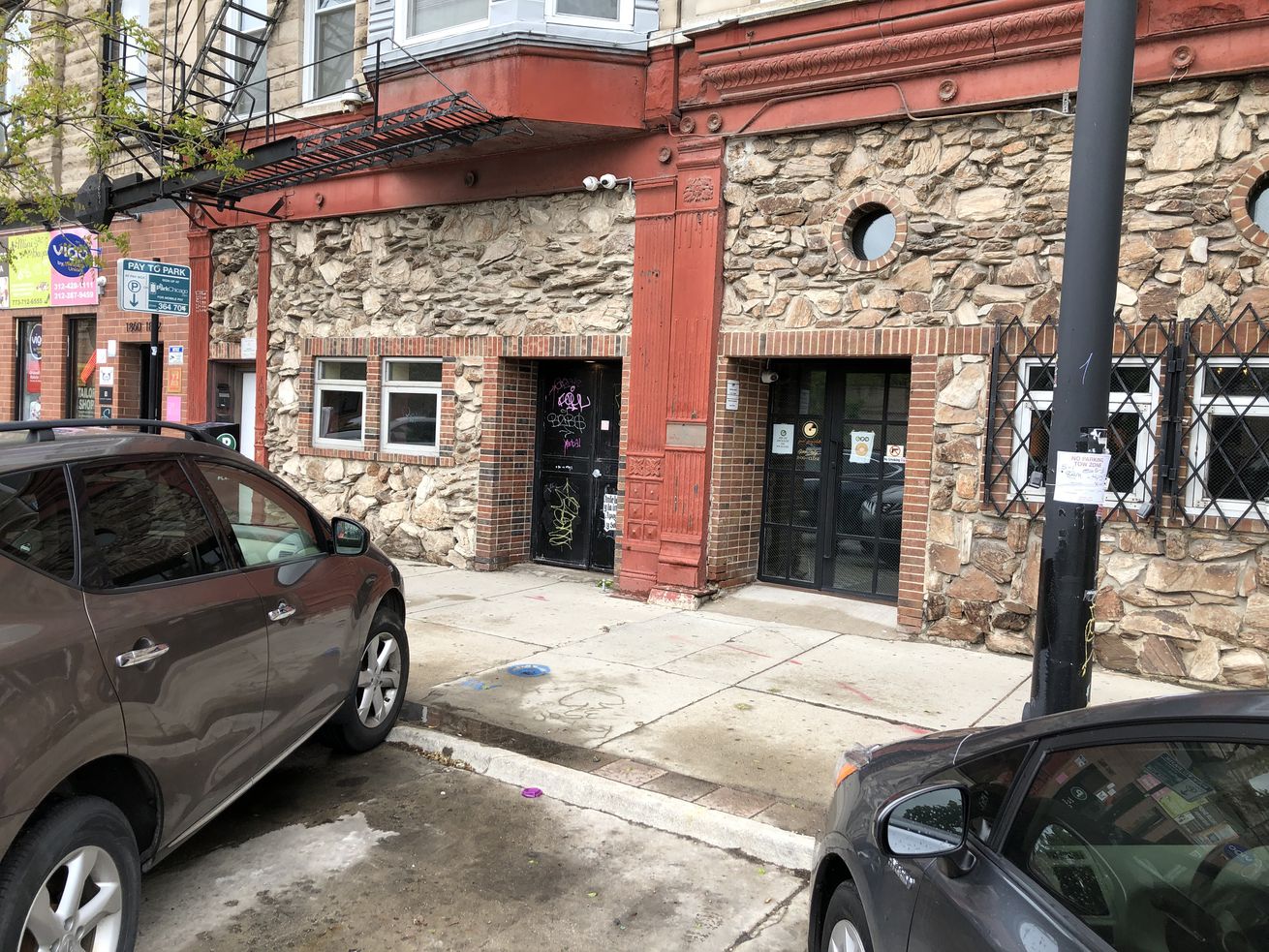
To settle a lawsuit, the city of Chicago granted the owners of The Giant Penny Whistle permission to open despite a liquor-license moratorium barring new taverns on that block.
To settle a lawsuit, the city of Chicago granted the owners of The Giant Penny Whistle permission to open despite a liquor-license moratorium barring new taverns on that block. | Mark Brown / Sun-Times

Mayor Lori Lightfoot’s administration OKed the project despite a liquor-license moratorium and opposition from neighborhood residents and Ald. Byron Sigcho-Lopez.

A new tavern named The Giant Penny Whistle opened recently in Pilsen.

It has a music venue that can accommodate up to 300 people and the original bar from the venerated McCuddy’s tavern once located outside Sox park.

The owners say they’ve carefully restored the old bar — at which Babe Ruth is said to have hoisted a few — after purchasing it from a McCuddy’s family member.

There’s just one problem: The Giant Penny Whistle’s owners were granted permission to open by Mayor Lori Lightfoot’s administration even though there’s a liquor-license moratorium that was voted in by neighbors more than 25 years ago that’s still in place.

The bar is in Ald. Byron Sigcho-Lopez’s 25th Ward. And he says he supports community leaders who want the moratorium enforced — and the bar shut down.

Ald. Byron Sigcho-Lopez.
Pat Nabong / Sun-Times file
Ald. Byron Sigcho-Lopez.

The dispute is the latest flashpoint in a widening rift between Sigcho-Lopez and Lightfoot over what he has taken to calling “community prerogative”— to distinguish it from the “aldermanic prerogative” that he and the mayor both campaigned against.

The complicated story of how they arrived at this juncture involves the messy final year in public office of Ald. Danny Solis, Sigcho-Lopez’s predecessor.

Solis is the alderman who turned FBI mole when confronted with his own alleged wrongdoing. He then went AWOL during the last four months of his term after his undercover work against others including Chicago City Council colleagues was unearthed by the Chicago Sun-Times in January 2019.

In hindsight, there seems little doubt Solis intended to lift the liquor-license moratorium to allow owners Kevin Heisner and Robert and Kathrine Middleton to open The Giant Penny Whistle at 1854-56 S. Blue Island Ave. in a building that previously housed the long-shuttered Tito’s Hacienda.

It’s even more clear Solis never actually managed to get that accomplished before he left office on May 20, 2019.

Solis still had a year left on his term on May 24, 2018, when he met with Heisner to discuss plans to open the tavern, according to a lawsuit the owners filed against the city.

Former Ald. Danny Solis.
Brian Jackson / Sun-Times file
Former Ald. Danny Solis.

The owners say Solis promised to support their project and “take all necessary steps” to lift moratoriums that barred new liquor licenses for taverns or packaged-liquor stores on Blue Island Avenue from 16th Street to 19th Street.

Those had been voted into effect decades earlier by locals worried about problems created by the high concentration of liquor establishments in their neighborhood, said Raul Raymundo, chief executive officer of The Resurrection Project.

But in their lawsuit, the owners said Solis told them their establishment would be “good for the community” and the next month wrote a letter backing the issuance of their building permit.

Lifting liquor-license moratoriums is a fairly simple matter. All it takes is for the city council to pass an ordinance doing so after first notifying any property owners who would be directly affected— in this case those along Blue Island Avenue.

In November 2018, the owners say, Solis’ aides told them they had submitted the documentation to lift both moratoriums.

But council records show the proposed ordinance which Solis introduced Dec. 12, 2018, and that was passed on Jan. 23, 2019, dealt only with lifting the moratorium against opening new liquor stores — but not the ban on taverns.

The January council meeting happened to fall on the same day the story broke in the Sun-Times that Solis had secretly recorded conversations with Ald. Edward M. Burke (14th), who later was indicted on federal corruption charges.

Solis wasn’t at the council meeting that day. And he never attended another public meeting, though he did not resign. His 25th Ward aldermanic service office kept operating, though dealing with it was difficult with Solis’ whereabouts mostly unknown.

Despite all of this, the tavern project continued to advance. The city issued a building permit for its construction in February 2019, and the owners say they soon started work. City Hall later accepted their fee for a liquor license.

It wasn’t until May 28, 2019, that the owners say they learned the tavern moratorium had not been lifted.

By then, Sigcho-Lopez had taken office. He took a decidedly different approach than Solis had to projects he says could hurt the character of Pilsen. He has allied himself with groups that want to put the brakes on the gentrification they say is pushing out longtime neighborhood residents and businesses.

Sigcho-Lopez refused to lift the moratorium, siding with community leaders who had been involved in the original effort to impose it. He pointed out that Benito Juarez High School and the Rudy Lozano Branch Library are nearby, and so is a Head Start program.

The tavern owners filed suit against the city in Cook County circuit court in May 2020. They argue that they had relied on Solis’ promise and the city’s approval of its building permits and demanded that the city either lift the moratorium or pay them damages of $797,932 — the amount they say they had spent on construction and city fees.

On Dec. 4, 2020, City Hall’s lawyers signed a settlement, agreeing that the “controversy is the result of an administrative error” and authorizing the city liquor commissioner to issue the bar a liquor license.

Sigcho-Lopez said he was unaware the lawsuit had been filed, let alone settled, that he learned about it only when The Giant Penny Whistle opened for business two weeks ago and neighbors complained.

“We thought it was a dead issue, then, all of a sudden, we realize they’re open,” said Juan Soto of the Pilsen Neighbors Community Council.

Sigcho-Lopez said the Lightfoot administration had no legal authority to bypass the moratorium and should have consulted with him and community residents.

The Giant Penny Whistle tavern on Blue Island Avenue in Pilsen.
Mark Brown / Sun-Times
The Giant Penny Whistle tavern on Blue Island Avenue in Pilsen.

Officials with City Hall’s law department wouldn’t discuss the matter with me.

Kathrine Middleton, one of the owners, said The Giant Penny Whistle has gotten a “fantastically warm welcome” since opening.

“We hope we have a long relationship with the community,” Middleton said.

But Sigcho-Lopez, who’s also involved in a dispute with the Lightfoot administration over another Solis-era liquor licensee, isn’t looking for any relationship at all.

Read More

In Pilsen, Giant Penny Whistle tavern’s opening a sign of alderman’s rift with LightfootMark Brownon May 14, 2021 at 10:30 am Read More »

Chance the Rapper’s ‘crazy idea’: a concert made to be filmedRichard Roeperon May 14, 2021 at 10:30 am

Chance the Rapper performs during the 2017 filming of “Magnificent Coloring World.” | Courtesy of Chance the Rapper

The hip-hop star tells Richard Roeper about ‘Magnificent Coloring World,’ a movie Chicago will see this weekend before anyone else.

When Chance the Rapper was on the “Magnificent Coloring World” arena tour in 2016, during his moments of downtime he had taken to watching a lot of filmed concerts — and that’s when he realized there’s a difference between a filmed concert and a concert film.

“Two things came to mind when I was watching these classic concert films from Michael Jackson and others,” said Chance in a conversation we had Wednesday at the mansion he has dubbed “House of Kicks” (more on that in a moment). “One, you couldn’t really hear the crowd. Two, it often seemed like we were just watching a tour performance that somebody had filmed.

“I had this crazy idea. I drew up this little map of a semi-circle with five separate stages and a long row of bleachers like they had on the old TV music shows. I wanted to do something that was a special event — a concert film and not a filmed concert.”

This was the genesis of “Magnificent Coloring World,” a stylized, one-off performance filmed at Chicago’s Cinespace Studios some four years ago but just now coming to light through an unprecedented direct deal between Chance and the AMC Theaters chain. Chicago audiences will be the first to see the concert film at advance screenings May 14-16 at AMC River East 21, followed by a nationwide rollout this summer.

After the deal with AMC was announced, Chance invited me up to his rented compound in Bannockburn so I could watch the film in the screening room in a massive house that was buzzing with activity, as various areas have been converted into recording studios, editing bays, green-screen soundstages, etc. (It was kind of like an updated version of “Entourage,” except in lieu of partying, everyone was fast at work.) I’ll have a full review of “Magnificent Coloring World” when the movie officially opens this summer, but it is indeed a concert film, with Chance performing in front of a smallish but wildly enthusiastic hand-picked audience on a specially constructed stage that allows him to seamlessly move from one setting to another to reflect the vibe of each song.

The top 1% of Chicago fans

“My fans, specifically in Chicago, are very used to scavenger hunts,” said Chance, who was sporting a classic retro White Sox hat during our talk. (He switched to his signature 3 cap for a photo op.) “Whenever I do an event, I put up tickets in random places, and it’s usually hard tickets only. People have a story for how they got to my show.


Bob Zegler
Chance the Rapper poses Wednesday at his rented home in Bannockburn.

“For this [project], I hit up SoundCloud and asked them to use metrics to find the top 1% of my listeners in Chicago. We sent out an RSVP to them and didn’t tell them anything about what the show was going to be. We just told them to gather at a specific location, and we rented out a bunch of school buses and they all rode to a random location, and they come inside not even expecting a performance. But I knew this audience would be the ones that really listen [to my music], the ones that know the words, and I wanted their voices and their enthusiasm.”

For the concert, Chance is backed up by a full band, a team of kinetic dancers with Broadway-style moves, a rousing choir that will give you goosebumps — and the fans, who appear on camera from time to time, singing along with pure joy and passion. (And yes, we can hear them, as microphones have been placed in the audience.) “With the microphones in the audience, that’s like the sixth stage,” he said.

There was some talk of releasing the finished product on a streaming service or in theaters, but Chance decided to hold on to it. “The main reason I didn’t put it out was, I wasn’t happy with the edit. And the reason I wasn’t happy with the edit was I was never in the editing room and I didn’t know HOW to edit. Then the pandemic happened, and I started doing all these filmed performances, and I learned about film and editing my own performances. So, after four years, I was like, ‘I need to do this over, I need to find a better way.’ ”

The film runs just a little over an hour — but before we get to the concert, there’s a series of brief interviews with various members of Chance’s team, and home video footage of a young Chancelor Bennett celebrating his win in a local talent show.

“I was 8 or 9 years old, that’s the first talent show I performed in,” he said. “I went to Skinner Elementary, right next to Whitney Young. … But when I was in preschool — this sounds stupid, this sounds crazy — I was a very well-known dancer, among friends and family. I would be the kid who would be doing ‘The Tootsie Roll’ and s— like that. When I got to grade school, I was really quiet for the first few years, but then I won that talent show and that was a turning point in my life.”

The next Paul Giamatti?

There are times during “Magnificent Coloring World” when Chance plays directly to the camera, almost as if playing a part. He has acted before, in the indie-horror film “Slice” and on “Saturday Night Live.” The tradition of singers becoming movie actors dates back well before hip-hop and rock ’n’ roll, to the early days of cinema, but Chance said he doesn’t want to just take some mainstream action/comedy type leading role.


A24
Billed as Chancellor Bennett, Chance the Rapper starred in the 2018 horror film “Slice.”

“The people I respect are the Steve Buscemis and the Paul Giamattis, the character actors. … I’d want to try to get into that space of becoming a character actor before I attempt to do any lead acting.

“I love movies because it is such a team sport. But I love lighting, cinematography, editing, directing, so many different types of behind the camera work that I could get into without having to shove my face in front of everybody.”

Chance will be a headliner at Summerfest in Milwaukee in September, as we slowly get back to something resembling normalcy in terms of sports and theater and music performances. But when he’s onstage, he doesn’t necessarily feel as if he’s playing a character.

“I feel like I’m Superman when I’m onstage and I feel like I’m Clark Kent when I’m not,” he told me. “You know how they say all the other superheroes put on a suit to become who they are, but Superman when he puts on a suit he becomes Clark Kent? I feel like I do more acting and I’m actually less myself when I’m NOT onstage. But when I get onstage, I remember who I am. … These songs that I love to write and I love to record and I love to listen to — I don’t love them as much as when I’m singing them to a crowd, when I’m sharing them. That’s my most comfortable space and where I can move how I actually move, as opposed to having to walk normal and s— in real life.”

“I fully build my performances off the crowd and I will spend a long time trying to get the crowd into their comfort zone so we can be Superman together.”

Read More

Chance the Rapper’s ‘crazy idea’: a concert made to be filmedRichard Roeperon May 14, 2021 at 10:30 am Read More »

14-year-old girl hurt in Englewood shootingon May 14, 2021 at 7:05 am

A 14-year-old girl was wounded in a shooting early Friday in Englewood on the South Side.

The girl was standing outside about 12:30 a.m. in the 800 block of West 61st Street when someone fired shots, Chicago police said.

She suffered gunshot wounds to the abdomen and was taken to Holy Cross Hospital but set to be transferred to Comer Children’s Hospital, Chicago police said. She was listed in fair condition, according to police.

There is no one in custody, police said.

A couple of hours earlier, a 16-year-old boy was wounded in a shooting in West Englewood. He was struck in the thigh and was taken to the University of Chicago Medical Center in good condition, police said.

Two more teenagers were shot about 6:40 p.m. in West Englewood. A 16-year-old was struck in the abdomen and the other, 15, was shot in the arm, police said.

The boys walked to Holy Cross Hospital and were transferred to a nearby trauma center where their conditions were stabilized, according to police.

Read more on crime, and track the city’s homicides.

Read More

14-year-old girl hurt in Englewood shootingon May 14, 2021 at 7:05 am Read More »