What’s New

Stopping General Iron is just the start of fixing environmental problems on the Southeast SideLetters to the Editoron May 18, 2021 at 7:30 pm

General Iron’s car and metal shredding facility, which is under construction, near South Burley Avenue and East 116th Street in the Southeast Side is seen in the background from a baseball field on East 110th Street.
General Iron’s metal shredding facility is shown here under construction on the Southeast Side in October 2020. | Pat Nabong/Sun-Times

The city must set a high bar to prevent new pollution sources from moving in and for cleaning up existing sources.

We agree with the Sun-Times’ recent editorial on General Iron that something must be changed so that future decisions regarding pollution and environmental justice are able to be made more quickly and in consideration of impacted residents.

As the editorial noted, the proposed relocation of General Iron’s recycling facility from Lincoln Park, a majority white neighborhood, to the Calumet Industrial Corridor, which is majority Hispanic/Latinx and Black, caused a great public outcry and inspired a month-long hunger strike by several residents in protest.

While we are pleased that Mayor Lori Lightfoot and U.S. EPA Administrator Michael Regan finally listened to community members who fought to stop the General Iron project, the proposed facility is the most recent in a long line of environmental injustices along the Calumet River that need to be addressed.

SEND LETTERS TO: [email protected]. Please include your neighborhood or hometown and a phone number for verification purposes. Letters should be approximately 350 words or less.

To that end, our organizations, in partnership with Calumet Connect, recently released six policy recommendations for Chicago as it overhauls zoning in order to improve public health and address environmental injustice for residents living near the Calumet Industrial Corridor. They include:

  1. Using a process that encourages and uses community feedback, including feedback about health equity;
  2. Making decisions based on the cumulative impact of development;
  3. Closing the loophole that allows industries in the Calumet Industrial Corridor to handle and store hazardous materials without special review;
  4. Creating and enforcing policies that reduce negative public health impacts of warehouse truck traffic;
  5. Requiring industrial facilities to plant and maintain landscaping that separates facilities from residential neighborhoods; and
  6. Improving the public’s access to information about public health and environmental impacts of industrial activities.

We urge Mayor Lightfoot to take these recommendations into account as the city reassesses the true impact that General Iron’s relocation would have on residents in the Calumet Industrial Corridor. This is an opportunity to set a high bar for future generations. After decades of fighting to prevent new pollution sources and clean up existing sources, the Southeast Side deserves no less.

Olga Bautista, Southeast Side resident, community planning manager, Alliance for the Great Lakes
Christina Harris, director of land use and planning, Metropolitan Planning Council

Police and violence

I agree with much of Bob Angone’s letter on Tuesday. Many policemen and policewomen are heroes. They throw themselves into danger to protect others. But if it’s true that “no one hates bad cops more than good cops. And the overwhelming majority of cops (are good cops)” then why did so many falsify accounts of what happened in the Laquan McDonald case and so many others like it?

Justice was served in that case only because there were video recordings. Same was true regarding George Floyd.

We need to mourn both police officers when they are the victims of violence AND the victims of police violence. And we all need to work to reduce violence from each side.

Why can’t we do both?

Kevin Coughlin, Evanston

What’s in a good newspaper

If ever the relevance of healthy local newspapers could be so clearly demonstrated, it was in the contents of Monday’s Sun-Times and in the imminent takeover of the other major Chicago newspaper by a group known for caring mainly about its bottom line.

In few publications like the Sun-Times’ Monday edition would you see such a well-reasoned call as David Roeder’s plea for deep-pocketed Chicagoans to rescue its rival from buyers with goals that threatened its integrity; Neil Steinberg’s tribute to cartoonist Bill Mauldin, urging readers to visit a local museum to see his realistic depictions of World War II soldiers in combat zones on display; and an editorial urging swift action by government and businesses to upgrade their cybersecurity defense systems.

Other in-depth coverage included Laura Washington’s reminder of an era she was too young to have witnessed, in which a North Side nightclub owner provided a stage where highly talented Black entertainers could be seen by influential audiences; a lengthy article by Zac Clingenpeel about a courageous Lincoln Park-area boy who must rely on organ transplants to stay alive; Tom Schuba’s coverage of downtown protests in support of Palestinians; and a report by Schuba and Sophie Sherry on police being shot on the West Side, apparently by a gunman whose earlier shots drew them to the scene.

Also in the Monday paper you found Fran Spielman reporting on the prospects Chicago’s mayor has for re-election, among an extraordinary range of issues she covers regularly at City Hall.

A hand-held device can never convey the depth of information citizens clearly need to stay honestly and fully informed.

J.L. Stern, Highland Park
Read More

Stopping General Iron is just the start of fixing environmental problems on the Southeast SideLetters to the Editoron May 18, 2021 at 7:30 pm Read More »

Bulls great Toni Kukoč discusses his road to the Hall of FameJoe Cowleyon May 18, 2021 at 7:01 pm

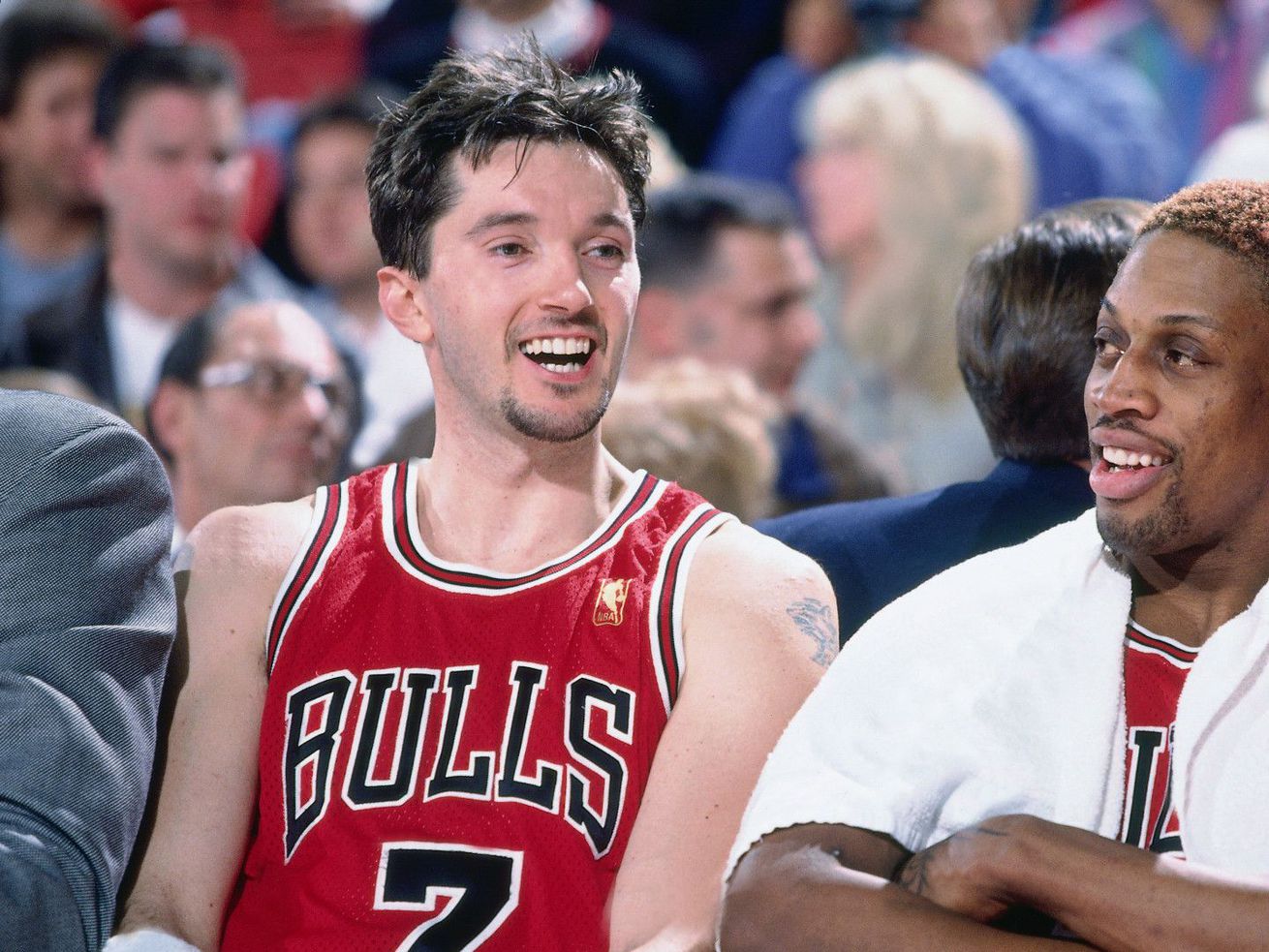
“The difficult thing for me was adjusting to the new team,’’ new Hall of Famer Toni Kukoč said of joining the Bulls. “As well as I played here in Europe, it was something totally different. I had to get used to a new system, new teammates, a new coaching staff.”
“The difficult thing for me was adjusting to the new team,’’ new Hall of Famer Toni Kukoč said of joining the Bulls. “As well as I played here in Europe, it was something totally different. I had to get used to a new system, new teammates, a new coaching staff.” | Getty Images

The three-time NBA champion was “overwhelmed” with the news that he is a member of the Hall of Fame’s Class of 2021.

Jerry Reinsdorf was the one that delivered the news to Toni Kukoč on Sunday.

The Bulls board chairman called his former player up while Kukoč was spending some time in Croatia, where his basketball journey all started.

According to Kukoč, once news spread that he would be heading into the Naismith Memorial Basketball Hall of Fame with the Class of 2021, the text messages, phone and Zoom calls, came storming in.

That’s why a few days later, the three-time NBA champion was able to take a deep breath and simply declare, “It’s good to be me these days.’’

Doing his first official press conference since he was given the news, Kukoč was reflective, complimentary, and humbled all at the same time, discussing on Tuesday the path it took to get to Chicago, and more importantly to make sure he was good enough to stay there.

“Well it wasn’t easy,’’ Kukoč said of the jump to the Association. “You all know that at that time not much was known about the European players. And we were coming in there, I don’t want to say total enigmas, but the few games we played against the Dream Team, some folks saw us playing the Olympics or World Championships, and that’s about it.

“I’m really, really happy that [former general manager] Jerry [Krause] stuck with that idea to bring me to the Bulls. Obviously he had a world champion team there, but his idea of how can I fit in that team was something of him talking me into coming over there, and then giving it a shot was the turning point for me. I decided to come over and everything else was pretty much recorded.’’

Kukoč, a native of Croatia, was selected 29th overall by the Bulls in the 1990 NBA Draft, but didn’t join the team until the 1993-94 season.

One interesting point he made in his presser was that was a key season to make the jump to the Bulls, not only because they were a world-wide brand, but also that was the same time that Michael Jordan was chasing his baseball dream and was away from the team.

That meant less pressure for the then-rookie to have to deal with.

“The difficult thing for me was adjusting to the new team,’’ Kukoč said. “As well as I played here in Europe, it was something totally different. I had to get used to a new system, new teammates, a new coaching staff. Maybe in a way Michael not being there my first year helped me a little bit because I got a lot of minutes that first year right away, and could play my natural role more than I would later in my Bulls years.’’

Whatever it was it worked, as the hardware started coming Kukoč’s way very early on, named NBA All-Rookie Second Team that first season.

His time with the Bulls also included being on three championship teams (1996, 1997, and 1998), as well as being named Sixth Man of the Year in 1995-96.

“Obviously I’m happy that I’m here in Croatia, the place that I started playing this game of basketball,’’ Kukoč said. “Actually that night [I found out], I went to the game of my old club, and I was watching them play and all the memories of the place we played and practiced kind of came over me. There were some pictures of me from my younger days playing there, so in a way it’s overwhelming.’’

Easy to see why. Kukoč now joins the likes of Hall of Famers Scottie Pippen and Jordan once again. Former teammates, but forever in the same building.

Read More

Bulls great Toni Kukoč discusses his road to the Hall of FameJoe Cowleyon May 18, 2021 at 7:01 pm Read More »

From mask must to mask ask: Chicago adopts CDC guidelines, but still advises covering your faceMitchell Armentrouton May 18, 2021 at 7:52 pm

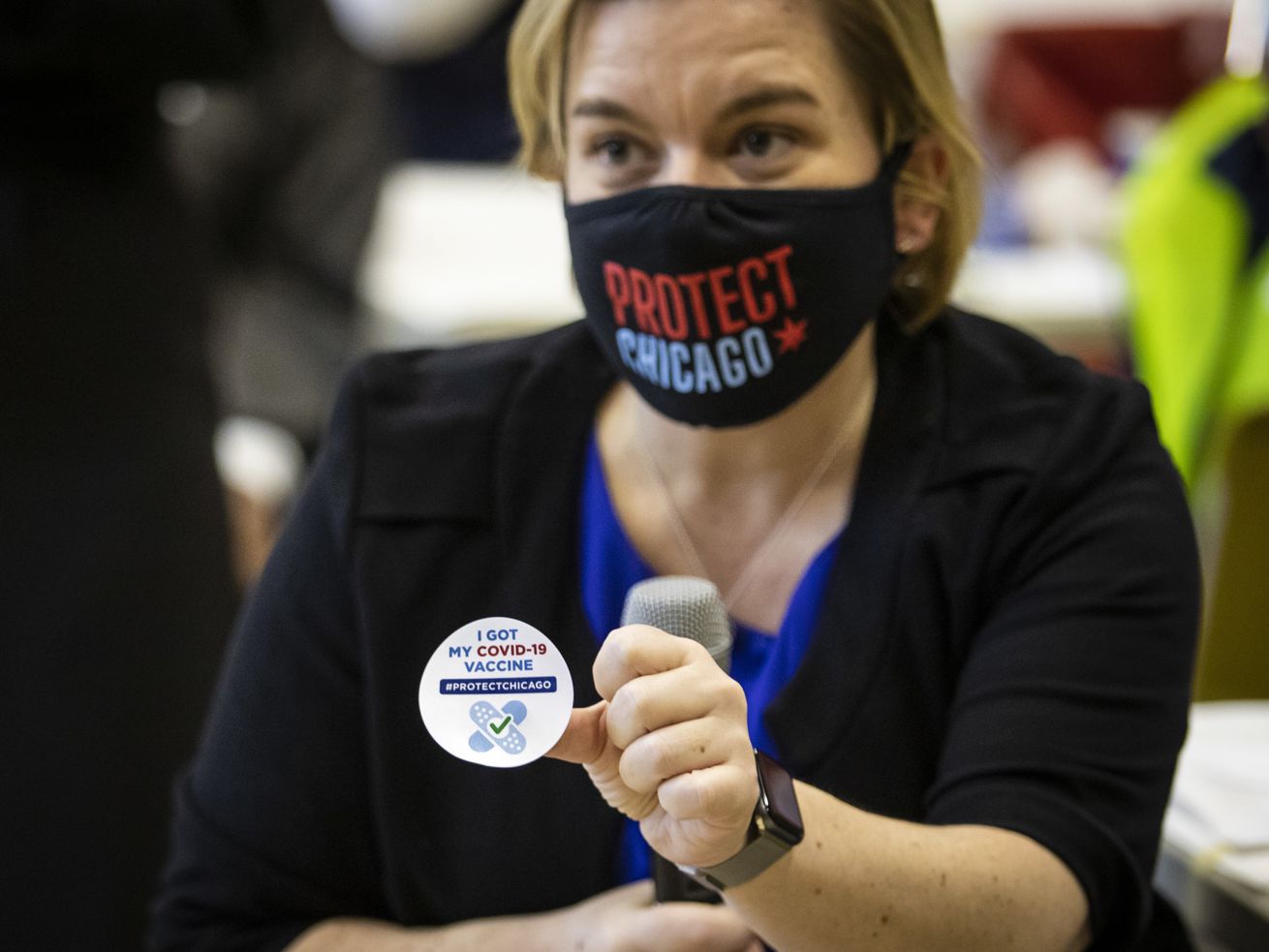
Dr. Allison Arwady, commissioner of the Chicago Department of Public Health, shows off her “I got my COVID-19 vaccine” sticker after receiving her second dose in January.
Dr. Allison Arwady, commissioner of the Chicago Department of Public Health, shows off her “I got my COVID-19 vaccine” sticker after receiving her second dose in January. | Ashlee Rezin Garcia/Sun-Times file

City officials “strongly advise businesses to verify that individuals are fully vaccinated,” but it’s up to them how to do that. Dr. Allison Arwady acknowledged many of them “may not have the capacity to do that,” so they’re advised — but not required — to keep masking policies in place until Chicago lifts all pandemic restrictions. 

Chicago’s top doctor would love for fully vaccinated residents to keep wearing their masks, but she’s not telling them they must.

Public Health Commissioner Dr. Allison Arwady on Tuesday announced the city will follow the state by falling in line with controversial new guidelines set by the U.S. Centers for Disease Control and Prevention that allow immunized people to roam restaurants, stores and most other settings without a mask — even though there’s no surefire way to verify a person’s vaccination status.

“Enforcement is a challenge,” Arwady said at a City Hall news conference. ”Part of the decision here around moving from a mask mandate to a mask advisory is recognizing that much of the country at this point has really moved away from mandates. … At some level here, we are really needing folks to be doing the right thing.”

That means the honor system will be in place for most venues except buildings owned by the city of Chicago, plus health care settings, schools, public transit and other “congregate settings” where masks are still required for all.

City officials “strongly advise businesses to verify that individuals are fully vaccinated,” but it’s up to them how to do that. Arwady acknowledged many of them “may not have the capacity to do that,” so they’re advised — but not required — to keep masking policies in place until Chicago lifts all pandemic restrictions as expected later this summer.

“We ask businesses and other settings to post a sign on the door letting the public know their current masking policy, so the public can choose whether to enter,” Arwady said.

About 48% of all Chicagoans have gotten at least one shot, and only 38% are fully vaccinated, and “many of our communities that have been the hardest-hit by COVID-19 have even lower vaccination rates,” she said.

So if you want to keep wearing that mask — as Mayor Lori Lightfoot, Gov. J.B. Pritzker and Arwady have said they will — the commissioner urges you to keep covering up.

Mayor Lori Lightfoot, pictured at a news conference in March 2020 with Gov. J.B. Pritkzer and Chicago Public Health Commissioner Dr. Allison Arwady.
Ashlee Rezin Garcia/Sun-Times
Mayor Lori Lightfoot, pictured at a news conference in March 2020 with Gov. J.B. Pritkzer and Chicago Public Health Commissioner Dr. Allison Arwady.

“A mask is mostly about protecting others: I wear my mask to protect you, you wear your mask to protect me,” Arwady said. “It helps keep my germs to myself, but it is a tangible sign that I’m thinking about somebody besides myself. I’m thinking about the greater good, and masks and distancing and hand washing have gotten us this far.”

And to those who do decide to go bare faced: “Please be kind,” Arwady said. “Regardless of mandates, we expect many Chicagoans to continue to wear masks in public spaces for a variety of reasons,” like protecting fellow residents with underlying health conditions.

The unmasking comes as COVID-19 infection rates fall to their lowest points in two months across the city and the rest of the state.

The Illinois Department of Public Health reported 1,495 new cases were diagnosed among 58,222 tests, lowering the average statewide positivity rate to 2.3%. That figure suggests the virus is spreading at its slowest rate since St. Patrick’s Day.

COVID-19 vaccine doses administered by day

Graphic by Jesse Howe and Caroline Hurley | Sun-Times

Source: Illinois Department of Public Health

Graph not displaying properly? Click here.

Metrics have improved significantly in most other states, too, meaning Chicagoans now have more flexibility to travel without quarantining or showing proof of a negative test, as advised by the city’s public health department.

The agency updated its emergency travel quarantine order to include just seven states considered hot spots, from which travelers must self-isolate or have a clean test upon arrival in Chicago: Michigan, Minnesota, Colorado, Florida, Maine, West Virginia, and Washington.

The quarantine order — which hasn’t resulted in any fines in almost a year since it was implemented — doesn’t apply to people who are two weeks removed from their final vaccine dose.

The city’s latest travel advisory map.
Chicago Department of Public Health
The city’s latest travel advisory map.

But fewer people are signing up for shots each day. The Illinois Department of Public Health reported just 25,936 vaccinations were performed Monday, the state’s lowest one-day total in two weeks.

That’s partly because a data reporting issue left out some doses administered at pharmacies, but vaccine demand has shrunk by more than half in Illinois since mid-April.

The state hit an all-time high seven-day average of nearly 133,000 shots given per day April 12. That rate is now just 56,593 — as low as it’s been since the end of February, back when scarce supply was the biggest issue facing the state.

Arwady said she hopes the new mask guidance “spurs confidence in vaccine and encourages you if you’ve been on the fence. Now’s the time.”

The virus is still claiming dozens of lives per day. The state reported 21 additional COVID-19 deaths, raising Illinois’ death toll 22,466 since last March.

To sign up for a vaccine appointment in Chicago, visit zocdoc.com or call (312) 746-4835.

For suburban Cook County sites, visit vaccine.cookcountyil.gov or call (833) 308-1988.

To find providers elsewhere, visit coronavirus.illinois.gov or call (833) 621-1284.

Read More

From mask must to mask ask: Chicago adopts CDC guidelines, but still advises covering your faceMitchell Armentrouton May 18, 2021 at 7:52 pm Read More »

Dingers: A Chicago Cubs Podcast; Episode 41: Homegrown Bright SpotsNick Bon May 18, 2021 at 5:13 pm

This week the Dingers Crew discusses some Cubs’ bright spots and who will take control of the NL Central?

The post Dingers: A Chicago Cubs Podcast; Episode 41: Homegrown Bright Spots first appeared on CHI CITY SPORTS l Chicago Sports Blog – News – Forum – Fans – Rumors.Read More

Dingers: A Chicago Cubs Podcast; Episode 41: Homegrown Bright SpotsNick Bon May 18, 2021 at 5:13 pm Read More »

Chicago announces that Lollapalooza is officially back for Summer 2021CCS Staffon May 18, 2021 at 4:57 pm

Chicago Mayor Lori Lightfoot announced on Tuesday that Lollapalooza is returning this Summer to Chicago’s Grant Park.

The post Chicago announces that Lollapalooza is officially back for Summer 2021 first appeared on CHI CITY SPORTS l Chicago Sports Blog – News – Forum – Fans – Rumors.Read More

Chicago announces that Lollapalooza is officially back for Summer 2021CCS Staffon May 18, 2021 at 4:57 pm Read More »

Nina Barrett vs. AmazonRebecca Aizinon May 18, 2021 at 4:15 pm


The owner of Evanston’s Bookends & Beginnings is taking on the retail giant in an effort to save independent bookstores.

Independent bookstore owner Nina Barrett has a lot on her plate—or actually, her bookshelves. Seven years ago, Barrett, 60, and her husband, a librarian, opened Bookends & Beginnings by the Northwestern University campus in Evanston, and now, just after a recent expansion of the store, she’s the single named plaintiff of a class action lawsuit against Amazon.…Read More

Nina Barrett vs. AmazonRebecca Aizinon May 18, 2021 at 4:15 pm Read More »

Chicago’s travel quarantine list shrinks along with Illinois’ COVID-19 positivity rate — and daily vaccinations  Mitchell Armentrouton May 18, 2021 at 5:39 pm

COVID-19 vaccines are seen inside a pop-up vaccine site beside West Town Bakery and Diner in the East Ukrainian Village neighborhood on Tuesday. About 38% of Illinoisans are fully vaccinated.
COVID-19 vaccines are seen inside a pop-up vaccine site beside West Town Bakery and Diner in the East Ukrainian Village neighborhood on Tuesday. About 38% of Illinoisans are fully vaccinated. | Pat Nabong/Sun-Times

The Illinois Department of Public Health reported just 25,936 vaccinations were performed Monday, the state’s lowest one-day total in two weeks. 

Illinois’ average statewide COVID-19 testing positivity rate fell to its lowest point in two months Tuesday as officials reported 1,495 new cases of the disease.

They were diagnosed among 58,222 tests to decrease the infection rate to 2.3%, suggesting the virus is spreading at its slowest rate since St. Patrick’s Day.

Significantly improving metrics in most other states mean Chicagoans now have more flexibility to travel without quarantining or showing proof of a negative COVID-19 test, as advised by the city Department of Public Health.

The agency updated its emergency travel quarantine order to include just seven states considered hot spots, from which travelers must self-isolate or have a clean test upon arrival in Chicago: Michigan, Minnesota, Colorado, Florida, Maine, West Virginia, and Washington.

The quarantine order — which hasn’t resulted in any fines in almost a year since it was implemented — doesn’t apply to people who are two weeks removed from their final vaccine dose.

“Chicago’s daily case rate has dropped considerably over the past two weeks but Chicagoans must realize that until you are fully vaccinated, you are still at risk of contracting COVID-19,” the city public health department said in a statement.

But fewer people are signing up for shots each day. The Illinois Department of Public Health reported just 25,936 vaccinations were performed Monday, the state’s lowest one-day total in two weeks.

That’s partly because a data reporting issue left out some doses administered at pharmacies, but vaccine demand has shrunk by more than half in Illinois since mid-April.

COVID-19 vaccine doses administered by day

Graphic by Jesse Howe and Caroline Hurley | Sun-Times

Source: Illinois Department of Public Health

Graph not displaying properly? Click here.

The state hit an all-time high seven-day average of nearly 133,000 shots given per day April 12. That rate is now just 56,593 — as low as it’s been since the end of February, back when scarce supply was the biggest issue facing the state.

About 58% of Illinois residents 16 or older have gotten at least one shot. Almost 38% are fully vaccinated.

Meanwhile, the virus is still claiming dozens of lives per day. The state reported 21 additional COVID-19 deaths, including those of men in their 40s from Cook and Will counties.

About 1.4 million Illinoisans have tested positive since March 2020 and 22,466 have died.

Read More

Chicago’s travel quarantine list shrinks along with Illinois’ COVID-19 positivity rate — and daily vaccinations  Mitchell Armentrouton May 18, 2021 at 5:39 pm Read More »

Mother prepares ‘final goodbye’ for 13-year-old son, one of the youngest victims of a violent weekend in ChicagoDavid Struetton May 18, 2021 at 6:06 pm

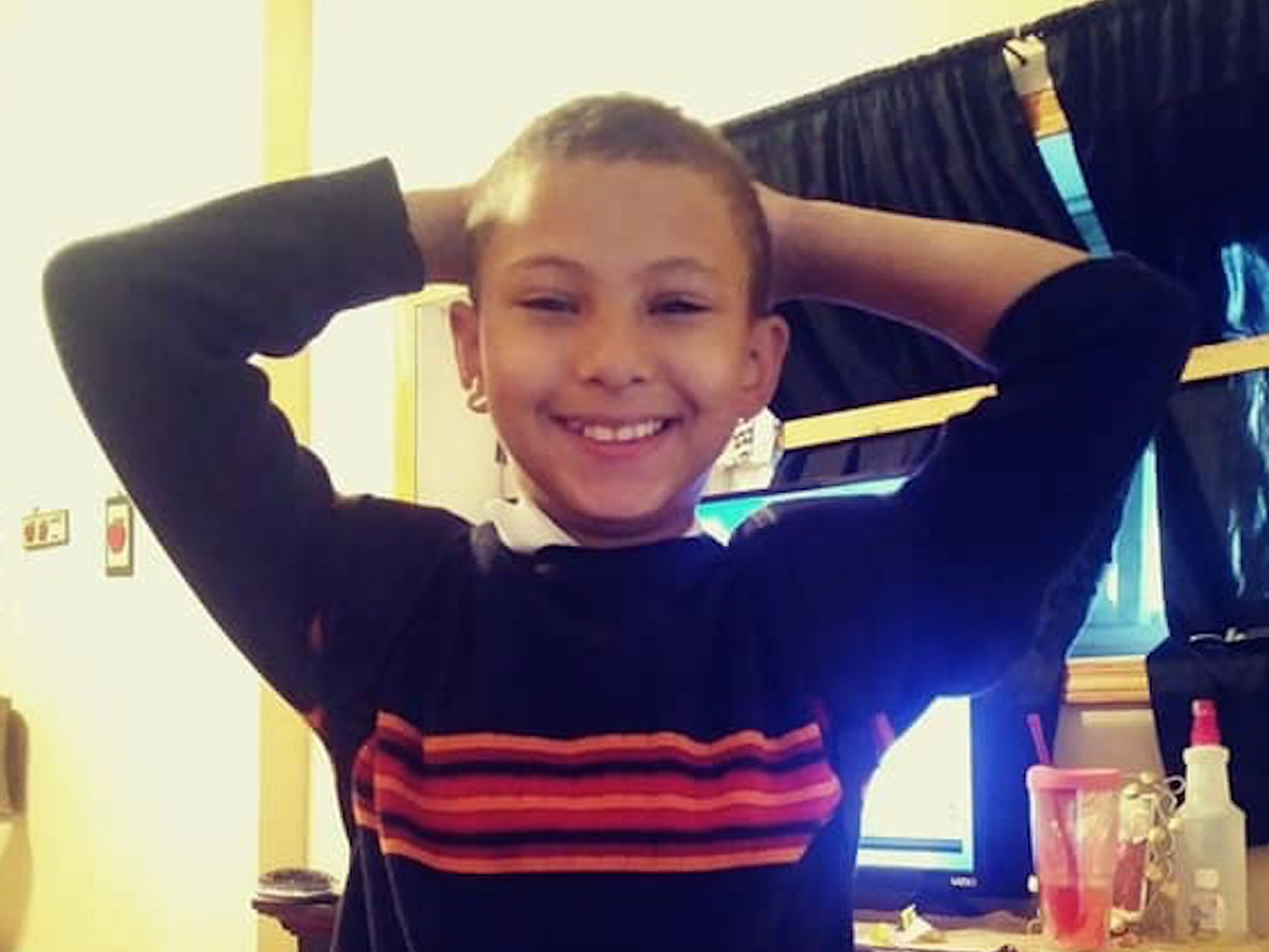
Eric Crawford was gravely wounded in a shooting Sunday in McKinley Park.
Eric Crawford was gravely wounded in a shooting Sunday in McKinley Park. | Facebook

Patricia Deates’ son Eric has been on life support at Stroger Hospital since he was wounded while riding his bike Sunday morning.

Patricia Deates went to the hospital Tuesday preparing to say a “final goodbye” to her 13-year-old son, one of the youngest victims of a violent weekend in Chicago.

Eric Crawford, about to enter eighth grade, has been on life-support at Stroger Hospital since he was wounded while riding a bike four blocks from his home in McKinley Park Sunday morning.

“Eric is a wonderful, bright child,” Deates said in a brief phone interview from her son’s hospital bed. He loved to ride his bike and play video games, she said. He has two siblings.

Eric was shot shortly before 8 a.m. by someone in the back seat of a white SUV in the 3700 block of South Wood Street, a police spokesperson said Tuesday. He was hit in his head and neck and taken to Stroger, where his condition was described as “grave.”

Chief of Detectives Brendan Deenihan said the shooting may have been a gang retaliation.

“The subject was riding his bike when it looks like a rival gang was following him and targeting him, and shot him and fled the area,” Deenihan said Monday at a news conference on the weekend, the most violent of the year so far.

He did not give details, and the family disputed that Eric was in a gang.

Deates told WGN-TV that Eric was not in a gang, though gang members had been trying to recruit him. “Yes, they have. And I blame them. Every single one of them,” she told the station.

Eric is one of several children caught in gun violence in Chicago in the last week. A 2-year-old girl was shot Friday evening as she sat in the backseat of a car near the Cook County criminal courthouse. Earlier that day, a 14-year-old girl was shot as she stood outside in Englewood. A day earlier, gunfire wounded an 8-year-old boy in Lawndale. Police said he was not the intended target.

An online fundraiser for Eric’s care had received over $1,500 by Tuesday afternoon.

Read More

Mother prepares ‘final goodbye’ for 13-year-old son, one of the youngest victims of a violent weekend in ChicagoDavid Struetton May 18, 2021 at 6:06 pm Read More »

Strike from Gaza kills 2 as Israel topples 6-story buildingAssociated Presson May 18, 2021 at 5:44 pm

Israeli Kassadra Bodari, left, and Lilian Feciouru take shelter in Ashdod, Israel during sirens warning of incoming rockets fired from Gaza Strip, Tuesday, May 18, 2021.
Israeli Kassadra Bodari, left, and Lilian Feciouru take shelter in Ashdod, Israel during sirens warning of incoming rockets fired from Gaza Strip, Tuesday, May 18, 2021. | AP

At least 213 Palestinians have been killed in airstrikes since, including 61 children and 36 women, with more than 1,440 people wounded, according to the Gaza Health Ministry.

GAZA CITY, Gaza Strip — A rocket launched from Gaza killed two Thai workers in southern Israel on Tuesday, police said, hours after Israeli airstrikes toppled a six-story building in the Palestinian territory that housed bookstores and educational centers. With the war showing no sign of abating, Palestinians in the region staged a general strike in a rare collective action against Israel’s policies.

Violence erupted at protests in the occupied West Bank, including in the city of Ramallah. Hundreds of Palestinians burned tires and hurled stones at an Israeli military checkpoint. Troops fired tear gas canisters at the crowd, and protesters picked up some of them and threw them back.

One protester was killed and more than 70 wounded — including 16 by live fire — in clashes with Israeli troops in Ramallah, Bethlehem, Hebron and other cities, according to the Palestinian Health Ministry. The Israeli army said two soldiers were wounded by gunshots to the leg.

The general strike was an uncommon show of unity among Palestinian citizens of Israel, who make up 20% of its population, and those in the territories Israel seized in 1967 that the Palestinians have long sought for a future state. It threatened to further widen the conflict after a spasm of communal violence in Israel and protests across the West Bank last week.

Strike organizer Muhammad Barakeh said Palestinians are taking a position against Israeli “aggression” in Gaza and Jerusalem, as well as the “brutal repression” by police. Israel blames the war on Hamas and accuses it of inciting the violence.

Since the fighting began last week between Israel and Gaza’s Hamas rulers, the Israeli military has launched hundreds of airstrikes it says are targeting Hamas’ militant infrastructure, while Palestinian militants have fired more than 3,400 rockets from civilian areas in Gaza at civilian targets in Israel.

The latest attack from Gaza hit a packaging plant in a region bordering the territory. In addition to the two people killed, Israel’s Magen David Adom rescue service said it took another seven to the hospital. Thai Foreign Ministry spokesman Tanee Sangrat said the wounded were also Thai.

The Israeli military said rockets also were fired at the Erez pedestrian crossing and at the Kerem Shalom crossing, where humanitarian aid was being brought into Gaza, forcing both to close. It said a soldier was slightly wounded in Erez attack.

Israel continued its airstrikes into Gaza, leaving behind a large pile of rubble in its attack on the six-story building with centers used by the Islamic University and other colleges. Desks, office chairs, books and wires could be seen in the debris.

Israel warned the building’s residents ahead of time, sending them fleeing into the predawn darkness. There were no reports of casualties.

“The whole street started running, then destruction, an earthquake,” said resident Jamal Herzallah. “This whole area was shaking.”

Since 2012, Hamed al-Ijla had run a training center in the building, teaching first aid, hospital management and other skills.

When the war is over, “I will set up a tent across the street and resume work,” he said.

The fighting began May 10 when Hamas fired long-range rockets toward Jerusalem in support of Palestinian protests against Israel’s heavy-handed policing of the Al-Aqsa Mosque compound, a flashpoint site sacred to Jews and Muslims, and the threatened eviction of dozens of Palestinian families by Jewish settlers.

At least 213 Palestinians have been killed in airstrikes since, including 61 children, with more than 1,440 people wounded, according to the Gaza Health Ministry, which does not break the numbers down into fighters and civilians. Hamas and Islamic Jihad say at least 20 of their fighters have been killed, while Israel says the number is at least 160.

Twelve people in Israel, including a 5-year-old boy, have been killed in the ongoing rocket attacks.

The fighting is the most intense since a 2014 war between Israel and Hamas, but efforts to halt it have stalled so far. Egyptian mediators are trying to negotiate a cease-fire, but the U.S. has stopped short of demanding an immediate stop to the hostilities and Israel has vowed to press on.

The war has also seen an unusual outbreak of violence in Israel, with groups of Jewish and Palestinian citizens fighting in the streets and torching vehicles and buildings.

As the fighting drags on, medical supplies, fuel and water are running low in Gaza, which is home to more than 2 million Palestinians and under an Israeli-Egyptian blockade since Hamas seized power from rival Palestinian forces in 2007. Nearly 47,000 Palestinians have fled their homes.

Israeli attacks have damaged at least 18 hospitals and clinics and destroyed one health facility, the World Health Organization said. Nearly half of all essential drugs in the territory have run out.

Essential supplies and aid have only trickled in during the fighting, some from Egypt through the Rafah crossing it controls and some from Israel when it briefly opened the territory’s main commercial crossing Tuesday before the attack forced it shut.

The WHO said the bombing of key roads, including those leading to the main Shifa Hospital, has hindered ambulances and supply vehicles in Gaza, which was already struggling to cope with a coronavirus outbreak.

The United States signaled it would not pressure the two sides for a cease-fire even as President Joe Biden said he supported one.

Israeli Prime Minister Benjamin Netanyahu said the bombardments had set the Palestinian militants back many years.

“I am sure that all our enemies around us see the price we have levied for the aggression against us,” he said, speaking in front of an F-16 fighter jet at an air force base in a video released by his office Tuesday.

The Biden administration has declined so far to publicly criticize Israel’s part in the fighting or send a top-level envoy to the region, and it has blocked a proposed U.N. Security Council statement calling for an end to the crisis.

Among the buildings that Israeli airstrikes have leveled was the one housing The Associated Press Gaza office and those of other media outlets.

Netanyahu alleged that Hamas military intelligence was operating inside the building. U.S. Secretary of State Antony Blinken said Tuesday in Iceland that Israel had given the U.S. information about the bombing. Blinken declined to characterize the material, and Israel has not publicly provided any evidence of its claim.

AP President Gary Pruitt reiterated the organization’s call for an independent investigation of the attack.

“As we have said, we have no indication of a Hamas presence in the building, nor were we warned of any such possible presence before the airstrike,” he said in a statement. “We do not know what the Israeli evidence shows, and we want to know.”

___

Krauss reported from Jerusalem. Associated Press writers Isabel DeBre in Dubai, United Arab Emirates, Grant Peck in Bangkok and Ilan Ben Zion in Jerusalem contributed.

Read More

Strike from Gaza kills 2 as Israel topples 6-story buildingAssociated Presson May 18, 2021 at 5:44 pm Read More »

Charles Grodin, ‘Heartbreak Kid’ and ‘Beethoven’ actor, dies at 86Jake Coyle | Associated Presson May 18, 2021 at 6:31 pm

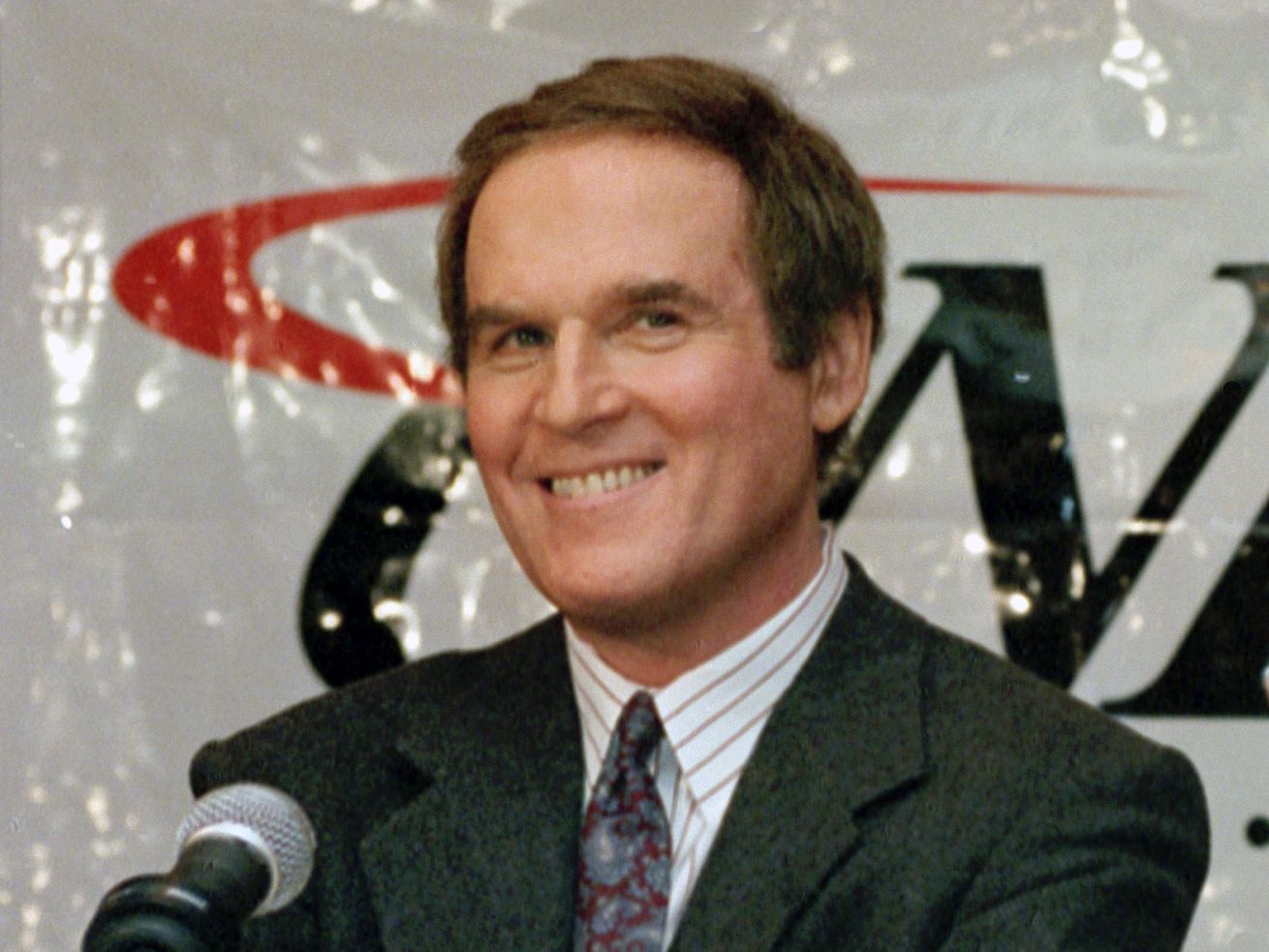
Charles Grodin in 1994.
Charles Grodin in 1994. | AP file

Other credits included “Midnight Run,” “The Woman in Red” and “Heaven Can Wait,” TV’s “Louie” and Broadway’s “Same Time, Next Year.”

Charles Grodin, the droll, offbeat actor and writer who scored as a caddish newlywed in “The Heartbreak Kid” and later had roles ranging from Robert De Niro’s prisoner in the comic thriller “Midnight Run” to the bedeviled father in the “Beethoven” comedies, has died. He was 86.

Grodin died Tuesday at his home in Wilton, Connecticut, from bone marrow cancer, his son, Nicholas Grodin, said.

Known for his deadpan style and everyday looks, Grodin also appeared in “Dave,” “The Woman in Red,” “Rosemary’s Baby” and “Heaven Can Wait.” On Broadway, he starred with Ellen Burstyn in the long-running 1970s comedy “Same Time, Next Year,” and he found many other outlets for his talents.

In the 1990s, he made his mark as a liberal commentator on radio and TV. He also wrote plays and television scripts, winning an Emmy for his work on a 1997 Paul Simon special, and wrote several books humorously ruminating on his ups and downs in show business.

Actors, he wrote, should “think not so much about getting ahead as becoming as good as you can be, so you’re ready when you do get an opportunity. I did that, so I didn’t suffer from the frustration of all the rejections. They just gave me more time.” He spelled out that advice in his first book, “It Would Be So Nice If You Weren’t Here,” published in 1989.

Grodin became a star in the 1970s, but might have broken through years earlier: He auditioned for the title role in Mike Nichols’ “The Graduate,” which came out in 1967. But the part for what became a classic went instead to Dustin Hoffman.

Grodin did have a small role in “Rosemary’s Baby” and was part of the large cast of Nichols’ adaptation of “Catch-22″ before he gained wide notice in the 1972 Elaine May comedy “The Heartbreak Kid.”

He starred as a Jewish newlywed who abandons his comically neurotic bride to pursue a beautiful, wealthy blonde played by Cybill Shepherd. The movie was a hit and Grodin received high praise. He commented: “After seeing the movie, a lot of people would approach me with the idea of punching me in the nose.”

In the next few years, Grodin starred in a lavish 1976 film remake of “King Kong” as the greedy showman who brings the big ape to New York. (The World Trade Center replaced the Empire State Building in the climax.) He was Warren Beatty’s devious lawyer in “Heaven Can Wait,” and Gene Wilder’s friend in “The Woman in Red” (Less successfully, he appeared in May’s 1987 adventure comedy “Ishtar,” a notorious flop).

In 1988′s “Midnight Run,” Grodin was a bail-jumping accountant who took millions from a mobster and De Niro was the bounty hunter trying to bring him cross-country to Los Angeles. They’re being chased by police, another bounty hunter and the Mob, and because Grodin is afraid of flying, they are forced to go by car, bus, even boxcar.

“Beethoven” brought him success in the family-animal comedy genre in 1992. Asked why he took up such a role, he told The Associated Press he was happy to get the work.

“I’m not that much in demand,” Grodin replied. “It’s not like I have this stack of wonderful offers. I’m just delighted they wanted me.”

Amid his film gigs, Grodin became a familiar face on late-night TV, perfecting a character who would confront Johnny Carson or others with a fake aggressiveness that made audiences cringe and laugh at the same time.

“It’s all a joke,” he told The Los Angeles Times in 1995. “It’s just a thing. It was a choice to do that.”

His biggest stage success, by far, was “Same Time, Next Year,” which opened on Broadway in 1975 and ran nearly 3½ years. He and Burstyn were two people who — though each happily married — meet in the same hotel once a year for an extramarital fling. Beyond the humor, the play won praise for deftly tracing the changes in their lives, and in society, from the 1950s to the ’70s. Critic Clive Barnes called Grodin’s character “a monument to male insecurity, gorgeously inept.”

After 1994’s “My Summer Story,” Grodin largely abandoned acting. From 1995 to 1998, he hosted a talk show on CNBC cable network. He moved to MSNBC and then to CBS’ “60 Minutes II.”

In his 2002 book, “I Like It Better When You’re Funny,” he said too many TV programmers’ believe that viewers are best served “if we hear only from lifelong journalists.” He argued that “people outside of Washington and in professions other than journalism” also deserved a soapbox.

He returned to the big screen in 2006 as Zach Braff’s know-it-all father-in-law in “The Ex.” More recent credits include the films “An Imperfect Murder” and “The Comedian” and the TV series “Louie.”

Grodin was born Charles Grodinsky in Pittsburgh in 1935, son of a wholesale dry goods seller who died when Charles was 18. He played basketball and later described himself as “a rough kid, always getting kicked out of class.”

He studied at the University of Miami and the Pittsburgh Playhouse, worked in summer theater and then struggled in New York, working nights as a cab driver, postal clerk and watchman while studying acting during the day.

In 1962 Grodin made his Broadway debut and received good notices in “Tchin Tchin,” a three-character play starring Anthony Quinn. He followed with “Absence of a Cello” in 1964.

He co-wrote and directed a short-lived 1966 off-Broadway show called “Hooray! It’s a Glorious Day … and all that.” That same year, he made his movie debut in a low-budget flop called “Sex and the College Girl.”

In 1969, Grodin demonstrated his early interest in politics by helping write and direct “Songs of America,” a TV special starring Simon and Garfunkel that incorporated civil rights and antiwar messages. But the original sponsor pulled out and Simon later called the little-noticed effort “a tragedy.”

Simon returned with a special in 1977 that spoofed show business and featured Grodin as the show’s bumbling producer. Grodin and his co-writers won Emmys.

Grodin and his first wife, Julia Ferguson, had a daughter, comedian Marion Grodin. The marriage ended in divorce. He and his second wife, Elissa Durwood, had a son, Nicholas.

Contributing: Bob Thomas

Read More

Charles Grodin, ‘Heartbreak Kid’ and ‘Beethoven’ actor, dies at 86Jake Coyle | Associated Presson May 18, 2021 at 6:31 pm Read More »