
‘No one wants to be the poodle’: Why defensive positions have the coolest nameson May 19, 2021 at 11:04 pm
Across the sport, depth charts feature bandits, bucks, bulls, cash, cincos, dogs — even a Bubo.Read More
Across the sport, depth charts feature bandits, bucks, bulls, cash, cincos, dogs — even a Bubo.Read More
TTNL’s Draft Dr. Phil and Shayne “The Smartest Man” Marsaw have a special Tuesday edition and are joined by CBS Sports’ Emory Hunt to talk storylines coming out of the NFL Draft and DaWindyCity Productions to talk hype videos and more!
The post Keepin It 100: A Chicago Bears Podcast – Rookie Camp Rewind first appeared on CHI CITY SPORTS l Chicago Sports Blog – News – Forum – Fans – Rumors.Read More

The U.S. government said no to Gov. Kristi Noem’s argument that it’s patriotic to allow a fireworks show there. Now, the Cheyenne River Sioux Tribe is fighting her efforts.
South Dakota Gov. Kristi Noem’s lawsuit against the federal government over a Fourth of July fireworks display she wants to put on at Mount Rushmore once again this summer has reignited tensions between Noem and the Cheyenne River Sioux Tribe.
The tribe has moved to join the lawsuit in opposition to Noem, who’s asking a federal judge to order the National Park Service to allow the fireworks display, like one held at Mount Rushmore last year.
The Republican governor sued the U.S. Department of Interior last month after the park service denied the state’s application for the event this year. It pointed to safety concerns and objections from local tribes.
The tribal lawsuit touches on a century-old dispute over ownership and control of the Black Hills, which include Mount Rushmore. In 1980, the Supreme Court ruled that the land was taken from tribes in violation of treaty agreements and offered them a monetary payment.
Now, in the lawsuit over Noem’s hoped-for fireworks show at Mount Rushmore, the Cheyenne River Sioux Tribe and Steve Vance, the tribe’s historic preservation officer, argue that they should be allowed to take part in the lawsuit because the land on which Mount Rushmore sits is “our most sacred site — the Heart of Everything That Is.”
“The fact that this event could be forced upon us in our sacred lands despite our clear opposition to the event traumatizes us as a people and inflicts grief upon us,” the tribe and Vance argue in court documents. “To us, allowing this event to occur again is a colonial attack on one of our most sacred places.”
In a court filing in response to the Cheyenne River Sioux Tribe’s request to join the lawsuit, Noem argues that the tribe doesn’t have any legal standing in what she termed a “state-federal dispute.” Her lawyers say the fireworks display wouldn’t hinder the tribe’s religious or free speech rights.
When Noem filed the lawsuit, she argued that patriotism was a reason to allow the fireworks show at Mount Rushmore.
Chief Judge Roberto Lange of the federal district court of South Dakota hasn’t ruled on whether the tribe can join the suit. He indicated he’ll decide by June 2 whether to issue a preliminary injunction to force the National Park Service to allow the fireworks display.
Last year, Noem threatened to sue over coronavirus checkpoints the Cheyenne River Sioux Tribe set up to keep unnecessary visitors off its reservation during the pandemic. Noem backed down.
South Dakota also sued the tribe for changing speed-limit signs on a state highway that runs through the reservation.
3107 W. Logan Blvd., Chicago, 60647
Located right on Logan Boulevard between Milwaukee and Whipple, this popular neighborhood market is always poppin’. They’re open on Sundays from 9AM to 3PM, now through October 31st. Just a heads up, LSFM has designated 9AM to 10AM as a shopping hour for high-risk populations. And don’t forget your face mask!
Lincoln Park: 1817 N Clark St.
West Loop: 115 S Sangamon St
For 19 years, Green City Market has been Chicago’s largest year-round sustainable farmers market. Their vendor list is extensive with farmers from all over the area slinging quality dairy, meats, and produce. The farmers market in Lincoln Park runs now through October, every Wednesday and Saturday from 7am to 1pm. The West Loop location opens in June through October, every Saturday from 8am to 1pm.
1500 W Catalpa Ave, Chicago, IL 60640
After 12 seasons, this popular Edgewater farmers market is back and operating as a hybrid market, with onsite shopping as well as an online market. Stop by to check out vendors like Andersonville Fine Foods, River Valley Ranch, Hillside Orchards, and much more! Open Wednesdays from 3pm to 7pm, now through October 20.
4100 N. Damen, Chicago, IL 60618
As one of the oldest farmers markets in Chicago, Northcenter has a roster of wonderful vendors providing produce, pastries and much more. Check out their newly-renovated Town Square on Saturdays starting June 5 through October 30, 8am to 1pm. Inventory tends to sell out early so try to get there before 11am. And, of course, don’t forget to mask up.
1219 W. 76th St., Chicago, IL 60620
Located on the South Side of Chicago, this friendly neighborhood farmers market offers a delicious sampling of organic produce, dairy, jams, bread, and more. Mark your calendars, ECM opens July 17 and runs through September 18 from 10am to 2pm.
For more Farmers Market goodness in Chicago, check out this helpful schedule!
Farmer’s Markets Chicago Featured Image Credit: Bild von Martin Winkler auf Pixabay
The post 5 Best Farmer’s Markets in Chicago You Must Hit Up This Spring appeared first on UrbanMatter.

The artist’s new collection of autobiographical comics looks at the highs and lows of everyday life with humor and lightness.
Keiler Roberts sits in front of her laundry machine, crying.…Read More

The two have had other moments of tension over the years, and their current differences over the war in Gaza create a challenge that President Joe Biden was trying mightily to avoid.
President Joe Biden’s efforts to persuade Benjamin Netanyahu to halt military strikes against Hamas in Gaza are plunging the two leaders into a difficult early test of the U.S.-Israeli relationship.
The two have had other moments of tension over the years, and their current differences over the war in Gaza create a challenge that Biden was trying mightily to avoid.
Biden told Netanyahu in a telephone call Wednesday that he expected “significant de-escalation” of the fighting by day’s end, according to the White House. But the prime minister came right back with a public declaration that he was “determined to continue” the Gaza operation “until its objective is achieved.”
Netanyahu did allow that he “greatly appreciates the support of the American president,” but said nonetheless that Israel would push ahead.
This is not where Biden had hoped to expend his time and energy.
Early in Biden’s term, foreign policy has taken a back seat. The president has tried to avoid getting bogged down in an interminable effort to establish an elusive Mideast peace that many of his White House predecessors have dedicated precious time to without much success.
This is not the first time Biden and Netanyahu have been publicly at odds.
As vice president, Biden kept Netanyahu waiting for a dinner meeting after the Israeli leader embarrassed President Barack Obama by approving the construction of 1,600 new apartments in disputed east Jerusalem in the middle of Biden’s 2010 visit to Israel.
Netanyahu sought to patch up hurt feelings at the dinner. But after the meal, Biden admonished the prime minister in a statement, saying the move undermined a U.S. effort to persuade the Palestinians to resume peace talks.
Later, Obama and Netanyahu’s relationship cratered as White House aides questioned the Israeli’s willingness to find accommodations with Palestinians and Sunni Arab countries to build a lasting peace in the region. Netanyahu, for his part, was furious about White House efforts to reach a nuclear deal with Iran.
Amid the tension between Obama and Netanyahu, Biden went out of his way during a 2014 speech before the Jewish Federations of North America to say that he and Netanyahu were “still buddies,” albeit with a somewhat complicated relationship. Biden noted that he had once inscribed a photo for Netanyahu with “Bibi I don’t agree with a damn thing you say but I love you.’”
In late 2019, during a question and answer session with voters on the campaign trail, Biden called Netanyahu “counterproductive” and an “extreme right” leader. But he also accused Palestinian leaders of “fomenting” the conflict and “baiting everyone who is Jewish.” And he suggested that some on the U.S. political left give the Palestinian Authority “a pass” when criticizing Israeli leadership.
Netanyahu had a notably better relationship with President Donald Trump, whom he praised for moving the U.S. Embassy to Jerusalem from Tel Aviv and brokering a normalization of relations between Israel and Gulf neighbors Bahrain and the United Arab Emirates as well as Morocco and Sudan.
Biden’s call on Netanyahu to de-escalate the fighting came as political and international pressure mounted on the U.S. president to intervene more forcefully to push for an end to the hostilities. Biden, until Wednesday, had avoided pressing Israel more directly and publicly for a cease-fire, or conveying that level of urgency for ending Israeli airstrikes targeting Hamas in the thickly populated Gaza Strip.
His administration has relied instead on what officials described as “quiet, intensive” diplomacy, including quashing a U.N. Security Council statement that would have addressed a cease-fire. The administration’s handling opened a divide between Biden and some Democratic lawmakers, dozens of whom have called for a cease-fire.
Egypt and some others have worked without success to broker a halt to fighting, while Hamas officials indicated publicly they would keep up their rocket barrages into Israel as long as Israel continued airstrikes.
Netanyahu, in his statement, made clear he had no plans to immediately wind down Israeli strikes targeting Hamas leaders and supply tunnels in Gaza, a 25-mile by 6-mile strip of territory that is home to more than 2 million people.
“With every passing day we are striking at more of the terrorist organizations’ capabilities, targeting more senior commanders, toppling more terrorist buildings and hitting more weaponry stockpiles,” Netanyahu said.
The White House did not respond directly to Netanyahu’s statement but said top Biden advisers continued to be in “hour by hour” contact with their Israeli counterparts.
Biden’s relationship with Netanyahu could be further complicated for the president by a shifting tide on Israel among some congressional Democrats. Rep. Alexandria Ocasio-Cortez of New York has called Israel an “apartheid state,” and Rep. Ilhan Omar of Minnesota has labeled Israeli airstrikes “terrorism.” Biden, during a visit to a Michigan on Tuesday, had an animated conversation about the ongoing fighting with Rep. Rashida Tlaib, who has family in the West Bank. Tlaib had pressed Biden to call for a cease-fire.
Soon after Netanyahu announced he planned to continue operations, Reps. Ocasio-Cortez, Tlaib, and Mark Pocan of Wisconsin introduced a resolution opposing the sale of $735 million in military weaponry to Israel that’s already been approved by the Biden administration.
The fighting, the worst Israeli-Palestinian violence since 2014, has killed at least 219 Palestinians and 12 people in Israel.
Top Biden administration officials have stressed to the Israelis in recent days that time is not on their side as international objections mount to their operations and domestic pressure builds on Biden, according to a person familiar with the ongoing discussions,
—-
Associated Press Writer Alexandra Jaffe in New London, Connecticut, contributed reporting.
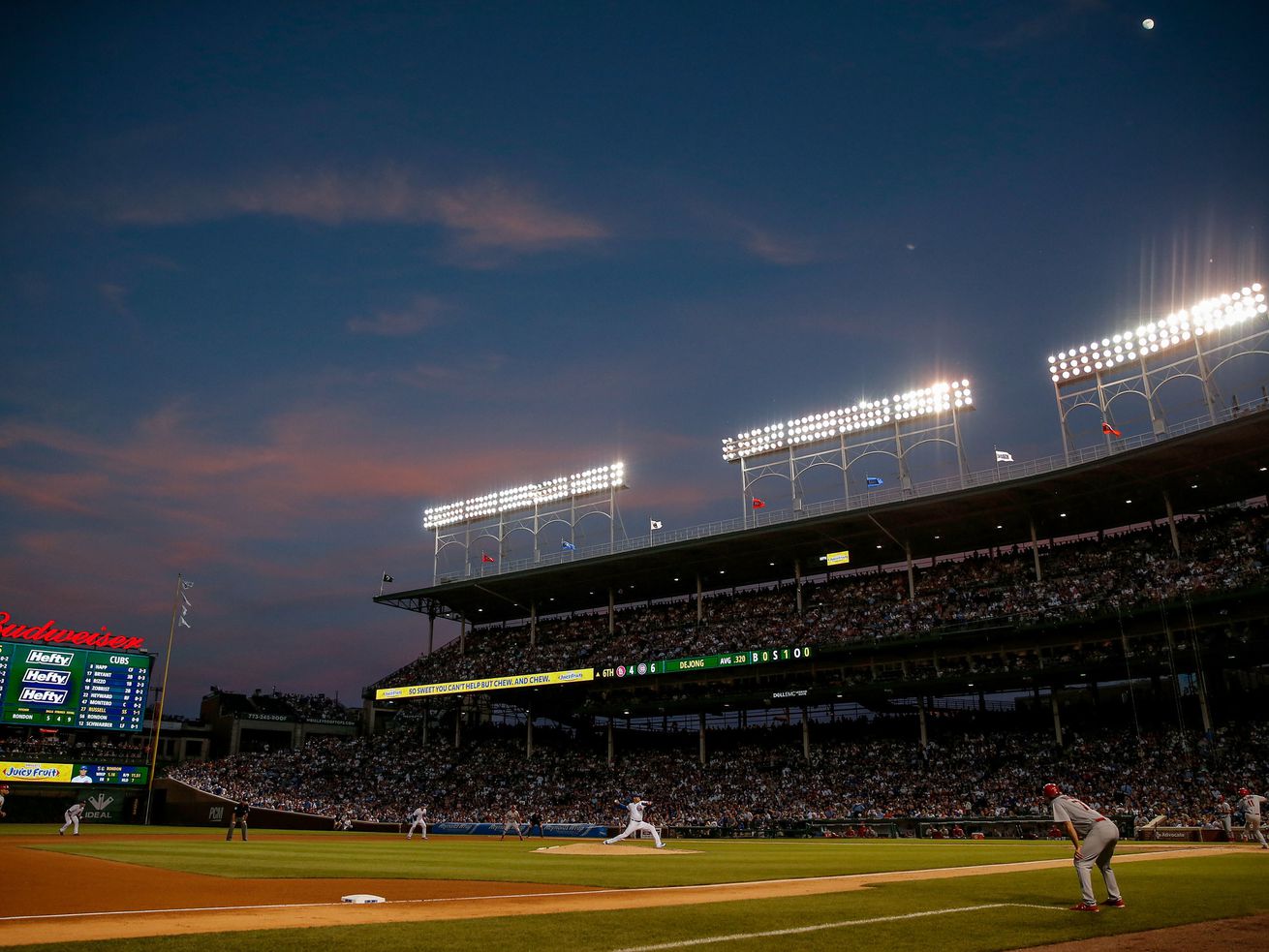
Normally, Friday or Saturday night games are a no-no; that’s when Wrigleyville restaurants and nightclubs expect their biggest crowds. The exception was OK’d by a City Council committee because of the Cubs’ travel schedule.
The Cubs got the go-ahead Wednesday to play a rare Friday night game on June 18 against the Miami Marlins because the team returns to Chicago late the night before after playing the Mets in New York.
Normally, Friday and Saturday night games are a no-no because they exacerbate parking and congestion problems in Wrigleyville on a night restaurants and nightclubs count on to draw their biggest crowds.
But at the behest of local Ald. Tom Tunney (44th), the City Council’s Committee on License and Consumer Protection agreed to make the one-time exception due to the Cubs’ travel schedule, hoping a better-rested home team would be more likely to defeat the Miami Marlins.
“It’s a pretty simple ask. This is to move a day game that was scheduled for Friday, June 18 to a night game … . We’ve done it in the past on a very limited basis to help accommodate tight travel schedules in the hopes that a well-rested team might get us in the playoffs,” Tunney said.
“The Cubs, traditionally by the night game ordinance, were not allowed Friday or Saturday night games without this kind of exception. … This was done historically because generally, in Lake View and other communities, Friday and Saturday night are the busiest nights for restaurants, theater and other uses that really are necessary to keep these businesses alive. When there’s a game around Wrigley Field, there’s too much congestion and parking issues for other businesses to really survive.”
Prior to the final vote, Ald. Michael Scott Jr. (24th) asked Tunney how often the ban on Friday night games is lifted.
“Once in a blue moon. Whenever the Cubs make the playoffs,” Tunney joked.
During the Zoom hearing, License Committee Chairman Emma Mitts (37th) held up her hand.
She appeared to be wearing a replica of the World Series ring distributed to Cubs players and personnel after the team won the 2016 World Series, ending a 108-year championship drought that was the longest in Major League Baseball.
“Can you bring one of these back home? With you getting this extra night [game], we’re looking for a win. This is your victory right here. We need a World Series coming from the Cubs,” Mitts said.
Cubs Vice-President and General Counsel Mike Lufrano replied: “That would be terrific. Thank you, Madame Chair.”

“This decision was not made lightly,” but it was one that had to be made, a company spokesman said.
NEW YORK — The operator of the nation’s largest fuel pipeline confirmed it paid $4.4 million to a gang of hackers who broke into its computer systems.
Colonial Pipeline said Wednesday that after it learned of the May 7 ransomware attack, the company took its pipeline system offline and needed to do everything in its power to restart it quickly and safely, and made the decision then to pay the ransom.
“This decision was not made lightly,” but it was one that had to be made, a company spokesman said. “Tens of millions of Americans rely on Colonial – hospitals, emergency medical services, law enforcement agencies, fire departments, airports, truck drivers and the traveling public.”
Colonial Pipeline’s CEO, Joseph Blount, told The Wall Street Journal he authorized the payment because the company didn’t know the extent of the damage and wasn’t sure how long it would take to bring the pipeline’s systems back.
The FBI discourages making ransom payments to ransomware attackers, because paying encourages criminal networks around the globe who have hit thousands of businesses and health care systems in the U.S. in the past year alone. But many victims of ransomware attacks, where hackers demand large sums of money to decrypt stolen data or to prevent it from being leaked online, opt to pay.
“I know that’s a highly controversial decision,” Blount told the Journal. “I didn’t make it lightly. I will admit that I wasn’t comfortable seeing money go out the door to people like this.”
“But it was the right thing to do for the country,” he said.
Blount said Colonial paid the ransom in consultation with experts who previously dealt with the group behind the attacks, DarkSide, which rents out its ransomware to partners to carry out the actual attacks.
Multiple sources had confirmed to The Associated Press that Colonial Pipeline had paid the criminals who committed the cyberattack a ransom of nearly $5 million in cryptocurrency for the software decryption key required to unscramble their data network.
A ransom payment of 75 Bitcoin was paid the day after the criminals locked up Colonial’s corporate network, according to Tom Robinson, co-founder of the cryptocurrency-tracking firm Elliptic. Prior to Robinson’s blog post, two people briefed on the case had confirmed the payment amount to AP.
Blount told the Journal the attack was discovered around 5:30 a.m. on May 7. It took Colonial about an hour to shut down the pipeline, which has 260 delivery points across 13 states and Washington, D.C., Blount said. That helped prevent the infection from potentially migrating to the pipeline’s operational controls.
The pipeline system delivers about 45% of the gasoline consumed on the East Coast, and Colonial, which is based in Alpharetta, Georgia, halted fuel supplies for nearly a week. That led to panic-buying and shortages at gas stations from Washington, D.C. to Florida.
Colonial restarted its pipeline a week ago, but it took time to resume a full delivery schedule, and the panic-buying led to gasoline shortages. More than 9,500 gas stations were out of fuel on Wednesday, including half of the gas stations in D.C. and 40% of stations in North Carolina, according to Gasbuddy.com, which tracks fuel prices and station outages.
___
Associated Press Writer Frank Bajak contributed to this report from Boston.
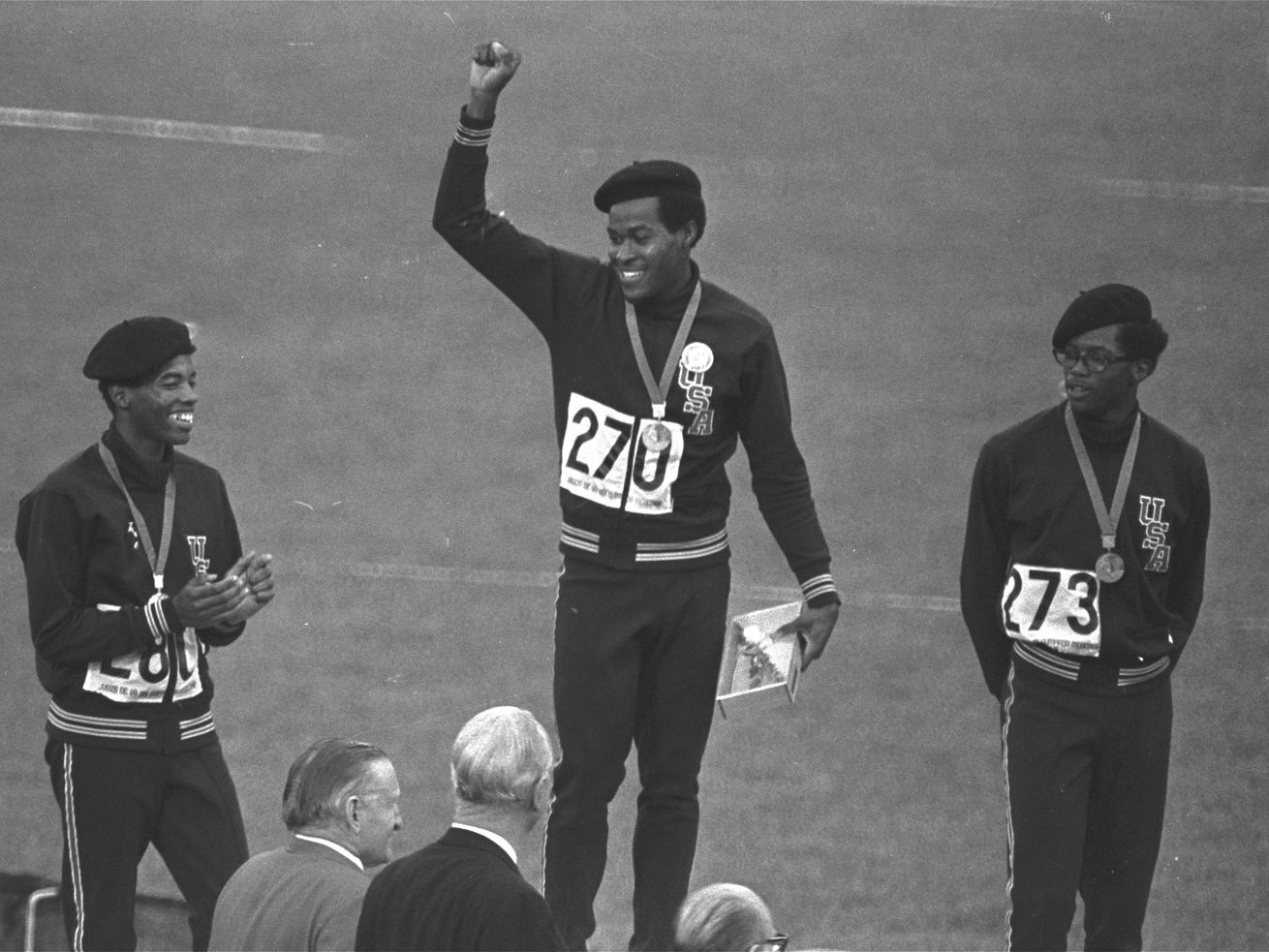
Evans became the first man to crack 44 seconds in the 400 meters, winning the gold medal at the Mexico City Games in 43.86.
LAGOS, Nigeria — Lee Evans, the record-setting sprinter who wore a black beret in a sign of protest at the 1968 Olympics, died Wednesday. He was 74.
USA Track and Field confirmed Evans’ death. The San Jose Mercury News reported that Evans’ family had started a fundraiser in hopes of bringing him back to the U.S. from Nigeria, where he coached track, to receive medical care after he suffered a stroke last week.
Evans became the first man to crack 44 seconds in the 400 meters, winning the gold medal at the Mexico City Games in 43.86. His victory came shortly after his teammates, Tommie Smith and John Carlos, were sent home from the Olympics for raising their fists on the medals stand.
In later interviews, Evans said an official warned him not do anything similar. He took a different approach, wearing a black beret to show support for the Black Panther Party and other civil rights organizations.
Like Smith and Carlos, Evans was a college star on the San Jose State “Speed City” teams. He was also a high-profile member of the Olympic Project for Human Rights, which called attention to racial inequality and oppression and spearheaded the protests at the 1968 games.
“His legacy of contributions to sports and the struggle for social justice is indelible and enduring,” tweeted Harry Edwards, the architect of the movement.
After running the 43.86, Evans anchored the U.S. 4×400 team to a world record of 2 minutes, 56.16 seconds. The 400 record stood for almost 20 years. The relay record stood for 24.
Evans won five U.S. titles at 400 meters and is a member of both the USATF and U.S. Olympic halls of fame.
After he stopped running competitively, Evans spent ample time in Africa, working for the United Nations, and also coaching national teams in Nigeria and Saudi Arabia. The Mercury News said he was currently coaching high school track in Lagos.
Prosecutors have dropped their bid for $168,000 in damages from two snowboarders who triggered a slide that buried a service road and destroyed an expensive avalanche-mitigation system in Colorado’s backcountry.
Outdoor enthusiasts and avalanche-prevention specialists were closely watching the case, which stoked concerns that other skiers and snowboarders would be deterred from coming forward to report avalanches out of fear they’d be saddled with the cost of the damage.
Tyler DeWitt, 39, of Silverthorne; and Evan Hannibal, 26, of Vail, agreed instead to plead guilty June 7 to a misdemeanor charge of reckless endangerment, according to Jason Flores-Williams, their lawyer.
The snowboarders also will have to complete 20 to 60 hours of community service as part of the plea deal.
:no_upscale()/cdn.vox-cdn.com/uploads/chorus_asset/file/22526217/merlin_97718908.jpg)
Hannibal’s helmet cam captured the March 25, 2020, avalanche — and also the tense, profanity-laced exchange that followed as a wall of snow wider than a football field barreled downhill in the vicinity of the Continental Divide near Vail.
The experienced backcountry snowboarders weren’t injured. But the avalanche buried a service road in about 20 feet of snow and came dangerously close to Interstate 70, a major route for ski traffic.
As soon as they were safe, the two men called 911 to report the slide and spent two about hours at the scene describing what happened. They also shared the video and photos with the Colorado Avalanche Information Center.
Hannibal described the interaction as cordial. But the snowboarders were shocked a few weeks later when they got word they were being criminally charged after the footage was handed over to law enforcement.
Investigators cited Hannibal’s video in an affidavit explaining the charge. Summit County sheriff’s Deputy Brian Metzger wrote that the footage shows the snowboarders making “several comments” expressing concern about the risks.
“The pair were clearly worried about avalanche conditions but proceeded down the path anyway,” Metzger wrote. “There was also a comment made about being in trouble if the cops show up.”
A report by the avalanche center also suggested the snowboarders might have misgauged the hazard on the slope.
The slide, which was about 400 feet wide and ran about 1,200 vertical feet, destroyed one of six O’Bellx avalanche-mitigation units in the area. The remotely operated devices are part of a statewide system controlled by the Colorado Department of Transportation. They ignite a mixture of oxygen and hydrogen that causes an explosion aimed at safely triggering avalanches.
As Hannibal’s and DeWitt’s case moved forward, the Colorado attorney general’s office joined those raising concerns about the message that was being sent by prosecuting them. The office filed a motion to quash testimony from the director of the Colorado Avalanche Information Center — a state agency — and one of its avalanche forecasters.
The motion, which was denied, argued that the testimony could have an “unintended adverse ‘chilling’ impact” on the avalanche center’s ability to collect photographs and videos from people involved in backcountry accidents because they might fear the information would be used against them.
“When people are willing to become reasonable, then you can actually have fair outcomes that don’t damage people or have national implications,” said Flores-Williams, who called prosecutors’ initial restitution request obscene and unjust.
Summit County District Attorney Heidi McCollum didn’t respond to a request for comment.
Flores-Williams said he hopes the case will lead to protocols under which people can freely interact with the avalanche center, which uses the information to compile daily backcountry forecasts during the winter and to warn of possibly dangerous conditions.
“It was always our hope that, at the end of all of this, that the Colorado Avalanche Information Center remains that neutral, positive state agency that it is meant to be,” he said. “It was really unfortunate that they were brought in the way they were. But, at the same time, they need to be given real credit for bringing in the attorney general. And the attorney general needs to be given real credit for coming in and trying to keep them from becoming a partial state agency.”
Hannibal said that even though he won’t be on the hook to pay restitution, the fact that criminal charges were filed to begin with is likely to keep some people from reporting avalanches.
“That’s kind of inevitable,” he said. “But I do think that [the Colorado Avalanche Information Center] is put in a better position by coming to a plea deal here instead of being forced to testify against members of the backcountry and kind of putting them in between the state and the community.”