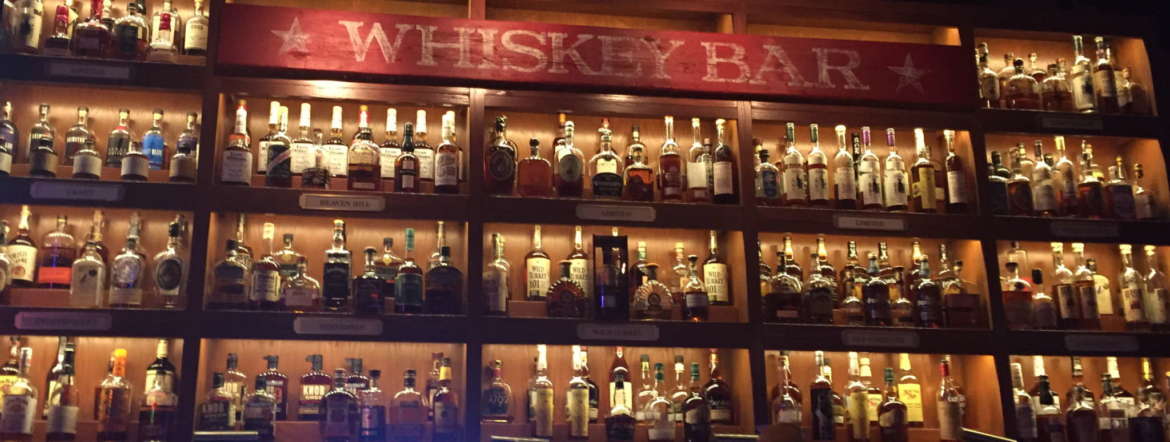
It wouldn’t be a true compilation of Chicago country bars without mentioning Bub City and Old Crow. Bub City, probably known to non-country fans as that BBQ place with the Christmas lights, also has a huge whiskey selection and their own house beer. Old Crow Wrigleyville (and its rooftop) has been successful enough to open a River North location in John Barleycorn’s old spot.
Both bars in Chicago have live music regularly and are usually one the first places someone will mention when you’re looking for a country bar. But they aren’t the only ones Chicago has to offer. For those still upset by the recent closure of long-standing dive bar, Carol’s Pub, this list is for you. Get your country fix at these other Chicago country bars.
Advertisement
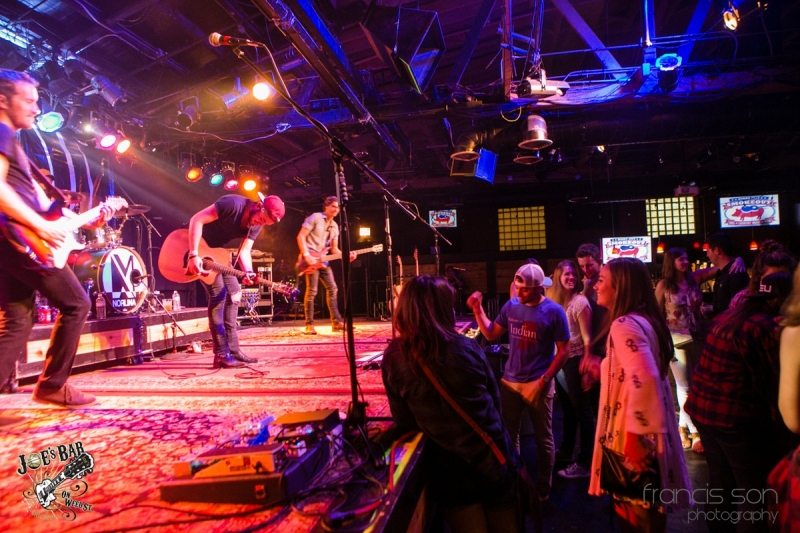
Photo Credit: Joe’s on Weed St
This country bar is known for its concerts and once you go, you know why. To see bigger names, you may have to win tickets, but the people who aren’t household names are high-quality. Their rooftop, over the off-track betting location next door, has a different feel but is another great spot to listen to live music.
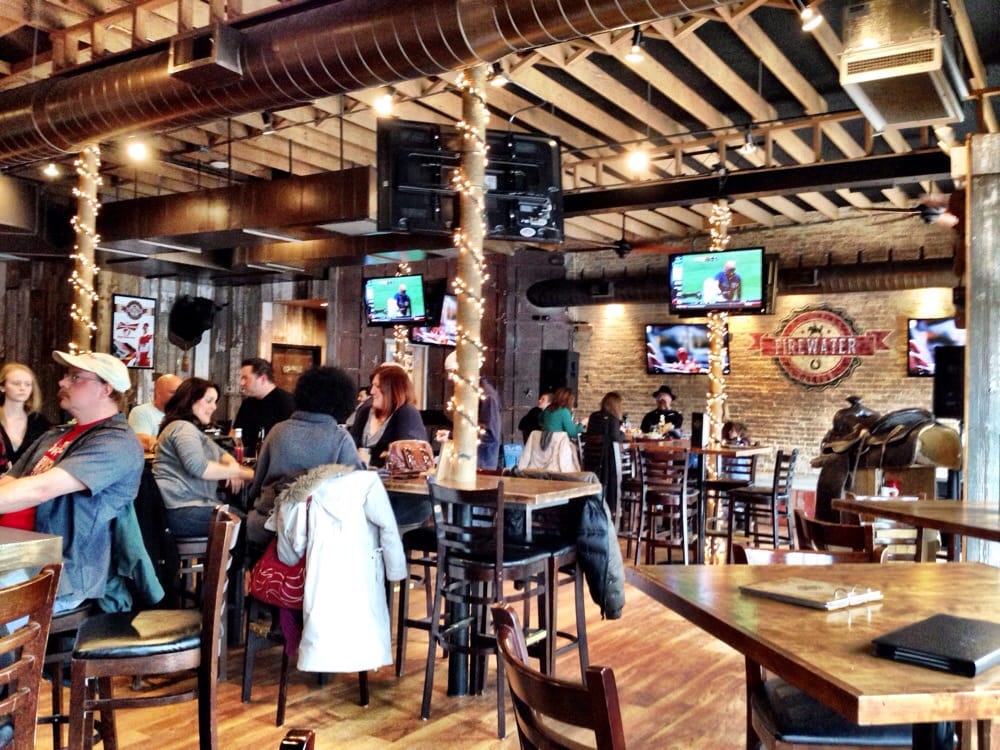
Photo Credit: Yelp
You’ll have to travel North for this one, but this Edison Park bar is all country, all the time. Visit for live music Thursday, Friday, and Saturday nights.
Advertisement
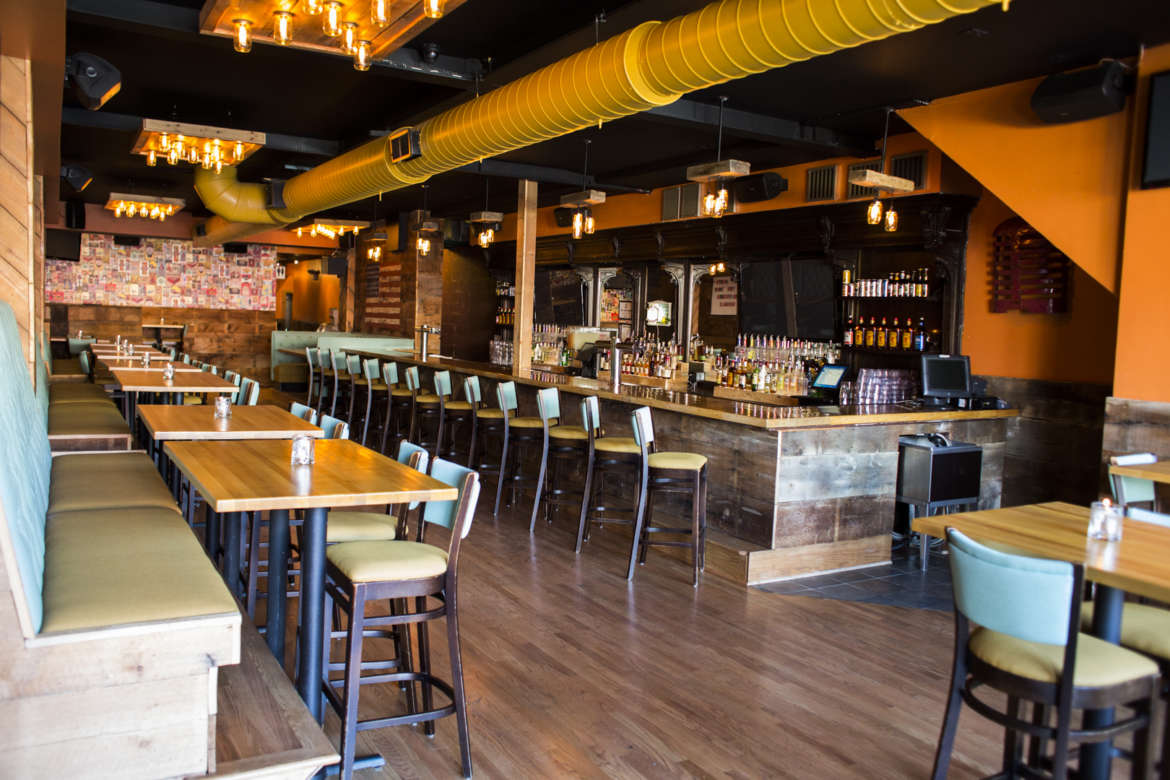
Photo Credit: Country Club
The Country Club, just down the street from Old Crow, is another Clark Street spot for country. Travel to this country bar in Chicago to hear live music with friends. Their own description of their bar says it all: Take the eclectic vibes of Austin’s 6th street, add musical chops that would fit right in Nashville, and you’ve got The Country Club.
Photo Credit: Reggie’s Rock Club
Watch excellent shows and musicians at Reggies Chicago. Check out their calendar and visit their rooftop for your next concert pregame.
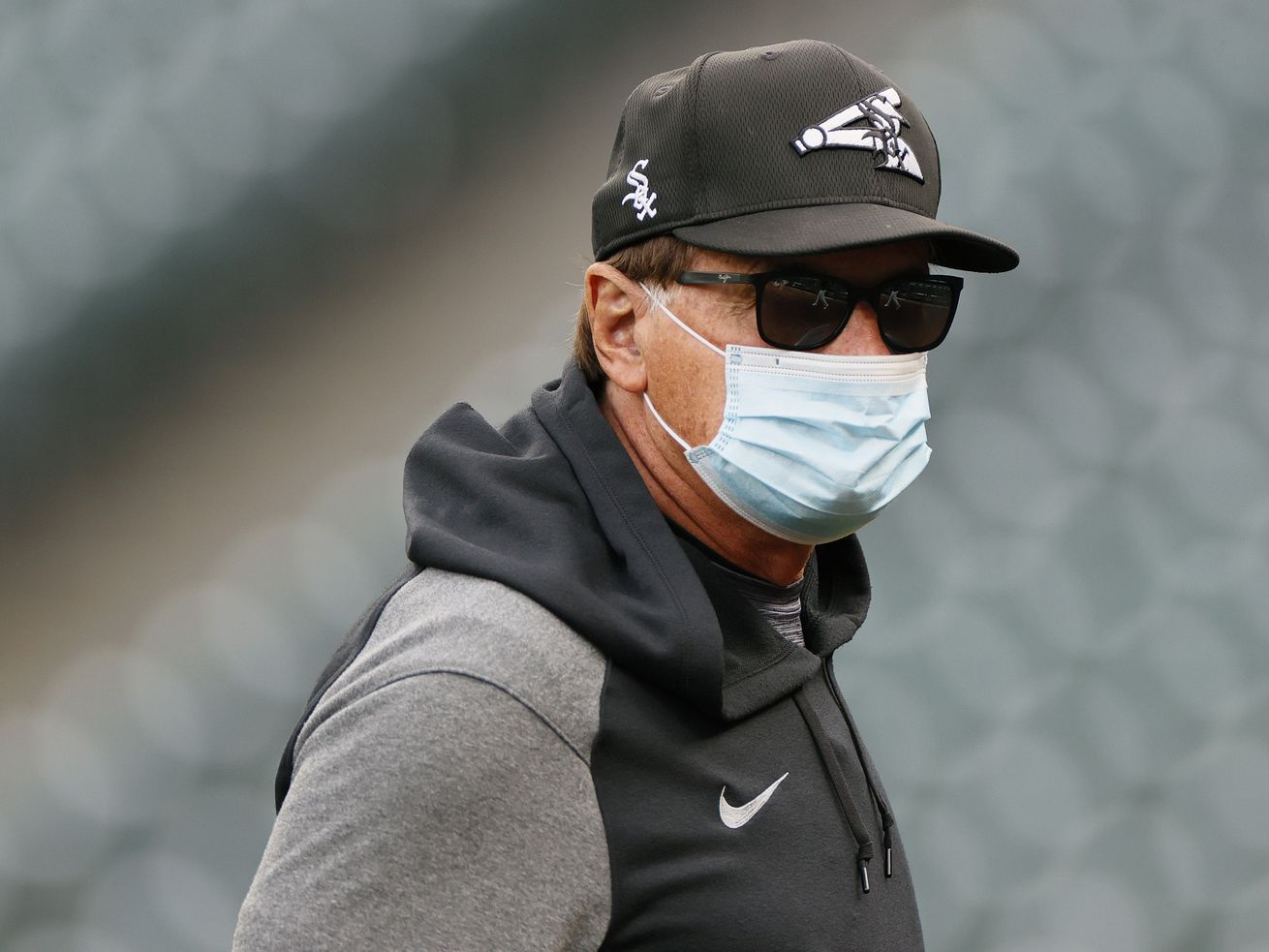
White Sox manager Tony La Russa has been heavily criticized for publicly calling out one of his players. | Steph Chambers/Getty Images
White Sox manager Tony La Russa wasn’t wrong for the act of calling out rookie Yermin Mercedes.
Tony La Russa has been all sorts of wrong about all sorts of things since the White Sox hired him in October to be their manager. And he might be wrong for believing that rookie Yermin Mercedes should have obeyed orders and not swung on a 3-0 count with his team leading the Twins 15-4.
But he’s not wrong for publicly criticizing Mercedes, even if modern sensibilities howl that it was a horrible, horrible thing to do.
When a manager or coach points out, for all the world to hear, what he thinks a player has done wrong, he is not burning the guy at the stake or planting him in front of a firing squad. But you would certainly have believed that was the case had you listened to the outrage that followed La Russa’s criticism of Mercedes, who homered on the 3-0 swing Monday night. He threw the player under the bus! The kid might never recover from the humiliation! How can La Russa face his players, who are now, as we speak, planning a rebellion?
There’s no way to say this without offending today’s incredibly sensitive athletes, so, oh, well: How did we get here, to Wimpyville?
I wasn’t a fan of La Russa’s hiring nor am I a fan of it now that he’s 40-plus games into his second stint with the Sox. But it’s clear he truly believes that, by speaking out, he was educating Mercedes about how the sport should be played. That might be another example of how out of touch the 76-year-old manager is with today’s game. But there’s also the distinct possibility that the world has tilted a bit too far in the direction of soft.
When everyone knows that a player made a mistake in a game, why is it so wrong for his coach to point it out publicly? Why is it such an egregious betrayal of trust? The offending emperor isn’t wearing any clothes. You know it. I know it. But the coach won’t say it for fear of alienating a player clad only in his birthday suit.
Why won’t coaches and managers speak up when players screw up? They’re afraid of getting fired, and, for a lot of these people, continued employment is Job One. They’re concerned about losing the locker room only as it applies to keeping their jobs. Shielding players from criticism thus becomes as important as knowing when to change pitchers.
Hence, all the zipped lips.
Maybe it takes a senior citizen, Hall of Fame manager to point out that there’s nothing wrong with calling out a player. Will the player be embarrassed? Quite possibly. Will he make the same mistake again? Probably not.
Again, I’m not defending La Russa for wanting to uphold the unwritten rules of baseball. I’m defending his ability to criticize players in public.
In Chicago, we’ve had a run of coaches who see no evil and speak no evil. Former Bears coach Lovie Smith was the king of complimenting all his players, including players whose football abilities deserved universal condemnation. This made him very popular in the locker room but perhaps the most boring quote in the history of quotes. Current Bears coach Matt Nagy has taken a similar tack of not criticizing players. Former Cubs manager Joe Maddon did the same thing, except he’d throw in a “groovy’’ now and then.
At least you could interpret former Blackhawks coach Joel Quenneville’s grunts and know when he was mad at a player.
Everybody stands at lecterns and lies these days. Without blinking, they let the listening audience know how much contempt they have for them.
Given the uphill public-relations battle La Russa is fighting, he won’t be the man to start an honesty movement in professional sports. But wouldn’t it be nice if telling the truth became contagious?
We’re told that there’s nothing in it for a coach or manager to be truthful. How do we know that? Perhaps he starts to develop players who realize their leader wants to bring out the best in them. Maybe, gasp, players toughen up a bit.
Buccaneers coach Bruce Arians publicly criticized Tom Brady for inaccurate throws last season, and Brady somehow survived. There are people who can handle criticism, who actually perform better when they’re on the business end of some unpleasant truths. Tampa Bay won the Super Bowl, and, as far as we know, Brady didn’t rack up massive mental-health bills.
It’s a different world than when La Russa was in his prime as a manager. Social media can be a brutal thing. Fans have ugly thoughts that must be aired (no they mustn’t). Athletes need as many people in their corner as possible. But when a coach makes a fool of himself defending the indefensible at a press conference, surely it’s cold comfort for the offending player. Surely the player is no less mortified.
It’s possible to tell the truth without tearing down the athlete: “He made a bad pass. We can’t have that. But he won’t do it again. That’s how much I believe in him.’’
Whoever is offended by that has the mental strength of a dandelion puffball.
How about we man and woman up, and see what happens?
Former Pittsburgh Pirates pitcher Felipe Vazquez is led to the Westmoreland County Courthouse. | Andrew Rush/Pittsburgh Post-Gazette via AP
The two-time All-Star was placed on MLB’s restricted list after the charges were filed in 2019, and he has not been eligible to play since the end of that season.
The two-time All-Star was placed on MLB’s restricted list after the charges were filed in 2019, and he has not been eligible to play since the end of that season.
The jury in Westmoreland County late Thursday returned a guilty verdict on 15 of the charges facing Vazquez, including statutory sexual assault, unlawful contact or communication with a minor, indecent assault and corruption of a minor. Investigators said the incidents occurred in 2017, when the girl was 13 and 14.
During three hours of testimony Thursday, Vazquez, 29, maintained that he was unaware the girl was a minor during their relationship, which began in 2017 when she reached out on Instagram to wish him a happy birthday.
Vazquez was found not guilty of 10 other counts of unlawful contact or communication with a minor. However, the Pittsburgh Tribune-Review reports he faces additional charges of child pornography and unlawful contact with a minor in Florida after he continued to have a relationship with the girl when she moved there in 2018.
The left-hander pitched for five seasons in the major leagues with the Pirates and Washington Nationals. He first ascended to the closer’s role in 2017 when he recorded 21 saves with a 1.67 ERA for Pittsburgh. He made the National League All-Star team in 2018 and 2019, compiling a total of 65 saves over those two seasons.
“It’s time to get back out there and do something for people’s souls,” Tab Benoit says, about his return to in-person concerts. “I can see the relief on people’s faces when they come back to shows and know that they can enjoy something normal again.” | Jean Frank Photo
The Grammy nominated Delta blues guitarist — recently named one of the 30 best in the world today by Guitar World magazine — is bringing “The Chicago Takeover” to town, a six-night stand at City Winery.
Live music is finally back in Chicago — and Tab Benoit is wasting no time getting things plugged in again. The Grammy nominated Delta blues guitarist — recently named one of the 30 best in the world today by Guitar World magazine — is bringing “The Chicago Takeover” to town, a six-night stand at City Winery June 1 and 4-8. “It feels like an old friend,” Benoit says about getting back on the road and in front of audiences.
Though the Louisiana native has done a few gigs since November, including a special series of concerts with Samantha Fish at Nashville’s illustrious Ryman Auditorium, the upcoming summer trek will be his first fully fledged multi-city tour since 2019 and comes as COVID-19 restrictions are eased across the country — as of press time, City Winery will still be enforcing masks, temperature checks, a wellness questionnaire and sitting only one party together per table.
“It’s time to get back out there and do something for people’s souls,” he says. “And I think that’s really what it is. I can see the relief on people’s faces when they come back to shows and know that they can enjoy something normal again.”
Benoit, who recently co-authored the book “Blues Therapy” with Anita Schlank, Ph.D., about how much blues music can be therapeutic and healing for people, says there’s a lot to be said about how live music will be a boost to both bands’ and concertgoers’ mental health after a year of the industry going dark.
“I think we’ve forgotten what it’s like to feel the energy of other people around you when there’s live music playing. That’s why festivals are so great, there’s thousands of people all feeling the same thing — it’s really special and you can’t replicate it at home.”
So, even though Chicago’s Blues Fest unfortunately has to take another year off – the city has announced a smaller, one-day event for 2021 on Sept. 18 as part of a new music celebration initiative called Chicago In Tune — Benoit hopes to create some of the magic of that traditional weekend in his mini-residency in June.
“Every show we do will be a different experience. I don’t have a set list, and we always play requests from the audience. Allowing people to be part of the show is important to me,” he says, noting that all the blues legends he grew up listening to like John Lee Hooker, Buddy Guy and Albert Collins did it the same way. “They played what they felt, and played in the moment. And that’s what drew me to the blues more than anything. That raw emotion.”
Of course, Chicago is a special place for Benoit who has played the hallowed blues venues a number of times over the course of his incredible 30-year career, and the city was purposely chosen for this unique multi-night event. “I love Chicago, and it gives us the chance to see friends around the city like Buddy Guy,” says Benoit, noting deep roots with the Guy family since all hail from Louisiana.
In much the same way Benoit experienced the tutelage of those that came before him, he also provides those opportunities to the artists on his Whiskey Bayou Records label, including bringing signee Alastair Greene out for the upcoming tour (you can also see Benoit play drums during Greene’s set).
Though Benoit doesn’t have immediate plans to release any new music himself — most of his downtime was spent “doing things around the house I couldn’t do in the 30-something years I’ve been on the road” — he says right now his biggest focus is to just get out on the stage and help get the music scene going again. “And I mean the entire music scene, not just the blues genre,” he says. “We just happen to be some of the first out there. But the backbone of all live music in this country is the blues so it’s in the right hands. Let the blues bands go out there and get it running again.”
Here are more in-person shows in the coming weeks:
Wave Wall Wax
Starting May 29, Navy Pier’s Wave Wall platform hosts free Saturday night showdowns with some of the city’s top house music DJs like Cordell Johnson (June 5) and Selah Say (June 12). 5 p.m. Starting May 29, Navy Pier, 600 E. Grand. Free. navypier.org
Waco Brothers
The rousing alternative country statesmen led by The Mekons’ Jon Langford play two can’t-miss hometown shows where anything goes. 6 and 9:30 p.m. May 29, Reggies, 2105 S. State St. $30. reggieslive.com
KingTrey
Local rapper from Evanston got his start at the age of 17 with his first EP “The Good Word” and is poised to become one of the next scene standouts. 8 p.m. June 3, The Promontory, 5311 South Lake Park Avenue West. $40-150. eventbrite.com
Piqniq 2021
Rock station WKQX will be hosting their annual summer bash at the Lakeshore Drive-In with Lovelytheband, Shaed and Letdown. 7 p.m. June 4, Lakeshore Drive-In, 1362 S Linn White Dr. $40-300. 101wkqx.com
Billy Flynn
The incredible guitar/mandolin/harmonica player and vocalist brings an unforgettable set and some special guests to a venerable blues club. 8 p.m. June 4, Rosa’s Lounge, 3420 W. Armitage. $20. rosaslounge.com
The Claudettes
Timeless act infusing American roots music with rockabilly and punk all set to rollicking piano and sultry vocals is as good a reason as any to get out and see live music. 6 and 9 p.m. June 12, City Winery, 1200 W. Randolph. $30 per seat. citywinery.com
Festivals are beginning to announce their future plans for 2021. | Ashlee Rezin Garcia/Sun-Times
Improving coronavirus numbers have made more summer events possible. Here’s the latest updates on this year’s changing entertainment landscape.
With coronavirus case numbers and positivity rates on the decline, the summer festival season in Chicago is in much better shape than last year.
The city has given the green light for festivals and “general admission outdoor spectator events” to welcome 15 people for every 1,000 square feet.
The city has debated various ways bolster vaccination rates among young people most likely to attend outdoor music events like Lollapalooza and Riot Fest. Mayor Lori Lightfoot said a proposal to create a coronavirus vaccine passport for Chicago events is “very much a work in progress” but that preferred seating at those events could be one way to urge vaccination.
Some festivals have already announced their return and concerts are starting to be rescheduled.
We’re tracking the status of the city’s festival and major events throughout the area as new cancellations and postponements are announced. Check back for more updates.
May
Navy Pier Fireworks: The Pier is hosting a 10-minute fireworks show every Saturday in May at 9:00 p.m.
Manifest Urban Arts Festival: Columbia College Chicago’s student driven event that showcases graduating student work. May 10-14.
For the Love of Chocolate: Long Grove, demonstrations, classes, presentations, experiences, vendors, chocolatiers, entertainment and so much more. Advanced online registration is required, May 14-16.
Hot Stove Cool Music virtual music festival, benefits the Foundation To Be Named Later, which was co-founded by former Cubs president Theo Epstein. Eddie Vedder headlines. May 18.
Mayfest: Armitage Ave. at Sheffield Ave. in Lincoln Park, May 21 – 23.
Pivot Arts Festival: Reimagining Utopia – A Performance Tour: Live, a multi-arts experience featuring world premieres in theatre, dance, video, music and puppetry. May 21 – June 5.
Chicago Symphony Orchestra concerts at Symphony Center, beginning May 27. Tickets will go on sale 10 a.m. May 11, at cso.org. Performances will take place over three consecutive weekends at 7:30 p.m. Thursdays, 1:30 p.m. Fridays, 7:30 p.m. Saturdays and 3 p.m. Sundays.
June
“Tuesdays on the Terrace,” Museum of Contemporary Art Chicago, starting June 1 and every Tuesday at 5:30 p.m. through Aug. 31.
Pride in the Park, Grant Park, Headlining will be Chaka Khan, the legendary Queen of Funk; Gryffin, the self-taught prodigal producer; and Tiësto, who has been dubbed “the world’s greatest DJ.” June 26- 27.
July
The Ravinia Festival announced it will reopen in July 1 for 64 concerts through Sept. 26 with a slate of outdoor concerts including a six-week residency by the Chicago Symphony Orchestra. Also slated to appear are: Cynthia Erivo, Kurt Elling, Brian McKnight, Ides of March, Madeleine Peyroux, Midori, Joshua Bell, Pinchas Zukerman, the Chicago Sinfonietta and the Joffrey Ballet.
Grant Park Music Festival, Millennium Park. All concerts are free with reserved seats for all concertgoers and will take place Wednesday, Fridays and Saturdays at 6:30 p.m. Run time will be 90 minutes, without intermission. July 2-Aug. 21.
Summerfest: Milwaukee. The festival will take place over three weekends, Sept. 2-4, 9-11 and 16-18. More than 100 artists are slated to perform including Chance the Rapper, Miley Cyrus, Luke Bryan, Pixies, Rise Against, Wilco, Diplo, and Fitz and the Tantrums.
Palestinians run from sound grenades thrown by Israeli police in front of the Dome of the Rock in the al-Aqsa mosque complex in Jerusalem, Friday, May 21, 202, as a cease-fire took effect between Hamas and Israel after a 11-day war. | AP
Palestinians, whether in blockaded Gaza, the occupied West Bank, annexed east Jerusalem or Israel itself made a striking show of unity after decades of forced separation. And the porous frontiers between Israel and the lands it occupied in 1967 — so central to decades of failed peace efforts — seemed to disappear.
JERUSALEM — Over the past weeks, as stun grenades echoed off Jerusalem’s walls, rockets streaked out of Gaza, West Bank protesters burned tires and Israeli cities erupted in violence, the frail boundaries separating Israel and the Palestinians seemed to vanish in smoke and flames.
Israelis saw the chaos ripple out of Jerusalem, not only igniting another Gaza war, but days of ethnic violence in mixed cities they had long held up as models of coexistence, bringing the conflict home in ways unseen since the 2000 Palestinian uprising.
But Palestinians, whether in blockaded Gaza, the occupied West Bank, annexed east Jerusalem or Israel itself made a striking show of unity after decades of forced separation. And the porous frontiers between Israel and the lands it occupied in 1967 — so central to decades of failed peace efforts — seemed to disappear.
On Tuesday, Palestinians from the Mediterranean Sea to the Jordan River observed a general strike, not only against the Gaza war but other aspects of Israeli rule. Protesters from Lebanon and Jordan, both home to large numbers of Palestinian refugees, stormed border fences.
“It highlighted the common destiny,” said Nijmeh Ali, a Palestinian academic and activist who is a citizen of Israel. “Palestinians are leading their struggle against one regime. It’s using different policies of control, but it’s the same apartheid system.”
There’s always been a certain degree of solidarity among Palestinians, she said, but a new generation is coordinating activities online and sharing videos from across Israel and the occupied territories, further binding them together in a shared struggle.
Israel’s leaders blame the unrest on Hamas, which does not recognize Israel’s right to exist and is branded a terrorist group by Western countries. They say the Islamic militants seized on protests in Jerusalem to incite war and unrest across the region.
“It’s a great success for Hamas, but I’m not sure that it has to do with the popularity of Hamas,” said Ofer Shelah, a former parliament member from a centrist party. “Something like this, when it happens, it ignites fumes that have already been there.”
Still, he said grievances within Israel’s Arab community and the conflict with the Palestinians are “two different stories.” He noted that before the fighting broke out a small Arab party was poised to play a key role in forming the next Israeli government.
Over the years, Palestinian citizens of Israel, while facing discrimination in many aspects of their lives, have also made inroads in others, building successful careers in law, academia, entertainment and medicine.
The peace process launched in the early 1990s was based on the idea that a century-old territorial dispute between Jews and Arabs could be resolved by dividing the land along the armistice lines from the 1948 war surrounding Israel’s creation. The state of Palestine would include most of east Jerusalem, the West Bank, and the Gaza Strip, lands Israel captured in a later war, in 1967.
But even with the cajoling of five U.S. presidents and much of the international community, the two sides were never able to reach an agreement or resolve the power imbalance favoring Israel. The last substantive talks broke down more than a decade ago.
And lines which were always arbitrary faded away.
Jewish settlers — who never wanted to divide the land to begin with — pushed into east Jerusalem and the West Bank, and their supporters came to dominate Israeli politics. Today, there are more than 700,000 settlers in both territories, the vast majority living in built-up residential areas connected to Israeli cities by rapidly expanding highways.
The Palestinian Authority, once seen as a state-in-waiting, has only limited autonomy in scattered enclaves making up less than 40% of the occupied West Bank. Its close security ties with Israel, and its decision last month to cancel the first elections in 15 years, have led many Palestinians to view it as an extension of the occupation.
If the West Bank is looking more like Israel, the opposite is also true.
Palestinian citizens of Israel, who make up 20% of the population, face widespread discrimination, especially when it comes to land and housing. Israel has spent decades establishing new communities on lands seized in 1948 that are intended for Jewish “settlement” — a descriptor used by Israelis and Palestinians alike.
In recent years, Jews with close ties to the settler movement have moved into predominantly Arab neighborhoods, not only in east Jerusalem, where they are trying to evict dozens of Palestinian families, but in mixed cities across Israel. Palestinians have cited that as one of the underlying causes of the recent ethnic violence. The Jews say they have the right to live anywhere in their country.
When the riots broke out, Israel redeployed hundreds of paramilitary Border Police — normally used to quell violent demonstrations in the West Bank — into its own cities.
Some of Israel’s traditional allies are taking notice, with left-leaning Americans increasingly drawing parallels to racial injustice in the United States.
“For years, most of the world, including liberals and progressives, believed that there was a good democratic Israel that was separate from a bad, Israeli-run apartheid regime in the occupied territories,” says Nathan Thrall, a writer living in Jerusalem who authored a book about the conflict. “That argument is collapsing before our eyes.”
That leaves Gaza, from which Israel withdrew all its troops and settlers in 2005, and where Hamas seized power from the Palestinian Authority two years later. Israel and Hamas have fought four wars in a little over a decade, and Israelis routinely speak of the territory as though it is a hostile neighboring country.
But more than half of the 2 million Palestinians living in Gaza are the descendants of refugees who fled or were driven from their homes in what is now Israel in 1948. Israel controls Gaza’s airspace, coastal waters, population registry and commercial crossings.
All of this together, according the Israeli human rights group B’Tselem and the New York-based Human Rights Watch, amounts to a single apartheid regime in which the roughly 7 million Jews living between the river and the sea dominate the roughly 7 million Palestinians — just in different ways depending on where they live.
Israel adamantly rejects the apartheid label and bristles at talk of a single state, which it views as an assault on its very legitimacy, even though its political system is dominated by leaders opposed to Palestinian independence.
Tareq Baconi, an analyst with the Crisis Group, an international think tank, says the question of whether there should be one or two states has been rendered largely irrelevant.
“Partition was something Palestinians and Israelis tried to do, backed by the international community, and it failed,” Baconi said.
“There might be some form of partition in the future. Who knows? Right now… the issue is that the single state that controls these territories is constitutionally committed only to Jews, not to Palestinians,” he said.
___
Joseph Krauss has reported from across the Middle East, including Israel, the Palestinian territories, Egypt and Iraq, since 2004. He joined The Associated Press in 2014. Follow him on Twitter at www.twitter.com/josephkrauss.
Alix Dobkin poses in a t-shirt that reads “The Future is Female” in Preston Hollow, New York, in 1975. Dobkin, the lesbian singer and feminist activist, died in her home from a brain aneurysm and stroke. | AP
In 2000, Dobkin wrote in defense of cis-women-only spaces while also seeking out conversations with transwomen and defending the right of everyone to love and be themselves.
NEW YORK — The lesbian singer and feminist activist who appeared in an iconic and recently resurgent 1975 photo wearing a t-shirt that read “The Future is Female,” has died. Alix Dobkin of Woodstock, New York, was 80.
An early leader in the music scene for lesbians and women, she passed away at her home from a brain aneurysm and stroke, according to Liza Cowen, her friend and former partner.
“Everything that she did was about being a public lesbian in the world,” said Cowen, who also took the striking photo.
In 1973, Dobkin formed the group Lavender Jane with musician Kay Gardner. With an all-women team of musicians, engineers and even vinyl pressers, they recorded the album “Lavender Jane Loves Women” — the first ever to be entirely produced by women, Cowen said.
Dobkin had been performing in the folk music scene in Philadelphia and New York in the 1960s, where she mingled with future superstars like Bob Dylan, according to her 2009 memoir “My Red Blood.” The title references her parents’ and her own membership in the Communist party.
When she came out as a lesbian, she forged ahead musically as an early leader and then mainstay of Women’s Music, a genre made by, for and about women. The genre fostered a whole network of publications, recording labels, venues and festivals starting in the 1970s.
“She became an iconic, kind of bigger-than-life figure for women who identified as lesbians,” said Eileen M. Hayes, author of the book “Songs in Black and Lavender,” a history of Black women’s involvement in the movement.
Dobkin sang songs like “Lesbian Code,” that playfully lists the many ways women interested in women identify each other. She also had a version of the alphabet song that begins, “A, you’re an Amazon.” Dobkin, who was Jewish, often played Yiddish songs during her performances and told stories she had heard growing up in Philadelphia.
She often performed for all-women audiences. An undated flyer advertising one of Dobkin’s shows explained all-women concerts offered women the opportunity “to come together to develop our culture as part of the process of taking control of our lives.” It asked men who supported the struggle against sexism not to attend.
A friend and collaborator, Kathy Munzer, produced shows for lesbians in Chicago for more than 30 years and called Dobkin “The Head Lesbian,” saying in a Facebook post that she inspired others to take pride in who they were.
Before the AIDS epidemic, lesbian and gay organizations operated separately, Hayes said. A prominent women’s festival where Dobkin played for years, the Michigan Womyn’s Music Festival, excluded transwomen from attending. In 2000, Dobkin wrote in defense of cis-women-only spaces while also seeking out conversations with transwomen and defending the right of everyone to love and be themselves.
“I especially worry about the narrowing of women’s identity and the erasure of women’s history. For voicing these considerations we have been attacked as ‘bigoted,’ ‘transphobic’ and worse, but are these not credible concerns?” she wrote in a column in the Windy City Times.
Reflecting on the fight about cis-women-only spaces, Hayes said at the beginning of the women’s movement, “it was a statement about, who is this movement supposed to benefit the most?”
The choice to create a parallel media ecosystem also reflected how difficult it was for women to break into the mainstream music industry, Hayes said.
“It didn’t support women as performers, and singers, and engineers and advertising people,” Hayes said. “It’s still very hard for women to break into the industry.”
Hayes called the newfound fame of the slogan “The Future is Female” and the reemergence of the photo of Dobkin “fabulous.”
The slogan originated from a woman’s bookstore in New York, Labyris Books, that had screenprinted a small run of the shirts, Cowen said. She photographed Dobkin wearing one for an article she was writing about lesbian fashion. An Instagram post in 2015 by @h_e_r_s_t_o_r_y, an account that chronicles lesbian history, featured the image. That inspired an unaffiliated company to print the T-shirts again and eventually introduced the slogan to a new generation, according to the New York Times.
“What we’ve learned through the women’s movement is that, yeah, the future is female, but it’s not a uni-dimensional female,” Hayes said. “It’s a female identity that is constructed with various threads, various backgrounds, and that is the corrective our new generation makes to the failings of earlier generations.”
In the weeks before her death, Dobkin’s family kept a public diary about her health that drew hundreds of comments from friends and fans. They wrote of how Dobkin’s music provided them comfort, guidance and community.
“And still you bring us together again, wonderous woman you are!!!” read one comment.
Before coming out as a lesbian, Dobkin married Sam Hood, whose father owned a folk music venue in New York where she had played. Dobkin is survived by him, their daughter, Adrian, and three grandchildren, among other family members, former partners and fans.
As a historian and witness to the women’s movement, Hayes said she was grateful to have had Dobkin’s musical and political leadership.
“I think that the death of Alix Dobkin just reminds us of how far we’ve come in terms of LGBTQ right to life,” she said. “And right to life as in the right to be.”