The Pritzker Museum highlights Bill Mauldin’s 50-year fight with injustice.
Editorial cartoonist Bill Mauldin, whose bedraggled “Willie and Joe” characters famously represented the lowly “dogface” foot soldiers of World War II, won two Pulitzer Prizes, the first when he was only 23. He didn’t win for his best-known cartoon, however.…Read More
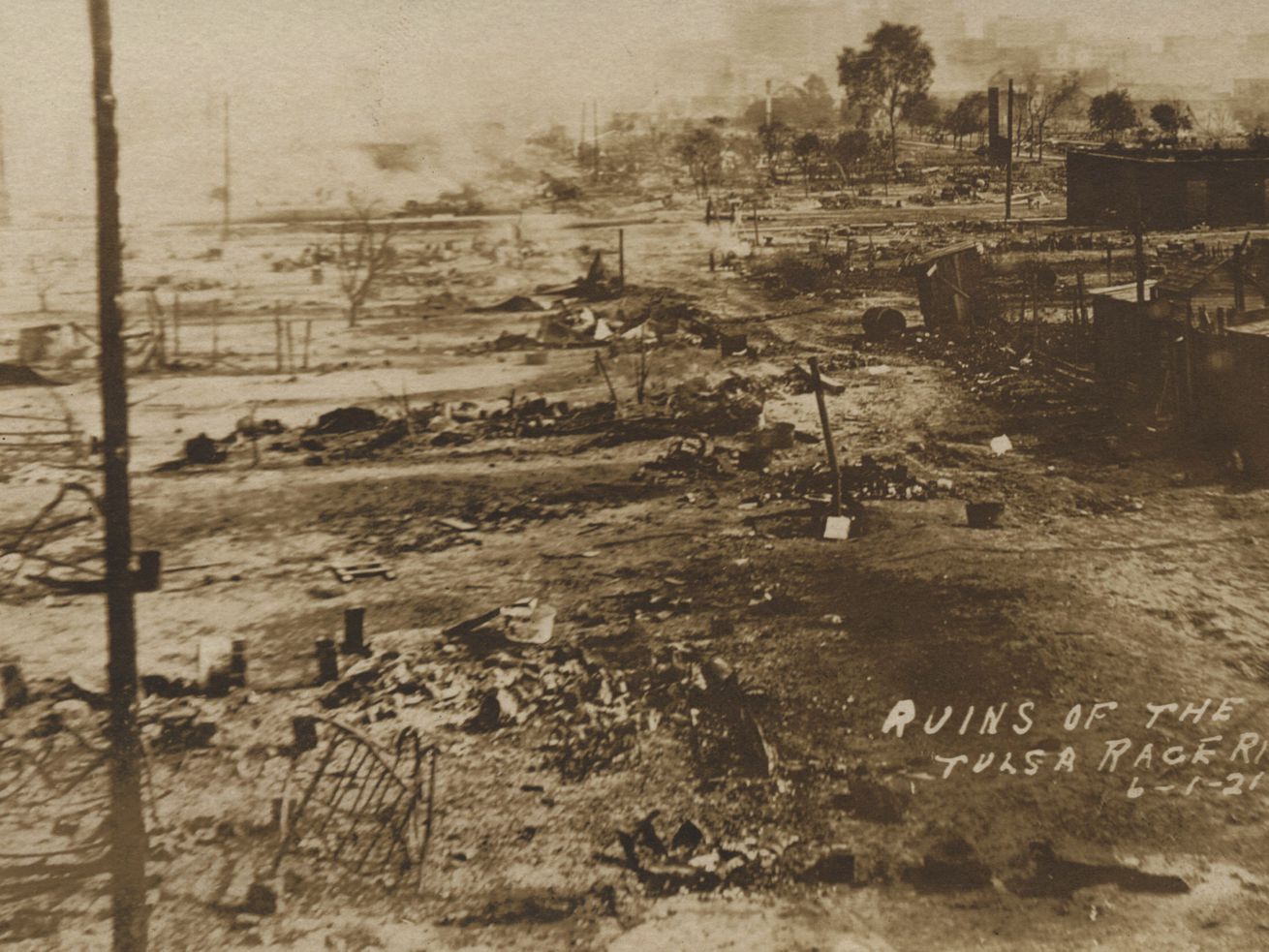
This photo provided by the Department of Special Collections, McFarlin Library, The University of Tulsa shows the ruins of Dunbar Elementary School and the Masonic Hall in the aftermath of the June 1, 1921, Tulsa Race Massacre in Tulsa, Okla. | AP
The Tulsa Race Massacre is just one of the starkest examples of how Black wealth has been sapped, again and again, by racism and racist violence — forcing generation after generation to start from scratch while shouldering the burdens of being Black in America.
TULSA, Okla. — On a recent Sunday, Ernestine Alpha Gibbs returned to Vernon African Methodist Episcopal Church.
Not her body. She had left this Earth 18 years ago, at age 100. But on this day, three generations of her family brought Ernestine’s keepsakes back to this place which meant so much to her. A place that was, like their matriarch, a survivor of a long-ago atrocity.
Albums containing black-and-white photos of the grocery business that has employed generations of Gibbses. VHS cassette tapes of Ernestine reflecting on her life. Ernestine’s high school and college diplomas, displayed in not-so-well-aged leather covers.
The diplomas were a point of pride. After her community was leveled by white rioters in 1921 — after the gunfire, the arson, the pillaging — the high school sophomore temporarily fled Tulsa with her family. “I thought I would never, ever, ever come back,” she said in a 1994 home video.
But she did, and somehow found a happy ending.
“Even though the riot took away a lot, we still graduated,” she said, a smile spreading across her face. “So, we must have stayed here and we must have done all right after that.”
Not that the Gibbs family had it easy. And not that Black Tulsa ever really recovered from the devastation that took place 100 years ago, when nearly every structure in Greenwood, the fabled Black Wall Street, was flattened — aside from Vernon AME.
The Tulsa Race Massacre is just one of the starkest examples of how Black wealth has been sapped, again and again, by racism and racist violence — forcing generation after generation to start from scratch while shouldering the burdens of being Black in America.
All in the shadow of a Black paradise lost.
“Greenwood proved that if you had assets, you could accumulate wealth,” said Jim Goodwin, publisher of the Oklahoma Eagle, the local Black newspaper established in Tulsa a year after the massacre.
“It was not a matter of intelligence, that the Black man was inferior to white men. It disproved the whole idea that racial superiority was a fact of life.”
___
Prior to the massacre, only a couple of generations removed from slavery, unfettered Black prosperity in America was urban legend. But Tulsa’s Greenwood district was far from a myth.
Many Black residents took jobs working for families on the white side of Tulsa, and some lived in detached servant quarters on weekdays. Others were shoeshine boys, chauffeurs, doormen, bellhops or maids at high-rise hotels, banks and office towers in downtown Tulsa, where white men who amassed wealth in the oil industry were kings.
But down on Black Wall Street — derided by whites as “Little Africa” or “N——-town” — Black workers spent their earnings in a bustling, booming city within a city. Black-owned grocery stores, soda fountains, cafés, barbershops, a movie theater, music venues, cigar and billiard parlors, tailors and dry cleaners, rooming houses and rental properties: Greenwood had it.
According to a 2001 report of the Oklahoma Commission to Study the Tulsa Race Riot of 1921, the Greenwood district also had 15 doctors, a chiropractor, two dentists, three lawyers, a library, two schools, a hospital, and two Black publishers printing newspapers for north Tulsans.
Tensions between Tulsa’s Black and white populations inflamed when, on May 31, 1921, the white-owned Tulsa Tribune published a sensationalized report describing an alleged assault on Sarah Page, a 17-year-old white girl working as an elevator operator, by Dick Rowland, a 19-year-old Black shoeshine.
“Nab Negro for Attacking Girl in Elevator,” read the Tribune’s headline. The paper’s editor, Richard Lloyd Jones, had previously run a story extolling the Ku Klux Klan for hewing to the principle of “supremacy of the white race in social, political and governmental affairs of the nation.”
Rowland was arrested. A white mob gathered outside of the jail. Word that some in the mob intended to kidnap and lynch Rowland made it to Greenwood, where two dozen Black men had armed themselves and arrived at the jail to aid the sheriff in protecting the prisoner.
Their offer was rebuffed and they were sent away. But following a separate deadly clash between the lynch mob and the Greenwood men, white Tulsans took the sight of angry, armed Black men as evidence of an imminent Black uprising.
There were those who said that what followed was not as spontaneous as it seemed — that the mob intended to drive Black people out of the city entirely, or at least to drive them further away from the city’s white enclaves.
Over 18 hours, between May 31 and June 1, whites vastly outnumbering the Black militia carried out a scorched-earth campaign against Greenwood. Some witnesses claimed they saw and heard airplanes overhead firebombing and shooting at businesses, homes and people in the Black district.
More than 35 city blocks were leveled, an estimated 191 businesses were destroyed, and roughly 10,000 Black residents were displaced from the neighborhood where they’d lived, learned, played, worked and prospered.
Although the state declared the massacre death toll to be only 36 people, most historians and experts who have studied the event estimate the death toll to be between 75 and 300. Victims were buried in unmarked graves that, to this day, are being sought for proper burial.
The toll on the Black middle class and Black merchants is clear. According to massacre survivor Mary Jones Parrish’s 1922 book, R. T. Bridgewater, a Black doctor, returned to his home to find his high-end furniture piled in the street.
“My safe had been broken open, all of the money stolen,” Bridgewater said. “I lost 17 houses that paid me an average of over $425 per month.”
Tulsa Star publisher Andrew J. Smitherman lost everything, except for the metal printing presses that didn’t melt in the fires at his newspaper’s offices. Today, some of his descendants wonder what could have been, if the mob had never destroyed the Smitherman family business.
“We’d be like the Murdochs or the Johnson family, you know, Bob Johnson who had BET,” said Raven Majia Williams, a descendant of Smitherman’s, who is writing a book about his influence on Black Democratic politics of his time.
“My great-grandfather was in a perfect position to become a media mogul,” Williams said. “Black businesses were able to exist because they could advertise in his newspaper.”
Smitherman moved on to Buffalo, New York, where he opened another newspaper. It was a struggle; eventually, after his death in 1961, the Empire Star went under.
“It wasn’t a very large office, so I’d often see the bills,” said his grandson, William Dozier, who worked there as a boy. “Many of them were marked past due. We didn’t make a lot of money. He wasn’t able to pass any money down to his daughters, although he loved them dearly.”
___
After the fires in Greenwood were extinguished, the bodies buried in unmarked mass graves, and the survivors scattered, insurance companies denied most Black victims’ loss claims totaling an estimated $1.8 million. That’s $27.3 million in today’s currency.
Over the years, the effects of the massacre took different shapes. Rebuilding in Greenwood began as soon as 1922 and continued through 1925, briefly bringing back some of Black Wall Street.
Then, urban renewal in the 1950s forced many Black businesses to relocate further into north Tulsa. Next came racial desegregation that allowed Black customers to shop for goods and services beyond the Black community, financially harming the existing Black-owned business base. That was followed by economic downturns, and the construction of a noisy highway that cuts right through the middle of historic Greenwood.
Chief Egunwale Amusan, president of the African Ancestral Society in Tulsa, regularly gives tours around what’s left. Greenwood was much more than what people hear in casual stories about it, he recently told a small tour group as they turned onto Greenwood Avenue in the direction of Archer Avenue.
Interstate 244 dissects the neighborhood like a Berlin wall. But it is easy for visitors to miss the engraved metal markers at their feet, indicating the location of a business destroyed in the massacre and whether it had ever reopened.
“H. Johnson Rooms, 314 North Greenwood, Destroyed 1921, Reopened,” reads one marker.
“I’ve read every book, every document, every court record that you can possibly think of that tells the story of what happened in 1921,” Amusan told the tour group in mid-April. “But none of them did real justice. This is sacred land, but it’s also a crime scene.”
No white person has ever been imprisoned for taking part in the massacre, and no Black survivor or descendant has been justly compensated for who and what they lost.
“What happened in Tulsa wasn’t just unique to Tulsa,” said the Rev. Robert Turner, the pastor of Vernon AME Church. “This happened all over the country. It was just that Tulsa was the largest. It damaged our community. And we haven’t rebounded since. I think it’s past time that justice be done to atone for that.”
Some Black-owned businesses operate today at Greenwood and Archer avenues. But it’s indeed a shadow of what has been described in books and seen in century-old photographs of Greenwood in its heyday.
A $30 million history center and museum, Greenwood Rising, will honor the legacy of Black Wall Street with exhibits depicting the district before and after the massacre, according to the 1921 Tulsa Race Massacre Centennial Commission. But critics have said the museum falls far short of delivering justice or paying reparations to living survivors and their descendants.
Tulsa’s 1921 Black population of 10,000 grew to roughly 70,500 in 2019, according to a U.S. Census Bureau estimate; the median household income for Tulsa’s Black households was an estimated $30,955 in 2019, compared to $55,278 for white households. In a city of an estimated 401,760 people, close to a third of Tulsans living below the poverty line in 2019 were Black, while 12% were white.
The disparities are no coincidence, local elected leaders often acknowledge. The inequalities also show up in business ownership demographics and educational attainment.
Attempts to force Tulsa and the state of Oklahoma to take some accountability for their role in the massacre suffered a major blow in 2005, when the U.S. Supreme Court declined to hear survivors’ and victim descendants’ appeal of a lower federal court ruling. The courts had tossed out a civil lawsuit because, justices held, the plaintiffs had waited too long after the massacre to file it.
Now, a few living massacre survivors —106-year-old Lessie Benningfield Randle, 107-year-old Viola Fletcher, and 100-year-old Hughes Van Ellis — along with other victims’ descendants are suing for reparations. The defendants include the local chamber of commerce, the city development authority and the county sheriff’s department.
“Every time I think about the men and women that we’ve worked with, and knowing that they died without justice, it just crushes me,” said Damario Solomon-Simmons, a native Tulsan who is a lead attorney on the lawsuit and founder of the Justice for Greenwood Foundation.
“They all believed that once the conspiracy of silence was pierced, and the world found out about the destruction, the death, the looting, the raping, the maiming, (and) the wealth that was stolen … that they would get justice, that they would have gotten reparations.” Solomon-Simmons said.
The lawsuit, which is brought under Oklahoma’s public nuisance statute, seeks to establish a victims’ compensation fund paid for by the defendants. It also demands payment of outstanding insurance policy claims that date back to the massacre.
Republican Mayor G.T. Bynum, who is white (Tulsa has never had a Black mayor), does not support paying reparations to massacre survivors and victims’ descendants. Bynum said such a use of taxpayers’ money would be unfair to Tulsans today.
“You’d be financially punishing this generation of Tulsans for something that criminals did a hundred years ago,” Bynum said. “There are a lot of other areas of focus, when you talk about reparations. People talk about acknowledging the disparity that exists, and recognizing that there is work to do in addressing those disparities and making this city one of greater equality.”
State Sen. Kevin Matthews, who is Black and chairs the massacre centennial commission, said no discussion of reparations can happen without reconciliation and healing. He believes the Greenwood Rising history center, planned for his legislative district, is a start.
“We talked to people in the community,” Matthews said. “We wanted the story told first. So this is my first step, and I do agree that reparations should happen. Part of reparations is to repair the damage of even how the story was told.”
___
Among the treasured keepsakes that came home to Vernon AME was a certificate of recent vintage that recognized Ernestine Gibbs as a survivor of the 1921 Tulsa Race Massacre.
But for Ernestine and her family, the real pride is not in survival. It is in surmounting disaster, and in carrying on a legacy of Black entrepreneurial spirit that their ancestors exemplified before and after the massacre.
After graduating from Langston University, Ernestine married LeRoy Gibbs. Even as she taught in the Tulsa school system for 40 years, Ernestine and her husband opened a poultry and fish market in the rebuilt Greenwood in the 1940s. They sold turkeys to order during the holidays.
Carolyn Roberts, Ernestine’s daughter, said although her parents lived with the trauma of the massacre, it never hindered their work ethic: “They survived the whole thing and bounced back.”
Urban renewal in the late 1950s forced LeRoy and Ernestine to move Gibbs Fish & Poultry Market further into north Tulsa. The family purchased a shopping center, expanded the grocery market and operated other businesses there until they could no longer sustain it.
The shopping center briefly left family hands, but it fell into disrepair under a new owner, who later lost it to foreclosure. Grandson LeRoy Gibbs II and his wife, Tracy, repurchased the center in 2015 and revived it as the Gibbs Next Generation Center. The hope is that the following generation — including LeRoy “Tripp” Gibbs III, now 12 — will carry it on.
LeRoy II credits his grandmother, who not only built wealth and passed it on, but also showed succeeding generations how it was done. It was a lesson that few descendants of the victims of the race massacre had an opportunity to learn.
“The perseverance of it is what she tried to pass on to me,” said LeRoy Gibbs II. “We were fortunate that we had Ernestine and LeRoy. … They built their business.”
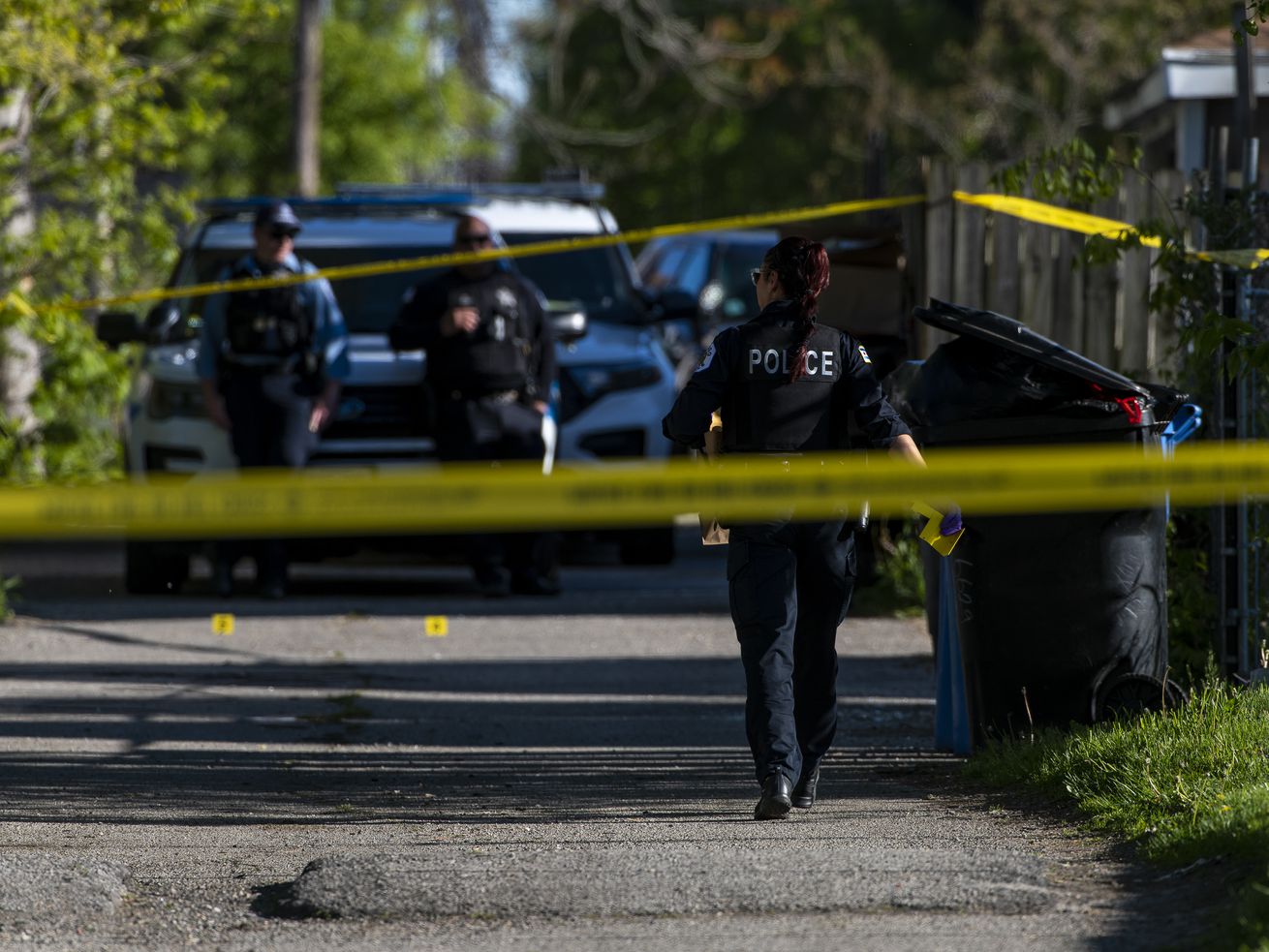
Chicago police work the scene where a 15-year-old boy was critically wounded in a shooting in an alleyway near the 6600 block of South May Avenue in the Englewood neighborhood on May 12. | Tyler LaRiviere/Sun-Times file
Illinois can’t stop all the crime guns that flow into the state, but it can keep some firearms out of the hands of criminals.
After a weekend in which gunfire killed 12 people and injured 42 in Chicago alone, the Legislature really ought to do something. Shootings in the city are up by 36% over a year ago.
Illinois can’t stop all the crime guns that flow into the state, but it can keep some firearms out of the hands of the criminals who take so many lives and hurt so many. Legislation known as the Block Illegal Ownership bill would close some of the loopholes. In 2020, it passed in the Illinois House, but the Senate failed to act on it during the pandemic.
Gun safety advocates are planning a press conference and a digital day of action on Thursday with gun violence survivors to try to get the BIO bill across the finish line. If they fail, it could be another two years before the Legislature takes another serious look at the legislation. There’s always an election coming up or some other excuse not to act.
Chicago and Illinois can’t afford that kind of delay. As the Legislature has dragged its feet, horror story has followed horror story. A man shot during a carjacking after changing a tire for a mother and her little children. A 15-year-old rapper gunned down. An 86-year-old woman shot in the foot while watering her lawn. A 16-year-old girl shot while sitting in a car. A couple shot at a stop sign. People shot on the expressways. Drive-by shootings.
All in the past few days.
All just a small part of the mayhem of gunfire terrorizing entire communities.
The BIO bill has several components, but the two most critical are requiring mandatory fingerprints for people getting Firearms Owners Identification cards and universal background checks by a federally licensed gun dealer for person-to-person sales. Those measures can help stop criminals from getting easy access to guns.
Other loopholes need to be closed as well, but the BIO bill is something the Legislature can do right now. Chicago just had its worst weekend of shootings this year, and everyone is worried about the upcoming Memorial Day weekend, often a time of heightened gun violence.
We don’t know how many lives might have been saved in the two years the Legislature has failed to act. We do know there’s no justification for adding to the toll of the dead and wounded by continuing to delay.
Under Mayor Lightfoot’s plan, the Chicago Police Department would be placed under stronger, though not ultimate, civilian oversight.
It’s appropriate that Mayor Lori Lightfoot has unveiled her plan to increase civilian oversight of the Chicago police in the same week that our nation marks the one-year anniversary of the killing of George Floyd.
The outrage that followed Floyd’s death, under the knee of a Minneapolis police officer, has spurred police reform efforts across the country, including Lightfoot’s police oversight plan. Her long-awaited proposal includes many of the changes demanded by police reform advocates.
Much of the public discussion about the mayor’s plan, released on Monday, is sure to focus on where the mayor and reform activists fundamentally disagree. The mayor insists that she and future mayors must retain their authority to hire and fire the police superintendent and make major policy decisions. But two local police reform groups, who have joined together to support an alternative plan now pending in the City Council, say an elected board of civilians, not the mayor, should make those calls.
We stand firmly with the mayor on this. The people of Chicago will always demand action from the mayor, not some semi-anonymous elected board, when crime rates soar or the police screw up. Strip any mayor of that most basic power — the authority to hire and fire the superintendent — and watch accountability fly out the window.
But what’s more significant, to our thinking, is the degree to which the mayor’s plan incorporates other elements of proposals by reform advocates. The police department still would be placed under stronger, though not ultimate, civilian oversight.
Under the mayor’s plan, Chicagoans would elect three-person panels in each of the city’s 22 police districts. Those panels then would nominate people to a seven-person commission, with the mayor making the final appointments.
When it becomes necessary to hire a new police superintendent, this commission would choose three candidates. Then the mayor would choose a finalist to be approved by the City Council.
Assuming those three-person panels were elected in well publicized and fair elections — assuming the fix is not in — this process for choosing a superintendent would ensure an unprecedented level of civilian participation.
The mayor also would select the heads of the Police Board and the Civilian Office of Police Accountability — and for the same good reason. As Lightfoot said Monday, “the buck” will always stop at the mayor’s office.
The seven-member commission proposed by Lightfoot would not have final say on police policy. But, as Fran Spielman of the Sun-Times reported, it would “review and approve by majority vote” any changes in in policy. The weight of that advisory function, given the likely media attention, should not be underestimated.
The commission also would have the right to “direct” COPA’s chief administrator to “investigate complaints of police misconduct.”
Negotiations will now begin to find common ground for a final police civilian oversight ordinance. Both sides will have to compromise.
But know this: One year after the murder of George Floyd, significant, real reform is coming to Chicago.
Raised in Little Village, the painter creates quiet art to process grief.
Elsa Muñoz’s paintings carry a sense of intimacy. They’re full of dark colors, but they glow—it’s as if light can’t help but seep through the lines.…Read More
People pays their respects to George Floyd in the intersection of 38th Street and Chicago Avenue on May 25, 2021 in Minneapolis, Minnesota. | Getty
Floyd’s sister Bridgett and other family members held a moment of silence at a “Celebration of Life” event at a downtown Minneapolis park that included music, food trucks, an inflatable bouncy house and a pop-up vaccination stand.
MINNEAPOLIS — A family-friendly street festival, musical performances and moments of silence were held Tuesday to honor George Floyd and mark the year since he died at the hands of Minneapolis police, a death captured on wrenching bystander video that galvanized the racial justice movement and continues to bring calls for change a year later.
Floyd’s sister Bridgett and other family members held a moment of silence at a “Celebration of Life” event at a downtown Minneapolis park that included music, food trucks, an inflatable bouncy house and a pop-up vaccination stand. A few miles away, at the site of the intersection where Floyd died, dozens of people gathered around a steel fist sculpture and kneeled for several minutes — symbolic of the 9 minutes, 29 seconds during which Floyd was pinned to the ground.
“It’s been a troubling year, a long year,” Bridgett Floyd told the crowd in downtown Minneapolis. “But we made it. … The love is very outpouring today. The love is here. George is here.”
Other members of Floyd’s family met with President Joe Biden and Vice President Kamala Harris in Washington, who urged Congress to quickly pass a law in Floyd’s name that would bring changes to policing. A moment of silence to honor Floyd was also held in New York and a rally was held in Los Angeles. Globally, a rally took place in Germany and Floyd’s death was marked by U.S. embassies in Greece and Spain.
Hours before the festivities began in Minneapolis, the intersection where Floyd died was disrupted by the sound of gunfire.
Associated Press video from 38th Street and Chicago Avenue — informally known as George Floyd Square — showed people running for cover as shots rang out. Police said a man, who they believe was injured in the shooting, went to a nearby hospital with a gunshot wound. Police spokesman John Elder said he was in critical condition but was expected to survive. No one was in custody by midday.
Philip Crowther, a reporter working for AP Global Media Services, which provides live video coverage, reported hearing as many as 30 gunshots about a block from the intersection. Crowther said a storefront window appeared to have been broken by gunshots.
“Very quickly things got back to normal,” Crowther said. “People here who spend a significant amount of time, the organizers, were running around asking, ‘Does anyone need a medic?’”
Like other major cities, Minneapolis has been struggling with rising gun violence, a problem made worse, in part, by many officers leaving the embattled force since Floyd’s death. A 6-year-old girl was fatally shot and two other children wounded in recent weeks. Minneapolis Mayor Jacob Frey last week unveiled sweeping public safety proposals aimed at fixing the problem. Other groups are pursuing a more radical remaking of the police department.
The intersection of 38th and Chicago has been barricaded since soon after Floyd’s death. It quickly turned into a memorial — and also a challenging spot for the city, with police officers not always welcome.
The square was transformed Tuesday into an outdoor festival, with food, children’s activities and a long list of musical performers. The “Rise and Remember George Floyd” celebration includes a candlelight vigil and caps several days of marches, rallies and panel discussions about his death and confronting racial discrimination.
Xavier Simmons, a 24-year-old organizer from Racine, Wisconsin, chanted “Say his name!” as the crowd kneeled before the fist sculpture. Simmons said he hopes people taking part in the festivities will both honor Floyd’s life and legacy and continue to “uplift and empower this movement.”
“We got the verdict that we needed, but it’s never going to change until we make a change,” he said.
Floyd, 46, who was Black, died May 25, 2020, after then-Officer Derek Chauvin knelt on his neck, pinning him to the ground for about 9 1/2 minutes. Chauvin, who is white, was convicted last month of murder and faces sentencing June 25. Three other fired officers still face trial.
Earl Vaughn, 20, of Minneapolis, went to the event in downtown Minneapolis to show support for Floyd’s family. Despite the event’s celebratory atmosphere, Vaughn said: “For all this a Black man had to die, so that’s really unfortunate.”
In New York City, elected officials, including Mayor Bill de Blasio and U.S. Rep. Hakeem Jeffries, joined the Rev. Al Sharpton in kneeling for 9 minutes, 29 seconds. “As we took a knee, imagine how long that was on a human being’s neck,” Sharpton said. “Never switched knees, just dug in. It’s time we correct policing in this country.”
Several Floyd family members, including his young daughter Gianna, met with Biden and Harris on Tuesday. Biden had called family members after the Chauvin verdict and pledged to continue fighting for racial justice.
On Tuesday, he recalled how Gianna told him on the eve of Floyd’s funeral that “Daddy changed the world.” He said in a statement that Floyd did bring change, but that real change must include accountability and trust in the justice system. He said he hopes the George Floyd Justice in Policing Act can pass the Senate and get to his desk quickly.
“We have to act,” he said of the legislation that would ban chokeholds and no-knock police raids and create a national registry for officers disciplined for serious misconduct.
Harris also called on Congress to move “with a sense of urgency. Passing legislation will not bring back those lives lost, but it will represent much needed progress. We must address racial injustice wherever it exists. That is the work ahead.”
Bridgett Floyd told the crowd in Minneapolis: “We don’t want a watered down bill … My message to the president: Get your people in order … We’re going to continue to fight this good old fight.”
Floyd’s brother Philonise, who appeared on CNN, said he thinks about George “all the time.”
“My sister called me at 12 o’clock last night and said ’This is the day our brother left us,’” he said, adding: “I think things have changed. I think it is moving slowly but we are making progress.”
Also Tuesday, the U.S. Senate voted to confirm Kristen Clarke as assistant attorney general for civil rights, the first Black woman to hold the position. In the last few weeks, the Justice Department under Biden has announced sweeping investigations into the police in Minneapolis and Louisville and brought federal civil rights charges against the officers involved in Floyd’s death, including Chauvin.
Separately, the Floyd family announced the launch of a fund that will make grants to businesses and community organizations in the neighborhood, as well as broader grants “encouraging the success and growth of Black citizens and community harmony.” The money comes from $500,000 earmarked as part of the city’s $27 million civil settlement for the Floyd family earlier this year.
___
Associated Press writer Amy Forliti contributed to this report.
San Pedro High School students hold vaccination signs at a school-based COVID-19 vaccination event for students 12 and older in San Pedro, Calif., Monday, May 24, 2021. Schools are turning to mascots, prizes and contests to entice youth ages 12 and up to get vaccinated against the coronavirus before summer break. | AP
Districts from California to Michigan are offering free prom tickets and deploying mobile vaccination teams to schools to inoculate students 12 and up so everyone can return to classrooms in the fall.
SAN DIEGO — A growing number of public schools are using mascots, food trucks and prize giveaways to create a pep-rally atmosphere aimed at encouraging students to get vaccinated against the coronavirus before summer vacation.
Districts from California to Michigan are offering free prom tickets and deploying mobile vaccination teams to schools to inoculate students 12 and up so everyone can return to classrooms in the fall. They are also enlisting students who have gotten shots to press their friends to do the same.
Officials are concerned that once school lets out, it will be even tougher to get enough teens vaccinated in time to guarantee widespread immunity on campuses.
The massive effort has just gotten underway because it was only two weeks ago that federal regulators authorized the Pfizer vaccine for children 12 to 15. Moderna said Tuesday that its COVID-19 vaccine strongly protects kids as young as 12, a step that could put it on track to become the second option for that age group in the U.S. Younger children are not yet eligible.
So far, about 14% of the nation’s 15 million kids ages 12 to 15 have received their first shot, according to the Centers for Disease Control and Prevention. Among 7.5 million teens ages 16 and 17, that number goes up to 34%, and about 22% have had both shots, according to the latest figures released Monday. The doses are scheduled about three weeks apart.
There are many challenges.
Depending on the state and even county, minors may be required to have a parent present to get the shot. Some parents may not be able to get away from work to do that. Others are unsure about allowing their kids to get a vaccine that only was approved for emergency use.
Protests have popped up outside schools offering the vaccine, discouraging kids who may already be nervous.
Mission Bay High School in San Diego provides an example of the mixed reaction among students.
“I’m not getting it,” said Tatum Merrill, 14, standing with friends outside a mobile vaccine clinic at the school. “It was developed too fast and is kind of sketchy. And I feel like the number of COVID cases is dying down so if everybody else has it, there may not be a need for me to have it.”
Her friend Brandon Cheeks, 15, said he wants the vaccine, but his mother is unsure. In the meantime, another 15-year-old, Laura Pilger, said she feels safer being back in school knowing that she and everyone she knows is vaccinated.
“A woman showed up and was passing out flyers that said ‘your body, your choice’ but the message was not very welcomed,” Pilger said. “Why wouldn’t you want to get the vaccine?”
While hundreds of colleges across the country are requiring students to have proof of vaccination to return to campus, it’s unlikely that K-12 public schools will do the same this fall. It’s unclear whether schools can legally require a vaccine approved under an emergency-use authorization to immediately address the pandemic.
Instead, public schools are trying to entice students to get the shots by making the experience festive while sending flyers home to families to address the vaccine’s safety.
In suburban Detroit, students in the Southfield district who show proof of vaccination will get a free ticket to the senior prom worth $80. The incentive drew protesters who said awarding the vaccinated could lead to harassment of students who haven’t gotten shots.
“We are not separating or segregating students who choose not to receive the vaccine or do receive the vaccine,” Southfield Superintendent Jennifer Green said. “We simply want to provide our students an opportunity to celebrate this milestone in their life.”
The idea won applause from Dr. Howard Taras, a University of California San Diego pediatrician who consults with districts about health safety. He is also the in-house physician for the San Diego Unified School District, the second-largest in California with about 120,000 students. It has been hosting vaccine clinics at schools in communities with low vaccination rates.
The district also took part in a public service announcement with local teens who say, “We’ll be getting the vaccine, now it’s your turn.”
“I think anything that is creating buzz helps,” Taras said, explaining that vaccinating at schools has the added benefit of generating peer pressure.
The virus has spread more rapidly among teens than younger children. “But with a large portion immunized, there is much less chance of it spreading in the classrooms, on buses,” Taras said.
And more students may want to return to classrooms as a result.
While most California public schools reopened in April, fewer than half of students resumed in-person learning, according to an analysis by the nonprofit EdSource.
Many continued with online learning, while some dropped out altogether or went to private schools. Public school enrollment dropped steeply in the nation’s most populous state, falling by more than 160,000 this school year, according to the California Department of Education.
The Los Angeles Unified School District, the largest in California with about 600,000 students, plans to have a mobile vaccination team visit every middle and high school campus at least once before the school year ends June 11. The events will feature food trucks and music.
Superintendent Austin Beutner recently appeared with Wilson High School’s “Mighty Mule” mascot to encourage students to roll up their sleeves. He said the district is offering paid leave for district employees to get their children inoculated. Schools where more than 30% of students are vaccinated will each receive $5,000 for projects, and students can decide how the money is used.
The school-based clinics also help administer shots to hard-to-reach populations who feel more comfortable going to their neighborhood school instead of mass vaccination sites.
Maisha Cosby was motivated by a drive-thru clinic at the Washington School for Girls in Washington, D.C. She held her 12-year-old daughter Maya’s hand as she got her shot. Then Cosby got hers.
“All my friends have gotten it and they’re fine, and I’m ready for her to go back to school,” Cosby said.
___
Associated Press writers Ed White in Detroit and Jacquelyn Martin in Washington contributed to this report.
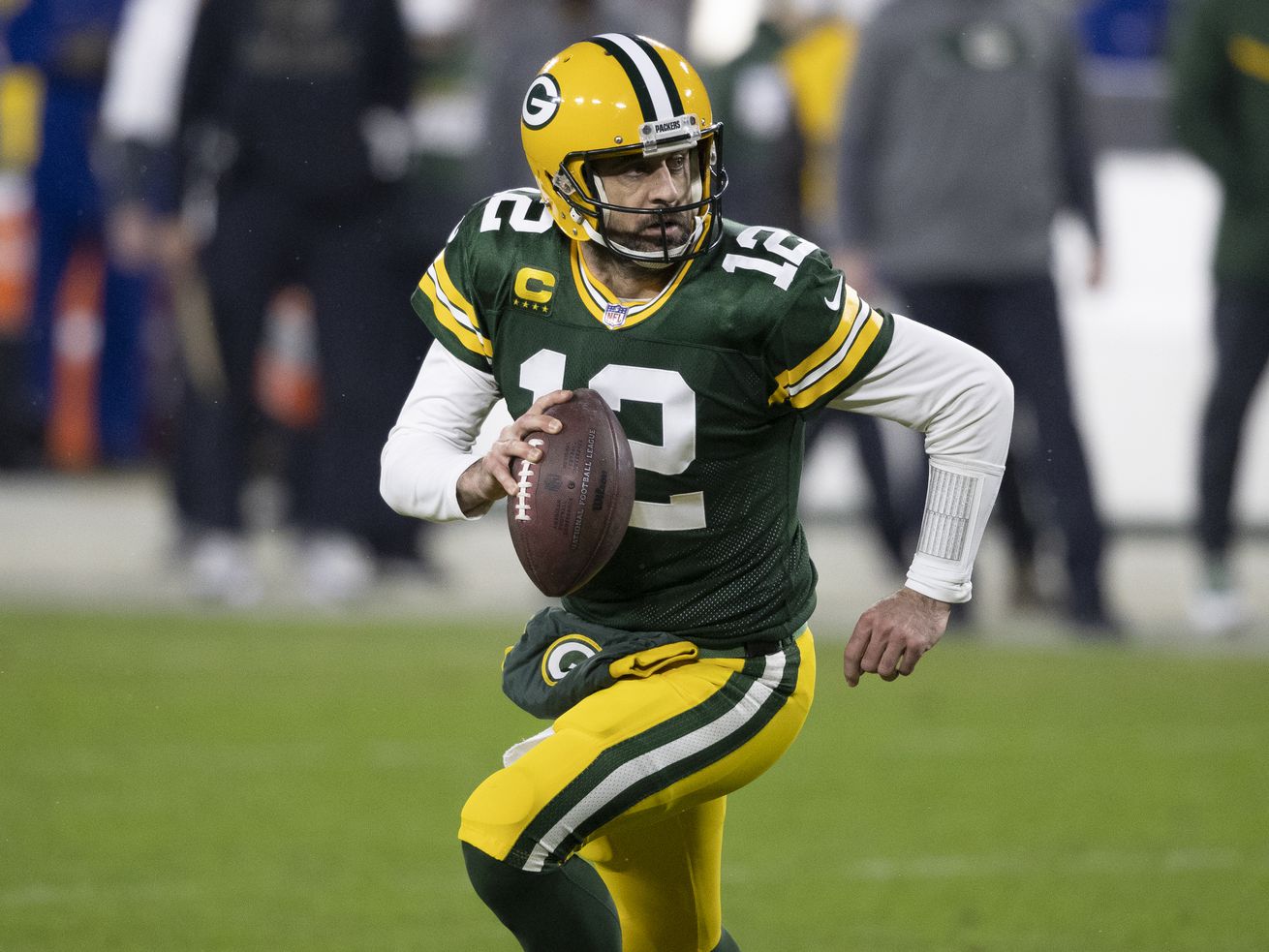
Aaron Rodgers’ teammates say his dispute with the Packers won’t be a distraction. | Jeffrey Phelps/AP
“We’ve got to control what we can control as a team, and we’ve just to come out, practice, handle business and play ball,” defensive tackle Kenny Clark said.
Packers quarterback Aaron Rodgers’ teammates say the MVP’s uncertain status won’t distract them in their offseason preparations.
Rodgers hasn’t been present for organized team activities this week following an ESPN report last month that he doesn’t want to return to Green Bay. Rodgers was noncommittal about his future in an ESPN interview Monday night.
“I don’t think it’s going to be that much of a distraction,” defensive tackle Kenny Clark said Tuesday. “We’ve got to control what we can control as a team, and we’ve just to come out, practice, handle business and play ball. You know, we’ve got to leave that situation to the organization and Aaron.”
Rodgers wasn’t the only notable Packer missing from Tuesday’s OTA session. Most of his receivers also weren’t there, including All-Pro Davante Adams.
Packers coach Matt LaFleur said he didn’t know whether it might have been a coordinated effort by the receivers to stay away.
“I’ve had individual conversations with each guy, but never once has that come up,” LaFleur said.
The NFL Players’ Association has advised players against attending voluntary workouts while citing the risks inherent amid the pandemic.
Although Rodgers wasn’t around, he still dominated discussions as Packers players spoke to reporters Tuesday. Many of the questions focused on the issues Rodgers addressed in the interview that ESPN aired Monday night.
“Love the coaching staff, love my teammates, love the fan base in Green Bay,” Rodgers said in the interview. “An incredible 16 years. It’s just kind of about a philosophy and maybe forgetting that it is about the people that make the thing go. It’s about character, it’s about culture, it’s about doing things the right way.
“A lot of this was put in motion last year and the wrench was just kind of thrown into it when I won MVP and played the way I played last year. This is just kind of, I think, a spill-out of all that. But it is about the people, and that’s the most important thing.”
Rodgers went on to reference Curly Lambeau, Vince Lombardi, Bart Starr, Brett Favre, Reggie White and Mike Holmgren while talking about how “Green Bay has always been about the people.”
LaFleur declined to comment on the issues Rodgers addressed while reiterating his hopes to have the three-time MVP back this fall. General manager Brian Gutekunst has said he has no plans to trade Rodgers, who has three years remaining on his contract.
“Aaron definitely knows how we feel about him, how he’s such an important part to our football team, such an important part to our organization,” LaFleur said. “We’re just going to continue to try to work through this and hopefully can get him back in the building at some point.”
Safety Adrian Amos was cautiously optimistic that Rodgers will remain with the Packers.
“I haven’t heard him say anything other than that, so I expect him to be (back),” Amos said. “But like I said, I’m not going to go home and cry if something else happens. I’m just playing it day by day. But of course, you want one of the greatest, if not the greatest, quarterback ever on your team. You want him out here. But everybody has to go about their business. I’m not going to knock anybody for getting what they feel like they deserve.”
Running back Aaron Jones signed a four-year, $48 million contract to remain with the Packers less than two months before the news broke regarding Rodgers’ disenchantment. Jones said he hadn’t spoken with Rodgers beforehand about the quarterback’s issues with the organization, but added that it likely wouldn’t have impacted his decision to sign a long-term deal.
“This is home,” Jones said. “This is where I love to be. I love the coaches, my teammates, the community, the system — everything. I feel like this is where I still would have been.
“Once I signed, we communicated. He told me congratulations. He was happy for me.”
Chicago’s most important news of the day, delivered every weekday afternoon. Plus, a bonus issue on Saturdays that dives into the city’s storied history.
This afternoon will be mostly cloudy with a slight chance of showers and a high near 85 degrees. Tonight will be mostly cloudy with a low around 67. Tomorrow there’s a chance of thunderstorms before it becomes sunny with a high near 83.
Last May, Tommie Gatewood was looking forward to grabbing breakfast with his 27-year-old son, who was trying to get back on his feet after losing his job.
But later that month — before the breakfast happened — Gatewood got a call saying his son had been fatally shot in Chicago. He thought it was a cruel joke until a nephew who works in law enforcement confirmed the details.
His son, Tommie Gatewood Jr., was among at least 26 people who were killed during a violent weekend last May that overlapped with protests and unrest in Chicago over the murder of George Floyd by a Minneapolis police officer.
Without a clear plan, Chicago police officers found themselves outnumbered and unprepared as vandalism and unrest spread from downtown to neighborhood businesses and as concerns grew about violence amid the chaos, according to a report from the city’s office of the inspector general.
One year later, we spoke with three families who lost loved ones to gunfire that weekend.
“Tomorrow is not promised to you,” said Jerri Richards, whose son JaQuawn Newman was killed. “You try to live your life the right way, the best that you can, and you just pray. Take one day at a time.”
Chicago will get its first look at a new documentary about the famed Rush Street nightclub Mister Kelly’s this week on WTTW-Channel 11.
The film will air as a one-hour special at 8 p.m. Thursday, followed by a rerun at 10 p.m. Sunday. The full version, clocking in at 80 minutes, premieres nationally this fall.
The film includes live footage of performances from the club, where such greats as Barbra Streisand, Bette Midler, Herbie Hancock and Lenny Bruce got their acts together during their up-and-coming years. Big names including Billie Holiday, Oscar Peterson, Ella Fitzgerald and Sarah Vaughan chose the venue as the site of their live albums.
The marquee at Mister Kelly’s and Bellevue and Rush trumpets a Joan Rivers residency in this 1960s photo.Chicago History Museum
The executive producer of the film is David Marienthal, whose father George and uncle Oscar operated Mister Kelly’s as well as two other prominent Chicago nightclubs of the era: the London House and the Happy Medium Theater.
“Our city was the entertainment epicenter of the country during that time,” Marienthal said in a statement, “and my father and uncle built an unrivaled talent incubator.”
As more fans return to stadiums, what is your most memorable experience attending a Chicago sports game? Reply to this email (please include your first name and where you live) and we might feature your answer in the next Afternoon Edition.
Yesterday, we asked you: How much has your daily routine returned to “normal” since being vaccinated? Here’s what some of you said…
“I’m fully vaccinated. Still taking the same pandemic precautions although I go to more places (rehab center for therapy, salon for pedicure), but not much else. Still too many unknowns to completely relax.” — Ayani Good
“I’m not carrying around constant anxiety.” — Angela Ballard
“My family had a baby shower last weekend in a park. We’re mostly health care workers and seniors.” — Felice Eleazar
“My routine has changed very much for the better. I actually made it to Wrigley Field for the first time since 2019! Also, I can visit relatives without the fear of a severe case of covid. It is wonderful!” — Jo Ann Fields
Thanks for reading the Chicago Afternoon Edition. Got a story you think we missed? Email us here.
NEW YORK — Disney’s iconic “Winnie the Pooh” will travel from the forest to find a home off-Broadway this fall.
“Winnie the Pooh: The New Musical Adaptation” will bring together Pooh, Christopher Robin, Eeyore, Tigger, and the gang in a new production developed by Jonathon Rockefeller.
The show will feature songs by the Grammy-winning Sherman Brothers with additional music from A.A. Milne, and will be told using life-size puppetry. Richard and Robert Sherman have written music for Disney classics “Mary Poppins,” The Jungle Book” and “The Aristocrats.”
“Winnie the Pooh: The New Musical Adaptation” opens Oct. 21 at Time Square’s Theater Row. Tickets go on sale June 1.
Away from the Great White Way, shows have already opened with socially distanced audiences, but that’s not possible for the 41 Broadway theaters. The financial demands simply don’t favor keeping many seats purposefully empty.
“Hamilton,” “The Lion King” and “Wicked” return Sept. 14, as does “Chicago.” “Ain’t Too Proud – The Life and Times of the Temptations” restarts Oct. 16, “The Phantom of the Opera” on Oct. 22, “Jagged Little Pill” on Oct. 21 and “Come From Away on Sept. 21. “Six,” which had planned to open officially on the day of the 2020 shutdown, will restart Sept. 17, as will David Byrne’s “American Utopia.” “Mrs. Doubtfire” will return Oct. 21. More are expected to announce new dates soon — for the fall.
Broadway shows can’t just restart like flipping a light switch, especially big musicals. Cast members may have left, requiring new hiring. Orchestras and ensembles must re-learn their parts, choreographers need the cast in the room to synchronize and costumers need to check fittings. Producers say the task is like opening a show from scratch all over again.




:no_upscale()/cdn.vox-cdn.com/uploads/chorus_asset/file/22539100/Joan_Rivers_Mister_Kelly_s_Marquee___from_CHM_copy.jpeg)