What’s New

Jay Cutler: Divorcee…and Fashion Business Owner?Stephen Johnsonon June 3, 2021 at 1:11 am

The divorce proceedings between former Chicago Bears quarterback Jay Cutler and his soon-to-be ex-wife Kristin Cavallari are starting to get a little messy.

The post Jay Cutler: Divorcee…and Fashion Business Owner? first appeared on CHI CITY SPORTS l Chicago Sports Blog – News – Forum – Fans – Rumors.Read More

Jay Cutler: Divorcee…and Fashion Business Owner?Stephen Johnsonon June 3, 2021 at 1:11 am Read More »

NASCAR’s Wallace puts Pilsen Boys & Girls Club kids in the driver’s seatBob Chiarito | Special to the Sun-Timeson June 3, 2021 at 1:22 am

NASCAR driver Bubba Wallace plays a game on a race simulator Wednesday at the Union League Boys & Girls Club at 2157 W. 19th St. in Pilsen. | Anthony Vazquez/Sun-Times

One of NASCAR racing’s biggest stars, Bubba Wallace donates two racing simulators and money to the club during a visit Wednesday in an effort to expand the sport’s audience among Latinos and Blacks.

Youngsters in Pilsen got an introduction to NASCAR racing when one of its biggest stars, Bubba Wallace, visited the Union League Boys & Girls Club on Wednesday afternoon and donated two racing simulators and money.

Wallace, whose real name is William Darrell Wallace Jr., came to the club as part of a partnership between the Boys and Girls Clubs of America and NASCAR with the goal of expanding the sport’s audience, according to Mary Ann Mahon Huels, president and CEO of the Union League Boys & Girls Cubs, which has several locations in Chicago.

Wallace, in town for a Fox television event Thursday, wanted to do something for young kids while in Chicago, according to spokesperson Beth Silverman.

Wallace, decked out in his McDonald’s Racing suit and ball cap, races under number 23 — and races on 23XI Racing team, owned by Chicago’s most famous number 23 — Michael Jordan.

Walking into the gymnasium of the club at 2157 W. 19th St., Wallace was greeted by about 30 children who regularly attend the club both during and after school hours. And although many of them said they didn’t know until recently who Wallace was, when asked who the most famous athlete to ever wear number 23 was, most shouted that it was Michael Jordan, a fact Wallace said he was well aware of.

“I got a great appreciation by watching The Last Dance of what Michael Jordan means to Chicago and what Chicago means to Michael Jordan. It’s kind of surreal; I feel like we came full circle being here today,” Wallace said.

Also Wednesday, NASCAR gave the club a $5,000 check and two racing simulators were provided to the club by Logitech, one of several Wallace sponsors. A third simulator was given to the Club’s branch at 1214 W. Washtenaw.

After taking a few questions from the kids, Wallace jumped on a simulator and was cheered on by the kids in the clubs. Then, he let them have a turn behind the wheel and rooted them on.

Wallace, who is mixed race and the only full-time African American driver in NASCAR’s three national series (Cup, Xfinity and Truck), also said it was important that the kids in the club, who are mostly Latino and Black, see that they have options.

“I went to Boys & Girls Clubs a few times when I was young and know how special it is for people to come in. To see what we’re doing now and having NASCAR be a part of it is very humbling.”

“It’s important to get them out to race and introduce them to it so they can be lifelong fans.

Since the murder of George Floyd in Minneapolis last year, Wallace has been vocal about the need for change in stock car racing and led NASCAR’s involvement in the Black Lives Matter Movement. He also successfully got NASCAR to ban displays of the Confederate Flag at events starting last June, a practice that went on for several years.

Now the challenge is to integrate the sports fan base, which is still overwhelmingly white. But events like the one Wednesday are a start, Wallace said.

After telling the kids that he’d love to see a NASCAR event in Chicago eventually, he conceded that winning a NASCAR race may be easier than navigating Chicago traffic in rush hour.

“Traffic is tougher. Traffic’s always the worst,” Wallace said, laughing.

Read More

NASCAR’s Wallace puts Pilsen Boys & Girls Club kids in the driver’s seatBob Chiarito | Special to the Sun-Timeson June 3, 2021 at 1:22 am Read More »

Blame it on the filibusterGene Lyonson June 3, 2021 at 1:32 am

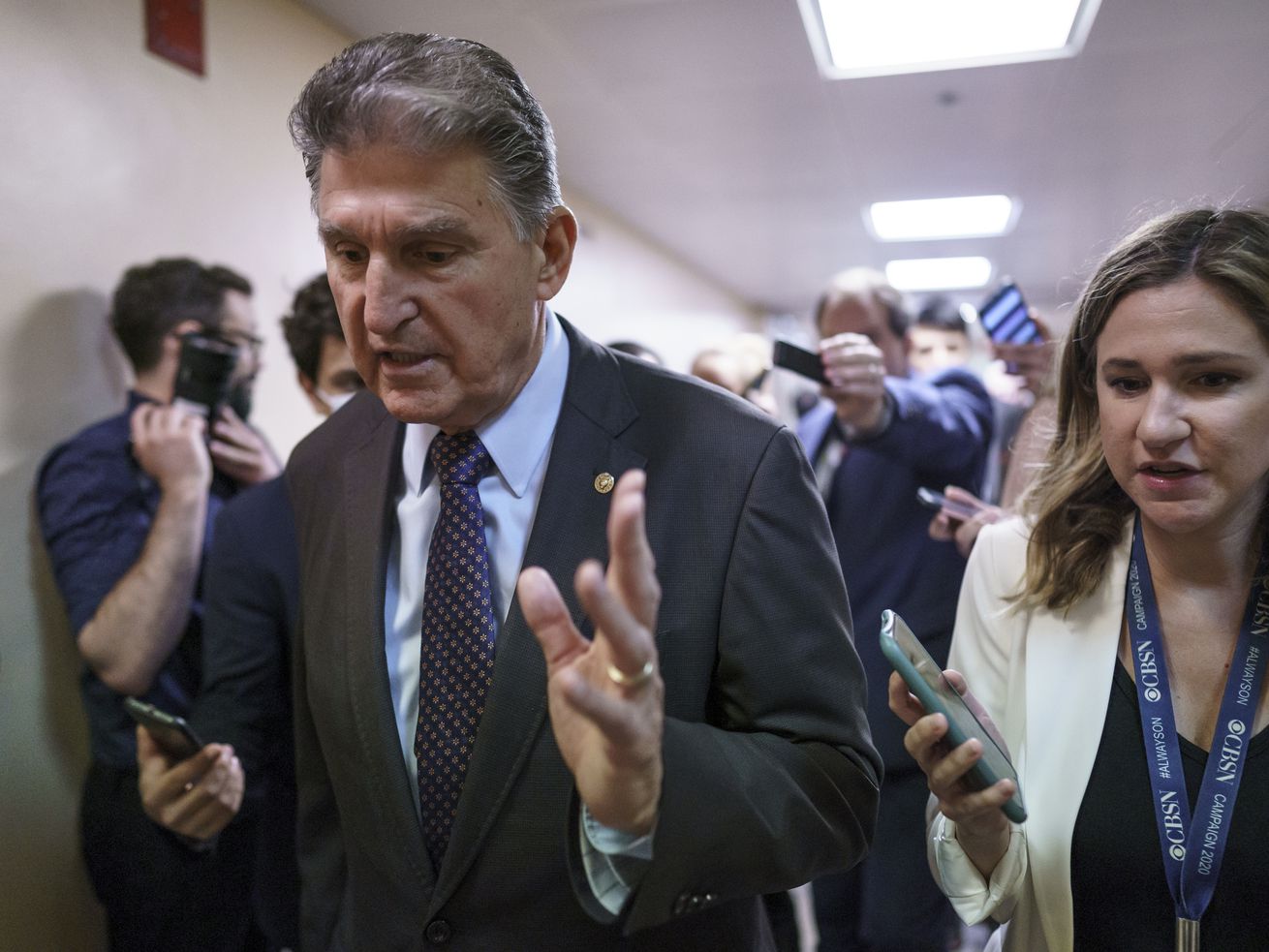
Preserving the filibuster seems more important to certain “moderate” Democrats, such as Sen. Joe Manchin of West Virginia, than taking action on big issues like climate change and voting rights, writes Gene Lyons. | AP Photos

Senate Democrats should ditch the filibuster and get stuff done. Does anybody think the GOP wouldn’t do away with the rule whenever it’s convenient?

Have Americans still got the guts for democracy? In light of recent events in Washington, you’d have to say it’s doubtful.

Last week, the Senate voted 54-35 to establish an independent commission to investigate the seditious Jan. 6 storming of the U.S. Capitol — the most violent attack there since the War of 1812. The House had previously approved the measure 252-175.

If the Senate vote were a football score, you’d call a 19-point win decisive. And yet, the measure failed to survive a Republican filibuster, a quaint Senate rule requiring a supermajority of 60 votes to become law.

Created during racial segregation and used for decades to block civil rights reforms, the filibuster is found nowhere in the U.S. Constitution. It’s neither a law nor a Supreme Court ruling. It’s merely a Senate custom — and an openly undemocratic one — which could be eliminated tomorrow by a simple majority vote.

The Senate is a conservative institution by definition. It gives far more power and influence to small rural states than to large, metropolitan ones where most people live. Citizens of Wyoming, population 579,000, for example, have about 70 times the influence in the U.S. Senate as citizens of California, population 39.5 million.

Only major constitutional surgery can change that, so it’s never going to happen. No point even talking about it.

Add the filibuster, however, and it’s a recipe for legislative paralysis: to wit, a government that refuses to defend itself against violent insurrection because it might hurt Citizen Trump’s feelings.

Or might put Sen. Mitch McConnell, R-Ky., in a tight spot. Not to mention Rep. Kevin McCarthy, R-Calif. These two heroes spoke out decisively in the immediate aftermath of the January coup attempt, but now the wind has changed and they’re busily hunting cover.

“If you can’t get a Republican to support a nonpartisan analysis of why the Capitol was attacked the first time since the War of 1812, then what are you holding out hope for?” asks Sen. Tim Kaine, D-Va.

What, indeed?

Former Obama White House aide David Plouffe put it even more bluntly on Twitter: “Democracy dying so the filibuster can live would seem a terrible way for this experiment to end.”

Polls have shown that Americans support the establishment of a Jan. 6 commission by 56% to 30% — a clear majority. Even 28% of Republicans would be interested in finding out, for example, how many of those “tours” given by right-wing members of Congress on Jan. 5 comprised pre-riot reconnaissance. Or who gave the “stand down” order preventing the National Guard from arriving on time, and why.

Just how organized was the conspiracy that resulted in uniformed Proud Boys running through the halls of Congress chanting “Hang Mike Pence!” while the vice president’s security team hustled him into hiding?

Did the Proud Boys keep it a secret from their pal Roger Stone? Did he neglect to tell his pal Donald J. Trump?

Inquiring minds want to know.

Senate Republicans, not so much.

Look, under current circumstances, 54-35 equates to a thunderous majority. The filibuster, however, equates with doing nothing, and with political cowardice.

Indeed, the filibuster is arguably more responsible than anything else for the disdain with which most Americans view Congress’ congenital inability to act. That’s certainly how Sen. Edward Markey, D-Mass., sees it.

“If they block the Jan. 6 commission, we will have to abolish the filibuster,” Markey told The Washington Post. “If the Republicans block climate action, we will have to abolish the filibuster. If Republicans block voting rights, we’ll have to abolish the filibuster. If Republicans block gun control legislation, we will have to abolish the filibuster. So I think that it’s just continuing to move towards the inevitability of the unavoidable necessity of repealing the filibuster.”

And yet, preserving the filibuster is seemingly more important to certain “moderate” Democrats — specifically Sens. Joe Manchin, D-W.Va., and Kyrsten Sinema, D-Ariz. — than all of those things. See, something else the filibuster does is enhance the power and visibility of individual senators — one reason President Joe Biden, a 30-year Senate veteran, is himself iffy about abolition.

The argument is that the 60-vote Senate requirement somehow fosters bipartisanship, although nobody ever says how. Mostly it now fosters Manchin’s televised imitations of Maine’s GOP Sen. Susan Collins — routinely regretting this and deploring that, before falling quietly in line. (In fairness, Manchin and Collins both voted for the Jan. 6 commission.)

On the day after voting to drop the filibuster, Manchin would return to being just another of 50 Democratic senators. So there’s that.

Others argue that should Republicans retake the Senate come 2022, Democrats could come to regret it. Could be, although does anybody think the GOP won’t ditch the rule whenever it’s convenient?

In the foreseeable future, there’s no chance of either party securing a 60-vote majority. The choice is between majority rule and paralysis.

Gene Lyons is a columnist for the Arkansas Times.

Send letters to [email protected].

Read More

Blame it on the filibusterGene Lyonson June 3, 2021 at 1:32 am Read More »

Chicago Blackhawks: 11th overall pick is not where you want to beVincent Pariseon June 3, 2021 at 1:40 am

The Chicago Blackhawks are going to make the 11th overall pick in the 2021 NHL Draft. They had the 11th best odds and stayed right there. A lot of things went right for the Blackhawks in 2020-21 but the season did not finish strong for them. Picking 11th is pretty much exactly where you don’t […]

Chicago Blackhawks: 11th overall pick is not where you want to beDa Windy CityDa Windy City – A Chicago Sports Site – Bears, Bulls, Cubs, White Sox, Blackhawks, Fighting Illini & More

Read More

Chicago Blackhawks: 11th overall pick is not where you want to beVincent Pariseon June 3, 2021 at 1:40 am Read More »

Lightfoot: ‘No apologies’ for keeping Mercy Hospital openon June 2, 2021 at 11:52 pm

Mayor Lori Lightfoot doubled down on her decision to terminate a 15-year-old redevelopment agreement the city had with Mercy Hospital in order to prevent it from shuttering despite Ald. Sophia King (4th) saying the city abused its authority by not seeking City Council approval first.

Lightfoot called King an “interesting person” who was willing to let the Bronzeville hospital close to keep the redevelopment agreement in place.

The mayor said she was not about to let that happen.

“Mercy Hospital is in dire circumstances, and one thing that we know coming out of the pandemic is it is crucial that our safety net hospitals are supported, that they remain open, that they provide services to people in communities most in need,” Lightfoot said Wednesday. “Keeping that hospital open was a key priority for me. [I] make no apologies about it.”

Meanwhile, as the mayor reasserted her decision, the Illinois Legislative Reference Bureau, which is responsible for drafting state legislation, sent King a letter stating that, yes, City Council approval would usually be needed to terminate the redevelopment agreement.

However, the Bureau letter also stated the city could unilaterally terminate the agreement without Council approval under certain conditions. It outlined five, and at least one would seem to apply.

If Mercy “breaches any other of the covenants in the RDA, including by being party to a merger, liquidation, or consolidation, or selling, transferring, conveying, leasing, or otherwise disposing of all or substantially all of its assets or any portion of the property,” the city could terminate the deal.

Normally, the Department of Planning and Development monitors redevelopment agreements and can terminate an agreement if obligations aren’t being met — without City Council approval. Those obligations include being required to offer specific programs, and when Mercy hospital ended its medical education program, it put the hospital in violation of the agreement. That’s why, on May 27, the department terminated the contract.

Both Lightfoot and Insight have also said the change in ownership immediately put Mercy Hospital in violation of the agreement. But had the city tried to block the sale to Insight, the hospital would have closed.

“Letting Mercy Hospital close, which is what the alderman wanted to do, to me was just a fundamental mistake. We disagree on that. … If you let a hospital close, it doesn’t reopen,” Lightfoot said.

King fired back.

“Shame on her for insinuating that I wanted the hospital closed because I have records of me emailing her and it was her deputy recommending that we just let this hospital go so they can use the land,” King said. “My community knows I have been working hand-in-hand to keep it open.”

King said Lightfoot was simply exercising “mayoral prerogative” and bending to the will of Insight and Trinity Health — the former owner of Mercy Hospital.

“They asked her to terminate the redevelopment agreement and she did but she did so illegally,” King said.

Insight — which assumed control of Mercy Hospital on Tuesday — will operate the facility as a full-service community hospital through 2029 and the nonprofit organization will invest $50 million in the first two years of operation. That money will help increase services, fund operations. It also will provide the same level of charity care as Mercy for that same duration, with plans beyond 2029.

Anel Ruiz, a spokeswoman for Insight, said the hospital will have three independent community board members and will create a comprehensive plan for increasing services and addressing community needs. It also will reestablish the hospital as a teaching facility for emerging doctors and restore a comprehensive emergency department.

The progress will be monitored through annual updates that Insight will publish and provide “quarterly communication highlighting the operations” of the hospital.

“Insight Chicago agreed to operating covenants for the future operation of the hospital to be included in its final purchase agreement with Trinity Health,” Ruiz said in a statement. “The operating covenants reflect Insight’s commitment to building a long-lasting relationship with the City of Chicago and its residents.”

According to the new agreement obtained by the Sun-Times, Insight must also maintain a not-for-profit corporate status and serve Medicare and Medicaid patients until 2029 — a condition King on Tuesday had said wasn’t part of the new agreement.

Lightfoot pointed to these stipulations, which she called “extra benefits” the city. The new owner’s commitment to having community members sit on its board and providing quarterly reports to the public is a “level of transparency we don’t typically see from hospitals,” the. mayor added. “We did the right thing under difficult circumstances.”

Read More

Lightfoot: ‘No apologies’ for keeping Mercy Hospital openon June 2, 2021 at 11:52 pm Read More »

Things to do in Chicago for music fanson June 3, 2021 at 12:41 am

Welcome to our highlights for concerts, festivals and live music in Chicago. From free shows at Millennium Park to large festivals like Ravinia and Lollapalooza, and intimate shows at small local venues, our guide has all the latest music entertainment. Bookmark this page and check back for updates on concerts and events.

‘Raices to Roots’

Poet Luis Tubens a.k.a. Logan Lu (from left), dancer Alyssa Harslton, singer Lester Rey, choreographer and dancer Maria Luisa Torres, dancer Angela Townsend, and musicians Natalie Land and Peter “Maestro” Vale celebrate Puerto Rican stories of pride and resilience through original Afro-Latin dance, spoken word, and music in “Raices to Roots.”
Marlon Taylor

WHAT: The Chicago Puerto Rican experience is celebrated in “Raices to Roots.” Using “home” as a theme, a cast of artists embody stories of pride, struggle and resilience through original Afro-Latin dance, spoken word and music. The performers are poet Luis Tubens a.k.a. Logan Lu; dancers Maria Luisa Torres, Alyssa Harslton and Angela Townsend; and musicians and performers Peter “Maestro” Vale, Natalie Land and Lester Rey.

WHEN: June 5-6, 24-27

WHERE: Segundo Ruiz Belvis Cultural Center, 4048 W. Armitage.

TICKETS: $30-$50. Visit segundoruizbelvis.org.

Philip Glass Opera

WHAT: Philip Glass’ new opera, “Circus Days and Nights,” is a stunning fusion of opera and contemporary circus with a libretto by playwright David Henry Hwang. The opera, a collaboration between Glass and the Swedish contemporary circus company Cirkus Cirkor (artistic director Tilde Bjorfors directs) and Malmo Opera, brings to life the poetry of Robert Lax and takes audiences on an adventure into the world of the circus and the performers who dedicate their life to this art.

WHEN: The world premiere opera livestreams through June 13

TICKETS: $12

INFO: Visit malmoopera.se/circus-days-and-nights-in-english.

Tab Benoit

Jean Frank Photo

WHEN: 8 p.m. June 4-5 and 7 p.m. June 6-8

WHAT: Blues guitarist Tab Benoit jumpstarts the return to live music with a multi-night stand at City Winery, 1200 W. Randolph. One of the most impressive guitarists to emerge from the bayous of Southern Louisiana, Benoit has found a favorite second home in Chicago where he fits right in with the city’s long held love of the blues.

TICKETS: $65

INFO: Visit citywinery.com/chicago.

Chicago Sinfonietta

WHEN: The concert streams at 7:30 p.m. June 5

WHAT: The Chicago Sinfonietta concludes its season with a program titled “Fusion: Stronger, Together,” which includes the world premiere of “La Leccion Tres,” an orchestra commission from collaborator and Grammy Award-winning musician Victor Wooten. Also on the program: an arrangement of the Suite from Astor Piazzolla’s tango opera, “Maria de Buenos Aires,” and Valerie Coleman’s “Suite: Portraits of Josephine,” a musical tribute to Josephine Baker. The concert streams at 7:30 p.m. June 5.

WHERE: chicagosinfonietta.org/fusion

TICKETS: $45

Music Institute of Chicago

WHAT: The Music Institute of Chicago Chorale presents an online performance of Carl Orff’s “Carmina Burana,” in an arrangement for two pianos and percussion. The soloists are soprano Angela De Venuto, baritone Leo Radosavljevic and tenor Peder Reiff.

WHEN: The free performance is at 3 p.m. June 6

WHERE: Virtual, via Zoom

INFO: Visit musicinst.org/chorale

Chicago Symphony Orchestra

When: Live performances May 27-June 13

What: The Chicago Symphony Orchestra returns with live performances May 27-June 13. The first program (May 27-30) conducted by Michael Mulcahy includes Aaron Copland’s iconic “Fanfare for the Common Man” and Samuel Barber’s 20th-century interpretation of a Bach chorale paired with works by Tilson Thomas, Bernstein and Schuller. Erina Yashima conducts (June 3-6) two “Novelettes” by Samuel Coleridge-Taylor, Schubert’s Symphony No. 5, the string orchestra version of Jessie Montgomery’s “Strum” and Kodaly’s orchestral “Dances of Galanta”; and Edo de Waart (June 10-13) conducts Mozart’s overture to “Don Giovanni,” Wagner’s “Siegfried Idyll” and Mozart’s Symphony No. 40.

Where: Symphony Center, 220 S. Michigan

Tickets: $29+; cso.org

Shannon McNally

Shannon McNally
Shannon McNally
Photo by Alysse Gafkjen

When: Live-streamed show at 8 p.m. May 28 from City Winery Nashville

What: Singer-songwriter Shannon McNally celebrates the release of her new album, “The Waylon Sessions” with a live-streamed show from City Winery Nashville. She’s assembled an all-star band along with special guests Rodney Crowell, Buddy Miller and Kenny Vaughn. On the album, McNally puts a woman’s spin on outlaw classics by Jennings and his cohorts. The result is not so much a tribute but a rethinking of a catalog long considered a bastion of masculinity.

Tickets: $15; citywinery.com/chicago

Tuesdays on the Terrace

“Tuesdays on the Terrace” at the MCA in Chicago.
Copyright MCA

When: 5:30 p.m. Tuesdays June 1-Aug. 31

Where: Museum of Contemporary Art’s outdoor sculpture garden, 220 E. Chicago

What: Tuesdays on the Terrace returns to the Museum of Contemporary Art’s outdoor sculpture garden. The popular jazz concert series features an array of Chicago jazz musiciansFirst up on June 1 is Alexis Lombre’s Ancestral Awakenings. Free with advance reservations. Visit mcachicago.org.

Henhouse Prowlers

Henhouse Prowlers
Henhouse Prowlers
Russ Boxer Photo

When: May 28-June 13

Where: City Winery, 1200 W. Randolph

Tickets: $35. Visit citywinery.com/chicago

More information: Get ready for some furious fingerpicking and perfect harmonies when the Chicago bluegrass band Henhouse Prowlers celebrates the release of a new album “The Departure” with four shows at City Winery.

Illinois Philharmonic Orchestra

When: Streams free May 28-June 13

Where: Visit ipomusic.org.

What: The final online event of the Illinois Philharmonic Orchestra’s season includes Aaron Copland’s “Fanfare for the Common Man” and Eric Ewazen’s Symphony in Brass, Valerie Coleman’s “Portrait of Josephine” and Joan Tower’s “Fanfare for the Uncommon Woman No. 1,” which is often viewed as a feminist counterpoint to the Copland work of similar name.

Lollapalooza

When: July 29-Aug. 1

Where: Grant Park

What: Lollapalooza returns to Grant Park July 29-Aug. 1 with Foo Fighters, Post Malone, Tyler, the Creator, Miley Cyrus, Dababy, Marchmello, Journey, Megan Thee Stallion, Roddy Ricch, Kaytranada and more. $375+/festival pass. Visit lollapalooza.com.

Pitchfork Music Festival

When: Sept. 10-12

Where: Union Park, 1501 W. Randolph

What: The Pitchfork Music Festival returns to Union Park, 1501 W. Randolph. Performers include Erykah Badu Phoebe Bridgers, St. Vincent, The Fiery Furnaces, Angel Olsen, Kim Gordon Waxahatchee, Flying Lotus, Thundercat and more.

Tickets: $90/day, $195 festival pass. Visit pitchforkmusicfestival.com.

Riot Fest

When: Sept. 17-19

Where: Douglass Park, Chicago

What: Riot Fest is back, this year with Nine Inch Nails, The Smashing Pumpkins, Run the Jewels, Pixies, Faith No More, Devo, Lupe Fiasco and more.

Tickets: $125+/day $155+/festival pass. Visit riotfest.org.

Read More

Things to do in Chicago for music fanson June 3, 2021 at 12:41 am Read More »

Things to do in Chicago for theater and dance fanson June 3, 2021 at 12:40 am

Welcome to our highlights of events and entertainment on stage at Chicago’s theaters. From local productions to Broadway hits, our guide has the latest on shows in the city. Bookmark this page and check back for updates and ticket information.

Ghostlight Theatre

Levi Denton-Hughes as Soledad in “It’s Poppin'” at Ghostlight Ensemble.
Ghostlight Ensemble

WHAT: Ghostlight Theatre’s “Make/Believe,” its annual festival for young audiences, takes place virtually this year. Featured are six new short plays that run the gamut from “Sunshine and the Sea of Lost Things,” about a child with no memory lost at sea to “It’s Poppin’,” about a balloon afraid of soaring through the clouds, to “Splash of Magic,” about a young Black girl trying to conquer her fear of swimming.

WHEN: The festival streams live at 2 p.m. June 5-6 and on demand to July 4

TICKETS: $1-$10

INFO: ghostlightensemble.com.

Chicago Dance Month

Ariel Dance Chicago. Photo by Philamonjaro
Ariel Dance Chicago
Photo by Philamonjaro Studio

When: May 29-June 24

What: June is Chicago Dance Month and it kicks off on May 29 at Navy Pier, 600 E. Grand. Presented by See Chicago Dance, the free live event features performances by Aerial Dance Chicago, Deeply Rooted Dance Theater, Ensemble Espanol Spanish Dance Theater, Mandala Arts and The Seldoms. The celebration continues with pop-up performances (3 p.m. Saturdays June 5-Sept. 4, Navy Pier), a park-wide dance “scavenger hunt” featuring an eclectic group of artists (4:30 p.m. June 9, 30 in McKinley Park, 2210 W. Pershing) and a virtual event with more dance performances (6 p.m. June 24). All events are free. Visit seechicagodance.com/dancemonth.

Read More

Things to do in Chicago for theater and dance fanson June 3, 2021 at 12:40 am Read More »

Netanyahu opponents reach coalition deal to oust Israeli PMon June 2, 2021 at 10:58 pm

JERUSALEM — Prime Minister Benjamin Netanyahu’s opponents announced Wednesday that they have reached a deal to form a new governing coalition, paving the way for the ouster of the longtime Israeli leader.

The dramatic announcement by opposition leader Yair Lapid and his main coalition partner, Naftali Bennett, came shortly before a midnight deadline and prevented what could have been Israel’s fifth consecutive election in just over two years.

“This government will work for all the citizens of Israel, those that voted for it and those that didn’t. It will do everything to unite Israeli society,” Lapid said.

The agreement still needs to be approved by the Knesset, or parliament, in a vote that is expected to take place early next week. If it goes through, Lapid and a diverse array of partners that span the Israeli political spectrum will end Netanyahu’s record-setting but divisive 12-year rule.

Netanyahu, desperate to remain in office while he fights corruption charges, is expected to do everything possible in the coming days to prevent the new coalition from taking power. If he fails, he will be pushed into the opposition.

The deal comes at a tumultuous time for Israel, which fought an 11-day war against Hamas militants in the Gaza Strip last month while also experiencing mob violence between Jews and Arabs in cities across the country. The country also is emerging from a coronavirus crisis that caused deep economic damage and exposed tensions between the secular majority and the ultra-Orthodox minority.

Under the agreement, Lapid and Bennett will split the job of prime minister in a rotation. Bennett, a former ally of Netanyahu, is to serve the first two years, while Lapid is to serve the final two years — though it is far from certain their fragile coalition will last that long.

The historic deal also includes a small Islamist party, the United Arab List, which would make it the first Arab party ever to be part of a governing coalition.

In the coming days, Netanyahu is expected to continue to put pressure on hard-liners in the emerging coalition to defect and join his religious and nationalist allies. Knesset Speaker Yariv Levin, a member of Netanyahu’s Likud party, may also use his influence to delay the required parliamentary vote. There was no immediate comment from Netanyahu or Likud.

Lapid called on Levin to convene the Knesset for the vote as soon as possible.

Netanyahu has been the most dominant player in Israeli politics over the past three decades — serving as prime minister since 2009 in addition to an earlier term in the late 1990s.

Despite a long list of achievements, including last year’s groundbreaking diplomatic agreements with four Arab countries, he has become a polarizing figure since he was indicted on charges of fraud, breach of trust and accepting bribes in 2019.

Each of the past four elections was seen as a referendum on Netanyahu’s fitness to rule. And each ended in deadlock, with both Netanyahu’s supporters as well as his secular, Arab and dovish opponents falling short of a majority. A unity government formed with his main rival last year collapsed after just six months.

The new deal required a reshuffling of the Israeli political constellation. Three of the parties are led by hard-line former Netanyahu allies who had personal feuds with him, while the United Arab List made history as a kingmaker, using its leverage to seek benefits for the country’s Arab minority.

“This is the first time an Arab party is a partner in the formation of a government,” said the party’s leader, Mansour Abbas. “This agreement has a lot of things for the benefit of Arab society, and Israeli society in general.”

Among the concessions secured by Abbas were agreements for legal recognition of Bedouin villages in southern Israel, an economic plan for investing 30 billion shekels ($9.2 billion) in Arab towns and cities, and a five-year plan for combating violent crime in Arab communities, according to Army Radio.

Lapid, 57, entered parliament in 2013 after a successful career as a newspaper columnist, TV anchor and author. His new Yesh Atid party ran a successful rookie campaign, landing Lapid the powerful post of finance minister.

But he and Netanyahu did not get along, and the coalition quickly crumbled. Yesh Atid has been in the opposition since 2015 elections. The party is popular with secular, middle-class voters and has been critical of Netanyahu’s close ties with ultra-Orthodox parties and said the prime minister should step down while on trial for corruption charges.

The ultra-Orthodox parties have long used their outsize political power to secure generous budgets for their religious institutions and exemptions from compulsory military service. The refusal of many ultra-Orthodox Jews to obey coronavirus safety restrictions last year added to widespread resentment against them.

Bennett, 49, is a former top aide to Netanyahu whose small Yamina party caters to religious and nationalist hard-liners. Bennett was a successful high-tech entrepreneur and leader of the West Bank settler movement before entering politics.

In order to secure the required parliamentary majority, Lapid had to bring together eight parties that have little in common.

Their partners include a pair of dovish, left-wing parties that support Palestinian independence and three hard-line parties that oppose major concessions to the Palestinians and support West Bank settlements. Lapid’s Yesh Atid and Blue and White, a centrist party headed by Defense Minister Benny Gantz, and the United Arab List are the remaining members.

The coalition members hope their shared animosity toward Netanyahu will provide enough incentive to find some common ground.

“Today, we succeeded. We made history,” said Merav Michaeli, leader of the dovish Labor Party.

The negotiations went down to the wire, with Labor and Yamina feuding over the makeup of a parliamentary committee.

Earlier this week, when Bennett said he would join the coalition talks, he said that everyone would have to compromise and give up parts of their dreams.

In order to form a government, a party leader must secure the support of a 61-seat majority in the 120-seat parliament. Because no single party controls a majority on its own, coalitions are usually built with smaller partners. Thirteen parties of various sizes are in the current parliament.

As leader of the largest party, Netanyahu was given the first opportunity by the country’s figurehead president to form a coalition. But he was unable to secure a majority with his traditional religious and nationalist allies.

After Netanyahu’s failure to form a government, Lapid was then given four weeks to cobble together a coalition. That window was set to expire at midnight.

Lapid already faced a difficult challenge bringing together such a disparate group of partners. But then war broke out with Hamas militants in the Gaza Strip on May 10. The fighting, along with the eruption of Arab-Jewish mob violence in Israeli cities during the war, put the coalition talks on hold.

But after a cease-fire was reached on May 21, the negotiations resumed, and Lapid raced to sew up a deal. He reached a breakthrough on Sunday when Bennett agreed to join the opposition coalition.

___

Associated Press Writer Ilan Ben Zion contributed to this report.

Read More

Netanyahu opponents reach coalition deal to oust Israeli PMon June 2, 2021 at 10:58 pm Read More »

Naomi Osaka’s activism could save liveson June 2, 2021 at 11:27 pm

Naomi Osaka did more than stun the sports world when she pulled out of the French Open on Monday after she declined to participate in the post-match news conference, drawing a $15,000 fine.

The 23-year-old tennis champion’s bold decision to go public with her mental health struggle shone a light in a very dark place.

Osaka, the highest-paid female athlete on the planet, acknowledged in a social media post that she has been dealing with depression and anxiety since 2018 when she won her first Grand Slam, defeating Serena Williams amid a controversy that cheated Osaka of her greatest moment.

Whether going public at the tail end of Mental Health Awareness month was planned or a spur-of-the-moment decision, the four-time Grand Slam champion’s bombshell blew a hole through the stigma that still exists around mental illness.

“The truth is I have suffered long bouts of depression since the US Open in 2018, and I have had a really hard time coping with that,” Osaka said in an Instagram post.

“Anyone that knows me knows I am introverted, and anyone that has seen me at tournaments will notice that I’m often wearing headphones as that helps dull my social anxiety … So here in Paris, I was already feeling vulnerable and anxious, so I thought it was better to exercise self-care and skip the press conferences,” she said.

Osaka isn’t the only athlete in recent times that has talked openly about having a mental illness.

But usually, the admission comes after the athlete has been arrested or charged with criminal behavior.

Osaka framed her anxiety in a way that is likely to strike a chord with ordinary people struggling to overcome the anxiety or depression threatening to take over their lives.

Given the carnage we have lived through this past year with COVID-19 and gun violence, we could all use a little self-care.

But too many people try to push through the pain without treatment, and that’s a problem.

According to the American Psychiatric Association, “more than half of people with mental illness don’t receive help for their disorders.”

Additionally, a 2019 national poll conducted by that group found that mental health stigma is “still a major challenge in the workplace with more than one in three workers concerned about retaliation or being fired if they sought mental health care.”

While Osaka’s decision to decline interviews while competing in the French Open brought cheers and jeers, it opened the door to a wider conversation about where we are today regarding mental illness.

Frankly, it was disappointing that the initial reaction from the organizers of the four Grand Slam tournaments was punishment and disqualification.

After Osaka walked away from the tournament, the French tennis federation president showed a sliver of empathy.

“First and foremost, we are sorry and sad for Naomi Osaka … We wish her the best and the quickest possible recovery,” Gilles Moretton said in a statement the AP reported.

It would have been more humane, not to mention compassionate, to allow Osaka to skip the press conferences and do what she needed to do to take care of her mental health.

Like other athletes who have defied the league’s rules to make a point, Osaka will likely pay the price for her stance.

It will be worth it.

Her candor about a subject that is often treated as taboo could encourage others to seek treatment and possibly save lives.

Research has shown that “46 percent of people who die by suicide had a mental health condition,” according to the National Alliance on Mental Illness.

I hope that Osaka doesn’t stay away from the media for too long.

Her voice is as powerful as her serve.

Read More

Naomi Osaka’s activism could save liveson June 2, 2021 at 11:27 pm Read More »