Chicago’s baseball teams apparently have impeccable fashion sense.
A national survey of 2,000 baseball fans conducted by Play USA ranked the Cubs with the best home uniform in Major League Baseball and the White Sox with the fourth-best home uniform.
The Cubs also had the second-best team colors in MLB, according to the survey and the fourth-best logo.
The top five home uniforms, according to the survey, are:
Touted as the team with the highest winning percentage in the history of professional sports, the Harlem Globetrotters are looking to test their basketball skills against the best of the best: the NBA.
The Globetrotters, founded in 1926, say it’s been 72 years since they last played an NBA team, beating the reigning champion Minneapolis Lakers in 1949.
Now, after all that time apart, the Trotters want the NBA and commissioner Adam Silver to acknowledge their influence on how the game is played today and make them an official NBA team.
“Based on what we’ve already proven, we can field a team of talent on par with the pros of today, and we want the chance to do that,” the team said in a statement. “As a world renowned and legendary professional basketball team, we petition Commissioner Adam Silver, the NBA governors and the powers that be to grant The Original Harlem Globetrotters an NBA franchise. Not now, but right now.”
While recognizing the efforts the NBA has made in fighting against social injustice, the Globetrotters noted that one of their former members, Nat Sweetwater Clifton, was the first Black player to sign an NBA contract in 1950, while another alum, Earl Lloyd, became the first Black player to play in the NBA that same year.
“As the NBA grew, you were able to attract the best Black players, but we remember who helped the NBA get it all started,” the statement said. “(B)asketball would not be what it is today without us.”
Adding another team to the NBA is on Silver’s mind too. He hinted at the idea of the league expanding back in December. Globetrotters general manager Jeff Munn said on Tuesday that his team is, “ready to negotiate for a franchise.”
“The potential and the sadness and beauty of big empty spaces” inspires Lucky Plush’s The Map of Now.
For over a year, the Harris Theater has loomed like an abyss in the center of the Loop, darker and more cavernous than it’s ever been: no drinks in the lobbies, no coats in the checkroom, no tickets ripped, no programs leafed and loosed on the floor. No hum of human gathering, no line out the restroom door, no echo of exhaust in the parking structure, no us.…Read More
Yasmin Perez and boyfriend Gyovanni Arzuaga pose with their children. | Instagram
Today’s update is a 5-minute read that will brief you on the day’s biggest stories.
Good afternoon. Here’s the latest news you need to know in Chicago. It’s about a 5-minute read that will brief you on today’s biggest stories.
This afternoon will be mostly sunny with a high near 75 degrees. Tonight will be mostly cloudy with a low around 61. Tomorrow will be mostly cloudy with a chance of showers and a high near 80.
Yasmin Perez, 23, and her boyfriend, 24-year-old Gyovanni Arzuaga, were driving in the 3200 block of West Division Saturday night when they were involved in a minor crash and were ambushed, according to Chicago police.
Several people beat Perez and then shot her, according to Chief of Detectives Brendan Deenihan. When Arzuaga came to her aid, he was shot by a second person “almost execution style,” Deenihan said.
Video shows the couple lying in the street next to their car as the attackers ran off.
Arzuaga was taken to Saints Mary and Elizabeth Medical Center and pronounced dead, while Perez was rushed to Stroger Hospital in critical condition. Perez died there Tuesday morning, according to the Cook County medical examiner’s office.
Perez had lived in suburban Hanover Park and had two children with Arzuaga.
Yesterday, Mayor Lori Lightfoot vowed to track down those involved in the “horrific” shooting, which was captured on surveillance video that was circulated widely online and in the media.
BaseHit BBQ & Catering co-owners Anthony Garland Sr. and his son Anthony Garland Jr. always took pride in manning the smoker and grill at their annual family picnic. They adored the smiles their barbecue would bring to their 60-plus loved ones.
“What happened was everyone was saying, ‘Hey, you guys need a restaurant, your barbecue is good,’” Garland Jr. said. “And yeah just kind of ran with it from there.”
The Father and son duo started a catering business out of a small banquet hall kitchen in Berwyn in 2015 before opening their first brick-and-mortar spot in Galewood in April 2019.
Brian Rich/Sun-TimesTony Garland (left) and his son Anthony Garland Jr. are co-owners of Basehit BBQ.
What makes the Garlands’ barbecue unique is their signature wet rub and sauce that they periodically brush onto their meats throughout the cooking process to develop deep layers of flavor, called “Base.”
What’s in it?
“I can’t give away none of that, my father would kill me if I did that,” Garland Jr. said with a laugh. “I would just say, there’s a lot of love put behind everything that we do and what we put it that way.” Oh, and some brown sugar and a handful of seasonings, too; Garland Jr. said he could share that much.
The result is a perfect blend of sweetness and spice.
What’s the best part about summertime in Chicago? Tell us why.
Reply to this email (please include your first name and where you live) and we might feature your answer in the next Afternoon Edition.
Yesterday, we asked you: How has the pandemic changed how you plan for your future? Here’s what some of you said…
“Get out and enjoy every bit of life, it just may disappear in the blink of an eye.” — Maureen Vanderbilt
“It has taught me the lesson that nothing is permanent, patience, and to plan ahead for a situation like this.” — Ivan Ruíz
“Right now, I’m in a state of waiting! Waiting until the U.S. finally lifts the ridiculous travel ban from Europe. That’s all I can do right now. My life changed to a state of waiting.” — Angela Brauchle
“It has made me realize even more not to take anything for granted. Especially summer activities: festivals, going out, eating out, grilling more, etc. Summer is way too short here in the Midwest regardless. If you’re lucky you can have six decent months. Not wasting them anymore” — Brice Notardonato Ellett
Thanks for reading the Chicago Afternoon Edition. Got a story you think we missed? Email us here.
Whether you’ve been given a company car in order to carry out the functions of your job or you’re the owner of the company — and therefore, the owner of the cars your employees drive — it may have crossed your mind a time or two that an accident in your company car might be an odd situation to sort out.
While the car may belong to the company, the driver is an independent person with their own driver’s license. This begs the question, what happens when your company car gets into an accident?
While each situation is unique and the circumstances of the accident itself definitely play a role in the outcome of any car accident, you can be prepared for anything that happens in your company car.
If you’re wondering how to handle an accident in your company vehicle — whether you’re just researching or the ding has already happened — here’s what you need to know.
Did the Accident Happen On the Job?
The first question — and likely, the most important — is whether the accident happened in the course of employment. This means that it happened while carrying out a vital function of the job, during work hours.
While commuting can sometimes be considered a part of this at some workplaces, most workplaces don’t consider the commute to be company time, and therefore the employee would be liable for damages and injuries caused in the course of the accident.
Employee or Independent Contractor?
Due to the nature of the “gig” economy, whether an employee is considered an actual employee of the company by technical standards is often up for debate. Independent contractors are a form of outsourced labor — often the same as a freelancer — which means that they pay their own taxes and don’t have access to the benefits that traditional employees often do such as health insurance.
This also means that companies often don’t cover legal damages for accidents that happen, even during the vital parts of a workday. Therefore, even if the company owns the car, the employee might still be liable for damages and injuries if they’re an independent contractor.
Who Is At Fault?
Arguably, this might also be considered the most important question. That’s because it could void any conversation about liability between employer and employee.
If the accident was caused by another party or driver on the road, that entity is liable, regardless of whether the employee was on duty, off duty, carrying out the functions of the job or using the car for personal time. The same rules of the road apply, so if someone hits your company car and is at fault for the accident, they’re responsible.
Smaller Damages
When it comes to smaller damages like dents and dings, you can contact the insurance company and make claims to fix things, or you can take care of the damages yourself. Especially in situations where you aren’t entirely sure where the damages came from. Having a paint pen or suction cup on hand to deal with dings and small dents can be a lifesaver, and helps to avoid long processes with insurance.
More Serious Accidents
When it comes to more serious accidents, especially when another person or vehicle is involved, it’s always important to contact the insurance company and make sure the workplace and superiors are aware of the situation. Especially when dealing with accidents in which damages or injuries have occured, it’s important to deal with everything above-board.
Dealing With Insurance
When it comes to dealing with the insurance company, you’ll need to go one of two routes — if the employee was carrying out a basic function of the job when the accident occured, you’ll likely go through the company’s insurance completely.
However, if the vehicle was being used for personal use, the employee may need to file a personal insurance claim, as well. Additionally, the accident will likely show up on the employee’s driving record regardless of the time of the accident.
What to Do With a Company Car Accident
Really, a company car accident is just like any standard car accident. As long as nobody is hurt, you can take care of the issue and get back to work in no time at all. Whether you deal with insurance independently or on a company level, there are ways to take care of an accident in the company car.
Regulations to issue. Guidances to promulgate. Manuals to draft. Conduct to control. Codes to enforce. Forms to sign. Committees to organize. Mandates to decree. Expectations to lower. Businesses to stifle. Jobs to kill. Fear to spread.
Bureaucrats are having a field day, busily molding directives out of piles of nonsense, as never before. Whoever in his right mind a couple of years ago would have thought that Americans would willingly take the advice of bureaucrats who “recommend” that we must show our Covid-19 vaccination “passports” to move around town, attend a sports event or travel domestically?
Or–remember this?–require that Americans must not leave their homes? Ooooh, that must have prompted happy endings in bureaucratic offices around the country.
Bureaucrats are all over, not just in government, but also in corporations, religious and non-profit institutions, athletic organizations and wherever two or more people are gathered. So many share a gawd-awful, smarter-than-thou conviction that they’re corralling us for our own good.
Even though I’m living in a free state called Florida, I was starkly reminded of bureaucratic power last week when we went to the Amateur Athletic Union’s junior girls volleyball national championships in Orlando.
We were required to sign a “waiver and release” to get in. If you read it here, I’m sure you’ll agree with me that this was written by a lawyer/bureaucrat straight out of short-story writer Franz Kafka’s descriptive nightmare of “incomprehensible socio-bureaucratic powers.”
That qualified us (after buying tickets) to wear a wrist band confirming our membership in the herd. Next we had to show a picture ID at a table of inquisitors in order to proceed to the next station at the top of the escalators, where a sign informed us that he had to show the wristband again.
Onto the floor of the gigantic Orlando convention center where girls were competing on more than 60 volleyball courts. Thousands of people sitting, standing and playing next to each other. Of course, some players and spectators were wearing masks, as required by some anonymous but all-knowing bureaucrat. Instead of the competing teams hand-slapping as was the custom, the bureaucrat required that the girls instead wave at each other from opposite sides of the court. Can’t touch hands, you know, because of the (unscientific) fear that the girls will transmit the virus to one another–even though they’ll all touching and slapping the same ball for hours on end.
Social distancing as practiced at the AAU junior girls volleyball championships in Orlando.
What motivates bureaucrats? Here I suggest Barton Swaim’s Wall Street Journal essay, “Why Shutdowns and Masks Suit the Elite.” I’m not sure he’s got the right answer, but it’s worth a read. He writes:
Is the benefit of not contracting Covid-19 worth the cost of going without the bodily presence of, say, one’s children and grandchildren for months on end? Put that way, I suspect most Americans’ answers would range from “probably not” to “hell, no.” But in 2020 public-health experts and their defenders in the media proceeded as though “yes” were the only conceivable answer. That suggests our cultural elites and policy makers haven’t thought deeply, or at all, about what the human person is.
His explanation is thoughtful and complex, sometimes challenging to follow. But it’s easy to understand what he says are the costs of the failure to involve “what the human person is”:
…the bizarre and at times perverse response of prosperous Western nations to the pandemic: the long discontinuation of economic life, the belief that pixelated screens can facilitate human relationships, the prohibitions on ordinary social interactions, the fetishization of masks. These policies and practices weren’t handed down from the ether by Reason and Science but bore the weight of contemporary assumptions about…what it means to be human.
Precisely said. In setting down their dictates, bureaucrats who have taken over our lives for the past year and a half have either forgotten or ignored what it means to be human.
To subscribe to the Barbershop and be notified when I post, type your email address in the box and click the “create subscription” button. My list is completely spam free, and you can opt out at any time.
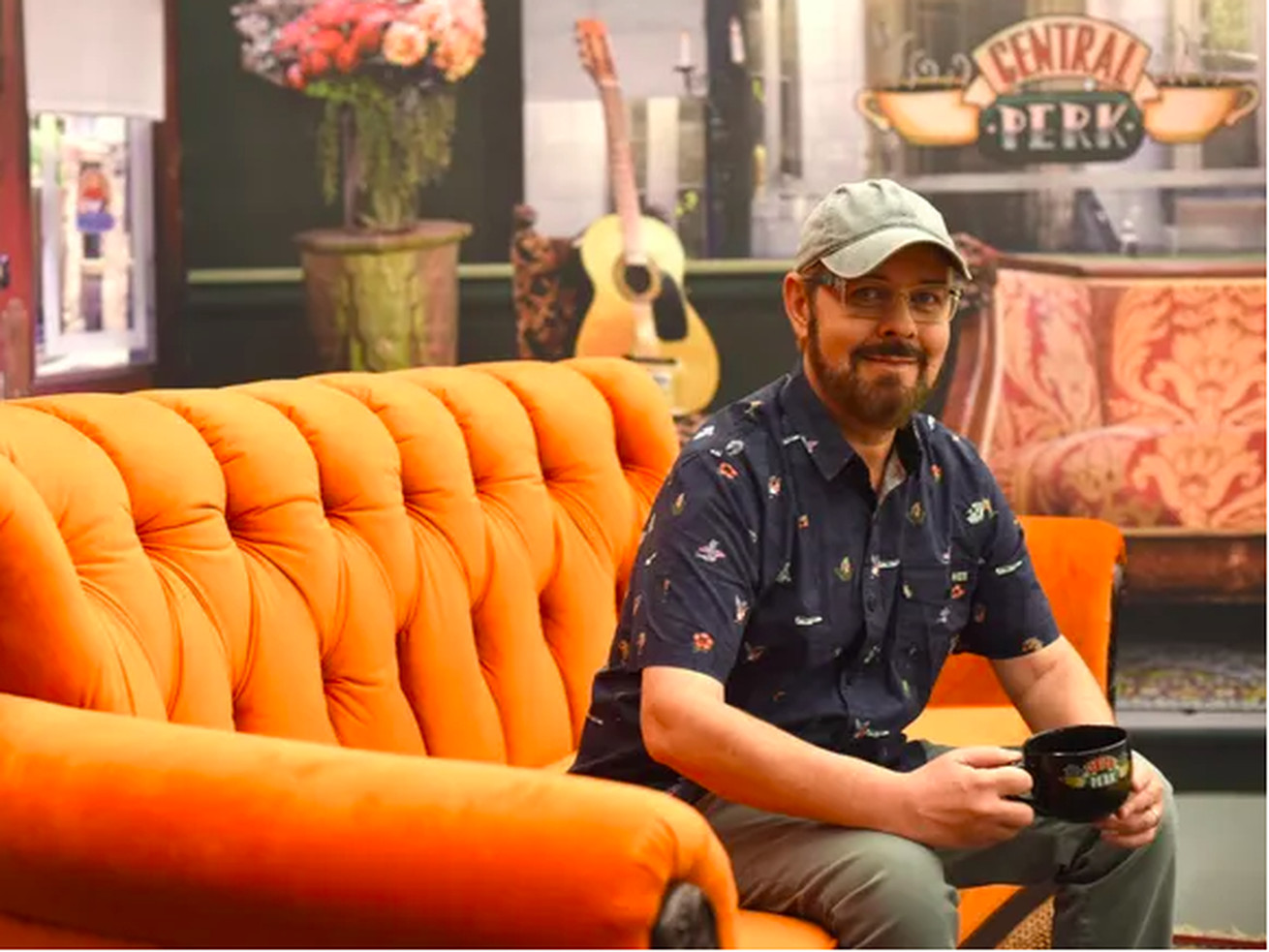
James Michael Tyler sits on an orange couch in a Central Park coffeehouse. | Jennifer S. Altman/USA Today
James Michael Tyler, 59, publicly opened up about his cancer battle for the first time while appearing on the ”Today” show Monday.
James Michael Tyler, who played the Central Perk employee Gunther on “Friends,” revealed he is undergoing chemotherapy treatment after being diagnosed with Stage 4 prostate cancer.
The actor, 59, publicly opened up about his cancer battle for the first time while appearing on the ”Today” show Monday.
“I’m sorry to say that I’m not appearing today with you to announce that there’s a ‘Friends’ movie,” Tyler said. ”Actually, I’m here to let you know that in September of 2018, I was diagnosed with advanced prostate cancer.”
Though Tyler had hoped to attend HBO Max’s “Friends” reunion last month in-person, he explained he was only able to appear virtually due to his health.
“I wanted to be a part of that, and initially I was going to be on the stage, at least, with them, and be able to take part in all the festivities,” Tyler explained. “It was my decision not to be a part of that physically and make an appearance on Zoom, basically, because I didn’t wanna bring a downer on it, you know? I didn’t want to be like, ‘Oh, and by the way, Gunther has cancer.’
Actor James Michael Tyler (@slate_michael) played Gunther on “Friends” for 10 years, but he was unable to attend the recent cast reunion in person because he’s been battling a serious health issue. Now he’s sharing his news for the first time with @craigmelvin. pic.twitter.com/272tg4Sbvc
Tyler noted that producers knew about his diagnosis and have “been aware for a long time,” and added that cast members such as David Schwimmer have “corresponded with me via Instagram.”
According to Tyler, doctors first discovered his cancer during a routine physical, in which he took his first prostate specific antigen (PSA) test. Though his early days were “optimistic,” Tyler said the cancer mutated during the pandemic, spreading to his bones and spine, resulting in his inability to walk.
“It’s Stage 4, late stage cancer, so eventually, it’s gonna probably get me,” Tyler said, adding that he wished he had gotten tested sooner.
“I would’ve listened to my wonderful wife, who has been my absolute strength throughout all of this,” a teary-eyed Tyler responded when asked if he would do anything differently. “I would have gone in earlier and would’ve hopefully been caught earlier. Next time you go in for a basic exam or your yearly check up, please ask your doctor for a PSA test. Caught early, (it’s) 99% treatable.”
While holding back tears, Tyler said he hopes his story will “save just one life” as he encourages others to get screened.
“My goal this past year was to see my 59th birthday. I did that, May 28th,” he said. ”My goal now is to help save at least one life by coming out with this news.”
A new law in Missouri declares that some federal firearm policies — including bans, registration requirements, and taxes that have “a chilling effect” on purchases — “shall be considered infringements on the people’s right to keep and bear arms.” | AP Photos
The anti-commandeering principle serves causes favored by both the Right and the Left.
When state and local officials decline to help enforce federal firearm rules they view as unconstitutional, The New York Times says, they are adopting “a legally shaky but politically potent strategy” with racist roots.
But when state and local officials decline to help enforce federal immigration rules they view as “unjust, self-defeating and harmful to public safety,” the Times says, they should be “proud” of “choos[ing] not to participate in deportation crackdowns.”
That blatant double standard illustrates how policy preferences and partisan allegiances color people’s views of federalism, which they tend to endorse when it serves their purposes and reject when it doesn’t. But as Missouri Gov. Mike Parson and Attorney General Eric Schmitt recently observed while defending that state’s Second Amendment Preservation Act, “you cannot have it both ways.”
Missouri’s law, which Parson signed last week, is part of a broader movement to resist federal gun control. It declares that some federal firearm policies — including bans, registration requirements, and taxes that have “a chilling effect” on purchases — “shall be considered infringements on the people’s right to keep and bear arms,” which is guaranteed by the Second Amendment and the state constitution.
The law says such rules “shall be invalid to this state, shall not be recognized by this state, shall be specifically rejected by this state, and shall not be enforced by this state.” It authorizes injunctions against law enforcement agencies that violate this new policy, along with civil penalties of $50,000 “per occurrence.”
In response to anxious questions from the U.S. Justice Department, Parson and Schmitt said the law’s restrictions and remedies apply only to state and local officials. That means they do not interfere with federal enforcement of federal laws — the same point the Times made in defense of “sanctuary” cities and states.
The immediate impact of this law — which is similar in spirit to laws passed by 11 other states this year, although their details and practical significance vary widely — is likely to be minor. The restrictions do not apply to federal firearm offenses that are also crimes under Missouri law, and currently there is not much difference between those categories.
The main point of the law, according to its sponsors, is proactive. Should Congress pass the gun controls that President Joe Biden favors, such as a ban on the manufacture and unregistered possession of “assault weapons,” Missouri officials will be prohibited from assisting in their enforcement.
Contrary to what the Times reported, that policy is not “legally shaky.” It relies on the well-established anti-commandeering doctrine, which says the federal government cannot compel state and local officials to enforce its criminal laws or regulatory schemes.
That doctrine is rooted in the basic design of our government, which limits Congress to a short list of specifically enumerated powers and leaves the rest to the states or the people, as the 10th Amendment makes clear. That division of powers gives states wide discretion to experiment with different policies, some of which are bound to offend the Times.
The paper suggests that defending state autonomy is disreputable, because that argument was “deployed in the past in the South to resist antislavery and civil rights laws.” But federalism does not give states a license to violate rights guaranteed by the Constitution or to flout laws authorized by it.
Although the Times tries to tar the anti-commandeering principle as racist, the same basic idea was a crucial weapon for Northern states that refused to help the federal government enforce the Fugitive Slave Act. Today that principle likewise means that state and local officials have no obligation to participate in the “deportation crackdowns” that the Times decries.
Similarly, the ongoing collapse of marijuana prohibition — a development the Times welcomes — would be impossible if states were obligated to participate in the federal war on weed. While both progressives and conservatives might wish that federalism could be limited to achieving results they like, that is not how constitutional principles work.
Jacob Sullum is a senior editor at Reason magazine.
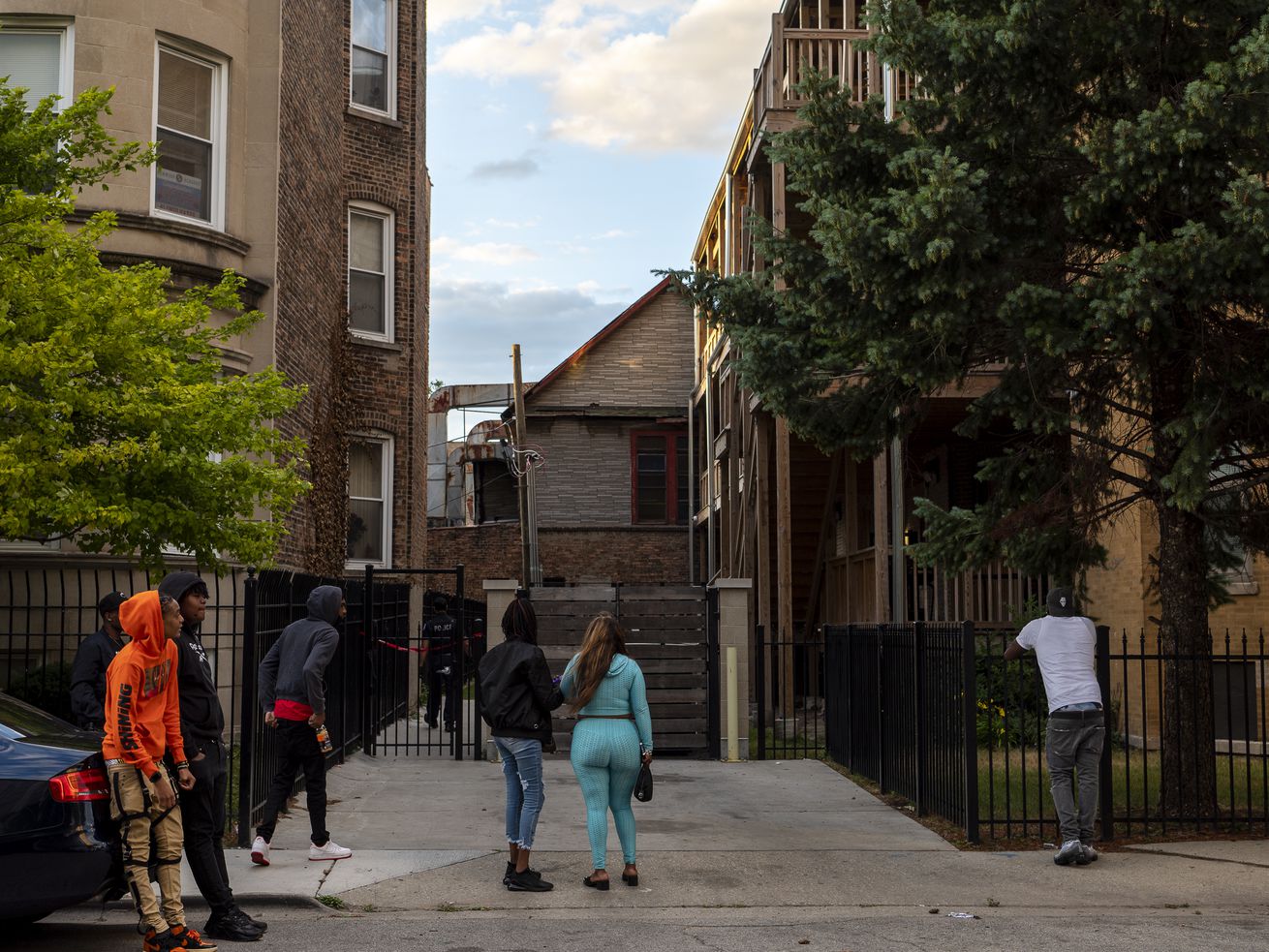
Onlookers watch as Chicago police work the scene where two people were shot and killed in the 6300 block of South Kimbark Avenue, in the Woodlawn neighborhood, Monday, June 21, 2021. | Tyler LaRiviere/Sun-Times
There have been at least 317 homicides in Chicago this year, up from 302 this time last year.
Chicago recorded one of its deadliest days of the year Monday, following a week of mass shootings and a weekend where at least 52 people were shot across the city.
There were at least seven homicides on Monday, one shy of the worst day for murders in Chicago so far this year. That was just a week ago when eight people were shot to death, including four at a mass shooting in Englewood.
Five of the seven homicides occurred in neighborhoods that are seeing more murders this year than last year, according to Sun-Times data: Roseland, Woodlawn, East Garfield and North Lawndale.
One of the homicides was in the Morgan Park neighborhood, which is even with last year. The other was in Fuller Park, which saw no homicides last year.
The violence followed a weekend that saw seven people killed and 45 others wounded. The victims included a Maryland grad student stabbed to death Saturday afternoon in the Loop, and a couple shot to death during the Puerto Rican Day parade later that night.
Last week, Chicago was hit by two mass shootings: four killed and four wounded in an Englewood home; and five people wounded in a shooting in West Garfield Park.
In all, there have been at least 317 homicides in Chicago this year, up from 302 this time last year. 2020 ended with 775 homicides, an increase of more than 50% from 506 murders in 2019.
Other deadly days this year have been Jan. 7 (seven homicides), April 4 (also seven), May 21 (six) and June 11 (five).
Monday’s murders included:
A 19-year-old woman who was sitting in a car in the 300 block of West 52nd Placein Fuller Park about 9:40 p.m. when someone stepped out of a gray Infiniti G35 and opened fire, Chicago police said. She was struck twice to the side of her body and once to her lower back. She was taken to the University of Chicago Medical Center, where she was pronounced dead.
Minutes earlier, a man was killed and a woman critically wounded on the Far South Side. They were sitting in a car in the 11800 block of South Michigan Avenue when someone fired at them about 9:40 p.m., police said. The man, 32, was taken to Christ Medical Center in Oak Lawn where he was pronounced dead. The 35-year-old woman was taken to the same hospital in critical condition.
A man was killed while working on his car in Fernwood on the South Side. He was in front of his home in the 10400 block of South Eggleston Avenue about 8:40 p.m. when someone fired from a silver Chevy Malibu, police said. The 28-year-old was struck multiple times and taken to Christ Medical Center in Oak Lawn, where he was pronounced dead.
Two people were killed in a shooting in Woodlawn on the South Side. Dominique Johnson, 20, and Shanal Guy, 18, were shot in their heads around 5:40 p.m. in the 6300 block of South Kimbark Avenue, authorities said. Both were pronounced dead at the scene. A weapon was recovered.
A man was killed in East Garfield Park. The 23-year-old was in a car in the 3400 block of West Walnut Street when a car pulled up and someone inside opened fire, police said. The man was struck in the neck and back. He was taken to Mount Sinai Hospital, where he was pronounced dead.
A 67-year-old man was shot and killed in a road-rage shooting Monday morning in Lawndale on the West Side. The shooter thought Patrick Earl had cut him off in the 1600 block of South Kostner Avenue at 9:45 a.m., police said. He argued with Earl, took out a gun and fired two shots, striking Earl once in his chest. Earl, who was the only person in the car, crashed and was taken to Mount Sinai Hospital, where he was pronounced dead.
At least 11 other people were wounded, including a 4-year-old boy shot possibly by accident in a Woodlawn home and two people wounded on the Eisenhower Expressway near West Garfield Park.



/cdn.vox-cdn.com/uploads/chorus_asset/file/22674931/TASTE_05302021_8.jpeg)



Leave a comment