Jacob deGrom Is Chasing the Greatest Cubs Pitcher Everon June 24, 2021 at 3:31 pm
Last week, Jacob deGrom of the New York Mets pitched three shutout innings against the Cubs, striking out eight of the nine batters he faced, before leaving the game with shoulder tightness. On Monday, he shut out the Atlanta Braves for five innings, lowering his earned run average to 0.50.
DeGrom’s wizard-like season—he has allowed four earned runs and 27 hits in 72 innings, while striking out 117 batters—has been compared to Bob Gibson’s in 1968. Gibson finished with a 1.12 ERA, so dominating National League hitters that baseball lowered the mound and shrank the strike zone the following year.
But there’s an even stingier pitching standard for deGrom to pursue. It belongs to a Cub: Mordecai “Three Finger” Brown. In 1906, Brown’s ERA was 1.04, still the National League record.
“If I was asked to pick an all-time team, my nod would go to Brown as starting pitcher,” Cubs historian Ed Hartig once said. “Not only was he one of the best starting pitchers of his era, he was also one of the best relief pitchers.”
Yet there is no statue of Brown outside Wrigley Field. He pitched his best seasons in West Side Park, and his career, which lasted from 1903 to 1916, is too remote to appeal to the modern fan’s nostalgia. But he was the best player on the best Cubs team ever.
Brown obtained his nickname as the result of an accident on his family’s farm in Nyesville, Ind., when he was five years old.
“My brother used to cut feed for the horses in a patent box filled with circular knives,” Brown would remember, as recounted in the biography Three Finger: The Mordecai Brown Story, by Cindy Thomson and Scott Brown. “One day I was feeding the knives and my hand slipped in among the knives.”
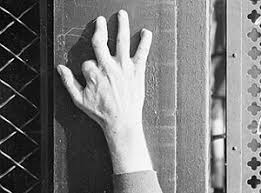
Brown’s index finger was severed just above the first knuckle. A few weeks later, he was playing with a rabbit in a tub when he slipped and smashed his already-mangled hand against the bottom. His sister rebandaged the hand badly. The middle finger and pinkie were forever crooked.
No one else in baseball had a hand like Brown’s, so no one else threw a curve like Brown’s. By spinning the ball off his middle finger, he made it curl down and away from his opponents’ flailing bats. As former Dodgers pitcher Carl Erskine observed, the index finger is “almost in the way” of a good curve grip. Brown’s hand most likely gave him what was a more effortless knuckle curve, a now-popular pitch that requires some tricky placement of the index finger—unless all you have is a knuckle.
“That old paw served me pretty well in its time,” Brown acknowledged. “It gave me a firmer grip on the ball so I could spin it over the hump. It gave me a greater dip.”
During a brief career as a coal miner (the source of his other nickname, “Miner” Brown), Brown began pitching for a local minor league team, the colorfully-named Terre Haute Hottentots of the Three-I League, which covered Indiana, Illinois and Iowa. He was signed by the Cardinals in 1903, and traded to the Cubs the next year.
Statistically, 1906 was Brown’s best year. Besides his 1.04 ERA, he was 26-6, with nine shutouts and 27 complete games. (Brown’s strikeout totals were never impressive. His deformities made him a finesse pitcher, not a power pitcher. With only three fingers, he couldn’t generate as much velocity as Walter Johnson.) The Cubs won 116 games, but that October, they lost the World Series to the White Sox. It was 1908—the year the team won its last championship of the 20th century—that established Brown as the greatest pitcher ever to wear a Cubs uniform.
To capture the pennant that year, the Cubs had to win the final game of the season, against the New York Giants, a makeup made necessary by the most famous baserunning error in baseball history: Merkle’s Boner. In a September 23 game against the Cubs at the Polo Grounds, the Giants apparently scored the winning run when Al Bridwell singled home Moose McCormick from third base in the bottom of the ninth. Fred Merkle, who was on first, thought the game was over, and returned to the dugout. Cubs second baseman Johnny Evers retrieved the ball and stepped on second for a force out, negating the run. Darkness was falling. The field was swarmed with fans. The umpires declared the game a tie, to be played over, if necessary. After the last day of the season, the Cubs and Giants were both 98-55, so it was necessary.
Giants fans, who felt cheated out of a victory, and a pennant, mailed letters marked with black handprints to the Cubs—a death threat, if they won the game. Jack Pfiester was the Cubs’ starter, but he just didn’t have it that day, hitting the first batter and walking the second. After another walk and hit, which left Giants up 1-0 with runners on first and second, player/manager Frank Chance pulled Pfiester, calling in Brown to pitch to third baseman Art Devlin.
“Unconscious of everything, careless of his bearing, the man who had faced and touched off many a death dealing blast in the depths of Indiana’s coal mines walked to his position, hurled a few balls to [catcher Johnny] Kling to assure himself of accurate aim. Then he was ready,” wrote Tribune sportswriter I.E. Sanborn. “Swish went Devlin’s bat, not once, but twice, then thrice, and the budding hero shriveled in the frost of a greater hero’s cool hard headed thinking.”
The Giants only scored one more run. Brown had yet another nickname, “The Royal Rescuer,” for his skill as a relief pitcher. (In 1911, Brown saved a then-record 13 games.)The Cubs won, 4-2. The losing pitcher was Brown’s nemesis, Christy Mathewson, a member of the Hall of Fame’s inaugural class in 1936; Brown was inducted in 1949, a year after his death. After the game, Giants fans punched and slashed the Cubs as they hightailed it for the clubhouse, where the police loaded them into squadrols for the ride back to the hotel.
The New York Times published a poem giving Brown his due as a Giant killer:
“Manhattan is busted,
The pennant is down,
And the Giants are walloped
By Mordecai Brown
Mordecai, Mordecai
Three-fingered Brown”
In the World Series against the Tigers, Brown won two games, pitched 11 scoreless innings, and made what Sanborn called “the greatest ‘inside play’ I ever saw pulled in a game of crucial importance.” In Game Four, with runners on first and second, Ty Cobb squared up to bunt. Brown leapt off the mound, intercepted the ball, and threw out the leading runner.
“Brown speared the ball with one hand and while bent in an awkward position, whirled like a top and burned the ball to [third baseman Harry] Steinfeldt,” Cobb recalled, offering a rare compliment to an opponent. “No pitcher ever made a finer play than ‘Miner’ Brown did that day and no one ever made one that was more critical or called for a greater display of nerve and ability.”
The Cubs, who had swept the Tigers in the 1907 World Series, won the 1908 Series four games to one. They wouldn’t win another for 108 years. Before turning into the Lovable Losers, the Cubs dominated the first decade of the 20th Century. In fact, the Society for American Baseball Research named the 1906-10 Cubs “The Best Team in National League History.” No player contributed more to the Cubs’ success than Brown, with 34.3 Wins Above Replacement in those years. Build that man a statue on Addison Street, with his mangled hand cast in bronze, to show that an accident which might have damaged a life instead made it unforgettable.
Jacob deGrom Is Chasing the Greatest Cubs Pitcher Everon June 24, 2021 at 3:31 pm Read More »



/cdn.vox-cdn.com/uploads/chorus_asset/file/22677218/Photo_Jun_10__9_18_02_AM.jpg)