Draft Dr. Phil and Shayne “The Smartest Man” Marsaw are joined by friend of the show and diehard Bears fan, comedian Tony Behinfar. They talk about his new show, “Day Drinker”, on Amazon Prime and then dive into the possibility of the Bears moving from Soldier Field to a new state-of-the-art stadium in Arlington Heights.
The nonprofit, artist-run network Tiger Strikes Asteroid has five locations across the U.S. in Los Angeles, Philadelphia, New York, Chicago, and Greenville, South Carolina. Their network of artists is vast, as they work to promote emerging, mid-career, and established creatives.…Read More
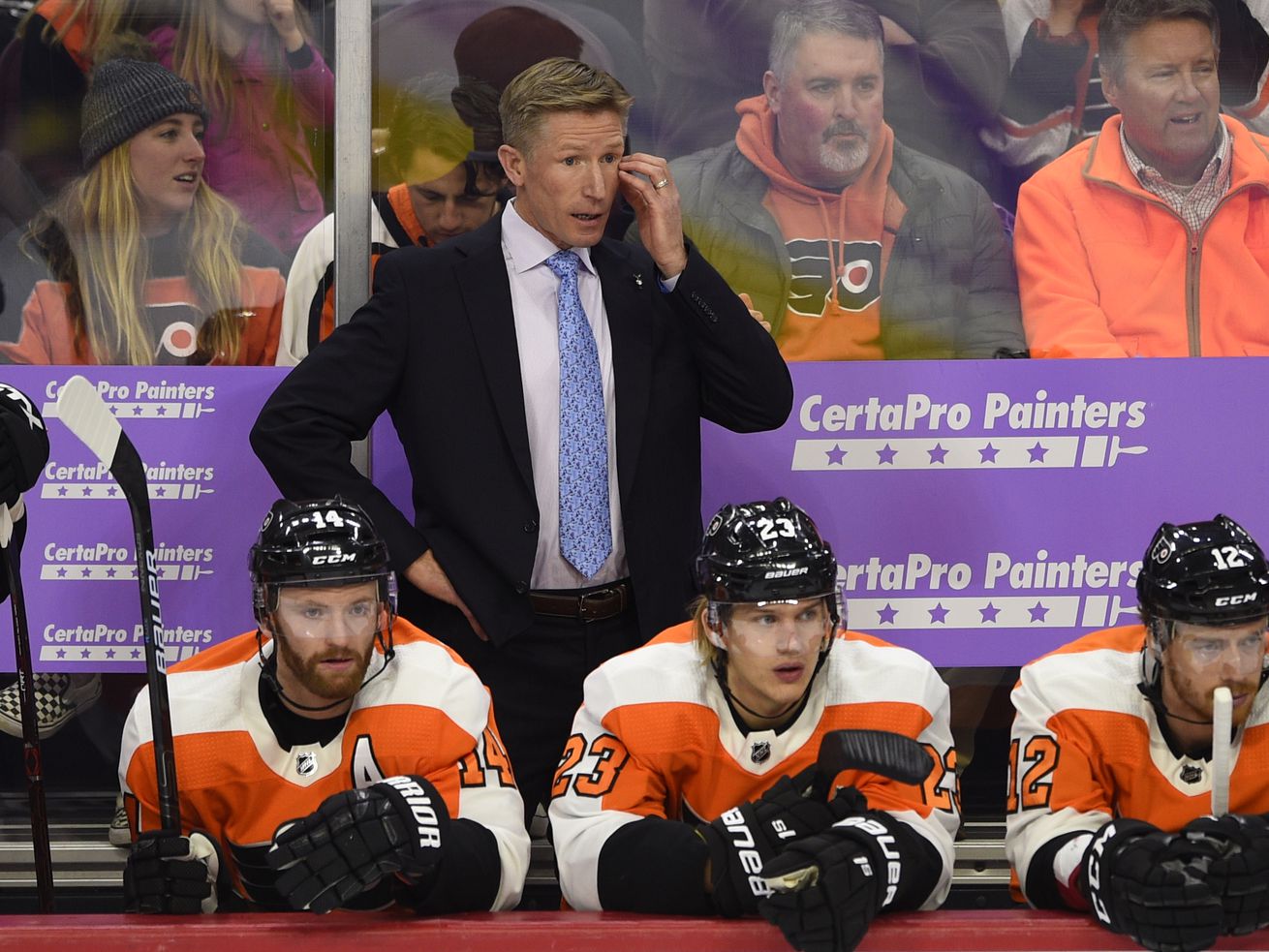
The Seattle Kraken have hired Dave Hakstol as head coach of the expansion team. | Derik Hamilton/AP
Hakstol will lead the first-year organization in his second head job in the NHL. He coached the Philadelphia Flyers for three-plus seasons from 2015-19.
SEATTLE — The Seattle Kraken hired Dave Hakstol on Thursday as head coach of the expansion franchise that will begin play this fall.
Hakstol will lead the first-year organization in his second head job in the NHL. He coached the Philadelphia Flyers for three-plus seasons from 2015-19 and spent the past two years as a Toronto Maple Leafs assistant.
“Dave possesses great experience, a strong work ethic, a solid technical understanding of the game and the remarkable ability to communicate clearly and effectively,” general manager Ron Francis said. “I look forward to working with Dave as we strive to build a team our fans will be proud of.”
The 52-year-old Hakstol coached the Flyers to two playoff appearances but both were first-round losses and he was fired midway through his fourth seasons. He coached at the University of North Dakota for 11 years and was an off-the-board hire six years ago for then-Philadelphia general manager Ron Hextall, just as he is for Francis this time.
“I am honored to be joining this tremendous group,” Hakstol said. “When I first saw the arena, I was blown away. It is such a unique venue. I am looking forward to being a part of the group that builds a team that plays with pride, passion and selflessness for the city of Seattle.”
The expectations for the Kraken are success from the start and the team will join the Pacific Division with the Arizona Coyotes shifting to the Central.
Hakstol’s task will be significant, trying to equal the success of the the league’s last expansion franchise, however unrealistic it might be for the Kraken to match the Golden Knights. Vegas reached the Stanley Cup Final in its inaugural season and has made the playoffs in all four years since its inception.
The hiring fits the timeline Francis set out from the start of wanting Seattle’s coaching search settled before the end of June, well before the July 21 expansion draft and July 23 NHL draft when the Kraken will have the No. 2 overall selection.
Hakstol got the job over former Arizona coach Rick Tocchet and others who interviewed multiple times. Francis, Hakstol and Seattle assistant GM Jason Botterill were together with Canada’s team at the 2019 world championship.
While Hakstol ended up with the job, he may not have been the initial favorite.
Gerard Gallant seemed the obvious option for Seattle due to his experience leading Vegas through its record-setting first season that ended with a loss to Washington in the final. Gallant opted for the chance with the New York Rangers over potentially taking on the challenges of another first-year franchise.
The Kraken are expected to begin training camp in September with the season likely to begin in mid-October.
Linus tries to reassure his nervous friend in “Who Are You, Charlie Brown?” | Apple TV+
With new animation and old documentary footage, Apple TV+ special touches on how the Peanuts comics and TV specials affected culture.
You’d have to be a real blockhead to resist just about anything related to Charlie Brown and the whole “Peanuts” gang, and the new Apple TV+ special “Who Are You, Charlie Brown?” is a suitably warm and breezy love letter.
Part existential exercise, part traditional documentary, the 54-minute special combines new animated scenes with a brief but solid history of Charles M. Schulz and interviews with generations of fans from Al Roker to Drew Barrymore to Kevin Smith to teenage actors such as Miya Cech and Keith L. Williams.
With Lupita Nyong’o providing sparkling narration, “Who Are You, Charlie Brown?” begins with the title character agonizing over a school assignment. He has one week to write a 500-word essay defining himself. (The animated scenes are in the style of the 1960s TV specials, and voice actors such as Tyler Nathan as Charlie Brown and Isabella Leo as Lucy sound very much like the original “Peanuts” gang.)
“I have no idea who I am!” Charlie Brown laments. “How am I going to come up with 500 words? Good grief, I couldn’t be stuck with a worse subject: me.”
“You worry too much, Charlie Brown,” says Linus, ever the voice of reason and calm.
We toggle back and forth between animated scenes of Charlie Brown trying to figure out who he is, with the help of Linus and Sally and Lucy et al., (well, Lucy does her Lucy thing and reminds Charlie Brown of his history of failures), and a straightforward timeline of the life and times of Charles M. Schulz, a shy kid who later drew on his childhood experiences to create the Peanuts comic strip.
There’s archival footage of interviews with Schulz, scenes of him at work and clips from some of the great TV specials that helped catapult “Peanuts” into a global phenomenon.
Schulz’s widow Jean shares memories of her husband, who, by all accounts, was just as nice and caring as you’d hope he would be.
And cartoonists Lynn Johnston (“For Better or For Worse”) and Dan Perkins (“This Modern World”) as well as Ira Glass join a parade of superfans expressing their admiration for the stories of Charlie Brown and his endearing group of pals (including, of course, Snoopy).
Though the “Peanuts” children never aged, and we never saw the adult figures in their life, the strip evolved with the times. In 1968, a teacher wrote to Schulz and urged him to create a Black character. Shortly thereafter Schulz introduced Franklin, the first Black kid in the group.
Roker talks about seeing someone who “looked just like” me in the comics: “It was amazing how much Franklin meant to me.”
When an editor in the South objected to a strip showing Franklin in school with the white characters, Schulz didn’t dignify the letter with a response.
APCharles Schulz, who wrote and drew the Peanuts comic strip for almost 50 years, shows a sketch of Snoopy in 1999.
Inspired by his friendship with Billie Jean King, Schulz created Peppermint Patty, a free-spirited jock, and her sidekick Marcie. (It’s pretty cool that, even 50 years ago, “Peanuts” always had the girls out on the baseball field with the boys.)
With a running time of less than an hour, “Who Are You, Charlie Brown” only skims the surface of the social and political impact the Peanuts gang had on the culture.
And Charlie Brown’s animated quest to define himself is tied up pretty quickly as well.
Still, this is a lovely tribute that will appeal to longtime fans and those who are just discovering the amazing Peanuts universe.
Timothy Christian’s Ben VanderWal (30) battles with Barrington’s Nathan Boldt (54) during the game at the Riverside Brookfield Summer Shootout. | Kirsten Stickney/For the Sun-Times
Joe Henricksen’s deep dive into all of last weekend’s high school basketball action.
There is no other place to start this rewind of last weekend than with Glenbard West. Let the superlatives begin.
If there is any suburban team that’s going to supplant any of the Chicago Public League powers at No. 1 when the preseason rankings come out in November, it’s Glenbard West. Yes, the Hilltoppers are that good.
Glenbard West took apart Simeon. They beat a very talented and likely top 10 team in New Trier in what was arguably the highest level game with serious shot-making that was played all weekend long. They also knocked off highly-regarded St. Rita and drilled Westinghouse.
There is Division I talent, including a legitimate high-major player in Braden Huff who has difference-making talent and size. There is the Swiss Army knife in 6-5 Cade Pierce and the high-level shooting of 6-5 Bobby Durkin. There is the athletic and physical big in 6-7 Ryan Renfro. There is the hard-nosed veteran in Paxton Warden.
You can go on and on … There is endless size, experience and, most importantly, a familiarity and unselfish aspect that is clear to see when watching this team play together.
That starts with having two unselfish stars in Huff and Pierce. They set the tone with their demeanor, leadership and unselfishness.
Huff is a basketball unicorn at the high school level, a 6-10 player capable of running an offense through, bringing the ball up the floor as a point-forward and initiating the offense, knocking down threes or being a mismatch nightmare around the basket. What he does for the Hilltoppers with his passing can’t be overlooked.
■ We won’t get into the details of specific players, but boy were there some much-talked-about players who did little to nothing this past weekend. We’re talking highly-ranked prospects with Division I offers, including some with high-major offers and interest, who really disappointed.
Some, I believe, were just highly-ranked players who simply had a rough weekend. Some are clearly over-hyped and just haven’t been seen enough –– or at all –– by college coaches. Some who just aren’t quite ready to perform yet at the level of where they are projected to be down the road. Remember, when it comes to evaluating and recruiting, it’s about projection.
But this came from one high-major assistant coach while I sat watching a prospect with him: “We seriously offered this kid?”
And this exchange from another coach as he was dissing a player to me while we were watching him play.
Me: “You know you guys offered him a year ago, right?”
Coach: “We did!?!?!?”
■ It’s worth repeating, sadly, but scholarship offers simply aren’t what they used to be –– or at least what they used to mean. And that’s a shame for the coaching staffs and programs that still really value extending an offer to a kid, because they are the ones who lose out in this college recruiting world of throwing around offers like candy. Their meaningful offers are lost in the wave of meaningless ones.
■ Speaking of offers, it’s not every day a young player receives an ACC offer and Summit League offer on the same day. That happened this week.
■ Kenwood’s JJ Taylor is the most eye-opening talent in the state. There is no debate. No one can do all the things the top-ranked junior prospect in the state can do with his size, length, athleticism and versatility. The 6-7 Taylor is a special talent.
■ Zach Cleveland is off the board as the first committed player in the Class of 2022. The Normal star committed to Liberty earlier this week just as his recruitment was gaining steam. That’s a huge win for Liberty and head coach Ritchie McKay who was front and center watching the 6-6 forward this past weekend at Normal West. Cleveland plays hard, competes, boasts very good athleticism and has a skill level that will only get better.
■ There should be no reason for this to be written again in this space, but Timothy Christian’s Ben VanderWal continues to be a vastly under-recruited player in the senior class. It’s a mystery as to why he does not have a host of Division I offers at this point. Instead he has one as of Tuesday –– from William & Mary. Still, the belief here is that will change over time.
■ It’s about time veteran Triton head coach Steve Christiansen was snapped up by a local Division I program. Christiansen, born and raised in Illinois and head coach at Triton for 17 years, was hired by Northern Illinois head coach Rashon Burno. Christiansen was making the rounds this weekend at both Riverside-Brookfield and Normal West.
Christiansen got his feet wet at NIU nearly two decades ago as the Director of Basketball Operations for then head coach Rob Judson. He went on to build Triton into a NJCAA Division II power, winning a national championship in 2018, and led the program into the Division I level of junior college basketball the past three seasons.
All the very respected Christiansen did at Triton was win. He went 443-111 in his 17 years as head coach.
■ New Trier is loaded. There is a ton of size, experience and the Trevians can shoot the basketball while posing problems with its 1-3-1 defense. This is a legitimate top 10 team and certainly the class of the north suburbs heading into next season.
Jackson Munro is a fast-improving 6-8 senior who will be watched closely this summer by college coaches, while junior Jake Fiegen is a hard-nosed guard who can absolutely fill it up as a perimeter shooter.
■ DeKalb went 18-1 this past season and has a chance to be better. Maybe the Barbs won’t match the glitzy record of a year ago, but coach Mike Reynolds team is going to be darn good. DeKalb competed and went at it with Kenwood in a matchup at the Midwest Crossroads Showcase in Normal.
The perimeter attack of Martez Jackson, Darrell Island and 6-4 Lane McVicar impressed.
■ It was hard not to be impressed with Rolling Meadows and what it could become this season. Coach Kevin Katovich’s team is probably going to miss some kid named Max Christie, but the Mustangs will be a ranked team again this upcoming season.
Cam Christie is poised to step out of his brother’s shadow and emerge as a bonafide star, and Orlando Thomas is set to be quite the running-mate on the perimeter. Veteran Foster Ogbonna, 6-4 junior who provides bulk and rebounding, returns. And keep an eye on the development of big Mark Nikolich-Wilson, a super intriguing 6-6 junior with skill and basketball smarts.
■ Rolling Meadows and Barrington ruled the Mid-Suburban League this past season, each winning their respective divisions of the MSL. Expect more of the same.
Barrington should be better than a year ago when the Broncos went 10-3 and won the MSL West.
■ One big take-away from the weekend was that the Chicago Catholic League’s profile will continue to rise. The quality depth this league is developing from top to bottom is outstanding. Whether it’s in the preseason polls or at some point during this upcoming season, it’s easy to say that as many as seven teams could be ranked during the 2021-22 season.
With DePaul Prep, Fenwick and Loyola likely coming back to the pack, the noise will surround the massive potential of St. Rita and its young, star-laden team. But the talk should start with St. Ignatius, an experienced team that will be the favorite.
■ An underrated coach who isn’t talked about enough: Lake Forest’s Phil LaScala.
■ They don’t have a Division I prospect or a big-named player but Riverside-Brookfield has the look of an easy 20-plus win team. Coach Mike Reingruber’s Bulldogs went 4-0 in their own event with seniors Joevonn McCottry, JP Hanley and Joe Gilhooley all taking turns impressing.
■ Keep an eye on Bloom in the south suburbs. Coach Dante Maddox has an emerging big man in 6-7 senior Emondrek Ford who is developing at both ends of the floor. Add a host of young guards and coach Dante Maddox should have one of the better teams in the south suburbs and a potential top 25 team.
■ DePaul Prep lost a ton from a team that went on a run this past season and won the Chipotle Clash of Champions in February, including all-stater and Loyola recruit TY Johnson. But coach Tom Kleinschmidt’s team is going to be better than I thought it would be.
Big man Dylan Arnett will be the key. A big-bodied 6-9 senior who is a Division I prospect, Arnett’s rise as a player over the next year could elevate the Rams. Keep an eye on 6-4 shooter Payton Kamin. The sophomore guard is one to watch.
■ You don’t want to play Brother Rice this year. After watching the Crusaders at Riverside-Brookfield, this is one sneaky good team. And you definitely won’t want to play them in two years. Coach Bobby Frasor has the bulk of that roster intact for the next two seasons, and it’s a good one, led by point guard Ahmad Henderson. I like this team and its potential going forward.
■ The Peoria area may be down when it comes to its high school basketball –– at least in comparison to past decades of brilliance –– but don’t include Peoria Notre Dame in that discussion. This team has put together some great seasons of late, but the potential going forward with Notre Dame is impressive.
A pair of seniors –– 6-2 guard Nelson Reynolds and 6-6 Colin Schuler –– is where you begin. But the potential of this team rides on a pair of sophomores with size in 6-7 Cooper Koch and 6-7 Lathan Sommerville. Koch, who the Hoops Report is so high on due to his size, agility and shooting ability, is already a bonafide high-major prospect at this young age.
■ Moline’s Brock Harding can play for my team any day. With his feel for the position, the heady 5-11 junior point guard reminds me a little of former St. Charles East point guard Cole Gentry, who went on to have a very nice career at Wright State. Harding, though, with his size and shooting range, has more scoring potential than Gentry had at the same age.
■ The summer shootouts are generally the first time you get a look at a few of the top incoming freshmen. Those freshmen who really opened eyes over the course of the weekend were Jeremiah Fears of Joliet West and Young’s Antonio Munoz. St. Rita’s Melvin Bell is another talent.
■ After getting another look at him this past weekend, throw Mascoutah’s Justin King in the group of players who should probably be getting a little more love than he’s received. I really like the 6-4 combo guard’s engagement and how he carries himself as a player on the floor. Those attributes don’t always stand out and when they do are sometimes ignored. King can play somewhere at the low-major Division I level.
■ Larkin should be much improved, because that senior backcourt of Damari Wheeler-Thomas and Fernando Perez will be the best in the Upstate Eight Conference.
■ Toby Onyekonwu of Plainfield East is one trigger-happy scoring guard, but he’s a sniper from the perimeter with big-time scoring potential. He’s a big-time weapon offensively with shake and shooting.
■ You have to continue to love how Glenbrook South’s Nick Martinelli just always finds a way. Don’t overlook the talent he brings to the floor, but so much of the uncanny craftiness he plays with does translate to the next level.
■ Gary DeCesare returns to the Chicago area as coach at De La Salle and has a group that will be a threat in the Chicago Catholic League. The Meteors were without scoring guard DaJuan Bates who was out with an injury, but they have a pair of bigs in Marcellius Cohen and Jamil Wilson and an unsung guard in Jalen Brown who is capable of knocking down shots.
■ Mount Carmel’s DeAndre Craig is a stud. The junior point guard with difficult shot-making ability is yet another underclass weapon in the Chicago Catholic League. He’s a player in the Class of 2023 who will garner more Division I interest soon.
■ There is a whole new look at Fenwick. And all things considered, it doesn’t look too bad.
First, life begins after three years of dominance from star Bryce Hopkins who has moved on to Kentucky.
Second, Tony Young has taken over the program as head coach, replacing respected Staunton Peck. That should be very good hand-off.
Third, a pair of transfers –– Kyle Thomas, a much-talked-about 6-9 senior big man from St. Joseph, and junior guard Hunter Duncan from La Lumiere –– are big additions.
The arrival of Thomas and Duncan, along with the senior trio of Denium Juette, Gabe Madej and David Gieser, will keep the Friars in the mix in the Chicago Catholic League.
■ Following his strong weekend showing, Batavia’s 6-7 Ethan Ivan has emerged as one of the must-have small college prospects on the market. He’s a versatile 4-man who will garner more Division II looks.
■ Downers Grove South’s appearance at Riverside-Brookfield was the debut of head coach Zach Miller. DGS has turned the program over to the young coach who has spent time as an assistant at both West Aurora and Downers South. Miller was the star point guard of the Glenbard East team, led by Johnny Hill, that reached Peoria in 2011 and finished fourth in the state.
■ Maybe a team will emerge or maybe there is a team I simply don’t know about around the state, but it’s hard to imagine Yorkville Christian not being a big favorite to win a Class 1A championship next March.
Jaden Schutt, one of the top players in the state, didn’t play this past weekend as he was on an official visit to Michigan State. Talented Brayden Long was also out with an injury. But coach Aaron Sovern’s team still impressed as it has weapons beyond Schutt and Sovern.
Slick guard KJ Vasser is a hidden player in the senior class and sophomore Jehvion Starwood is another talent in the backcourt.
■ West Aurora finished 1-15 last season. But I do know this after watching the Blackhawks this past weekend: West Aurora should be much-improved and win a lot more than one game next year with the addition of St. Rita sophomore transfer Josh Pickett and a healthy 6-7 Ty Rogers.
■ A big thanks goes out to both Riverside-Brookfield’s Mike Reingruber and Normal West’s Ed Hafermann.
Reingruber and his staff at Riverside-Brookfield once again ran a stellar, well-organized event that everyone has come to expect based on past history. It’s still just summer basketball, but the Riverside-Brookfield Shootout has become a staple on the basketball calendar.
With certain Covid restrictions up in the air when the live events were being discussed and organized, there was a dire need for a second event. Hafermann and Normal West stepped up and provided a platform for so many other players, particularly those in the southern part of the state and in central Illinois.
In a very short amount of time and without any past experience of running a live event to base it on, Hafermann did a great job of making the most out of the situation.
Based on several different factors, the IBCA should look at keeping a live event in Normal going forward on one of the two weekends.
This aerial photo shows part of the 12-story oceanfront Champlain Towers South Condo that collapsed early Thursday, June 24, 2021 in Surfside, Fla. | Amy Beth Bennett /South Florida Sun-Sentinel via AP
Surfside Mayor Charles Burkett warned that the death toll was likely to rise, saying the building manager told him the tower was quite full at the time of the collapse.
SURFSIDE, Fla. — A wing of a 12-story beachfront condo building collapsed with a roar in a town outside Miami early Thursday, killing at least one person and trapping residents in rubble and twisted metal. Rescuers pulled dozens of survivors from the tower during the morning and continued to look for more.
Surfside Mayor Charles Burkett warned that the death toll was likely to rise, saying the building manager told him the tower was quite full at the time of the collapse around 1:30 a.m., but the exact number of people present was unclear.
“The building is literally pancaked,” Burkett said. “That is heartbreaking because it doesn’t mean, to me, that we are going to be as successful as we wanted to be in finding people alive.”
Authorities did not say what may have caused the collapse. Work was being done on the building’s roof, but Burkett said he did not see how that could have been the cause.
About half of the building’s roughly 130 units were affected, Miami-Dade County Mayor Daniella Levine Cava told a news conference. Rescuers pulled at least 35 people from the wreckage by mid-morning, and heavy equipment was being brought in to help stabilize the structure to give them more access, Raide Jadallah of Miami-Dade Fire and Rescue said.
Sally Heyman, of the Miami-Dade Board of County Commissioners, said that 51 people who were thought to be in the building at the time of the collapse were unaccounted for by mid-morning — but there was a possibility that some weren’t at home. The tower has a mix of seasonal and year-round residents, and while the building keeps a log of guests staying, it does not keep track of when owners are in residence, Burkett said.
Earlier, Burkett said two people were brought to the hospital, one of whom died. He added that 15 families walked out of the building on their own.
David Santiago/Miami Herald via APPeople look at the partially collapsed Champlain Towers South Condo in Surfside, Fla., Thursday, June 24, 2021.
Gov. Ron DeSantis said officials were “bracing for some bad news just given the destruction that we’re seeing.”
The collapse, which appeared to affect one leg of the L-shaped tower, tore away walls and left a number of homes in the still-standing part of the building exposed in what looked like a giant dollhouse. Television footage showed bunk beds, tables and chairs still left inside. Air conditioner units hung from some parts of the building, where wires now dangled.
Piles of rubble and debris surrounded the area, and cars up to two blocks away were coated with a light layer of dust from the debris.
Barry Cohen, 63, said he and his wife were asleep in the building when he first heard what he thought was a crack of thunder. The couple went onto their balcony, then opened the door to the building’s hallway to find “a pile of rubble and dust and smoke billowing around.”
“I couldn’t walk out past my doorway,” said Cohen, the former vice mayor of Surfside. “A gaping hole of rubble.”
He and his wife made it to the basement and found rising water there. They returned upstairs, screamed for help and were eventually brought to safety by firefighters using a cherry picker.
Cohen said he raised concerns years ago about whether nearby construction might be causing damage to the building after seeing cracked pavers on the pool deck.
At an evacuation site set up in a nearby community center, people who live in buildings neighboring the collapse gathered after being told to flee. Some wept. Some were still dressed in pajamas. Some children tried to sleep on mats spread on the floor. When a news conference about the collapse appeared on the TV, the room went silent.
Jennifer Carr was asleep in a neighboring building when she was awakened by a loud boom and her room shook. She thought it was a thunderstorm but checked the weather app on her phone and saw none. The building’s fire alarms went off, and she and her family went outside and saw the collapse.
“It was devastation,” Carr said. “People were running and screaming.”
Miami-Dade Fire Rescue said in a tweet that more than 80 units were “on scene with assistance from municipal fire departments.”
David Santiago/Miami Herald via APA Miami-Dade Police helicopter flies over the Champlain Towers South Condo after the multistory building partially collapsed, Thursday, June 24, 2021, in Surfside, Fla.
Teams of firefighters walked through the rubble, picking up survivors and carrying them from the wreckage.
Nicolas Fernandez waited early Thursday for word on close family friends who lived in the collapsed section of the building.
“Since it happened, I’ve been calling them nonstop, just trying to ring their cellphones as much as we can to hep the rescue to see if they can hear the cellphones.”
The seaside condo development was built in 1981 in the southeast corner of Surfside. It had a few two-bedroom units currently on the market, with asking prices of $600,000 to $700,000 in an area with a neighborhood feel that provides a stark contrast to the glitz and bustle of nearby South Beach.
The area has a mix of new and old apartments, houses, condominiums and hotels, with restaurants and stores serving an international combination of residents and tourists. The main oceanside drag is lined with glass-sided, luxury condominium buildings, but more modest houses are on the inland side. Among the neighborhood’s residents are snowbirds, Russian immigrants and Orthodox Jews.
Patricia Avilez considered spending the night in her brother-in-law’s vacant condo on Wednesday but didn’t, only to awake to news of the collapse.
“And then I came here, and it’s gone,” she said. “Everything is disaster.”
Associated Press writers Tim Reynolds and Ian Mader in Miami; Freida Frisaro in Fort Lauderdale; Bobby Caina Calvan in Tallahassee; and Jay Reeves in Birmingham, Alabama, contributed to this report.
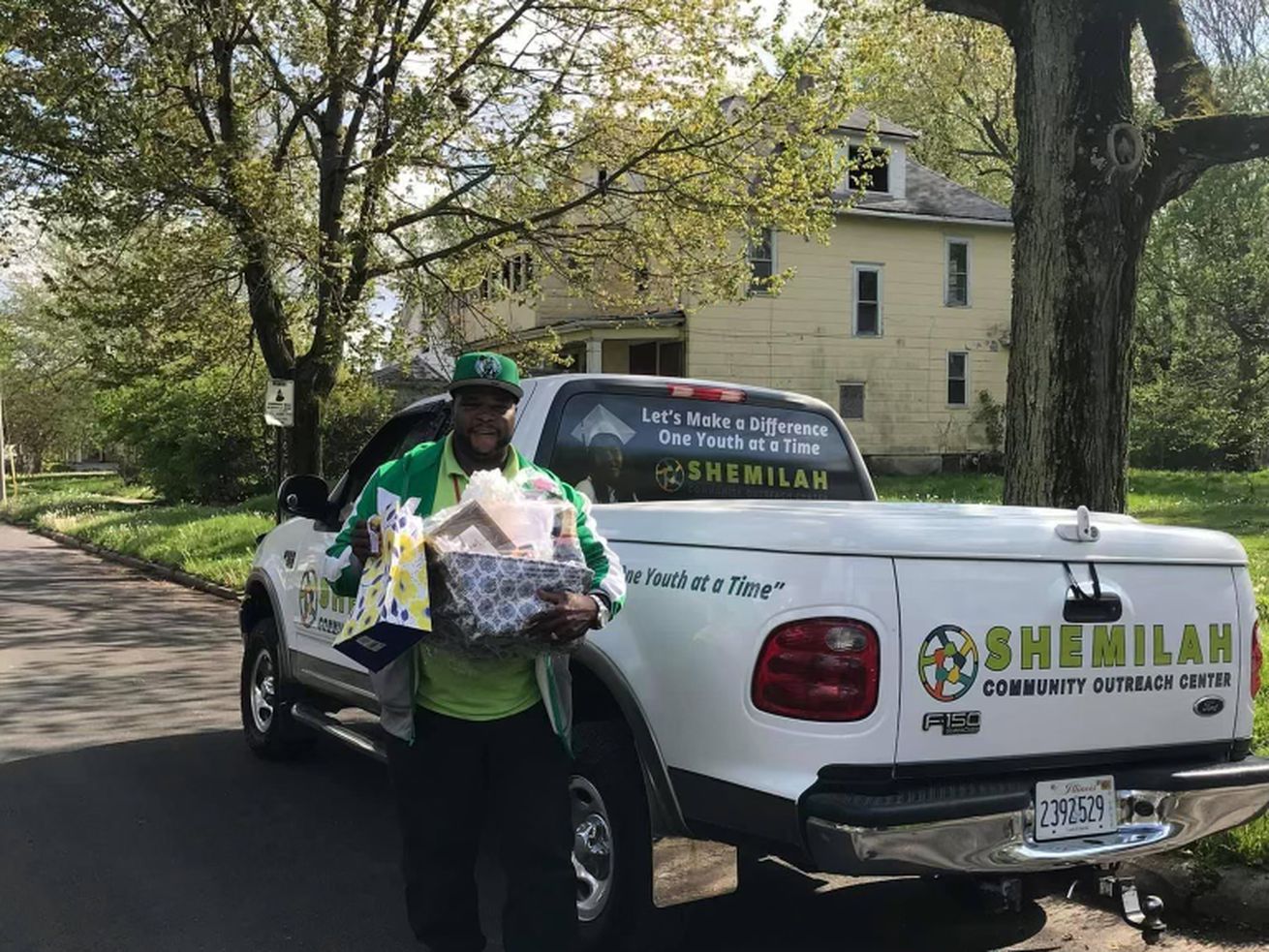
Shemuel Sanders suffered a tragic loss and channeled his life-changing experience into an opportunity to help others.
Shemuel Sanders suffered a tragic loss last June when his daughter, Shemilah, became the victim of a fatal shooting in their hometown of Decatur, Illinois.
Sanders, who often served as an informal mentor to youth in the Decatur middle school where he works, felt compelled, now more than ever, to do more.
“I never want another parent to have to feel what I’m feeling,” says Sanders, who does landscaping work during the summers, “so I started small — pulling a few young men into my landscaping work and paying them for their time.”
Once the community heard about what Sanders was doing, his phone wouldn’t stop ringing with calls from parents and young men who wanted to be involved.
In just a few weeks, his landscaping program, which started with 10 young men, quickly grew to 70 — the maximum number of participants that donations to the program could support.
When they returned to school in the fall, Sanders refocused his outreach on helping the men navigate e-learning, recruiting a team of retired teachers who volunteered their time to help students who were struggling outside of a traditional school setting.
Provided photo.
This year, the program has grown to include 200 young men and women and many more offerings for the youth, who can now learn forensic science taught by the local police department, take music or dance classes, and of course, continue to participate in the popular landscaping program.
The only limitation to the growth of the program is funding, and Sanders continues to fundraise to be able to support more participants.
“I’ve had to turn youth away, and that kills me,” says Sanders. “I believe I could easily reach 1000 youth with the community’s support – there is that much need for this work.”
As published in the Chicago Daily News, sister publication of the Chicago Sun-Times:
In the early 20th century, the arrival of the circus in town disrupted everyday life, sometimes closing schools and businesses so everyone could attend. Even in major cities like Chicago where residents never lacked entertainment, the sight of a circus tent or train would have been a welcome one.
During the early morning hours of June 22, 1918, two trains carrying the Hagenbeck-Wallace Circus chugged on from Michigan City, Indiana, to nearby Hammond. The first arrived safely, but the second pulled off the main tracks to fix a hotbox. Five wooden cars of the second train — several of them filled with sleeping clowns, acrobats, performers and their families — stayed on the main track while the engineers fixed the problem.
Want more “This Week In History” content delivered to your inbox? Sign up for our Afternoon Edition newsletter for a rundown of the day’s biggest stories every weekday and a deep-dive into Chicago history every Saturday.
At about 4 p.m., an empty train came barreling down the tracks, ignoring stop signals and the lights of several engineers trying to catch the driver’s attention. Nothing worked. The train crashed into the five cars, causing a deafening sound and a terrible fire.
When reporters for the Chicago Daily News caught up to the action, authorities reported 100 people dead, according to that day’s paper.
“At noon nearly 60 bodies had been removed from the mass of ashes and twisted metal into which the five sleeping coaches had been jammed,” the paper said. “More than 150 dead and injured were taken to Gary and 75 dead and injured were removed to Hammond. It was believed that 50 more were still in the funeral pyre, literally burned to ashes.”
The crash caused tanks of acetylene gas to explode, which sparked fires that spread quickly in the area.
“To add to the holocaust,” the paper reported, “water was unobtainable and the fumes of the gas and intense heat of the flames made it impossible for volunteer resources to approach within 150 feet of it. The crew of the circus train and the men of the troop train available worked heroically, but there was so little they could do.”
Some performers did manage to survive. One Daily News reporter interviewed acrobat Alec Codd at Mercy Hospital in Gary.
“It was like the cracking of an egg shell,” he said. “My legs doubled under the pressure of the walls of the car as they caved in. I felt a terrible pain in my back. Everything was dark, and, for one minute after the big crash that woke me up, everything was silent.”
Codd attempted to reach his sleeping wife, whose hand was “still warm, but motionless,” he said. He couldn’t move. Something pinned him down, and every time he tried to move, “a piercing pain shot through my body.” Just before the flames engulfed his car, a fellow performer freed Codd and dragged him out of the wreckage.
“All around me, there was pandemonium,” he recounted. “A strong wind was fanning the flames, which spread rapidly. And from underneath the mass of piled-up coaches, it flashed through my mind that it looked like a funeral pyre. I heard the groans and moans and the death cries of these whom I had worked with so long. Then I lost consciousness.”
D.W. Donohue, superintendent of the Chicago division of the railroad, and L.W. Landman, general passenger agent, told reporters they believed the empty train’s engineer, a man called Sergeant, had either fallen asleep or suffered an attack of paralysis. No other option would explain why he’d missed signals and the circus engineers telling him to stop from miles down the track.
Other experts, however, had different theories. Several railroad officials, who declined to be named, examined the empty train following the crash and noticed that the air brakes of the Pullman coaches had not been set on the wheels. Because military officials usually used the empty train to move soldiers serving in World War I to the east coast, the unnamed railroad officials suspected sabotage.
The Hagenbeck-Wallace Circus train wreck remains one of the most disastrous in history, with 86 officially dead and more than 100 injured. Next to the main story, the Daily News ran a list of names of those that died along with their respective roles in the circus.
As a onetime academic, I’ve always been of two minds about the institution of tenure.
In theory, it protects intellectual freedom. In practice, however, junior faculty become so accustomed to keeping their heads down seeking a lifetime sinecure that timidity becomes second nature. They confine their heterodox opinions to the faculty lounge.
So I’m puzzled that a nationally famous journalist like The New York Times’ Nikole Hannah-Jones thinks she needs it. The hullaballoo at the University of North Carolina, provoked by its Board of Trustees declining to include tenure in its offer of a 5-year, $180,000 per annum contract, has become a symbolic struggle on depressingly familiar racial terms. I quite doubt she intends to make a career in Chapel Hill.
In-depth political coverage, sports analysis, entertainment reviews and cultural commentary.
Sometimes, however, symbolic struggles are worth having. But do spare me the high-flown rhetoric about UNC’s inviolable academic standards. This is the school whose department of African and Afro-American Studies got caught awarding phantom “A” grades to varsity athletes for classes that never met. Literally did not exist.
The scam involved some 3000 students over two decades. Supposedly, UNC’s football and basketball coaches knew nothing.
Sure they didn’t.
But back to today’s racial controversy. Nikole Hannah-Jones, of course, is the author of the Times’s celebrated and controversial “The 1619 Project” — an ambitious attempt to reassess American history through the shame of slavery.
It’s UNC’s Hussman School of Journalism that has offered her the job. And that, in turn, has drawn the interest of Arkansas Democrat-Gazette publisher Walter Hussman, the school’s namesake, whose $20 million gift to his alma mater ensures that his phone calls and emails will always be answered.
Three big things trouble Hussman about “The 1619 Project.” First, its monthly magazine-style blend of fact and opinion, which the publisher finds unseemly. But that ship has sailed. Times readers know what they’re getting. More substantively, Hussman objects to what serious historians have called into question about the work: its assertion that the Revolutionary War was fought largely to prevent the abolition of slavery in the 13 colonies.
According to the Chronicle of Higher Education, Hussman was greatly influenced by a Politico column by Northwestern professor Leslie M. Harris headlined “I Helped Fact-Check the 1619 Project. The Times Ignored Me.” Harris had warned that the insupportable claim would give critics an excuse to disregard an otherwise important work, which is “exactly what happened.”
But should a piece of journalism whose headline allegation is somewhere between dubious and downright false be lionized? OK, so Hannah-Jones has earned a Pulitzer Prize. But would she be offered tenure in a first-rate history department? Probably not.
Princeton historian Sean Wilentz, who has publicly criticized her work, put it this way: “There are, no doubt, reasons to object to awarding a tenured position on the faculty to Hannah-Jones, in which scholarship and qualifications are the primary considerations. The substance of her work on ‘The 1619 Project’ is controversial. So is her choice to sometimes dismiss and demean her critics instead of engaging with their arguments on the merits.”
All too often, it goes like this:
“You’re wrong.”
“You’re white.”
The End.
Wilentz nevertheless emphasizes that the decision is the UNC faculty’s to make, not politically appointed trustees or alumni donors.
If Hannah-Jones has become a partisan lighting rod, it’s a role she’s clearly chosen. And yes, it’s all about race.
As for mega-donor Hussman, he’s found himself pillored in Slate as “a mini-Rupert Murdoch,” which is surely unfair to anybody familiar with the newspapers he publishes. The Democrat-Gazette’s news coverage is vastly superior to any newspaper in the region, and Hussman has risked a lot by offering iPad subscriptions (complete with iPads) to cut printing costs.
I wrote a column there myself during the Clinton and George W. Bush years. Although I’m confident Hussman disagreed with most of my opinions, he never interfered. When the publisher says he resents Hannah-Jones’ assertion that “Black Americans fought back alone,” he’s thinking about white Arkansas journalists who risked everything (and won Pulitzer Prizes) championing racial justice from the 1957 Central High integration crisis onward.
One of those journalists, the late Paul Greenberg, edited the Arkansas Democrat-Gazette. We didn’t agree about much else, but Greenberg stood strong for racial justice at a time when it could get a man killed.
Indeed, he was the editor and Hussman the publisher when I was unceremoniously dumped from a half-time teaching job after several columns lampooning the propaganda barrage used to sell the Iraq war.
“This isn’t conservatism,” I’d written. “It’s utopian folly and a prescription for endless war.” The dean said the college had no funds to pay me, transparently false. I’d taken the job to help the college out of a tight spot after a senior professor fell ill. Colleagues pretended they didn’t know I’d been sent away. Students were told I’d resigned.
Sun-Times City Hall reporter Fran Spielman is joined by her long-time competitor and friend, former Chicago Tribune columnist John Kass. Topics include their time together covering City Hall, his recent controversies, and what’s next for Kass as he launches his own site, johnkassnews.com.



/cdn.vox-cdn.com/uploads/chorus_asset/file/22675985/SCHULZ_RETIRES.jpg)


/cdn.vox-cdn.com/uploads/chorus_asset/file/22679248/AP21175537016033.jpg)
/cdn.vox-cdn.com/uploads/chorus_asset/file/22679250/AP21175537093224.jpg)
/cdn.vox-cdn.com/uploads/chorus_asset/file/22677218/Photo_Jun_10__9_18_02_AM.jpg)