What’s New

GOP tries to sucker punch U.S. historyon June 29, 2021 at 4:37 pm

Chicago is a boxing town. Or was.

That shouldn’t be news, but I suspect it is, to some. The three most important heavyweight champions of the world in the 20th century all lived in Chicago. Jack Johnson bought a home for his mother on South Wabash Avenue in 1910, then moved in himself in 1912. Joe Louis lived at 4320 S. Michigan Ave. and won his first title at Comiskey Park in 1937. As a teen, Muhammad Ali won his first fights as a Golden Gloves champion here and later lived at several locations on the South Side.

I could share inspiring tales — the luxurious life Johnson led, the silver spittoons at Cafe de Champion, the club he owned on West 31st Street. Louis’ humility in the face of global fame. How Ali would stop his Rolls Royce and shadow box kids on the street.

Pause here, and consider how learning about this historic connection makes you feel about Chicago. Proud? Happy? Eager to know more?

I hope so. Because I left out something crucial. Johnson, Louis and Ali were — stop the presses — Black. Their race was in no way incidental to their athletic careers and personal lives. Just the opposite; it was pivotal. Because of his race, Johnson was at first prevented from fighting for the title; he had to go to Australia to do it. Johnson was then vilified for winning, and for dating white women. He was hung in effigy at State and Walton streets.

Louis had to act humble, trying to avoid the trouble Johnson got into. When named Cassius Clay, Ali was initially sneered at by the public as a poetry-spewing clown. After he found his Muslim faith and changed his name, white America refused to use it, as if he wasn’t a man who could call himself whatever he liked. Nobody objected to “Bob Dylan.”

Does the second, racial element of my boxing tale wreck it for you? Make you feel small? Or does it, as I believe, enlarge the story, nudging it from a mere gloss toward the complexity that real history demands?

Welcome to the critical race theory debate. Well, it’s not a debate in the educated parts of the country. We just call it “history.” But Red State backwaters, in their continual quest to cast themselves as victims, normalize ignorance and fire up the dupes, decided that a big problem facing the country, along with minorities voting, is children are being taught actual history. They’re passing laws, in Texas, in Florida.

Both states banned the use of the New York Times “1619 Project,” which presents slavery is an intrinsic aspect of the founding of the country. (Spoiler alert: It was.) The discussion of current events is also out — students can no longer get class credit for political action. In Texas, teachers discussing bigotry must now “give deference to both sides,” which is like requiring that Tony Zale be included in any Chicago boxing recap.

While the laws themselves are a muddle, the context is the most frightening part.

“Some of this stuff is, I think, really toxic,” said Florida Gov. Ron DeSantis, of teaching students about our country’s racist past and present. “I think it’s going to cause a lot of divisions. I think it’ll cause people to think of themselves more as a member of particular race based on skin color, rather than based on the content of their character.”

I think he means that discussing George Floyd might make some students realize they’re Black. I have news for him.

History is a balancing act. A good teacher mixes the positive and the negative. Terrified politicians try to put their thumb on the scales because they can’t stand living in a nation where Black Lives Matter, where the country’s true racial history is taught as if it were real history. Which it is, whatever laws are signed in Texas and Florida.

In 1762 Oliver Goldsmith called the history of Europe “a tissue of crimes, follies and misfortunes.” That is true for all history, everywhere. There is an exquisite irony of the Republican resistance to teaching troublesome racial reality — their bonehead attempt at censorship is a compelling argument for why the full scope of America’s past, both glory and shame, must be taught. Because look at the kind of people who are allowed to run things when it’ s not.

Read More

GOP tries to sucker punch U.S. historyon June 29, 2021 at 4:37 pm Read More »

The Gals win The Great Raceon June 29, 2021 at 4:29 pm

Girls Go Racing

The Gals win The Great Race

Read More

The Gals win The Great Raceon June 29, 2021 at 4:29 pm Read More »

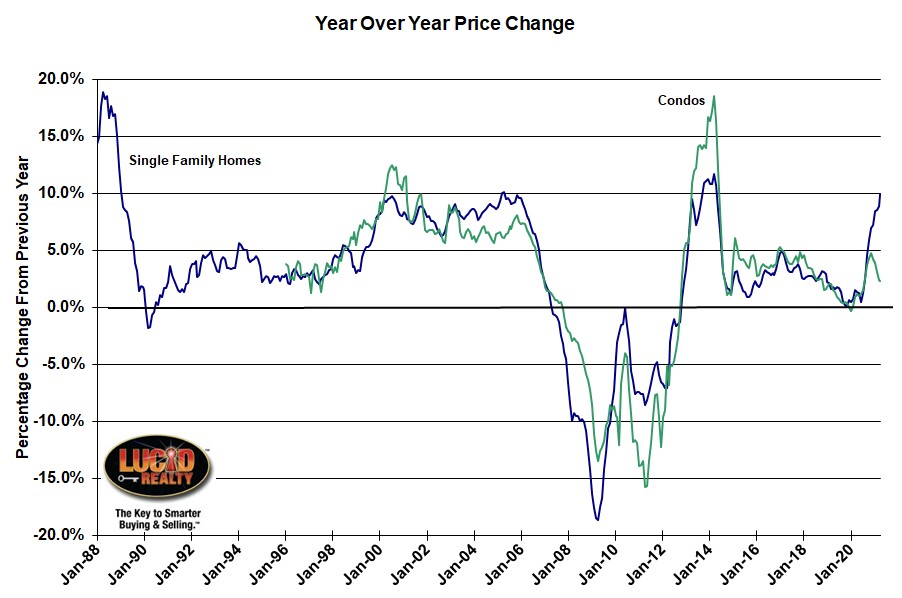
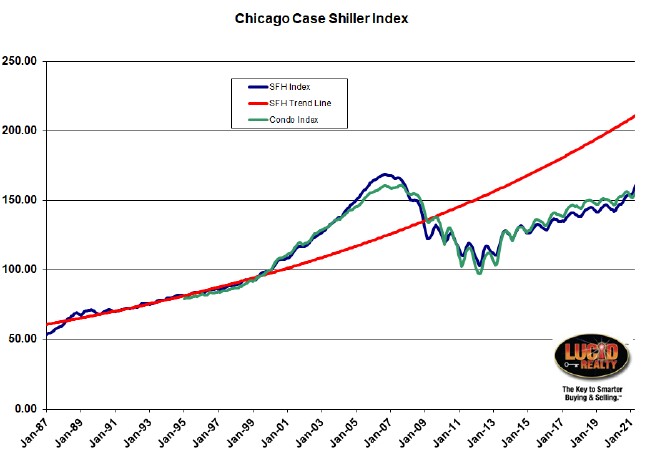
Case Shiller: Chicago Area 7 Year Record Home Price Growth Doesn’t Cut Iton June 29, 2021 at 4:22 pm

Getting Real

Case Shiller: Chicago Area 7 Year Record Home Price Growth Doesn’t Cut It

Read More

Case Shiller: Chicago Area 7 Year Record Home Price Growth Doesn’t Cut Iton June 29, 2021 at 4:22 pm Read More »

Ruling in Chicago rioting ‘Joker’ case leaves some statements unusable by prosecutorson June 29, 2021 at 2:55 pm

A federal judge found Tuesday that a Pilsen man invoked his right to counsel when authorities tried to get him to identify himself as the person wearing a “Joker” mask during the May 2020 riots in Chicago, leaving some comments he made unusable by prosecutors.

U.S. District Judge Andrea Wood said Timothy O’Donnell sought the help of a lawyer when an FBI agent and a Chicago police detective asked him June 2, 2020, about a photo of a person in a clown mask sitting on a bridge above the spray-painted words, “KILL COPS.”

Prosecutors say O’Donnell set fire to a Chicago police vehicle while wearing that mask in the 200 block of North State Street on May 30, 2020. His case is among the most high-profile to result from last year’s rioting and looting in the wake of George Floyd’s murder by then-Minneapolis police officer Derek Chauvin.

O’Donnell repeatedly denied setting the police vehicle on fire during his interview and told authorities, “I do not stand for the exploitation of me and using me as a puppet to create an image,” according to Wood’s 13-page order Tuesday.

While the ruling amounts to a victory for O’Donnell’s defense attorneys, authorities had also tied O’Donnell to the incident through a “PRETTY” tattoo seen on the neck of the person wearing the mask, which matches a tattoo of O’Donnell’s. Prosecutors have also said investigators found a similar mask during a search of an apartment where O’Donnell lived.

Timothy O'Donnell
Timothy O’Donnell
Chicago Police Department

In addition, U.S. Magistrate Judge Gabriel Fuentes found last year that video of the incident “is indeed quite damning,” in part prompting him to rule that O’Donnell should be held in custody awaiting trial. Fuentes also noted then that, in addition to allegedly wearing a “Joker” mask, O’Donnell “self-reported that he has gone by the name ‘The Riddler’ in the past.”

Wood’s ruling Tuesday revolved around O’Donnell’s comments during his June 2, 2020, interview after the FBI agent showed O’Donnell the photo of the man in the mask on the bridge above the words “KILL COPS.”

O’Donnell allegedly said, “Yes, that is me, and they so nicely got me um- with uh- it’s all exploitation of image. See ‘kill cops’ and then an image of me as the clown,” according to Wood’s order.

The FBI agent asked O’Donnell to initial the photograph, and O’Donnell asked, “You want to — you just want to make the correlation of me as that man in the — ?” When the FBI agent answered, “Yeah, just you saying that ‘Yes, this is me in the picture,” O’Donnell replied, “I would prefer not to sign any kind of documents.”

Though the FBI agent said he wouldn’t force O’Donnell to sign, a Chicago police officer asked O’Donnell, “But is that you?” And that’s when O’Donnell said, “I’m in fear. I’m not going to say anything further on that matter without a lawyer present.”

Wood’s ruling suppressed any statements O’Donnell made about whether he wore the “Joker” mask after he made that comment. The FBI agent went on to ask O’Donnell about a photo of a person in the mask standing next to the CPD vehicle with his hand close to the gas tank. O’Donnell explained that a photographer asked him to pose there.

A man alleged to be Timothy O'Donnell reaches toward the gas tank of a Chicago police vehicle in Chicago.
A man alleged to be Timothy O’Donnell reaches toward the gas tank of a Chicago police vehicle in Chicago.
U.S. District Court records

“This is an image with the — the — the man in question is being told, you know, by a photographer to check — to check this out, ‘Hey, look what’s going on,’ like, I mean, not ‘Look what’s going on,’ it’s — he wanted an image, and that’s the image he got. He wanted that specific image,” O’Donnell allegedly said.

The FBI agent asked O’Donnell, “What if we told you we have witnesses that say you’re dancing and having a good time and enjoying yourself and not moving in fear?” O’Donnell replied, “That’s all what an attorney and a court of law — when they are — to be brought up.”

O’Donnell denied setting the vehicle on fire, said “it was supposed to be a peaceful protest” that day, and he said he was there helping bandage people injured by other protesters.

Read More

Ruling in Chicago rioting ‘Joker’ case leaves some statements unusable by prosecutorson June 29, 2021 at 2:55 pm Read More »

Riders stage protest amid Tour de France road safety concernson June 29, 2021 at 3:13 pm

FOUGERES, France — Tour de France riders staged a protest at the start of Tuesday’s stage to complain about perceived dangerous racing conditions after a flurry of crashes reignited the issue of road safety.

Having left the town of Redon in the western Brittany region to start Stage 4, the peloton rode at a moderate pace and all riders got off their bikes after about one kilometer. They waited silently for about a minute before hitting the road again.

After the crash-filled Stage 3, several riders have criticized race organizers for setting up what they considered a dangerous finale to a Tour stage, especially in the early days of the race when nervousness is at its highest level.

Former world champion Philippe Gilbert said in a video that riders’ representatives asked for the Stage 3 timings to end with five kilometers left. The goal by the majority of riders was to avoid a risky final sprint in narrow and winding roads leading to the finish line.

“We had analyzed the route and saw that the finale was extremely dangerous,” said Gilbert, a Belgian classic specialist.

Gilbert said that race organizer ASO supported the proposal. “But the UCI (cycling’s governing body) commissaires did not accept the request, it was rejected in the morning at the start of the race,” he said.

Gilbert said a pileup on a downhill curve about three kilometers from the finish was a direct consequence.

“There was a big mistake from the people who approved this route,” he said.

Riders’ union CPA said in a statement it has asked the UCI to set up discussions to adapt the so-called “3-kilometer rule” during stage races. Under that regulation, riders who crash in the last three kilometers are awarded the time of the group they were riding with before they fell.

“This could avoid circumstances such as those which occurred in yesterday’s stage,” the union said. “Riders and CPA are determined to pursue changes for the safety and physical integrity of athletes. These changes are more necessary than ever.”

Thierry Gouvenou, who is in charge of the Tour route, told L’Equipe newspaper about the increasing challenges he faces to find finish sites without dangerous road materials.

“There are no longer any medium-sized towns without a small island, roundabout or narrowing,” he said. “Ten years ago, there were 1,100 dangerous points on the Tour de France. This year, there are 2,300. If the level of demand becomes too great, there will be no more finishes. That’s where we are.”

Gilbert did not put all the blame on the route on the UCI, though, saying the teams that scouted it before the race should have let know organizers about its dangers.

One of Gilbert’s teammates at the Lotto-Soudal team, ace sprinter Caleb Ewan, fell near the finish line as he contested the sprint and was forced to abandon with a broken collarbone.

Two top contenders for the yellow jersey — last year’s runner-up, Primoz Roglic, and 2018 champion Geraint Thomas — were involved in crashes on Monday, losing ground to their main rivals. But they fell on straight roads with no major difficulty and did not blame organizers.

Saturday’s opening stage was marred by two big pileups, one caused by a spectator holding a cardboard sign in the way of the peloton.

Calling for changes in the sport without offering solutions, veteran Groupama-FDJ sports director Marc Madiot called on all stakeholders to take their responsibilities “because if we don’t do it, we will have deaths and I don’t want to phone the family of the rider who will be in hospital forever. That’s not worthy of our sport.”

The last rider to die on the Tour was Fabio Casartelli, an Italian on the then-Motorola team of Lance Armstrong who crashed on the descent of the Portet d’Aspet pass in 1995. Many serious crashes have continued to mar the race since.

Read More

Riders stage protest amid Tour de France road safety concernson June 29, 2021 at 3:13 pm Read More »

Daily Cubs Minors Recap: Preciado, Stevens, Mena lead Cubs to win in opener of Arizona Complex Leagueon June 29, 2021 at 2:54 pm

Cubs Den

Daily Cubs Minors Recap: Preciado, Stevens, Mena lead Cubs to win in opener of Arizona Complex League

Read More

Daily Cubs Minors Recap: Preciado, Stevens, Mena lead Cubs to win in opener of Arizona Complex Leagueon June 29, 2021 at 2:54 pm Read More »

‘Six’ to launch national tour in Chicago next year, replacing 2021 engagementon June 29, 2021 at 2:28 pm

The hugely anticipated run of “Six” at Chicago’s Broadway Playhouse in October has been canceled, replaced by the show’s national tour launch in 2022, it was announced Tuesday.

The critically acclaimed musical will now kick off its national tour in Chicago at the CIBC Theatre, March 29-July 3, 2022.

All subscribers and groups who previously purchased tickets for the 2021 dates will be notified by Broadway In Chicago directly with information about rebooking.

Single ticket holders will receive refunds at point of purchase by Sept. 1 and will receive priority access before tickets go on sale for the new dates.

The musical, with book and music by Toby Marlow and Lucy Moss, is a pop-rock concert reimagining of the story of the six wives of Henry the VIII. It received its Chicago premiere in 2019 at Chicago Shakespeare Theater.

Any questions about single tickets/refunds or exchanges, should be directed to [email protected]

Read More

‘Six’ to launch national tour in Chicago next year, replacing 2021 engagementon June 29, 2021 at 2:28 pm Read More »

Confessions of a Hospital Chaplainon June 29, 2021 at 2:00 pm

I never thought I’d carry a pager. I had decided against medical school and being a drug dealer long ago. Who else carries a pager? I thought. Who else needs to be reached and told that their specific skills and goods are needed stat?

Most of my pages come in all caps, which adds to the felt urgency of the request. One might read, “pt expired family at bedside.” This means a patient died and there are family members in the room grieving their loss. Then there’s “cardiac arrest,” which means a patient is having a heart attack and may not make it — and if family is present, watching the CPR could be difficult. “family meeting for pt in 9904” means that the medical team is about to meet with next of kin and will probably be giving them bad news. The protocols for death, potential death, grief, loss, and bad news at the South Side hospital where I work all conclude with “Page the chaplain.”

We’ve sometimes been referred to as “God on call,” but the God part isn’t always clear. That said, people in distress do tend to spontaneously ask questions that might be called theological. After a recent “pt transition to comfort care” page, I sat with a self-identified atheist who asked me, “Where is he now?” after we watched his father’s blood pressure and heart rate fade to zeros on the monitors. Before that moment, the son had shared stories about his father and had told me why he, the son, didn’t believe in God — it was the general irrationality of it all — and had marveled at the monitors as a way to measure the presence of life.

“He’s in your memories,” I answered. “And he’s in the spaces where you share stories about him, and in the relationships that he helped you create.” I paused as we looked together at the presence of his father’s body and felt the absence of his father. Mustering all the wisdom from my toes to my graying hairs, I said, “You’ll have to find a new way to love him.” My voice cracked as I said it, but there are no cracks in my belief that what I said was true. We keep loving the people who are gone, and the pain of grief is our adjustment to figuring out how to love them in their new state. As I left, the son gave me a hug and thanked me for staying with him so that he didn’t have to be alone as he watched his father die. Maybe not having to be alone is the God part.

Sometimes I think the patient brings the God part. At one visit, a woman in her 60s from South Shore, one of the neighborhoods my hospital serves, prophetically said, “You should get some Easy Spirit shoes. God told me to tell you that.” She nodded, convinced that she was giving me a divine message. Turns out it was good advice. In my first year on the job, I went through two pairs of walking shoes.

Some of that walking was answering “pt requesting bible” pages. Now, this may seem like the God part showing up, but sometimes a Bible is just a Bible. Or sometimes it is an invitation to sit and hear about marriage troubles, or about this thing their minister said that has been bothering them, or about the ghost that keeps them awake at night by walking up and down the stairs in their house. In these cases, the request for a Bible, divine communication from the past, creates a conversation without my even having to open the book. Often I carry the Bible in and hand it to the patient, who then puts it on the table by the bed. It sits there while we talk about the patient’s various issues. Asking for a Bible is summoning someone to listen.

What counts as a conversation with God is sometimes hard to judge. Once, I came back to the office space I share with the hospital’s nine other chaplains and found a couple of them pondering a page: “pt in 497 wants prayer with chaplain who speaks in tongues.” We looked at each other, a bit stunned. One of us said, “At least we know that the patient is religious.” Another said, “Yes, and she knows what she wants.” We looked up videos of speaking in tongues to see if it was something any of us could even do. I wondered aloud, “Does the patient think that speaking in tongues happens by request?” I called the nurse back and told her that we didn’t have a chaplain who could speak in tongues, but that one of us would come and see the patient anyhow. Ultimately, the patient just wanted to talk about her hospital bills and whether she’d be able to take care of her husband when she was discharged.

And then one day the plague came and chaplains were declared essential workers. Suddenly all the pages were “transition to comfort care 743” or “pt death 992” or “cardiac arrest covid+ pt 1215” or “family in lobby for end of life visit.” Patients were dying, families were grieving, and everyone was alone. Now we had to keep the grieving family members at a distance. We were used to caring for others, but now that care required us to calculate distances and weigh the costs and benefits to getting just a little closer — to be a human with another human in need. And now the spaces we had previously used for talking with families— those rooms where you get bad medical news—were filled not only with grief but also with tears and gasps and exhalations that felt dangerous. Did anyone in this room have the virus? Would grief literally become contagious?

The operator paged me. It was just a callback number — the rare page that meant someone outside of the hospital was trying to get in touch with a chaplain. With no other context, I picked up the phone and dialed the number. The woman on the other end had heard that patients in hospitals were dying alone and she thought it was so horrible. She wondered if she could bring her hunting gear — flannel jacket, hat with earflaps, rubber waders — to the hospital for the chaplains to wear as protection against the virus so that we could go into the COVID patients’ rooms and be with them at the end. Apparently, she’d been hearing about PPE shortages but didn’t quite grasp that flannel and wool didn’t count as such. I politely declined her offer. The image of chaplains in hunting gear made me laugh for days. I was glad I took the page.

Read More

Confessions of a Hospital Chaplainon June 29, 2021 at 2:00 pm Read More »

Funkenhausen: West Town’s Southern Spun Haus of Funkon June 29, 2021 at 2:31 pm

There’s no shortage of accessibility to incredible sausage when living in Chicago. In fact, Abe Froman made his name on it. But this isn’t your standard Jim’s Original or even your standard Ferris Bueller shout out, though plenty of those are always welcome. Today our spotlight shines brightly on the West Town neighborhood, to the quirky German gem, Funkenhausen.

From the name alone, you’re probably confused. When you acknowledge the fact that it’s a German-Southern fusion restaurant, you’re likely bewildered.

Advertisement

I had the opportunity to try Funkenhausen for the first time recently and let me tell you, bewilderment quickly went out the window. The entire experience could eloquently be reminisced in a way that only the Chicago Tribune could with 1000 words that flow like a nighttime drive down LSD, but that just wouldn’t be our style. Nor would it be Funkenhausen’s, and frankly, neither of us would like it any other way. From the moment you step foot into Funkenhausen, the classic beer haus vibes hit you immediately in the face. It’s badass. It smells like sausage, and beer, and pork, and the energies radiating from the artwork and Lo-Fi hip hop music drape the entire scene as the words “German Heritage, Southern Hospitality” stare you down from behind the bar. Find a more fun atmosphere in fine dining, we’ll wait.

After a stroll past the open-air kitchen and like a street sign on a dim block, our initial pass through the menu guided our eyes to two distinct places: the Big Garlicky Pretzel and the Grüne Bratwurst. Between those, and well, drinking beer out of a glass boot, you couldn’t help but feel like you were sitting at a German cafe on a cobblestone road in Munich. It made sense, and for those beginning items, it was perfect.

Advertisement

Creatively, Funkenhausen takes that traditional German cuisine, and honors it. Some of it. However, there’s no subtlety to some of the Southern inspired elements to the cuisine. Note, there’s absolutely nothing wrong with that. We applaud Chef’s that push the envelope on what’s tradition. Funkenhausen deserves that recognition. Just consider me a little sidetracked when items like the Surfenturfen completely scramble what you thought you knew. Scallops and pork belly with strawberries isn’t something you generally anticipate finding on a German menu, but again, it’s these liberties that make Funkenhausen a destination restaurant amongst West Town’s bustling dining scene.

Advertisement

Moving onto the entree section of the menu could only be done with the assistance of a second boot of beer (the house pilsner brewed with Funkenhausen’s own pretzels is a must). The Porkloin Schnitzel and Short Ribs called my name like a dear friend across a crowded room. Accompanied by a side of the charred Brocollini and Fries, the entire meal from top to bottom hit each one of my German sensibilities. Albeit I needed to be wheeled out of the restaurant after, that’s the ultimate sign of a good meal.

If there’s one thing to be said about Funkenhausen it’s don’t expect to roll into a HIIT class afterward. You’re going to want the check with one giant side of your couch, and well, maybe wash it down with another beer. But regardless of how you choose your Funkenhausen adventure, the path you choose is going to deliver in a way only Chef Mark Steuer can provide. It’s authenticity remastered. You just don’t have to travel to Bavaria or Charleston for it. And to me, that’s a beautiful thing.

Advertisement

At Funkenhausen, chef Mark Steuer draws inspiration from his Charleston, South Carolina, upbringing and German heritage to create unique dishes that revisit the meals of his childhood, but are reimagined with modern and innovative twists. It’s worth noting that, in the hands of Steuer, these traditionally heavy dishes become lighter versions of themselves. His food combines Southern and German flavors to create a soulful mash-up of cuisines, cultures, and memories in an expression that is deeply personal but still doesn’t take itself too seriously.

Featured Image Credit: Funkenhausen on Facebook

Advertisement

Read More

Funkenhausen: West Town’s Southern Spun Haus of Funkon June 29, 2021 at 2:31 pm Read More »

NBA Pregame Outfits Survey Labels Bulls As League’s Best Dressedon June 28, 2021 at 11:30 pm

Our beloved Chicago Bulls won’t win an NBA Championship this year, didn’t find luck in the NBA Draft Lottery, nor did they make the playoffs. But, that doesn’t mean they aren’t number 1 in something. Because when it comes to NBA pregame outfits, the Chicago Bulls rank at the top of the list.

RushOrderTees is a custom apparel maker with roots in Philadelphia who recently polled 1,117 NBA fans to gauge their opinions on the increasingly popular NBA pregame outfit. We definitely weren’t surprised to see the Chicago Bulls beat out every other team in the league given how stylish the Chicago sports scene is. From best dressed teams, worst dressed players, and rankings for the “Most Questionable” and “Most Trash” outfits, let’s dive into what RushOrderTees found in their survey feedback.

Advertisement

Ranking NBA Pregame Outfits

RushOrderTees evaluated NBA pregame outfits at both the individual player and overall team level. When it came to the players, Garrett Temple of our very own Chicago Bulls ranked at the top of the list after all the number crunching. Temple received an average score of 7.3/10 for his pregame outfits. Fans used different words and phrases to describe the players outfits, and 28.7% labeled Temple’s as fresh, while 32.7% indicated them as vibrant. RJ Barrett came in at a close second with an average score of 7.1/10. Jamal Murray followed him at third, and then Lauri Markannen managed to sneak his way into the top 5 in a three-way tie with Rudy Gobert and Bojan Bogdanovic. 

Advertisement

When it came to the overall team scores, the Bulls saw themselves earn the number 1 ranking in the league thanks to Temple and Markannen’s high scores. They lead the pack with an average outfit rating of 6.56, followed by the Denver Nuggets at 6.32 and the Atlanta Hawks at 6.31

What About The Least Fashionable?

Some players and teams didn’t find themselves quite as lucky as the Bulls with their fashion scores. According to the survey data, James Harden ranked at the top of the list for worst dressed NBA players with his average score only reaching 5.2/10. Serge Ibaka came in second place on that list at 5.3/10, followed by Kyle Kuzma and Gary Trent Jr. at 5.4/10.

The survey also asked fans to rank players’ outfits by how questionable and trash they were. When it came to “Most Questionable”, Terrence Ross and Gary Trent Jr. received the highest scores with 18.4% indicating they felt their NBA pregame outfits were questionable. OG Anunoby had one outfit score the highest in the questionable category at 44%. For “Most Trash”, James Harden led that list as 22.8% of respondents labeled his outfits as trash. The most trash pregame outfit overall went to Gary Trent Jr. again. That guy just can’t catch a break.

Advertisement

To dive deeper into the survey results and findings, check it out on RushOrderTees website. We’ll keep our hopes high that the Bulls can carry this winning momentum into next season!

Advertisement

Read More

NBA Pregame Outfits Survey Labels Bulls As League’s Best Dressedon June 28, 2021 at 11:30 pm Read More »