What’s New

Brewers and Their Beers: Skeleton Keyon July 7, 2021 at 4:30 am

The Beeronaut

Brewers and Their Beers: Skeleton Key

Read More

Brewers and Their Beers: Skeleton Keyon July 7, 2021 at 4:30 am Read More »

Rodon, bullpen help White Sox snap losing streakDaryl Van Schouwenon July 7, 2021 at 3:13 am

MINNEAPOLIS — Jose Abreu, who plays through everything, thought he might not be able to play through this one.

“I thought it was fractured,” Abreu said of a pitch that hit him on the side of his left knee in a game against the Mariners June 27.

Abreu hit the ground, pounding the grass in pain.

“My leg went numb.”

Fans expected the worst — it’s been that kind of year for injuries — but Abreu was in the lineup two days later. It’s the Abreu way.

Play through everything.

“My family,” he said through translator Billy Russo, explaining what motivates him to play hurt. “They are my strength. I come here every day here to do my best and to honor them and I know they have my back, they support me. It doesn’t matter if I’m in pain or not, soreness or not, I have to be there for them. My mom, my wife, my sons, they are my everything.”

The reigning MVP did miss the Sox’ last series in Minnesota after a violent collision with the Royals’ Hunter Dozier near the first base line. He has missed six games after playing all 60 last season and 159 in 2019.

After batting .182/.265/.307 with two homers in June, Abreu is 9-for-26 with two homers and nine RBI in the first six games of July. He collected his 63rd RBI, which ranks fourth in the AL, nine behind RBI Rafael Devers, with an eighth-inning sacrifice fly in the Sox’ 4-1 win over the Twins Tuesday and is aiming to be the first player since Cecil Fielder (1990-92) to lead the AL in RBI three consecutive years.

Having had his first taste of a winning season and the postseason in 2020, Abreu is soaking in first place.

“Winning is one of the sweetest things that you can have as an athlete,” Abreu said.

This was one of the sweetest wins of the season for the Sox, who learned before the game that catcher Yasmani Grandal would be lost to injury for at least a month. Zack Collins, the new starter, drove in the first two runs with a single, the only hit against Jose Berrios, and later doubled and scored on Adam Eaton’s single.

“I’ve been ready for it,” Collins said of elevated role.

Michael Kopech pitched a scoreless seventh and a well-rested Liam Hendriks struck out four in two perfect innings of relief for his 22nd save.

Hendriks raised his arms after defensive replacement Billy Hamilton made a running catch near the wall with with a head first slide into a rained-soaked warning track.

“That might be the top one, to be honest with you,” Hamilton said when asked where the catch ranked among plays he’s made in his career.

In large part because of starting pitching — Carlos Rodon gave them another strong start in his last one before the All-Star Game next Tuesday with six innings of one-run ball, finishing with a flurry of 99- and 100-mph pitches — the Sox have held their spot atop the AL Central despite an onslaught of injuries.

“You have to just keep moving forward,” Abreu said.

Rodon (2.31 ERA) struck out eight and didn’t allow walk, the only run against him coming on Alex Kirilloff’s RBI single in the sixth. That followed a single by Luis Arraez that glanced off Rodon’s glove and a ball that center fielder Brian Goodwin lost in a misty sky, falling for a single.

Rodon struck out Ryan Jeffers and Max Kepler to end his outing, limiting Twins damage to one run.

“He can rise to the occasion and make clutch pitches,” manager Tony La Russa said.

The Sox snapped a three-game losing streak. As the 34-year-old Abreu says, winning trumps everything.

“That’s what you work for,” he said. “It’s something I don’t know how to describe. If you are winning, it doesn’t matter. There’s no age that can stop it, there’s no pain. It’s nothing. You’re winning.”

Read More

Rodon, bullpen help White Sox snap losing streakDaryl Van Schouwenon July 7, 2021 at 3:13 am Read More »

3 children, 3 adults hurt in Loop crashSun-Times Wireon July 7, 2021 at 3:22 am

Three children and three adults were hospitalized following a traffic crash Tuesday night in the Loop.

The crash happened near the intersection of Michigan Avenue and Jackson Boulevard, according to Chicago fire officials.

Two adults were taken to Northwestern Memorial Hospital in serious to critical condition, fire officials said.

The other adult was taken to the same hospital in fair to serious condition, fire officials said.

All three children were transported to Rush University Medical Center in good to fair condition, fire officials said.

This is a developing story. Check back for details.

Read More

3 children, 3 adults hurt in Loop crashSun-Times Wireon July 7, 2021 at 3:22 am Read More »

Chicago’s top cop blames the courts — again — after one of the most violent Fourth of July weekends in yearsMitch Dudekon July 6, 2021 at 10:55 pm

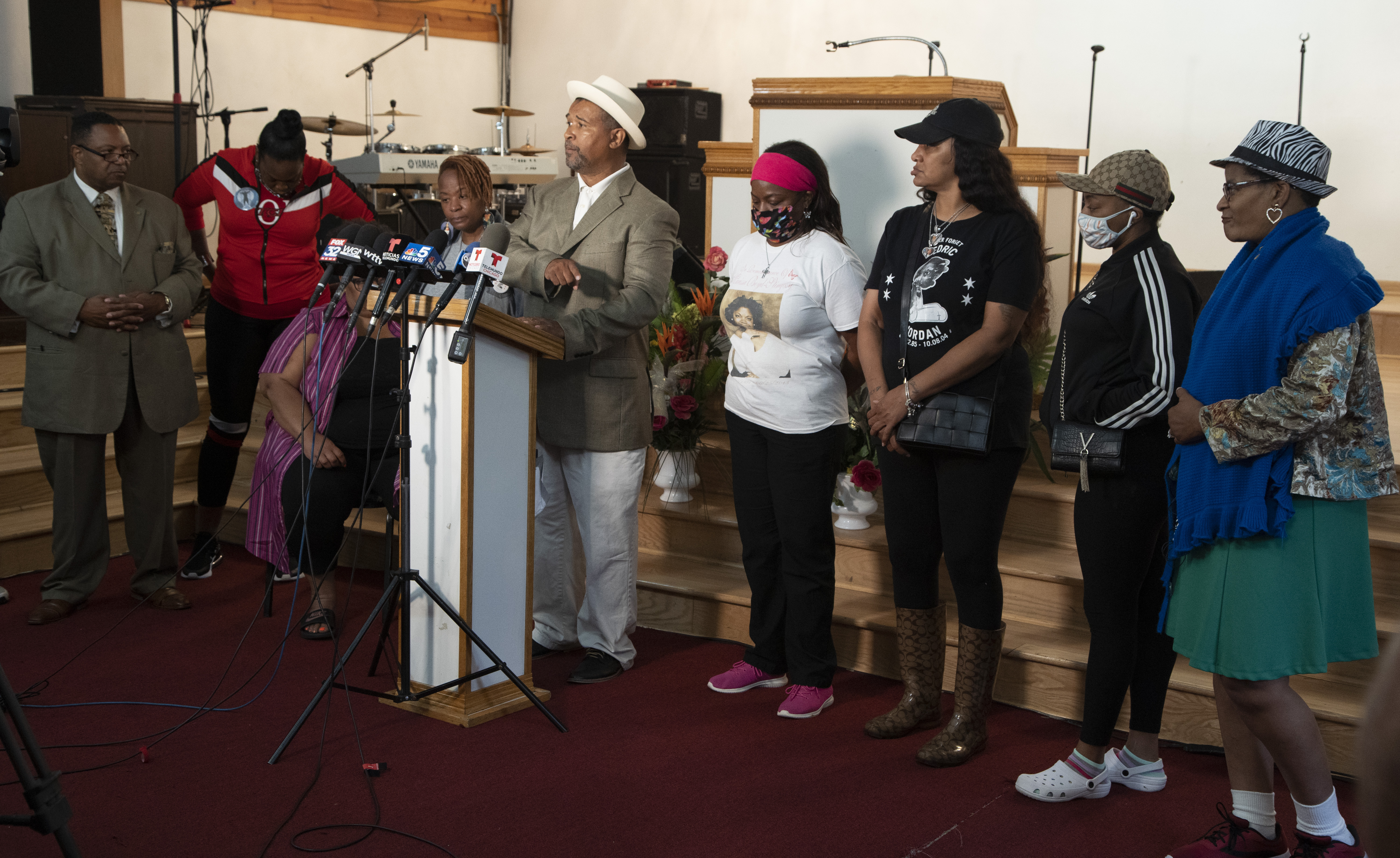
Chicago’s top cop found himself under fire from the chief judge and prosecutor of Cook County Tuesday after he once again blamed them for the city’s rising gun violence, including a holiday weekend that saw over 100 people shot.

Police Supt. David Brown complained at a news conference that Cook County courts release too many violent criminals, with judges setting low bonds and relying too much on electronic monitoring.

“Chicago police officers are doing their job by arresting people and charging them with murder,” Brown insisted. “That’s doing our part. And what’s happening in the courts, it’s creating this unsafe environment for all of us.”

But Timothy Evans, chief judge of Cook County Circuit Court, dismissed Brown’s criticism as simplistic. “Speculation based on isolated cases is not the same as reality based on a complete picture,” he said in a statement.

State’s Attorney Kim Foxx turned Brown’s criticism against him, saying police need to make more arrests for violent crimes.

“It starts with apprehending those who pull the trigger,” she said in a statement. “Police must make an arrest before a case reaches the courthouse door.”

Amid the heated exchange of words, an alderman once again proposed sending in the National Guard, an idea Mayor Lori Lightfoot described as grandstanding. “I don’t think I need to say anything more about that,” she said.

The police department said it would have no other comment about the weekend violence beyond what the superintendent said at the news conference.

Both Brown and Lightfoot have repeatedly questioned the decisions of prosecutors and judges as this year’s violence continues to outpace 2020, the most violent year in the city since the mid-1990s.

In making his case yet again, Brown pointed to more than 90 people charged with murder who were later released back into their communities on electronic monitoring.

“If the cops’ productivity was down and not unprecedentedly high, I would be arguing we need to do more as police officers. That’s not the case here,” Brown said, noting officers recovered 244 illegal guns over the holiday weekend, resulting in 86 arrests.

Brown did not say if police had made any arrests in any of the weekend shootings, including attacks that wounded at least 13 children 15 years of age and younger.

This holiday was the most violent Fourth of July weekend since 2017, when at least 101 people were shot, 14 fatally. However, the holiday was on a Tuesday that year, so the tally covered four full days; this year’s tally covered three days.

Many of the shootings were in the Calumet and South Chicago police districts on the South Side, in neighborhoods that have seen more violence this year than last, according to Sun-Times data.

Brown was quick to point out violent crime in other major cities has increased dramatically more than Chicago, both last year and this year. “It’s a violent crime wave that’s happening in this country,” he said.

So far in 2021, murders are up nearly 18% nationally, according to statistics compiled by crime analyst Jeff Asher, while Chicago has seen an increase of nearly 4% from the same period last year.

However, murders last year in Chicago jumped by more than 50%, much higher than the national increase of 30%.

The nearly 800 killings in Chicago in 2020 still fell short of the city’s annual tolls during much of the 1980s and 1990s, though it was the highest number of slayings in 20 years.

“No one would do the job that Chicago police officers do right now. No one would wade into large crowds and risk being shot,” Brown said. “No one would go down these dark alleys that officers go down.”

Two officers — a commander and a sergeant — were wounded on the West Side early Sunday while dispersing a crowd. One was hit in the foot, the other grazed in the thigh.

Brown said blaming the courts wasn’t “finger pointing,” but an attempt to spur further debate. “I think people should hear this,” he said. “This is a worthwhile debate here and in all places around the country.”

But Evans insisted “bail reform has not led to an increase in crime. Looking at individual tragic cases in isolation may contribute to the speculation that releasing individuals before trial rather than incarcerating them — whether by placing them on electronic monitoring or other forms of supervision — means an increase in crime.”

There were 100 murder defendants on electronic monitoring as of Tuesday, out of 3,500 on such restraints, according to the sheriff’s office. Of the entire group, 72% were facing charges for violent crimes.

In July 2017, before new policies limiting limit pre-trial jail time for all but the most dangerous defendants, there were 2,200 on electronic monitoring, and 32% faced charges related to violent crime, the office said.

Foxx, after taking a swipe at the low number of arrests by Brown’s department, argued “finger-pointing instead of talking honestly about the violence plaguing our city doesn’t help bring solutions that make our communities safer.

“The violence we are experiencing is not the result of a slowed down court system; it is a larger and more complex issue (both locally and nationally), that requires all of the criminal justice stakeholders to work together rather than engaging in deflection and blame-shifting,” she said.

Cook County Public Defender Sharone Mitchell said Brown’s and Lightfoot’s message might be politically expedient, but it detracts from efforts to suppress crime through community outreach.

Mitchell watched Brown’s press conference online, and disagreed with the superintendent’s assessment that the large number of people charged with murder on electronic monitoring devices are “driving the violence.”

“If you are charged with something as serious as murder, you probably have posted a very high cash bond and are still subject to all sorts of restrictions. You’re being monitored on GPS, so we know exactly where you are. You have curfews. You have to check in with the court,” said Mitchell, whose office represents roughly 90% of all criminal defendants in Cook County.

“This idea that if the courts would just ‘do their job’ and we would all be safer flies in the face of numerous studies,” Mitchell said. “Crime is up in cities all over the U.S. right now, and that covers cities with conservative bond policies and bond reform.

“I feel for the superintendent. He has a very difficult job,” he added. “But we have to get away from asking what the superintendent is going to do on a Thursday to stop violence over the weekend.”

Meanwhile, Ald. Anthony Beale (9th) called for the deployment of the Illinois National Guard “immediately to get a handle on this city.”

He said the Guard wouldn’t patrol neighborhoods and streets, but instead would “secure the perimeter” around downtown, freeing more police officers to be sent to communities.

Asked about critics who say they don’t want their neighborhoods turned into armed camps, Beale responded: “I get that, but my question to them is, what’s your plan? I’ll be more than willing to listen to anybody who has a plan going forward. But just complaining and not having a plan doesn’t resonate with me.”

Read More

Chicago’s top cop blames the courts — again — after one of the most violent Fourth of July weekends in yearsMitch Dudekon July 6, 2021 at 10:55 pm Read More »

Person in critical condition after rescued from North Shore Channel near Bryn MawrSun-Times Wireon July 7, 2021 at 12:36 am

A person was listed in critical to grave condition after they were pulled from the water of the North Shore Channel Tuesday evening.

The person was found by divers near Bryn Mawr and Jersey Avenue in the North Park area, according to Chicago fire officials.

Emergency crews attempted resuscitation and the person was transported to a local hospital in critical to grave condition, fire officials said.

Authorities have not yet released the person’s age or gender.

This is a developing story. Check back for details.

Read More

Person in critical condition after rescued from North Shore Channel near Bryn MawrSun-Times Wireon July 7, 2021 at 12:36 am Read More »

New indoor track in Pullman’s Gately Park will share space with After School MattersCheyanne M. Danielson July 6, 2021 at 11:56 pm

South Side student athletes now have a new sports facility where they can practice.

Mayor Lori Lightfoot cut the ribbon Tuesday for a new indoor track in Gately Park in Pullman.

The 139,000-square foot facility at 10201 S. Cottage Grove Ave. also will serve as the new flagship site for After School Matters, the non-profit group that hosts programs for students in the 8th through 12th grades at at the Gately Park site and two other locations.

Joyce Chapman, president of the Gately Park Advisory Council, said the facility is “a long time coming for the Far South Side.”

After School Matters and the Chicago Park District announced the project in 2018, according to CEO Mary Ellen Caron. It was to open last year but was delayed by the pandemic.

Tuesday was the first day of programs at the new facility, which has seats for 3,500 spectators and, LIghtfoot said, will “put Chicago on par with New York City and Boston” when it comes to track and field championships.

“I don’t ever want to hear again that nobody comes to Chicago to look for track talent because we have it in abundance,” said Lightfoot.

Mayor Lori Lightfoot watches students dance during a tour at a ribbon cutting ceremony for the new combined indoor track and After School Matters flagship site, 10201 S. Cottage Grove Ave., in Gately Park in Pullman on Tuesday, July 6, 2021.
Mayor Lori Lightfoot watches students dance during a tour at a ribbon cutting ceremony for the new combined indoor track and After School Matters flagship site at Gately Park on Tuesday in the Pullman neighborhood.
Anthony Vazquez/Sun-Times

The building is named for Conrad Worrill, a longtime Northeastern Illinois University professor who died last year. Worrill, a runner in high school, had long pushed for an indoor track, so today’s student-athletes could practice year-round despite Chicago’s unforgiving winters.

“He was a runner at Hyde Park High School 50 years ago, and he had to run through the school halls” because there was no indoor track, Caron said.

With the new track, Chapman said Chicago could “build our new Olympian.”

But there is more than the track. The building’s After School Matters wing has art and dance studios, music rooms, culinary spaces, tech labs and a rooftop garden spread over two floors.

Although the program has served over 350,000 participants in its 30-year history, Caron said this summer is the largest class yet, with 14,000 students.

The new combined track field and After School Matters flagship site at 10201 S. Cottage Grove Ave. in Gately Park in Pullman. Photographed on Tuesday, July 6, 2021.
The new combined track field and After School Matters flagship site at Gately Park in Pullman.
Anthony Vazquez/Sun-Times

One is Danny Barksdale, 16, in the Les Enfants dance program. He can see the building from his school across the street, though even as watched during three yeas of construction, he hadn’t known what it was going to be.

“When I heard it was for After School Matters, it made me smile,” Danny said. “We finally have an opportunity where we don’t have to travel far away just to do what we like. We can be safe and enjoy other activities.”

Destynee Smith, 16, has been in another After School Matters’ dance program, Forward Momentum Chicago, for five years. She hopes to see the facility used by other youth teams around the city.

“After School Matters (helps) lower violence and get a lot of kids off the street and have something to do with their days and just brighten up everyday life,” she said.

Cheyanne M. Daniels is a staff reporter at the Chicago Sun-Times via Report for America, a not-for-profit journalism program that aims to bolster the paper’s coverage of communities on the South and West sides.

Read More

New indoor track in Pullman’s Gately Park will share space with After School MattersCheyanne M. Danielson July 6, 2021 at 11:56 pm Read More »

President Biden, say their names.on July 7, 2021 at 12:31 am

The Barbershop: Dennis Byrne, Proprietor

President Biden, say their names.

Read More

President Biden, say their names.on July 7, 2021 at 12:31 am Read More »

Rural ambulance services face jeopardy as volunteers age, expenses mountKaiser Health Newson July 6, 2021 at 10:50 pm

DUTTON, Mont. — Vern Greyn was standing in the raised bucket of a tractor, trimming tree branches, when he lost his balance.

He fell 12 feet and struck his head on the concrete patio outside his house in this farming town on the central Montana plains.

Greyn, then 58, couldn’t move. His wife called 911. A volunteer emergency medical technician showed up: his own daughter-in-law Leigh.

But there was a problem. Greyn was too large for her to move. She had to call in help from the ambulance crew in the next town over.

“I laid here for a half hour or better,” Greyn said.

When help finally arrived, they loaded him into the ambulance and rushed him to the nearest hospital, where they found he had a concussion.

In rural America, it’s increasingly difficult for ambulance services to respond to emergencies like Greyn’s. One factor: Emergency medical services are struggling to find young volunteers to replace retiring EMTs. Another: There’s a growing financial crisis among rural volunteer EMS agencies. A third are at risk because they can’t cover their operating costs.

“More and more volunteer services are finding this to be untenable,” said Brock Slabach, chief operations officer of the National Rural Health Association.

Rural ambulance services rely heavily on volunteers. About 53% of rural EMS agencies are staffed by volunteers, versus 14% in urban areas, according to the NRHA. And more than 70% of those rural agencies report difficulty finding volunteers.

In Montana, the state Department of Public Health and Human Services says about 20% of EMS agencies frequently have trouble responding to 911 calls for lack of available volunteers; 34% occasionally can’t respond.

When that happens, other EMS agencies must respond, sometimes having to drive long distances, though a delay of minutes can mean life or death. Sometimes, an emergency call will go unanswered, leaving people to drive themselves to a hospital or ask neighbors.

Sixty percent of Montana’s volunteer EMTs are 40 or older, and fewer young people are stepping in to replace older volunteers.

Finding enough volunteers to fill a rural ambulance crew isn’t a new problem. In Dutton, EMS crew chief Colleen Campbell says it’s been an issue for most of the 17 years she’s volunteered.

The Dutton crew has four volunteers. In its early days, the ambulance service was locally run and survived on limited health insurance reimbursements and donations. At its lowest point, Campell said, her crew consisted of two people.

That made responding to calls, doing the administrative work and organizing the training needed to maintain certifications more than they could handle. In 2011, the Dutton ambulance service was absorbed by Teton County.

Dutton EMS Crew Chief Colleen Campbell at the Dutton ambulance barn.
Aaron Bolton / KHN

That eased some of Campbell’s problems. But her biggest challenge remains finding people willing to do the 155 hours of training and take the written and practical tests in this town of fewer than 300 people.

In addition to personnel shortages, about a third of rural EMS agencies in the United States are in jeopardy because they can’t cover their costs, according to the NRHA.

Slabach said that largely stems from insufficient Medicaid and Medicare reimbursements, which, on average, cover about a third of the cost to maintain equipment, stock medications and pay for insurance and other fixed expenses.

Many rural ambulance services rely on patients’ private insurance to fill the gap. Private insurance pays considerably more than Medicaid. But, because of low call volumes, rural EMS agencies can’t always cover their bills, Slabach said.

“So it’s not possible in many cases without significant subsidies to operate an emergency service in a large area with small populations,” he said.

This all means rural parts of the country no longer can rely solely on volunteers but must find ways to convert to a paid staff.

Jim DeTienne, who recently retired as the Montana health department’s EMS and trauma systems chief, said sparsely populated counties still would need volunteers, but having at least one paid EMT could be a huge benefit.

DeTienne said EMS needs to be declared an essential service like police or fire departments. Then, counties could tax residents to pay for ambulance services.

Glacier County EMS paramedic Robert Gordon (left) and EMT Camas Rinehart put together advanced life support bags for their ambulances. Glacier EMS is one of the few paid services along Montana's Rocky Mountain Front that responds when volunteer agencies can't and provides advanced life support transfers from critical access hospitals to larger facilities miles away.
Glacier County EMS paramedic Robert Gordon (left) and EMT Camas Rinehart put together advanced life support bags for their ambulances. Glacier EMS is one of the few paid services along Montana’s Rocky Mountain Front that responds when volunteer agencies can’t and provides advanced life support transfers from critical access hospitals to larger facilities miles away.
Aaron Bolton / KHN

A Montana health department report suggested other ways to move away from full-volunteer services, such as having EMS agencies merge with taxpayer-funded fire departments or having hospitals take over the programs.

In the southwestern Montana town of Ennis, Madison Valley Medical Center absorbed the dwindling volunteer EMS service earlier this year.

EMS manager Nick Efta, a former volunteer, said the transition stabilized the service, which had been struggling to answer every 911 call. It recently had nine calls in 24 hours, including three transfers of patients to larger hospitals miles away.

“I think, under a volunteer model, it would be difficult to make all those calls,” Efta said.

Rich Rasmussen, president and chief executive officer of the Montana Hospital Association, said an Ennis-style takeover might not be financially viable for many of the smaller critical access hospitals that serve rural areas. Many small hospitals that take over emergency services do so at a loss, he said.

“What we need is a federal policy change which would allow critical access hospitals to be reimbursed for the cost of delivering that EMS service,” he said.

Under Medicare policy, federally designated critical access hospitals can get fully reimbursed for EMS only if there’s no other ambulance service within 35 miles, Rasmussen said. Eliminating that mileage requirement, he said, would give the hospitals an incentive to take on EMS and “dramatically improve EMS access all across this country.”

A federal Centers for Medicare & Medicaid Services pilot program is testing the elimination of mileage minimums with select critical access hospitals.

The rural EMS crunch places a greater burden on the closest urban ambulance services. Don Whalen, who manages a private EMS service in Missoula, Montana’s second-largest city, said his crews regularly respond to outlying communities 70 miles away and sometimes across the Idaho line because volunteer agencies often can’t answer emergency calls.

“We know, if we’re not going, nobody is coming for the patient because, a lot of times, we’re the last resort,” he said.

Whalen said communities need to find ways to stabilize or convert their volunteer programs, or private services like his will need financial support to keep responding in other communities.

During Montana’s legislative session this year, DeTienne pushed for a bill to study the benefit of declaring EMS an essential service, among other improvements. The bill died.

In Dutton, the EMS crew chief is thinking about her future after 17 years as a volunteer. Campbell wants to spend more time with her grandchildren, who live out of town. If she retires, there’s no guarantee somebody will replace her. She’s torn about what to do.

“My license is good until March of 2022, and we’ll just see,” she said.

KHN (Kaiser Health News) is a national newsroom that produces in-depth journalism on health issues.

Read More

Rural ambulance services face jeopardy as volunteers age, expenses mountKaiser Health Newson July 6, 2021 at 10:50 pm Read More »

Chicago’s top cop blames the courts — again — after one of the most violent Fourth of July weekends in yearsMitch Dudekon July 6, 2021 at 10:55 pm

Chicago’s top cop found himself under fire from the chief judge and prosecutor of Cook County Tuesday after he once again blamed them for the city’s rising gun violence, including a holiday weekend that saw over 100 people shot.

Police Supt. David Brown complained at a news conference that the court system in Cook County releases too many violent criminals by setting low bonds and relying too much on electronic monitoring.

“Chicago police officers are doing their job by arresting people and charging them with murder,” Brown insisted. “That’s doing our part. And what’s happening in the courts, it’s creating this unsafe environment for all of us.”

But Judge Timothy Evans, chief of the Cook County court system, dismissed Brown’s criticism as simplistic. “Speculation based on isolated cases is not the same as reality based on a complete picture,” he said in a statement.

State’s Attorney Kim Foxx turned Brown’s criticism against himself, saying police need to make more arrests for violent crimes.

“It starts with apprehending those who pull the trigger,” she said in a statement. “Police must make an arrest before a case reaches the courthouse door.”

Amid the heated exchange of words, an alderman once again proposed sending in the National Guard, an idea Mayor Lori Lightfoot described as grandstanding. “I don’t think I need to say anything more about that,” she said.

The police department said it would have no other comment about the weekend violence beyond what the superintendent said at the news conference.

Both Brown and Lightfoot have repeatedly questioned the decisions of prosecutors and judges as this year’s violence continues to outpace 2020, which was the most violent year in the city since the mid-1990s.

In making his case yet again, Brown pointed to more than 90 people who’ve been charged with murder but were later released back into their communities on electronic monitoring.

“If the cops’ productivity was down and not unprecedentedly high, I would be arguing we need to do more as police officers, that’s not the case here,” he said, noting officers recovered 244 illegal guns over the holiday weekend, resulting in 86 arrests.

The superintendent did not say if police had made any arrests in any of the weekend shootings, including attacks that wounded at least 13 children 15 years of age and younger.

This holiday was the most violent Fourth of July weekend since 2017, when at least 101 people were shot, 14 of them fatally. However, that holiday was on a Tuesday, so the tally covered four full days, not three like this year.

Many of the shootings were in the Calumet and South Chicago police districts on the South Side, in neighborhoods that have seen more violence this year than last, according to Sun-Times data.

Brown was quick to point out that violent crime in other major cities has increased dramatically more than Chicago, both last year and this year. “It’s a violent crime wave that’s happening in this country,” he said.

So far in 2021, murders are up nearly 18% nationally, according to statistics compiled by crime analyst Jeff Asher, while Chicago has seen an increase of nearly 4% from the same period last year.

However, murders last year in Chicago jumped by more than 50%, much higher than the national increase of 30%.

The nearly 800 killings in Chicago in 2020 was still short of the city’s annual tolls during much of the 1980s and 1990s, but it marked the highest number of slayings in 20 years.

“No one would do the job that Chicago police officers do right now, no one would wade into large crowds and risk being shot,” Brown said. “No one would go down these dark allies that officers go down.”

Two officers — a commander and a sergeant — were wounded on the West Side early Sunday while dispersing a crowd. One was hit in the foot, the other grazed in the thigh.

Brown said he wasn’t engaging in “finger pointing” by blaming the courts, but seeking to spur further debate. “I think people should hear this,” he said. “This is a worthwhile debate here and in all places around the country.”

But Evans insisted that “bail reform has not led to an increase in crime. Looking at individual tragic cases in isolation may contribute to the speculation that releasing individuals before trial rather than incarcerating them — whether by placing them on electronic monitoring or other forms of supervision — means an increase in crime.”

There were 100 murder defendants on electronic monitoring as of Tuesday, out of 3,500 on such restraints, according to the sheriff’s office. Of the entire group, 72% were facing charges for violent crimes.

In July 2017, before new policies limiting limit pre-trial jail time for all but the most dangerous defendants, there were 2,200 on electronic monitoring, 32% of them facing charges related to violent crime, the office said.

Foxx, after taking a swipe at the low number of arrests by Brown’s department, argued that “finger-pointing instead of talking honestly about the violence plaguing our city doesn’t help bring solutions that make our communities safer.

“The violence we are experiencing is not the result of a slowed down court system; it is a larger and more complex issue (both locally and nationally), that requires all of the criminal justice stakeholders to work together rather than engaging in deflection and blame-shifting,” she said.

Cook County Public Defender Sharone Mitchell said the messaging by Brown and Lightfoot might be politically expedient, but detracts from programs that seek to suppress crime through community outreach.

Mitchell watched Brown’s press conference online, and disagreed with the superintendent’s assessment that the large number of people charged with murder on electronic monitoring devices are “driving the violence.”

“If you are charged with something as serious as murder, you probably have posted a very high cash bond and are still subject to all sorts of restrictions. You’re being monitored on GPS, so we know exactly where you are. You have curfews. You have to check in with the court,” said Mitchell, whose office represents roughly 90% of all criminal defendants in Cook County.

“This idea that if the courts would just ‘do their job’ and we would all be safer flies in the face of numerous studies,” Mitchell said. “Crime is up in cities all over the U.S. right now, and that covers cities with conservative bond policies and bond reform.

“I feel for the superintendent. He has a very difficult job,” he added. “But we have to get away from asking what the superintendent is going to do on a Thursday to stop violence over the weekend.”

Meanwhile, Ald. Anthony Beale (9th) called for the deployment of the Illinois National Guard “immediately to get a handle on this city.”

He said the Guard wouldn’t be tasked with patrolling neighborhoods and streets, but rather be used to “secure the perimeter” around the downtown area, allowing more police officers to be sent to communities.

Asked about critics who say they don’t want their neighborhoods turned into armed camps, Beale responded, “I get that but my question to them is, what’s your plan? I’ll be more than willing to listen to anybody who has a plan going forward. But just complaining and not having a plan doesn’t resonate with me.”

Read More

Chicago’s top cop blames the courts — again — after one of the most violent Fourth of July weekends in yearsMitch Dudekon July 6, 2021 at 10:55 pm Read More »

Supreme Court should listen and learn from Chicago’s horrific weekend of gun violenceCST Editorial Boardon July 6, 2021 at 11:17 pm

When the Supreme Court takes up gun violence in its next term, we hope the justices will remember Chicago’s real-world experience over this Fourth of July weekend, when 104 people were shot and at least 19 killed.

We all need to take a step back from the sometimes facile exercise of looking at trends — how many shootings this year compared to last year, let’s say, or how many shootings in Chicago compared to other cities — and think hard about what just happened.

More than 100 Chicagoans were shot on what should have been a pleasant holiday weekend.

When the Supreme Court reconvenes in September, it is slated to decide whether to give people greater rights to carry firearms in public. The court could settle on a range of options, but gun violence opponents worry, for good reason, that the new conservative majority will upend a New York law at the heart of the case. If the court strikes down the century-old law, which places restrictions on who can carry guns, the result could be a scaling back of laws across the country, including in Illinois, designed to keep guns out of the hands of criminals.

For the most part, lower courts now take public safety into account when evaluating challenges to gun laws. But a small minority of judges takes a narrower view, based on whether a modern law, in their view, has a historical precedent from the nation’s founding or the ratification of the 14th Amendment or is analogous to laws from those times.

That interpretation would not allow for consideration of whether a gun law enhances public safety. And that, as Eric Tirschwell, managing editor for the gun safety group Everytown Law, told us, poses “a real risk to any number of important gun safety laws.”

Such an interpretation also would violate the idea that government should be responsive to the people, said Lee Goodman, a Chicago lawyer and author of “Too Many Rights and Too Many Guns.”

“If democracy is going to mean anything, it has to be relevant to the people in the times,” Goodman said. “There’s no point in trying to have a government from 250 years ago.”

Advocates on both sides of the issue will make their case to the Supreme Court. But what the justices can’t afford to do — not if our nation is serious about reducing gun violence — is adopt a rigid ideological stance that ignores what’s happening on the streets. People are being shot and killed by the hundreds every day.

In Chicago, 15th District Police Cmdr. Patrina Wines and a police sergeant were wounded by bullets sprayed by a man who fired into a crowd of West Side revelers at around 1:30 a.m. on Monday, police said, even though police were out in force.

Meanwhile, as we wait on the Supreme Court to act, Chicago, Cook County and the Illinois Legislature should do everything they can to reduce gun violence.

Over the weekend, as hospitals were struggling to treat gunshot victims, mothers on the West Side camped outside a vacant bank to “pray against violence.” Last month, the Legislature sent a bill to Gov. J.B. Pritzker requiring background checks on private sales of firearms.

But in Cook County and Chicago, officials still are blaming each other over who is responsible for the violence. In remarks on Friday before the City Council, Police Supt. David Brown repeated his complaints about the local criminal courts, which he says release violent offenders on electronic monitoring, only for them to commit more crimes. Brown repeated that complaint at a press conference on Tuesday, and was quickly rebutted by the state’s attorney, chief judge and public defender.

It was a sad reminder that the mayor, state’s attorney, police chief, chief judge, public defender and sheriff are still failing to work as a team with a single plan to reduce gun violence. Instead, they point fingers.

The Biden administration has announced such anti-gun-violence initiatives as tougher federal enforcement of gun laws, regulation of untraceable “ghost guns,” a crackdown on trafficking of illegal firearms and money to hire more police officers. The Justice Department will create a new strike force to slow the flow of illegal firearms in Chicago. But Congress has a poor record of enacting significant reforms.

Gun advocates argue for their unfettered right to carry guns wherever they wish, arguing that this would make everyone safer. But guns are already everywhere. If more guns made us safer, we would be the safest nation on Earth.

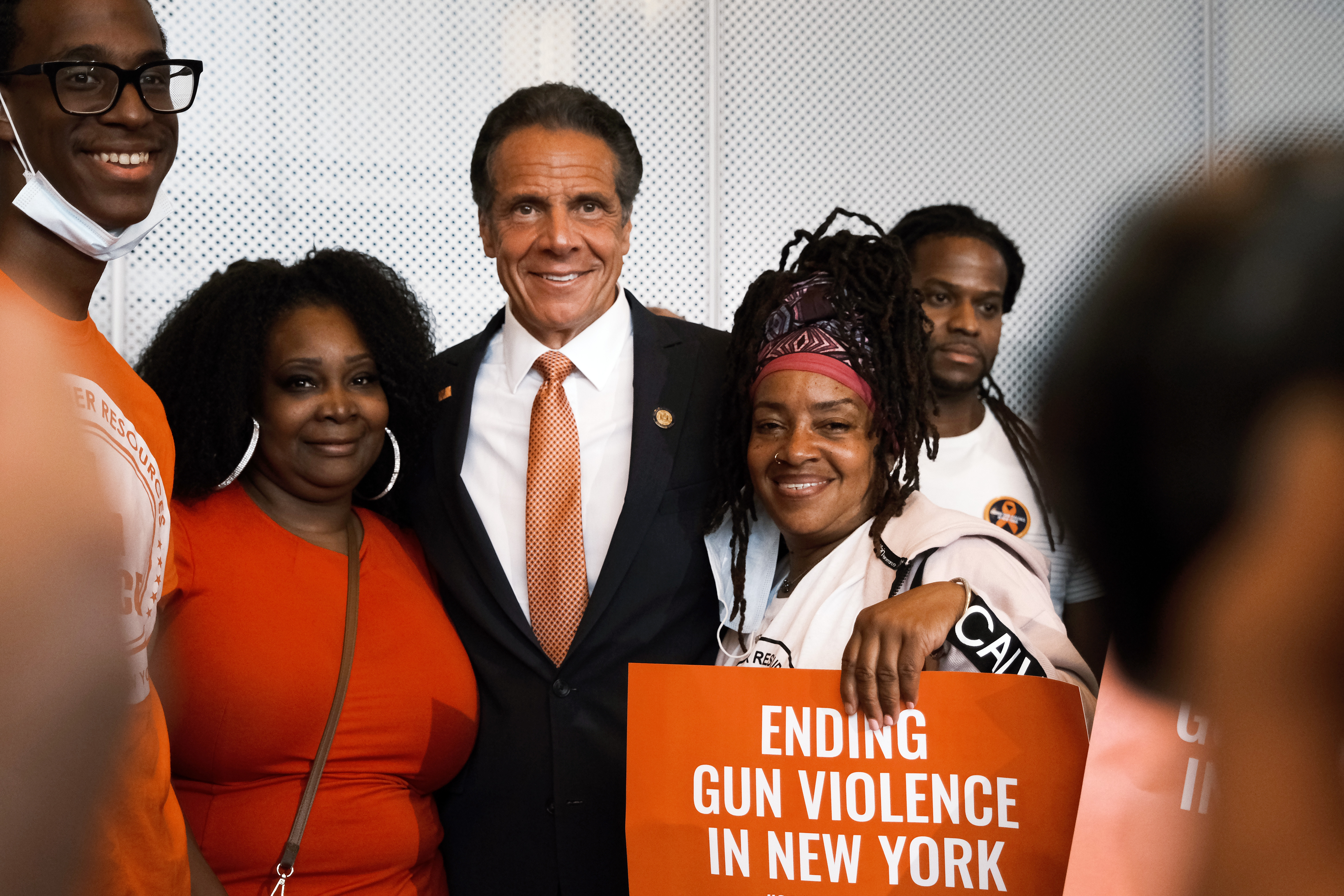
Instead, gun shootings in the U.S. this year, as of Tuesday afternoon, have claimed 22,676 lives, according to the Gun Violence Archive. In New York on Tuesday, Gov. Andrew Cuomo declared a disaster emergency because of the extreme gun violence there.

More than 100 people were shot in Chicago over the Fourth of July weekend. We can’t go on this way.

Send letters to [email protected].

Read More

Supreme Court should listen and learn from Chicago’s horrific weekend of gun violenceCST Editorial Boardon July 6, 2021 at 11:17 pm Read More »