What’s New

Pritzker signs criminal justice bills barring deceptive interrogation practices; re-sentencing for some offendersRachel Hintonon July 15, 2021 at 9:00 pm

Deceptive practices during the interrogation of minors would be barred under a bill Gov. J.B. Pritzker signed into law Thursday, one piece of legislation aimed at advancing “the rights of some of our most vulnerable” in the state’s criminal justice system.

“Together, this package of initiatives moves us closer to a holistic criminal justice system, one that builds confidence and trust in a system that has done harm to too many people for too long,” Pritzker said at Northwestern’s Pritzker School of Law.

Terrill Swift, one of the so-called “Englewood Four” accused of the rape and murder of Nina Glover in 1994, said police lied to him and his family — first about where they were taking him, then about the crime and his connection to the three others convicted of the killing.

Swift was 17 at the time. He spent 15 1/2 years in prison before he was exonerated.

“This bill, I truly believe, could have saved my life,” Swift said, choking up. “When it was first brought to me, it touched me in the sense that it could have saved my life.”

Pritzker signed three other pieces of legislation addressing parts of the criminal justice system:

o Allows state’s attorneys to petition a court to re-sentence someone whose original sentence “no longer advances the interests of justice.”

o Bars anything said or done during a restorative justice hearing from being used against someone in court unless that protection is waived.

o Creates a re-sentencing task force to study ways to reduce the state’s prison population through re-sentencing motions.

Flanked by supporters, Gov. J.B. Pritzker signs criminal justice legislation at Northwestern's Pritzker School of Law, barring the use of deceptive interrogation practices with minors and allowing county prosecutors the ability to petition to resentence someone, Thursday morning, July 15, 2021.
Flanked by supporters, Gov. J.B. Pritzker signs criminal justice reforms into law Thursday at Northwestern’s Pritzker School of Law.
Ashlee Rezin Garcia/Sun-Times

Cook County State’s Attorney Kim Foxx told the Chicago Sun-Times her office collaborated with the Innocence Project and For the People to draft the legislation banning the use of deceptive practices during the interrogation of minors and the bill that would allow county prosecutors to seek new sentences for offenders.

“It’s important for us to not just have proactive policies, but to go back and look at some of the harms that were caused by the things that happened before we got here,” Foxx said of the criminal justice reforms signed into law Thursday.

“We had so many wrongful convictions, particularly of youth, that were predicated on these practices of lying to children, where the science … tells us about their susceptibility to those types of practices and the damage that can be done,” Foxx said. “When we convict people who are not the people who have done the actual crime, it not only robs them of their lives, from their families and from their communities, it also allows the people who’ve actually committed the crimes to go free.”

Sen. Robert Peters, D-Chicago, called the package of criminal justice legislation “a major step in the right direction.”

“We must not waste the potential of our fellow neighbors by locking them up and throwing away the key,” said Peters, a lead sponsor on all of the pieces of legislation signed Thursday.

“We see systemic failures over and over again. We’re promised public safety, and yet it seems like it’s something we chase over and over again,” Peters said. “Chicago sports teams have better draft records than tough-on-crime policies have on providing safety. It is time that we move towards a new era of public safety — public safety for all, public safety by the people, public safety that belongs to us.”

Rep. Justin Slaughter, D-Chicago, who was a lead sponsor on the bills in the House. said no matter where people fall on the criminal justice reform spectrum, “we can all agree that innocent people should not be serving time in prison.”

Swift said while the new law will likely help minors avoid a situation like the one he faced, there is still work to be done to decrease wrongful convictions.

“The reality is, I can’t get what I lost back,” Swift said.

“We don’t need another Terrill Swift, Michael Saunders … this happens so much and it’s something that needs to change. Granted, this bill passing is a great step, but we still have so much work to do.”

Read More

Pritzker signs criminal justice bills barring deceptive interrogation practices; re-sentencing for some offendersRachel Hintonon July 15, 2021 at 9:00 pm Read More »

Mom says cops won’t talk to her about murdered son. ‘They just think Myron is another Black kid who just got slain in the street, and that’s not my baby.’Mohammad Samraon July 15, 2021 at 9:38 pm

Carmela Richardson has lost four family members over the last four years.

Her husband, her mother-in-law, a daughter and, last week, her 19-year-old son.

Myron Richardson was found in the trunk of a burning car on the Far South Side with a gunshot wound to his head. That’s all the family knows about his murder.

Repeated calls to a detective have gone unanswered, they say, and a supervisor even hung up on them.

Myron Richardson was found shot in the head in the trunk of a burning car July 6 on the Far South Side. His family says they can no longer reach the detective working on his case.
Provided

“I just want to know what happened to him,” Richardson, 39, said through tears. “They just think Myron is another Black kid who just got slain in the street, and that’s not my baby,” she said through tears.

“He was raised to be a good man,” she continued. “I talked to my son every day. I told him I love him, he was a good big brother, good boyfriend…they don’t know who Myron was … We have to let them know who my baby was.”

The body of her son was found after someone reported a car fire around 10:30 p.m. July 6. Emergency crews responded to the 12100 block of South Doty Avenue, near the Bishop Ford Expressway, and found Richardson’s burned body in the trunk of the car. He was pronounced dead at the scene.

An autopsy showed he died of a gunshot wound to his head and his death was ruled a homicide by the Cook County medical examiner’s office.

Richardson’s mother said she spoke with a Chicago police detective for over an hour on July 8, two days after her son’s death. Since then, the Richardson family says they have tried to reach him at least five times, but were either left on hold for up to half an hour or were hung up on.

“I took it personal because Myron is my son,” Richardson said. “It wasn’t personal, they don’t know who Myron is.”

Richardson’s frustration came to a head on July 10 when she said she called for the detective and spoke to an official who told her, “I don’t have time for this” and hung up.

A police spokesman told the Sun-Times he would check with the detective, then later said the department would have no comment at all on Richardson’s complaint. Police have reported no one in custody.

Carmela Richardson, 39, sits on the couch with her six remaining children, ranging in ages from 1 to 17, while holding a photograph of her oldest son, whose obituary she would prepare to write later in the evening in the family's West Pullman neighborhood home, Wednesday night, July 14, 2021. Carmela Richardson's 19-year-old son Myron Richardson's body was found shot in the head in the trunk of a burning car July 6 not far from their home on the Far South Side.
Carmela Richardson, 39, sits on the couch with her six remaining children, ranging in ages from 1 to 17, while holding a photograph of her oldest son, whose obituary she would prepare to write later in the evening in the family’s West Pullman neighborhood home, Wednesday night, July 14, 2021. Carmela Richardson’s 19-year-old son Myron Richardson’s body was found shot in the head in the trunk of a burning car July 6 not far from their home on the Far South Side.
Ashlee Rezin Garcia/Sun-Times

The Richardsons are not alone in searching for information about the death of their loved ones. Chicago police have reported 362 homicides so far this year, but arrests have only been made in 68 cases, according to public data.

“So many people get killed in Chicago, and they just don’t seem like they care,” Myron’s aunt Jeanetta Richardson, 40, said. “I can only imagine how overwhelmed the police must be, but you got parents out here that don’t care and you got parents out here that do care, and the ones that do care, I feel like you should at least give them a little bit of peace and do your part of your job.”

Carmela Richardson’s fiance Prince Elston, 40, said he understands that police deal with victims’ families daily, “but there’s certain levels of respect people should have for one another, especially going through a time like this.”

Carmela Richardson said she hopes detectives understand her son was a good kid and will bring his killer to justice.

“He wasn’t that person, he didn’t live that life,” she said. “So now I have to let them know who Myron was…I just want to know what happened to him.”

Richardson played basketball for Morgan Park High School and enjoyed playing video games. He was the oldest of seven and was described by his aunt as “someone who lit up whatever room he was in.”

“My nephew always had this smile on his face,” she said. “He was a very, very happy guy, very respectful…even when he was in trouble, he was smiling.”

Richardson often bought his mother roses, knowing her love for them. For his service, the family plans to have roses to honor the tradition. “He was just a joy to be around,” his aunt said.

Carmela Richardson, 39, whose 19-year-old son Myron Richardson's body was found shot in the head in the trunk of a burning car July 6 on the Far South Side, poses for a portrait outside the family's West Pullman home, Wednesday evening, July 14, 2021.
Carmela Richardson, 39, whose 19-year-old son Myron Richardson’s body was found shot in the head in the trunk of a burning car July 6 on the Far South Side, poses for a portrait outside the family’s West Pullman home, Wednesday evening, July 14, 2021.
Ashlee Rezin Garcia/Sun-Times

Read More

Mom says cops won’t talk to her about murdered son. ‘They just think Myron is another Black kid who just got slain in the street, and that’s not my baby.’Mohammad Samraon July 15, 2021 at 9:38 pm Read More »

Three Chicago Park District lifeguards sexually harassed, assaulted female co-workers, watchdog saysFran Spielmanon July 15, 2021 at 9:35 pm

About six female lifeguards at Chicago Park District pools and beaches were sexually harassed and assaulted by male co-workers, with some of the harassment taking place in front of children, an internal investigation has concluded.

The explosive allegations, including an attempted rape, are in a report released Thursday by Park District Inspector General Elaine Little that hints at a cover-up.

All three male lifeguards who were accused no longer work for the Park District. Two resigned during the investigation to avoid being fired. The third resigned earlier this year.

Of the six victims, two have filed police reports. The others, including the victim of the attempted rape, did not file criminal charges, fearing retaliation.

The allegations were first reported by WBEZ-FM (91.5).

Sources said the first sexual misconduct complaint was referred to Park District Supt. Mike Kelly in February 2020. But it wasn’t until a second complaint was referred to Kelly by the mayor’s office that the superintendent forwarded it to Little for a full investigation.

As always with internal investigations, neither the victims nor the subjects of the investigation are identified in the report. Nor does the report say where the alleged attacks occurred. Other investigative sources have identified the locations as Welles Park, Jefferson Park and North Avenue Beach and said the attacks occurred as early as 2016 and as recently as 2019.

Among the allegations in the graphic report:

o A veteran male lifeguard also accused of drinking while on duty at North Avenue Beach forced an underage rookie female lifeguard to perform oral sex on him before he tried to rape her, then physically threatened both her and a friend she told about the attack.

In “detailed and corroborated testimony,” the woman told investigators the man “sexually abused and sexually assaulted” her while driving her home from work in 2018. Although the man had “repeatedly sexually harassed his victim while they were on duty together,” she “reluctantly took him up on his offer” of a ride home after she “unexpectedly found herself without transportation from work,” the report states.

“As they were approaching her house, Subject 2 parked his automobile on the side of the street, refused to let his victim exit the vehicle and directed her to give him oral sex while threatening to ‘make her life miserable’ if she refused,” the report states.

The victim “initially rebuffed” her attacker, but ultimately “acquiesced” to his demands only because he was a “more senior lifeguard” who, she firmly believed, could “deliver on his threat,” the report states.

“Subject 2 then suddenly forced himself on top of her, fondled her breasts and genitalia without her consent and attempted to rape her,” the report states.

The attack continued until the victim screamed. The male lifeguard then “let her exit” the vehicle.

Apparently unafraid of being caught, the male lifeguard continued to sexually harass his victim for a full year after the attempted rape, the report states.

At the year-end banquet, he allegedly nominated her to receive an award for “Slut of the Beach.”

The report also concluded the male lifeguard violated the employee code of conduct by “possessing and consuming alcohol” while on duty at North Avenue Beach.

“In detailed and credible testimony, a lifeguard told OIG that, while on beach duty at the 2018 Air & Water Show, he/she saw Subject 2 drink alcoholic beverages to the point where he was obviously intoxicated,” the report states.

“Specifically, the lifeguard recounted Subject 2 stumbled and swayed while patrolling the beach and reeked of alcohol.”

o A veteran seasonal male lifeguard allegedly molested two female co-workers — one at the Portage Park pool in 2016 and the second at the Jefferson Park pool in 2018.

In the 2016 attack in Portage Park, the woman was “attempting to take a pre-shift nap” in the women’s locker room when the male lifeguard came in, laid down next to her and “fondled her breasts and genitalia over her clothing,” the report states.

The fondling allegedly continued even after the woman “attempted to push his hands away from her body,” the report states. The female lifeguard also accused her male abuser of “repeatedly sexually harassing her” by “constantly asking her whether she had ever had sex.”

Two years later, the male lifeguard was at it again — this time at the Jefferson Park pool.

As his second victim was changing in a storage room, the male lifeguard barged in, closed the door behind him, pinned the victim against lockers and “forcefully sexually abused and assaulted her,” ignoring her pleas.

Both before and after the alleged attack, the male lifeguard “propositioned her to enter into a sexual relationship” and made “numerous unwelcomed comments about her buttocks” and his genitalia, the report states.

o The third incident of harassment — with three female victims — allegedly occurred at Welles Park in 2018 and 2019. One victim told investigators that “on several occasions and in the presence of several child patrons,” the male lifeguard “commented on the view that her shorts afforded of her buttocks.”

The male lifeguard was further accused of telling one victim that female lifeguards “should wrestle in their swimsuits while he sprayed them with water because the scene ‘would be so sexy,'” the report states.

When the third victim asked him to stop making lewd comments about her and other women, “He threatened to revoke the time off that he had already approved” for her, just as he had “threatened to retaliate” against another victim, the IG said.

During the investigation, the inspector general learned the male lifeguard had been fired from a lifeguard’s job at Chicago Public Schools and placed on the CPS “do not hire” list for making “inappropriate and uncomfortable advances” toward two female high school students.

CPS told the Park District — but not until February 2020, when he was assigned to a Park District pool on CPS property.

Read More

Three Chicago Park District lifeguards sexually harassed, assaulted female co-workers, watchdog saysFran Spielmanon July 15, 2021 at 9:35 pm Read More »

Facebook.gov… Biden’s administration is flagging posts on Facebook and having them deletedon July 15, 2021 at 9:24 pm

Life is a TV Dinner

Facebook.gov… Biden’s administration is flagging posts on Facebook and having them deleted

Read More

Facebook.gov… Biden’s administration is flagging posts on Facebook and having them deletedon July 15, 2021 at 9:24 pm Read More »

‘I am not nervous at all’ Inspiration4 Crew Member Hayley Arceneaux Talks to WGN News About Upcoming Missionon July 15, 2021 at 9:30 pm

Cosmic Chicago

‘I am not nervous at all’ Inspiration4 Crew Member Hayley Arceneaux Talks to WGN News About Upcoming Mission

Read More

‘I am not nervous at all’ Inspiration4 Crew Member Hayley Arceneaux Talks to WGN News About Upcoming Missionon July 15, 2021 at 9:30 pm Read More »

When a statue is more than a statueClaire Voonon July 15, 2021 at 6:30 pm

A few years ago, in my former neighborhood in Queens, I passed an ornamental column amid the sidewalk trash. Regret prompted me to backtrack and haul the plaster orphan home. It’s since moved with me to Chicago, where, bearing a pothos, it receives many compliments.

Columns, particularly of the classical order, have a powerful allure. They are elegant, evoke high art, and can feel beguiling, as I realized on that summer stroll. They can seem incongruous in our surroundings, particularly on a city sidewalk. Columns are really everywhere though: decorating banks, colleges, museums, and federal buildings throughout the country.

This all might seem obvious, but artist Kelly Kristin Jones knows there’s something more insidious behind the ubiquity of columns. “They are symbols used by white people to reinforce power,” she said when we spoke in June. “It’s so ingrained that we’re not conscious of why they’re so heavily used throughout our built spaces.”

Jones has spent several years interrogating the prevalence of such markers in the U.S., focusing on public (and taxpayer-maintained) monuments to long-dead white men that have fueled national debate–and, in Chicago, a public arts reevaluation. For her ongoing work In time and paradise, Jones documents herself and others while they hold up photographs of the sky in front of local statues that depict controversial people. In the course of these performances, Jones does not identify the subjects of the statues for the viewer, which invites us to imagine the possibilities of who should be memorialized atop the pedestals. The resulting documentation makes it appear as though the original statues have been erased, echoing the darkroom technique of dodging.

While Jones was cooped indoors last year, she began thinking about ideologies of whiteness that are baked into everyday domestic life. She bought ornamental columns from local sellers on Craigslist and Facebook, made of cheap materials such as plastic, wood, plaster, or metal. The growing stockpile of columns is the centerpiece of Jones’s show “We forgot the moon while holding up the sun” at Bridgeport’s 062 gallery in the Zhou B Art Center. The resulting piece, Orders of Empire, features dozens of columns spilling from a corner to evoke an ancient ruin. The exhibition, which also includes photography, works to untangle the pervasive legacies of white supremacy that haunt in plain sight; to show that a column is not just a column.

The crux of this systemic architectural sleight is the white and Right-wing obsession with antiquity. Rutgers professor Dr. Lyra D. Monteiro wrote that ancient Greeks and Romans “affirmed the ancient nobility and capacity for rule of the white race, while also offering a model of righteous empire and civilized slave ownership.” Monteiro outlines this in her essay “Power Structures: White Columns, White Marble, White Supremacy,” which she posted on Medium in October 2020. Monteiro tells us that the so-called founding fathers “. . . set their heritage claims in stone,” and traces the incessant formation of white national identity from Thomas Jefferson (whose plantation Monticello has become a byword for whitewashed histories of enslavement) to the farcical tradition of plantation weddings, and from the 2017 white supremacist rally in Charlottesville (which revolved around a Robert E. Lee statue) to Trump’s “Making Federal Buildings Beautiful Again” executive order. Neoclassical architecture, Monteiro writes, was and remains a way for white men to “[seed] the landscape with the signs of the European past–of European heritage–quite literally marking the territory of whiteness.”

Jones’s work seeks to avoid didacticism and invites us to excavate the calculated history of unbalanced power simply by making it immense and inescapable. She collects and calls attention to the bread crumbs of this history beyond the south, still largely the focus of today’s debates over monuments. Interestingly, her column sellers all live in predominantly white, western, and northern Chicago suburbs. They’re also all white women. “I realized that that was the work,” Jones said. “I’ve been thinking about the role white women have always and continue to play in upholding white supremacy.” The point is not to suggest that women are intentionally signaling white spaces but that “this agenda is at work, even if we are unaware or don’t want to acknowledge it.”

Echoing protestors’ righteous toppling of monuments that gained momentum last summer, Orders of Empire wrenches columns from their cozy camouflage. Literally upended, they are exposed as gimcrack–hollow props, not regal pedestals. In convening them, Jones creates what I’d called a counter-monument, a marker that simultaneously makes visible and deconstructs collective ideas of heritage. Over the exhibition’s course, the pile has grown, becoming more unwieldy as well as absurd in its utter futility.

Jones also visited predominantly white suburbs to create her photographs on view, driving to places such as River Forest, Riverside, Downers Grove, Elmhurst, and Wheaton. Over the past year, she’s trespassed into private yards to photograph public-facing markers that are, again, curiously low-grade. The cheap busts of white men and faux Greco-Roman urns are more reminders that whiteness dominates. Jones uses Adobe Photoshop’s spot healing brush to render the documented markers unrecognizable, then prints and cuts the photos to the scale of the object’s silhouette. At night, she returns to the site, conceals the marker with the photo, and photographs it by moonlight. The resulting prints, richly tonal and mysterious, are small subversions. They capture a momentary redaction of power–filtered through time and commercialization–by attentive, almost healing gestures. Some are noticeably edited, like an image that shows the clear outline of a bust or another, the contours of an amphora. But the most effective of Jones’s interventions are those that nearly blend with their surroundings, like happy glitches in the landscape.

Jones is aware that being a white woman has allowed her to do this work–so far, no one has called the police on her. Her race is one of the reasons I’d argue that she should be doing this work: white artists don’t feel the expectations that many artists of color do to make work about race, and infrequently examine whiteness without speaking for nonwhite communities.

And Jones’s work is ceaseless and ongoing. She is amassing a collection of vintage and tourist postcards depicting sites with historical monuments, more than 700 of which were displayed in Wish you were here, an installation she mounted earlier this year at the Lubeznik Center for the Arts in northwest Indiana. She digitally alters the postcards to remove controversial markers, reclaiming the tools of the very process used to mythologize them. Jones is also accumulating snapshots of white women posing with contested monuments, and the growing binder already points to an enduring process of patriotic identity building–one intrinsically tied to the United Daughters of the Confederacy’s funding of hundreds of Confederate statues.

In building and wrestling with these various material archives, Jones seems to be heeding artist Xaviera Simmons’s call for white artists: “Go further and work more rigorously to undo yourselves . . . do the cultural autopsy, name what whiteness is and the centuries of harm it has done . . . ” Jones names, interrogates, and implicates whiteness, better equipping us to work at dismantling it in our personal spaces. v

Read More

When a statue is more than a statueClaire Voonon July 15, 2021 at 6:30 pm Read More »

Second man dies days after Lower West Side shooting that killed 23-year-oldSun-Times Wireon July 15, 2021 at 8:09 pm

A man died days after a shooting in the Lower West Side that also killed a 23-year-old.

The men were walking about 3:45 a.m. Sunday in the 2100 block of South Oakley Avenue when someone opened fire, Chicago police said. The gunman may have shot from a black-colored vehicle, according to police.

A 23-year old was shot in the chest and was taken to Mt. Sinai Hospital, where he was pronounced dead, police said. He was identified as Victor Manuel Barreto, the Cook County medical examiner’s office said.

The other man, 25, was shot in the head and was taken to the same hospital in critical condition, police said. He was pronounced dead Tuesday morning and identified as Alfonzo Carmona, according to the medical examiner’s office.

No one is in custody as Area Three detectives investigate.

Read More

Second man dies days after Lower West Side shooting that killed 23-year-oldSun-Times Wireon July 15, 2021 at 8:09 pm Read More »

120 pounds down: A summer body five years in the makingIsmael Perezon July 15, 2021 at 8:28 pm

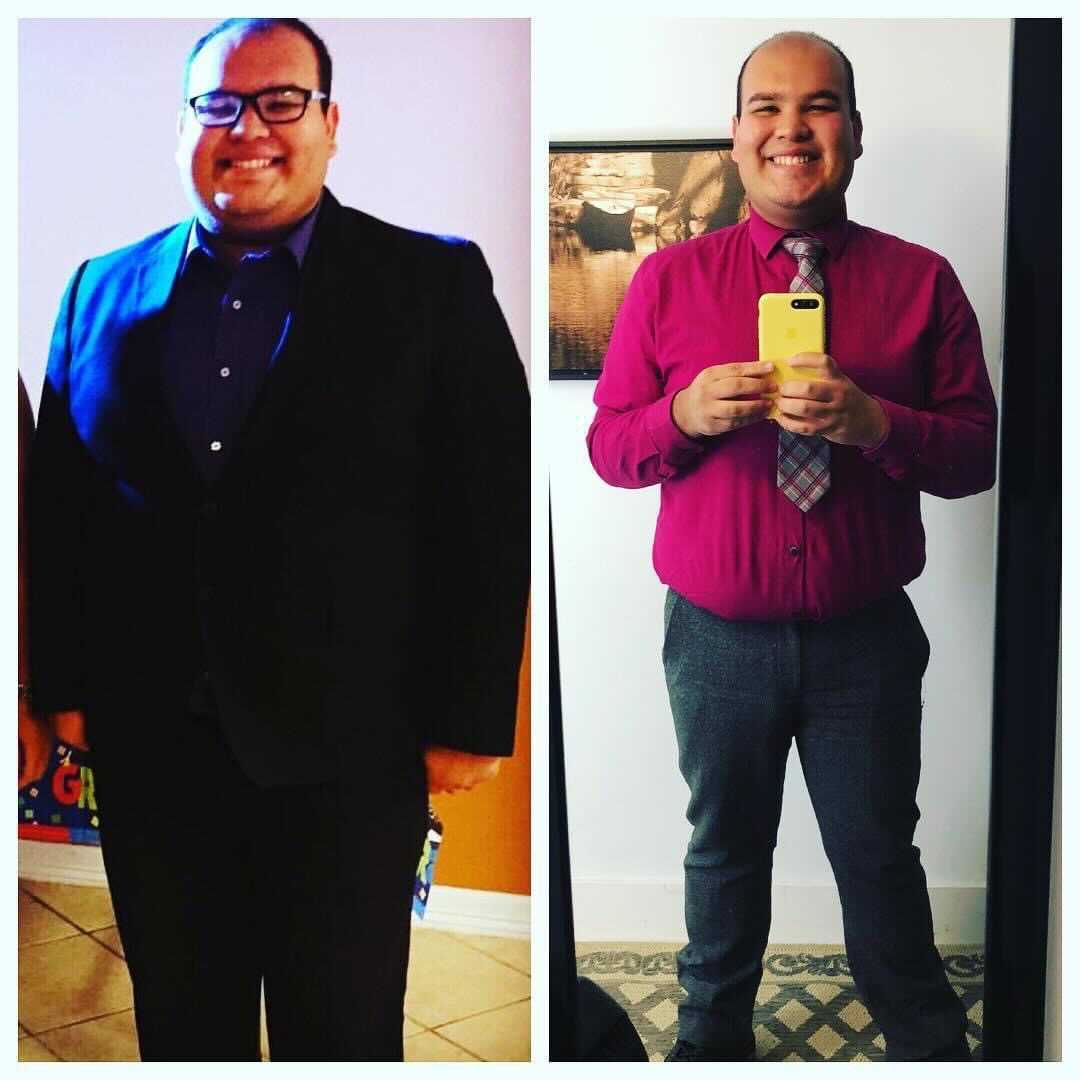
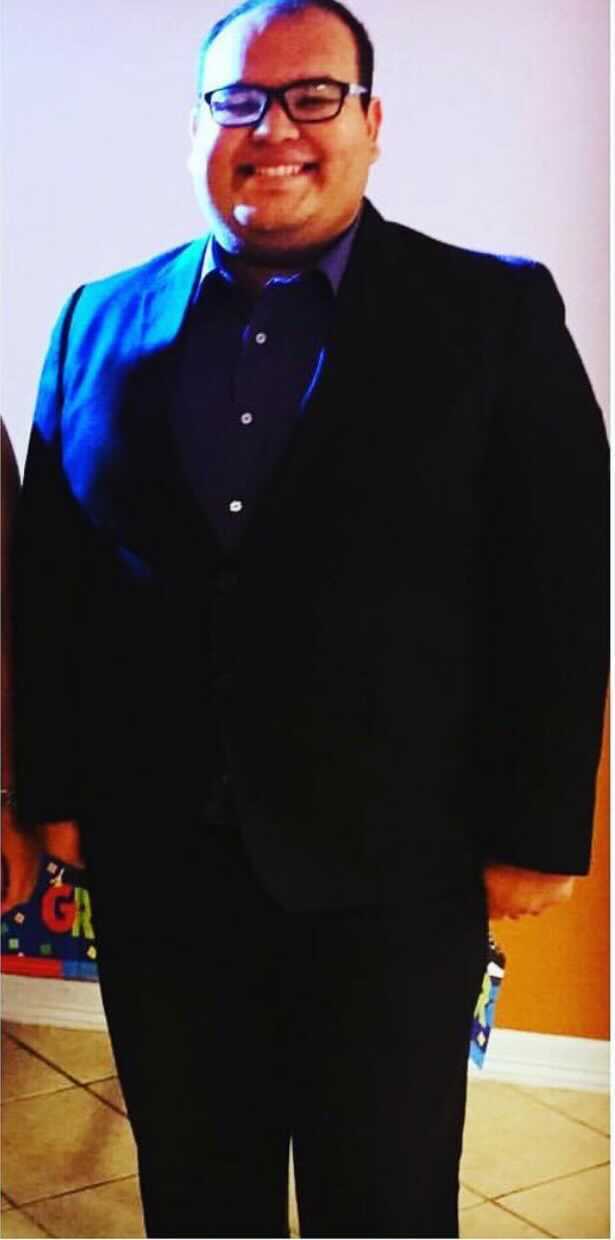
“I used to weigh 320 pounds.”

That’s a statement I am proud to make. Especially this week when I stood on a scale and realized I am now below 200 pounds. No matter what part of the room I move my scale, it told me I am at a welcomed 199.6 pounds.

How did I do it? The easy answer would be, “I drink a lot of water.” The deeper and most honest truth is that I lost 120 pounds the same way I gained the weight in the first place — through a lifestyle change that was triggered by my mental health.

My weight journey didn’t start at the gym or with a strict diet plan. It started in 2013, when I auditioned for my university’s church choir.

My classically trained voice caught the eyes and ears of a thankful choir director. I also caught the attention of a cute and devoted Catholic guy in the choir who held my hand every time we prayed. And Catholics pray a lot.

Yes, I was delusional falling for a God-loving man at a Catholic church, but it was fun.

There were the late-night hangouts that made me sigh for weeks and the cute text message screenshots that made my best friend gasp in excitement for me.

My life was like a song — Selena’s “Amor Prohibido” (Forbidden love). In the song, Selena says who cares what society thinks when we have each other. It’s beautiful. However, listening to it again, I realized the song — like my situation — doesn’t actually have a happy ending.

People began to stare, and he suddenly became booked with church events. I stopped going to church because it felt like I had a giant scarlet letter on me. A huge rainbow-colored “G.”

The staring was harsh and the message clear: I wasn’t welcome.

I rarely saw him over the next year, and when there were opportunities to see him, I didn’t want him to see me.

When I first met him, I was a good-standing double major student who was 2nd chair in the university’s prestigious top band. I performed in the orchestra, playing the french horn, and was even voted the “most valuable player” for the marching band.

After the heartbreak, I failed a music class three times and embarrassed myself when I performed a failing senior music recital in front of my peers and music professors.

My graduation was pushed back. I started losing my hair when I was 23. And by 2016, I had gained almost 100 pounds.

Those facts are hard to admit. But now they make me proud, too.

Just like losing the weight, fighting those demons that tore me down and turned me into the worst version of myself was no easy feat. How do you tell yourself you love yourself when you know this version of yourself is the worst you’ve ever been?

At the lowest point of my young life, a defeated me told myself, “I will survive.” I decided to turn my life into a song again (the Selena disco medley version), and this time one that had a happy ending.

When people ask, “How did you do it?” I say, “It just happened.”

The best way I can explain it is through bicycling. I never look straight ahead, my eyes are always locked three meters in front of me. And before I know it, I have traveled a good 4 miles. The same goes for these past five years I spent working on myself. I stayed focused on bettering myself, and it just happened.

It’s funny. I walked into that church five years ago and definitely went on a spiritual journey.

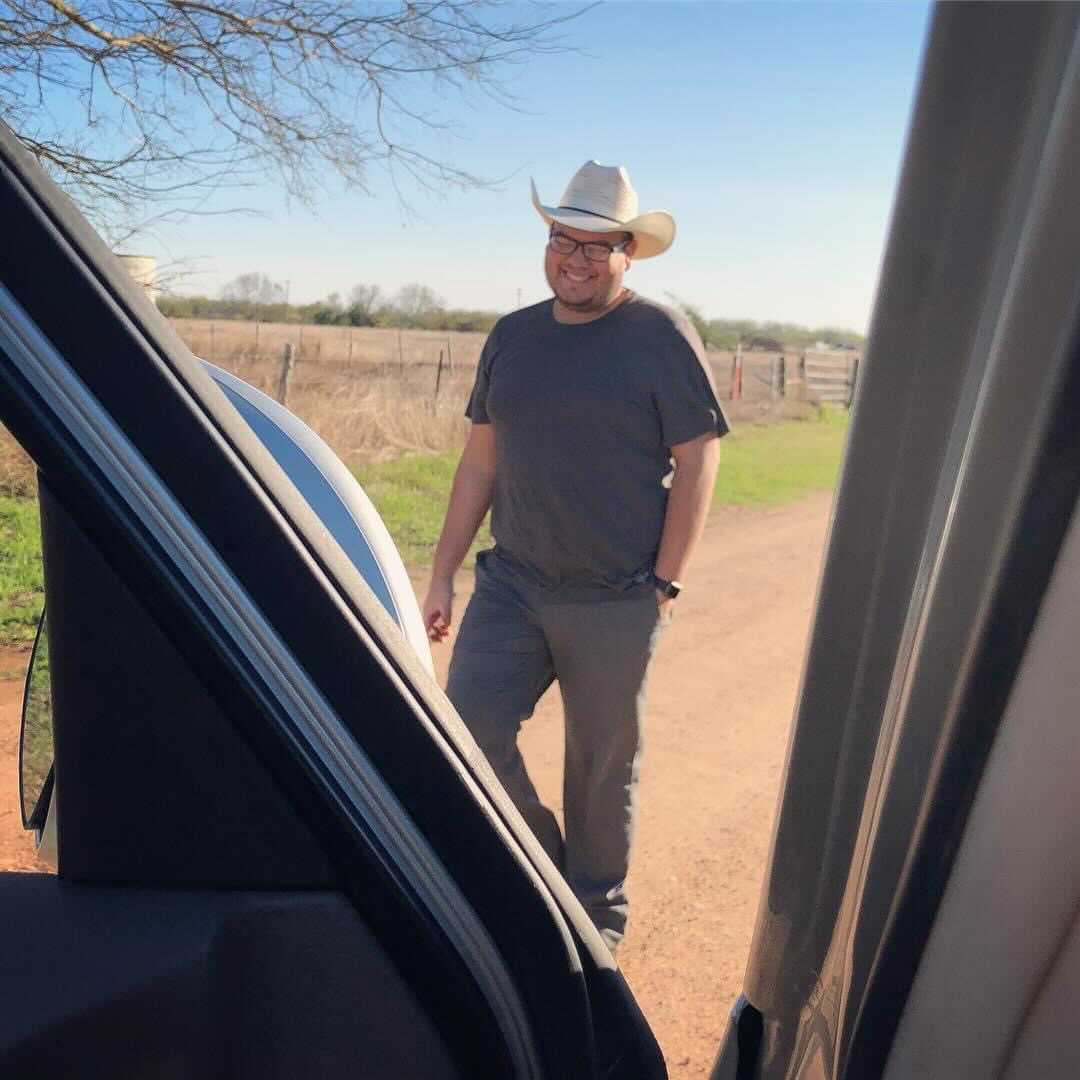
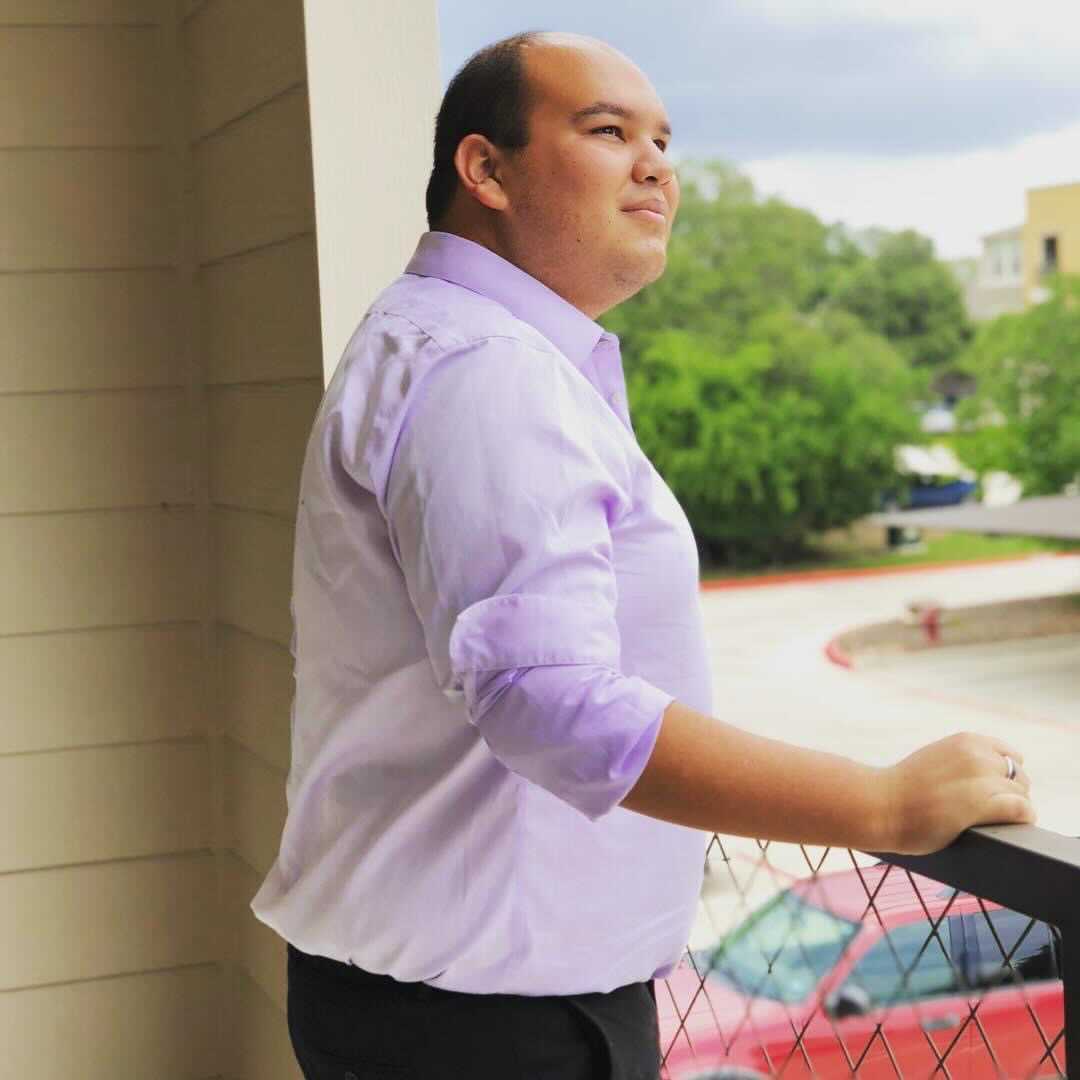
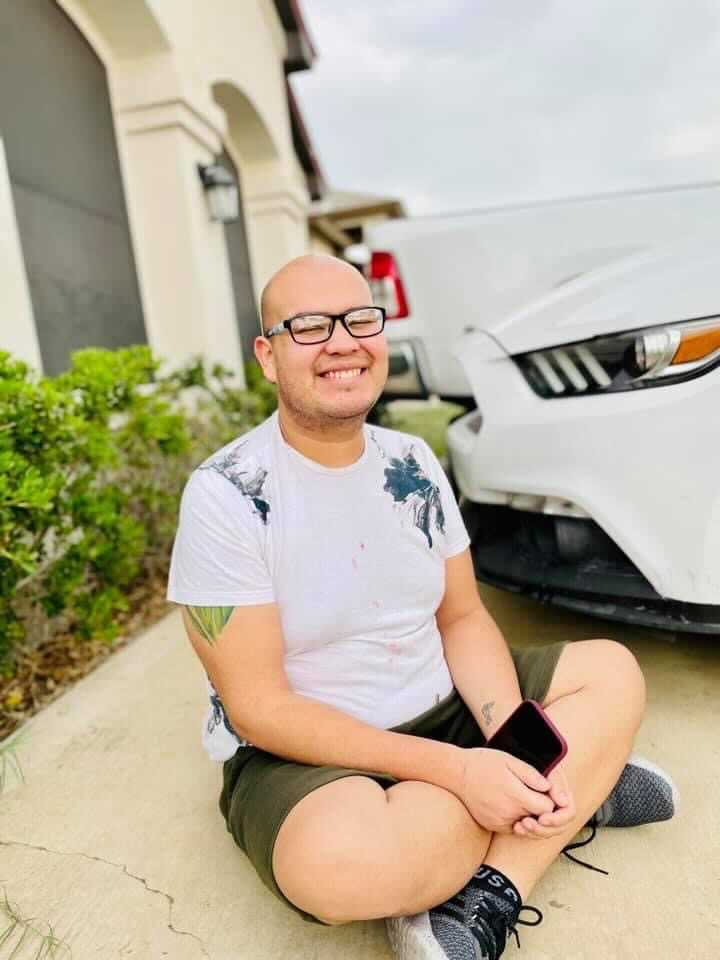
Here I am now. A bald and beautiful man who knows that if a certain pant size can be a goal, a state of mind can be one, too.

Send letters to [email protected].

Ismael Perez is a member of the Sun-Times Editorial Board.

Read More

120 pounds down: A summer body five years in the makingIsmael Perezon July 15, 2021 at 8:28 pm Read More »

Scouting Jon Sciambi halfway through his first season on Cubs’ Marquee Sports NetworkJeff Agreston July 15, 2021 at 8:48 pm

When I wrote in December that I wanted Jon “Boog” Sciambi to succeed Len Kasper in the Cubs’ TV booth, I didn’t know the Cubs were pursuing him and would hire him two weeks later. I just knew what I had heard listening to him for so long on ESPN: He was perfect for the job.

(I know. Lousy reporting, Agrest.)

Halfway through his first season on Marquee Sports Network, Sciambi has been everything I had hoped. He has brought a similar sound and demeanor to his good friend Kasper, who’s now on White Sox radio. He has connected easily with analyst Jim Deshaies, making for good conversation and a lots of laughs. And with a sharp eye for numbers, he has examined players in a digestible context for viewers.

Sciambi said it all starts with the relationship he has developed with Deshaies.

“I love getting the chance to work with JD every day,” he said. “I’m so grateful that he’s my partner. I think he’s smart, he’s fun, he’s open, and I just really enjoy our conversations. And I look forward to seeing him every day. That is a crucial part of delivering a good broadcast.”

That positive working environment extends beyond the booth. Sciambi, who grew up in New York, said he has felt at home in Chicago since moving into his Streeterville building.

“There’s something about being here that feels like this is right,” he said. “I have to think that that’s affecting the broadcast in a positive way.”

Sciambi and Deshaies often have been joined by a second analyst, which is new to longtime Cubs viewers. But it’s nothing new to Sciambi, who called a majority of games at ESPN in a three-person booth and is a strong believer in the setup with so much down time available.

It was a treat last week to listen to Sciambi, Deshaies and former Cub Rick Sutcliffe together. “Boog” and “Sut” worked together at ESPN, and their chemistry was evident. Combined with Deshaies, the three made for great conversation, even during the duds against the Phillies.

That said, it would make sense to add a hitter into the mix at some point. Two former pitchers can’t speak to what a batter is looking for with the authority of an accomplished hitter. Perhaps Doug Glanville, another former Cub, could move out of the studio on occasion to bring that perspective.

Sciambi adds an interesting perspective of his own with player evaluations. He often uses percentages to examine players, giving viewers context of where players rate. As opposed to relying on complex sabermetrics that require definition, Sciambi makes evaluations easy to understand.

“The thing that I find so crucial is, if I’m telling you that the two stats that correlate most with run scoring are on-base and slugging [percentage] and you’re not familiar, then it’s imperative for me to tell you that the major-league average this year is .316 in on-base,” Sciambi said. “That’s where I go with context. This guy strikes out 31% of batters; the major-league average is 23.8.

“I’m not that smart. I’m not super math guy. I feel like it’s important information, but if I can’t deliver it in a digestible manner, it’s pointless. I do think I’m good at delivering that information that way.”

He also delivers information from baseball executives with whom he has developed relationships over the years. Those conversations can lead to teachable moments on the air.

In preparation for a series with the Indians last month, Sciambi spoke with Indians general manager Mike Chernoff. They were discussing right-hander Aaron Civale, who was having a good year before suffering a finger injury against the Cubs. Sciambi questioned whether Civale was the real deal because of his low strikeout rate and asked if he was forcing soft contact.

“Chernoff said to me, ‘I think that the peripherals show that he’s good at that,’ ” Sciambi said. “Then he pauses and says, ‘He’s got a lot of wins, right?’ And I go, ‘Mike, he’s got 10 wins.’ And he starts laughing.

“The point is this: If the general manager of the Indians is not evaluating the performance of his guys by wins, I don’t know why we should be doing it. If I talk to a general manager and I say, ‘Who leads your team in RBIs this year?’ and the GM says to me, ‘I have no idea,’ it should inform you that we need to start moving away from it. A lot of people are going to need to unlearn some things.”

Despite his ability and accomplishments, Sciambi is his own worst critic, and the Marquee crew’s inability to make every road trip because of coronavirus concerns and technological challenges makes that feeling worse.

“I suffer it when we don’t travel, but the guys at Marquee understand it, and they want us to travel as well,” Sciambi said. “They want it to be great. I feel that. It’s been hard because I don’t feel like I’m executing it always the way I’m fully capable because there are limits.

“I do this job as connective, me being connected to the players, the managers and the baseball people. And with that, I connect to the audience. That’s important to me. I angst over it sometimes. I want to be great.”

Remote patrol

  • Len Kasper will fill in for Jason Benetti on NBC Sports Chicago’s White Sox broadcasts starting Aug. 1, when Benetti leaves to call Olympic baseball from NBC Sports’ studios in Stamford, Connecticut. Benetti will call the semifinals and bronze- and gold-medal games. Other games on his schedule are still pending.
  • Benetti will host another Statcast edition of “Sunday Night Baseball” for the Red Sox-Yankees game on ESPN2. He’ll be joined by Statcast regulars Eduardo Perez and Mike Petriello.
  • Adam Amin and A.J. Pierzynski will call the Astros-White Sox game Saturday on Fox-32.
  • The Cubs-Cardinals game Monday will air locally on Marquee and ESPN. Karl Ravech, Tim Kurkjian and Perez have the national call.

Read More

Scouting Jon Sciambi halfway through his first season on Cubs’ Marquee Sports NetworkJeff Agreston July 15, 2021 at 8:48 pm Read More »

Off-duty Chicago police officer dies by suicide, autopsy confirmsDavid Struetton July 15, 2021 at 8:33 pm

An off-duty Chicago police officer died by suicide Wednesday morning in the Clearing neighborhood on the Southwest Side — the third such death by a member of the department this year.

The body of Christian Furczon, 24, was found slumped over in a vehicle at Hale Elementary School in the 6100 block of South Melvina Avenue, according to police and fire sources.

Furczon was pronounced dead at the scene at 7:35 a.m., according to the Cook County medical examiner’s office.

Autopsy results released Thursday revealed Furczon died from a gunshot wound through his mouth, the medical examiner’s office said. His death was ruled a suicide.

Furczon, who lived several blocks from where he was found, joined the force in 2018 and worked on the community safety team.

Police did not release details about the officer or the incident, other than to say he died by suicide.

“It is always profoundly painful to deliver such news,” CPD Supt. David Brown said in a statement. “This morning, the Department experienced the heartbreaking loss of one of our police officers to an apparent suicide. As his family, loved ones and fellow CPD officers mourn, we are asking the city to help carry their grief by keeping them in your thoughts.”

“Being a police officer is not an easy job and our officers carry the weight of the world on their shoulders. They put their lives on the line for the people of Chicago, all while balancing their daily lives and taking care of their families. At the end of the day, these police officers are only human. It’s so important now, more than ever, to remember that,” Brown said.

A procession brought Furczon’s body to the Cook County medical examiner’s office on the Near West Side.

He was the third Chicago police officer to die in a suicide this year, and at least the 11th officer since 2018.

On March 5, Officer Jeffrey Troglia, 38, shot himself in the basement of his Mount Greenwood home on the Southwest Side. Troglia, who joined the force in 2006, worked in the department’s gang investigations unit.

Earlier that week, Officer James Daly was found dead of a gunshot in the men’s locker room of the Town Hall police station at 850 W. Addison. Daly, 47, told colleagues he was planning to retire even though he was notified two weeks before he died that he needed to be 50 to qualify for a pension, officials said then.

Shortly after the pair of officer suicides, CPD announced the hiring of Alexa James, CEO of the National Alliance on Mental Illness Chicago, as a senior adviser of wellness. The department said she planned to create a comprehensive “officer wellness strategy.”

A 2017 Justice Department report found the department’s suicide rate was 60% higher than the nationwide average for officers.

If you or someone you know needs help, call (800) 273-8255 to reach the National Suicide Prevention Lifeline.

Read More

Off-duty Chicago police officer dies by suicide, autopsy confirmsDavid Struetton July 15, 2021 at 8:33 pm Read More »